
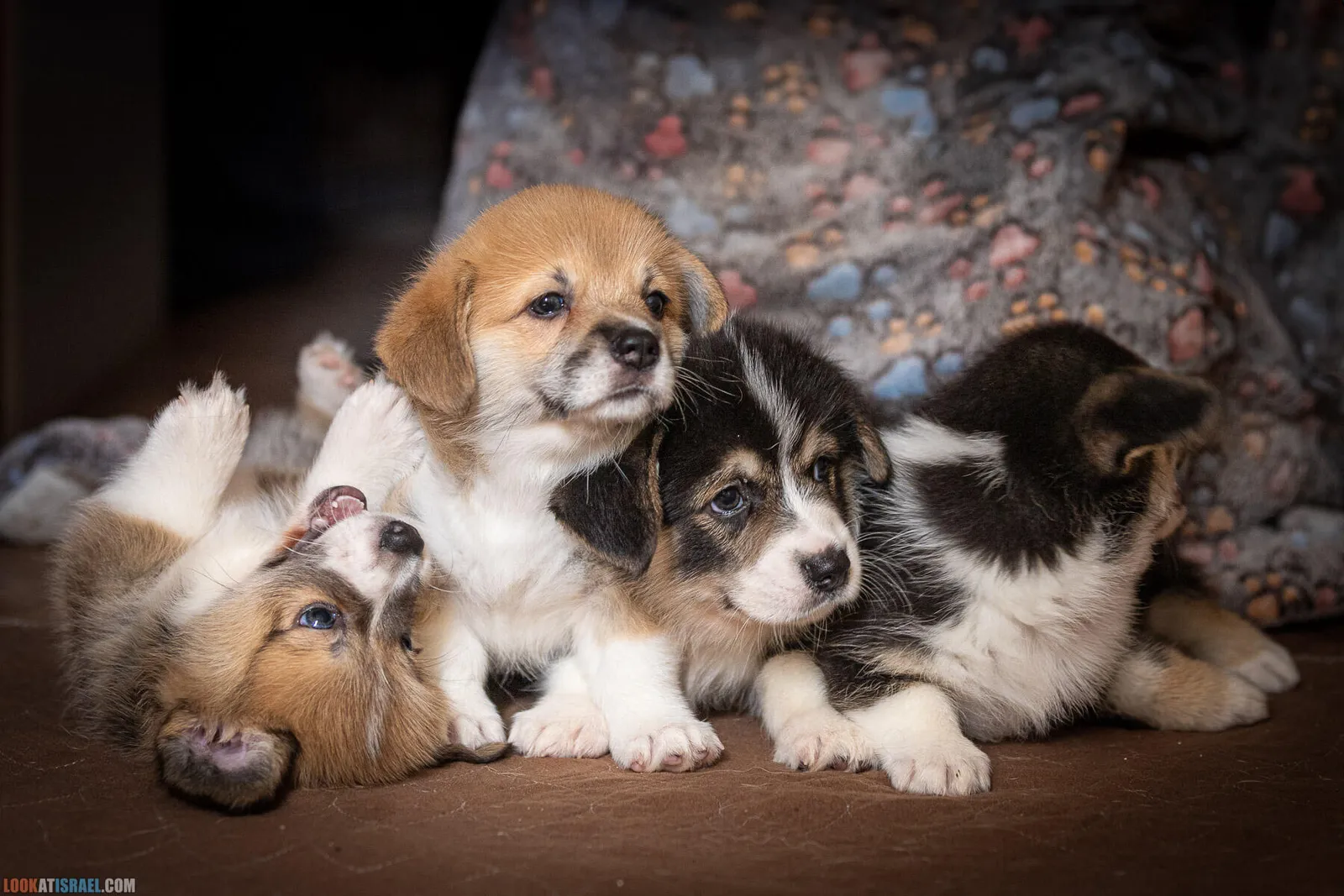
Where to Start
A good puppy starts with a good breeder — that is the main thing to understand before any checklist. So the order of choosing is: first the breed (Pembroke or Cardigan — their characters differ noticeably), then a kennel you trust, and only then a specific puppy. Picking "the cutest one in the photo" is the least reliable path: at eight weeks they are all adorable, and you will be living with the dog's character and health for a decade and a half.
Do not rush. Responsible kennels do not sell puppies "right here, right now" — there is often a waiting list for a litter, and that is a good sign, not an inconvenience. It also helps to see adult dogs in person beforehand — at a kennel or a dog show: puppyhood flies by, and you will be living with an adult corgi, its size, its coat and its voice.
Paperwork: What a Puppy Must Have
A purebred puppy from a real kennel always comes with:
- a puppy card or a pedigree issued by a recognised kennel organisation — in Israel that means a club within the FCI system;
- a veterinary passport with age-appropriate vaccinations and parasite treatments recorded;
- a microchip whose number is written into the documents;
- a sales contract that sets out the obligations of both sides.
"A puppy without papers, but cheaper" is not a saving — it is a lottery: without a pedigree nobody guarantees the breed, the temperament or the health of the line. Papers are worth the money because behind them stands a verifiable history of generations.
Parents' Health and Tests
Corgis, like any breed, carry hereditary risks: von Willebrand disease (vWD), degenerative myelopathy (DM), hip dysplasia, hereditary eye diseases. A responsible breeder knows this and tests the breeding dogs before mating: genetic tests, hip scoring, ophthalmological exams.
Ask about the test results of both parents. A breeder's normal reaction is to calmly show the documents and explain what each result means. Taking offence or dodging such a question is a signal to look elsewhere.
Beyond the tests, ask about the parents' age and how often the dam has litters: a female should not whelp every heat cycle. Look at the adult dogs' temperament too — steadiness and friendliness are inherited no less reliably than coat colour, and fearfulness and aggression all the more so.
A Responsible Breeder and the Red Flags
What a proper kennel looks like:
- the breeder asks you plenty of questions — it matters to them whose hands the puppy goes to;
- the puppies grow up in the house, among people and everyday sounds: clean, curious, comfortable being handled;
- you are shown the puppies' mother and the conditions the dogs live in;
- puppies do not leave before eight weeks of age;
- the breeder stays in touch after the sale and is ready to help throughout the dog's life;
- they talk about the breed honestly, including the downsides: shedding, barking, herding habits.
Red Flags
- "Puppies always available" and several breeds "to choose from" — signs of mass production.
- Refusal to show the puppies' mother or the place where they are raised.
- "You don't need papers, you're buying it for yourself anyway."
- "Mini" puppies or an "exclusive rare colour" for an extra charge — Pembrokes, for example, do not come in merle, and such "rarities" often mean questionable crosses.
- The breeder cannot clearly tell you about the parents: what tests they have, what their characters are like, why this particular pair was chosen.
- Pressure and urgency: "decide today, tomorrow it will be gone", or demanding a deposit before you have even met.
Questions Worth Asking the Breeder
- Which health tests have the parents had, and may I see the results?
- How are the puppies socialised in their first weeks?
- What are the puppies fed, and how is the move to a new home organised?
- What happens if my circumstances change and I can no longer keep the dog? A responsible breeder will always take their dog back.
- May I visit and meet you before reserving?
Choose Calmly and Be Picky
A proper kennel is not afraid of questions — on the contrary, it welcomes them: a meticulous owner means a reliable home for the puppy. Come and meet us, ask about tests and paperwork, see how the dogs live. We are always open to such conversations: have a look at our litters, meet our dogs, and when you feel ready, leave a request on the reservation page.