The Corgi's Homeland Is Wales
The Welsh Corgi is one of the oldest herding breeds of the British Isles. Its homeland is Wales — a land of green hills, sheep and cattle, where small sturdy dogs were the farmers' indispensable helpers for centuries. The word "corgi" itself is most often traced to the Welsh cor gi, "dwarf dog"; another version derives it from cur gi, "watchdog". There is no definitive answer: the breed is so old that its early history dissolves into legend.
One thing is certain: long before dog shows and standards, corgis were working dogs, and it was work that shaped their famous silhouette — a long body on short, strong legs.
The Herding Past
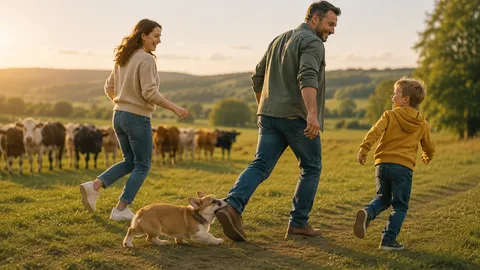
The corgi is a classic heeler: it drives the herd by nipping at the cows' heels. Small stature here is not a flaw but a professional advantage: when a cow kicks, the hoof passes over the dog's head rather than into it.
A farm corgi had plenty of work:
- driving cows and sheep to pasture and back;
- herding geese and ducks and escorting them to market;
- guarding the yard and announcing strangers with a ringing bark;
- keeping the farm free of rodents.
This working biography is still visible in the breed's character: a corgi is attentive, independent in his decisions, loves order and considers it his duty to control everything that moves — from a ball to the members of his family. Anyone eyeing the breed on our dogs page should keep this in mind.
Pembroke and Cardigan: Different Origins
Although both breeds were born in Wales, their roots are different — these are not variations of one dog.
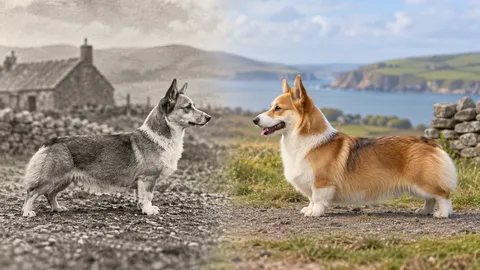
- The Cardigan is the older type, from the county of Ceredigion (Cardiganshire). His ancestors are traced to dachshund-type dogs that came to the isles with Celtic tribes — by various estimates, the Cardigan's history spans thousands of years.
- The Pembroke took shape further south, in Pembrokeshire. His ancestors are believed to be spitz-type dogs that arrived in Wales later — by the popular account, with Flemish weavers around the tenth to twelfth centuries.
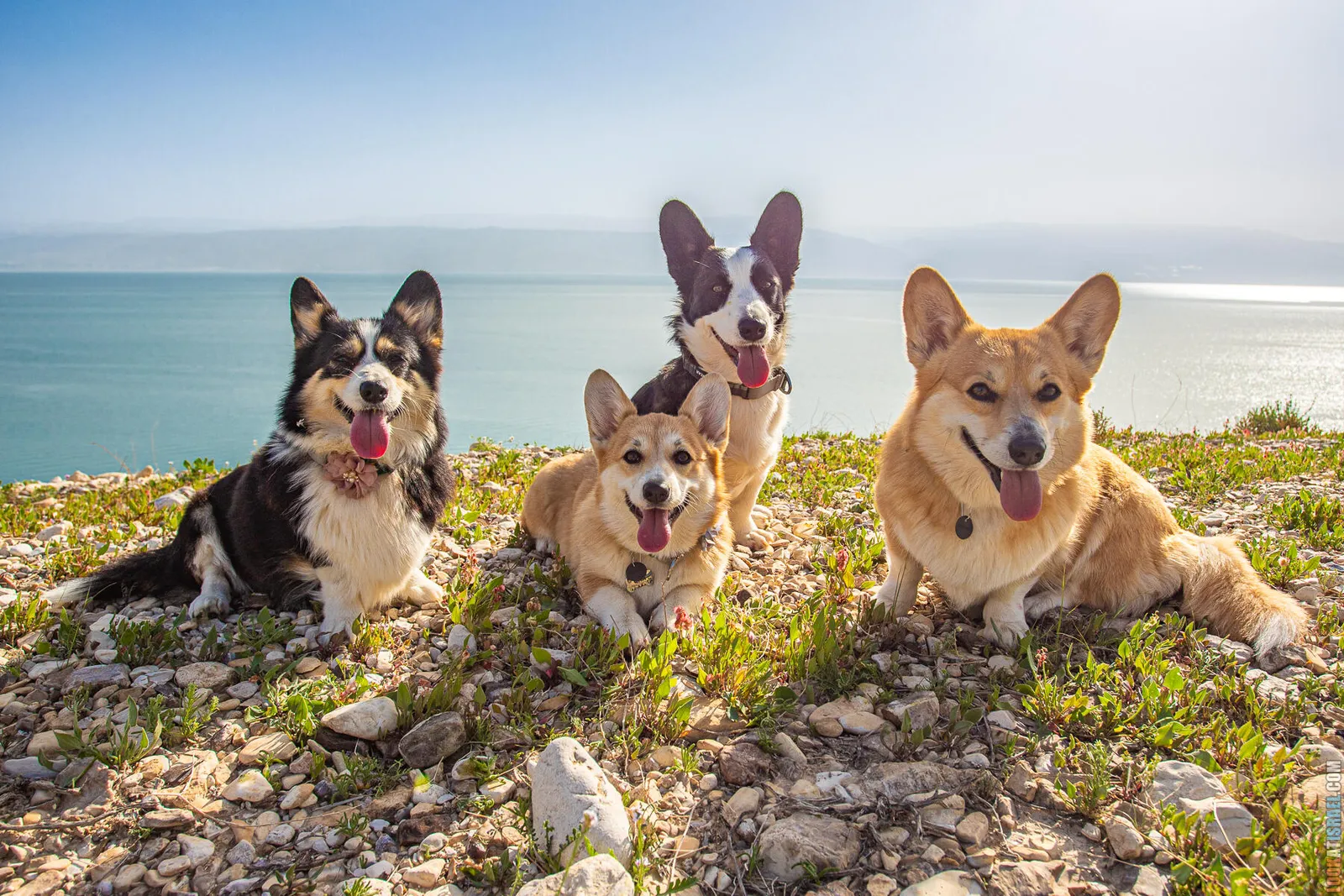
For a long time the two varieties were shown as a single breed and were even crossed with each other, which caused much confusion. The English Kennel Club settled the matter in the 1930s by officially splitting the Pembroke and the Cardigan into two independent breeds with their own standards. The differences also settled into their looks: the Cardigan kept the long tail and the heavy frame, while the Pembroke got the natural bobtail and a lighter silhouette.
The Road to World Fame
The Pembroke's finest hour came in 1933, when the future King George VI gave his daughters a corgi puppy named Dookie. Young Princess Elizabeth fell in love with the breed for life: she was inseparable from Susan, the corgi she received for her eighteenth birthday, and over the long reign of Elizabeth II about thirty corgis grew up in the royal household. Thus the Pembroke became one of the most recognisable symbols of Britain.
A new wave of fame arrived in our own time: the internet fell in love with the corgi — the smile, the short legs and the fluffy rear. Today the Pembroke is a fixture on the lists of the world's most popular breeds. The Cardigan, meanwhile, remains the rarer breed, and his admirers consider that a virtue: the best-kept secret of Wales. And from their herding past both breeds have carried into city life their tirelessness, their ringing voice and their habit of keeping their flock in sight.
As for us, we simply live side by side with the heirs of this long history — both Pembrokes and Cardigans. If you would like to meet the descendants of the herders and the fairy dogs in person, have a look at our litters or leave a request on the reservation page — we can talk about the breed long enough to fill a book.