How Corgis Came to Be 🐾
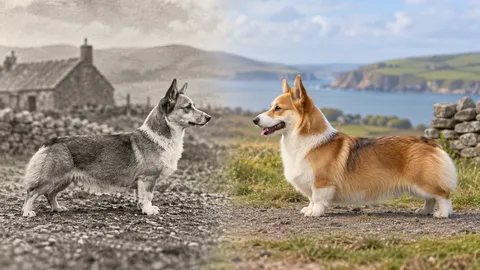
Long ago, in times beyond memory, deep in the Cambrian Mountains of Wales, there lived a small folk — the dwarfs. They were a friendly, cheerful, hardworking people who lived in harmony with elves and fairies, who were numerous throughout the British Isles in those days. The dwarfs built mines, collected stones, and were skilled craftsmen who knew how to shape and work with them. They were a happy people, and they remained so for many years.
Centuries passed. Humans began to settle the British Isles. They built homes, raised livestock, and started mining iron in the mountains of Wales. The little dwarfs went unnoticed by humans. The number of people grew larger and larger, while the dwarfs became fewer and fewer. Humans pushed the dwarfs deeper and deeper into the mountains, and the iron they mined poisoned the dwarfs. Their lives were no longer as joyful as they once had been.
Something had to be done, and the dwarfs decided to transform themselves into noble, long-legged greyhounds so that humans would respect them. They asked the fairies to help them with their plan.
And so, one day, during the festival of Ivan Kupala, when magical energy was believed to be at its strongest, the fairies drew a magic circle, and the Fairy Queen began casting her spells. When everything was ready, the dwarfs stepped into the magical circle, ready to become elegant, long-legged hounds.
And the transformation began…
But every herd has its “black sheep” — and the dwarfs had one too. This particular dwarf was always complaining, grumbling, and refusing to agree with the others.
And so, just as the dwarfs began transforming into greyhounds, this dwarf stepped out of the magic circle, muttering and protesting. By doing so, he broke the spell, and the magic woven by the Fairy Queen was changed. Instead of becoming tall, graceful hounds, the dwarfs transformed into small dogs with short legs.
However, they did not lose their intelligence, cheerful nature, or friendliness. The fairies began using them as tiny horses, riding them under saddle or hitching them to little carts when they traveled or went into battle.
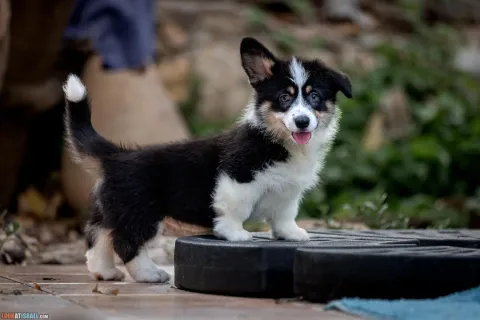
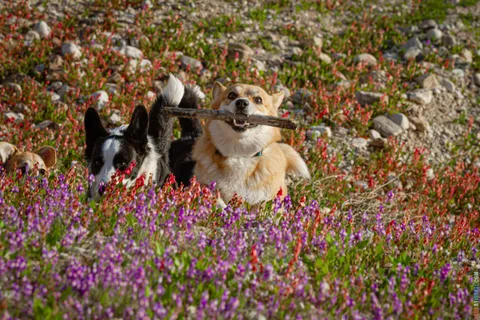
…and if you do not believe this story, simply look at your corgi. Even today, these little dogs love digging holes and carrying stones in their mouths, remembering that long ago they were once dwarfs themselves.
The Legend of How the Corgi Lost His Tail 🐾
Long ago, when the world was still young and elves spent their nights tying sheep’s tails into knots and tangling the manes of horses, there lived the Pembroke Corgis — the finest little steeds for the Fairy Queen’s moonlit rides.
They had such graceful tails that when they trotted along, it seemed as if the corgis were wishing everyone good fortune.
And then, one night, after a long day spent working in the pastures, one Pembroke Corgi decided that he had had enough. Enough of these decorations, enough of these midnight rides beneath the moon with the Queen.
When the time came for the Fairy Queen to arrive, he closed his eyes in despair and lay down to rest.
When the Fairy Queen came to him, he only burrowed deeper into his bed and refused to open his eyes. At once, the servants gathered around him, and the fairies tried every possible way to wake him and persuade him.
But nothing could change the corgi’s mind.
“I do not want to go anywhere. I am tired, I am annoyed, and I want to sleep. Find another little horse for your evening ride.”
With these words, he stood up, pricked his ears, and sat proudly, making it perfectly clear that he would not move an inch.
The fairies pleaded with him, they begged, they commanded, they threatened, they tried to bribe him, and they shouted — but all was in vain. The Pembroke had made his decision and would not change it.
The Fairy Queen became furious. In her anger, she stamped her tiny foot, shook her beautiful hair, and cast a terrible curse upon the corgi:
“I shall bind your tail to the earth with my magic, so that you will remain trapped and will not be free until you agree to become my servant, so that I may ride you whenever I please!”
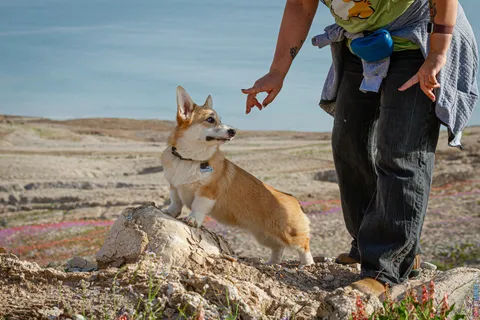
The corgi was not pleased at all. He vowed that he would never surrender to threats, and he began pulling and tugging at his tail, which was trapped in the ground.
But alas — the tail was firmly stuck, and the corgi was trapped along with it!
Yet the corgi did not give up. He pulled and pulled, and at last he managed to break free.
But his tail had already become part of the earth and remained behind.
And that is why, to this day, Pembroke Corgis have no tails — in memory of the brave little dog who dared to challenge the Fairy Queen herself.
And, like any true Welshman, the corgi still takes pride in knowing that he can never be frightened into submission by threats or curses.
The Legend of How the Corgi Received a Magical Saddle 🐾
Many years ago, long, long ago… or perhaps it happened before that, or maybe after…
A gallant Pembroke Corgi, well known throughout the land, was strolling along a mountain path.
Suddenly, by the side of the road, he discovered a young woman in tears. When she saw him, she immediately asked for help.
“Dear Corgi,” she said, “I was returning from the fair when I fell from my horse. Please, kind sir, help me find my way home.”
And the Corgi replied:
“I must admit, I am embarrassed. How could I possibly leave you in trouble? Climb onto my back, and I will take you home. Tell me where you live.”
“I live in a castle to the north, sir,” the young woman answered.
And so the Corgi carried her all the way to the castle.
At the castle gates, the young woman thanked the Corgi and said:
“I did not tell you before, but I am a magical princess, sir. For your kindness toward me, and for helping me return home safely, I shall leave upon your back the mark of a magical saddle.”
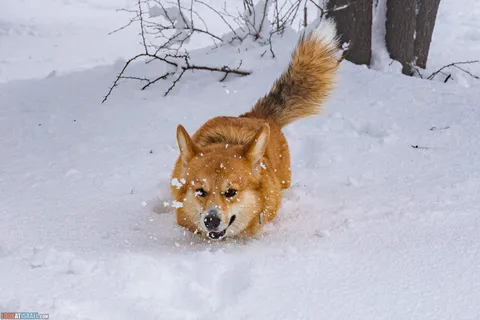
And to this very day, one may see the marks of a magical saddle on the backs of many corgis — a reminder that once, a noble and courageous Pembroke did not abandon a magical princess in her time of need, but helped her find her way home.
And just like that brave Corgi, your own corgi will always be there to help you too.
(Translated by Andrey Khvatov, 2003.
The legends are based on works by Anna Biddlecombe and Betsy Copeland.)
Legends of How Corgis Came to Live Among Humans 🐾
Legend One:
In Wales, every stone seems to hold a story. Castles stand everywhere, and it is easy to imagine that elves and fairies truly exist. Corgis — the dogs of Wales — are a part of this wonderful tale…
…Queen Mab clapped her hands.
“I am tired of sitting at home,” she cried. “We shall take our horses and ride!”
She had barely finished speaking when a small red-and-white dog appeared, wearing a golden collar with a tiny bell around its neck. On its back was a little saddle, made of the finest leather and decorated with silver.
More such dogs appeared before the other fairies. Each fairy mounted her little companion, and led by Queen Mab and her huntsman, Dark Edric, they rode out from the Hollow Hills.
Bathed in moonlight, they galloped through the forests of Wales.
After some time, the Queen heard a piercing cry. One of the elves from her court and his red-and-white steed had fallen into a trap — iron snares generously scattered by poachers. Made of iron, these traps were deadly to the magical folk…
The court elf and his dog lay helpless, unable to rise, while the fairies gathered at a distance, afraid that the cold iron might harm them as well.
“What shall we do?” Queen Mab cried in despair. “We cannot leave them here to die!”
A thin, trembling voice broke the silence that followed.
A little boy was watching from behind a tree, and nearby stood his frightened sister.
“If Your Majesty wishes, I can free them,” he said. “And my sister knows the healing herbs — she can ease their pain.”
“What are you doing here in the forest at night, boy?” demanded the Queen. “Do you not know how many dangers await mortals in the woods after dark?”
“My father is a shepherd,” the boy replied. “Today the finest sheep in the flock went missing, and if we do not find it, our family will go hungry.”
“Heal my friends,” said Queen Mab, “and I shall give you a reward worth far more than a lost sheep.”
The boy and his sister carefully freed the elf and his little steed from the traps and carried them away from the deadly iron. Then the girl gathered white oak bark and blackberry leaves. After soaking them in the water of a stream, she prepared a soothing healing compress.
Thanks to the magical properties of the herbs, the elf and his dog-steed were soon standing on their feet again.
“Boy, I promised you a reward,” said Queen Mab.
She rang twice the golden bell hanging from her dog’s collar.
Two red-and-white puppies appeared — small, strong, and sturdy, with short legs and dark eyes shining with intelligence.
“These are magical dogs,” said Queen Mab. “They are fast and clever, and they can herd cattle and sheep. Treat them well, and you will never lose your livestock again!”
She clapped her hands, and all the elves immediately continued their journey, leaving behind two bewildered children and two little puppies.
The dogs that grew from these puppies proved to be excellent herders, and soon people no longer needed to watch over their flocks constantly. From that day on, not a single animal was lost.
The shepherd’s family prospered, and the magical dogs had puppies of their own.
By then, they were known far beyond the village, and people began calling them “corgi” — from the Welsh words “cor”, meaning “dwarf,” and “gi”, meaning “dog.”
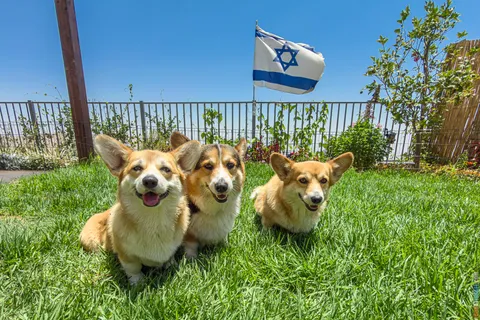
As a reminder of their magical origins, every corgi carried a mark on its back resembling a saddle.
And on the day of the Summer Solstice, when the dogs seemed a little more tired than usual in the morning, the shepherds would wisely nod their heads. They knew that on the eve of the Summer Solstice, the fairies returned to ride their corgis once again — so that the dogs would never forget where they came from and what their true purpose was…
(Collected and translated by Anna Kuznetsova, Style Life Kennel, 2003.)
Legend Two:
This is one of the oldest and most famous legends about corgis. For generations, corgi families passed this story down by heart. In time, humans began to hear about the legend as well. But for the corgis themselves, there was never any mystery in this tale — and so we share it with those who have not yet heard it.
This story appeared long before humans ever noticed corgis. No one knows the exact time when it happened, and no one knows where the story first began, but it took place many centuries ago…
The whole story begins with magical creatures.
They lived happily across the lands of Wales, spending their days wandering through forests. Because their wings were delicate and very small, they could not travel quickly, and their own laziness prevented them from covering great distances. So they decided to create a small, swift horse for riding.
After much thought and great effort, the elves came to the only possible answer: it had to be a little dwarf-dog.
In appearance, this dog should resemble a fox, but without any fox-like cunning in its character. The elves believed that their magical dogs should not only move quickly, but also have a gentle, friendly, and loving nature — something very important for long journeys.
And when no journeys were planned, these little dwarf-dogs could walk with children and even look after them, becoming their little guardians and nannies.
One day, while riding their magical steeds, the King and Queen of the Forest Elves saw humans in a valley below. They were poor farmers. Day after day, they worked the land, doing exhausting labor just to provide food for themselves and their children.
The sight was so heartbreaking that the King became overwhelmed with emotion and fainted, falling from his little steed. The Queen quickly dismounted to help her husband.
The dwarf-dogs were still very young — almost puppies — and they did not even notice that Their Majesties had fallen from their backs. Happily, they ran onward, believing that everything was perfectly fine.
While the Queen was trying to revive the King, the little dogs disappeared from sight, and the royal couple no longer had the strength or speed to catch up with them.
“What shall we do? Our little dwarfs will surely become lost. We must organize a search immediately!” declared the King.
But the Queen calmed him:
“Do not worry so much. We have lost only two dwarf-dogs. We used them merely for our own pleasure, and they will not truly be lost — people will surely find them, and people need them more than we do.”
And indeed, the little puppies wandered away and became lost, eventually arriving in a valley gorge. They did not even realize they were lost, happily spending their time playing and chasing each other.
They did not notice that two children were watching them…
In those ancient times, farmers lived in the mountains of Wales and in its beautiful green valleys. They worked hard, raised livestock, and cultivated the land — and nature rewarded them generously for their efforts.
Their children took the cows to graze in the mountains (for in those days it was safe), while their fathers worked the fields in the valleys and their mothers made cheese.
Every day, the children walked with the cows beyond the mountains, watching them wander through fields and meadows.
And then, one day, they saw two puppies playing in a gorge, just like a pair of little foxes.
They had no tails. They were very low to the ground, with long bodies, silky coats, short, straight, strong front legs, and fox-like faces. Their eyes were kind and gentle, and their color shone like polished gold…
The children played with the puppies all day. They fell in love with these little dwarf-dogs and shared their bread and water with them.
Then they picked them up, carried them home, and happily presented their wonderful discovery.
There, they prepared cozy baskets for them and placed them in the kitchen.
“Welcome home,” they said.

When the farmers returned home after a long day of hard work and saw the little dwarf-dogs, their faces lit up with smiles.
One farmer explained to the children that these little dogs were a gift from the elves:
“These are gifts from the fairies. A gift of the Fair Folk to humans. Do you not know what our fathers’ legends tell us?
These dwarf-dogs are protected by the fairies. They ride them in carts. They ride them under saddle. The corgis look after fairy children. And the fairies keep these dogs hidden in the mountains, in the shadows of the hills, so mortal eyes will never find them.”
People did not know the true name of these creatures, so they called them Corgis — from the ancient Welsh words meaning “dwarf dog.”
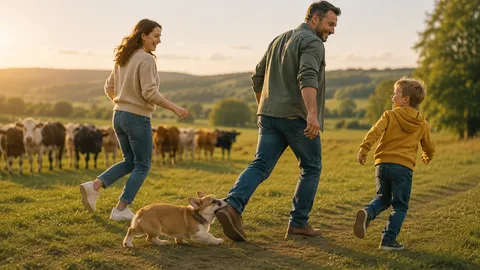
The corgis worked so devotedly on the farms, herding cows and all kinds of livestock, that they quickly won the hearts and love of the people of Wales.
And over hundreds of years, humanity’s love for corgis grew stronger and spread throughout the entire world.
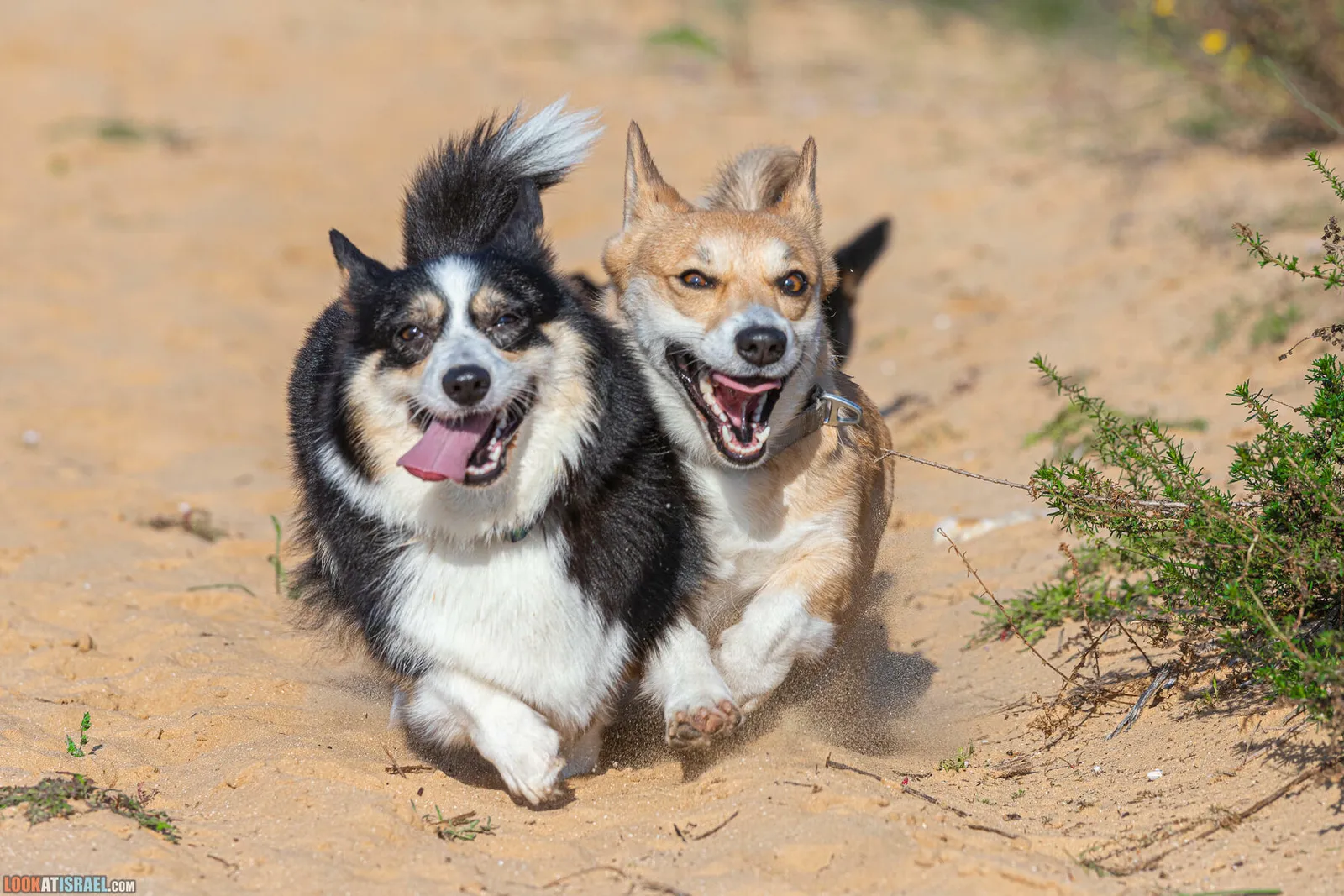
Today, corgis continue to grow and thrive. People find magic in their eyes, in the lightness of their movements, in their mischief, and in their perfection.
And corgis learned how to live alongside mortals. They learned to love their human families. They learned to herd cattle. They learned to play with human children.
Now, in every home — in valleys and mountains, in little towns and harbors — lives the Pembroke Welsh Corgi.
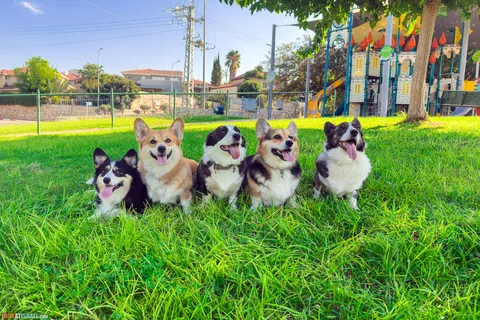
Living together with its human companion.
And if you doubt this ancient legend, if you laugh and call it impossible, simply look at your corgi.
You will see the magical saddle on which your corgi once carried the fairies.
And you know what?
He still does.
On the night of Ivan Kupala, when all mortals are asleep.
P.S. Have you ever noticed where your corgis disappear on the night of the Summer Solstice?..
(Translated by Andrey Khvatov, 2003.
The legends are based on works by Anna Biddlecombe and Betsy Copeland.)