What Is Rabies?
Rabies is a dangerous viral disease that affects the central nervous system.
It is a zoonotic disease, meaning that it can be transmitted between animals and humans.
Almost any mammal can become infected with rabies: dogs, cats, foxes, jackals, bats, farm animals, and humans.
Rabies cases continue to be reported among animals in Israel.
The cause of the disease is the rabies virus.
Despite extremely rare cases of human survival after the development of clinical signs, the disease almost always ends in death.
After clinical signs appear, an infected person or animal usually dies within 7–10 days.
This is why rabies is considered one of the most dangerous infectious diseases in the world.
Why Is the Rabies Virus So Dangerous?
The rabies virus has an unusual structure.
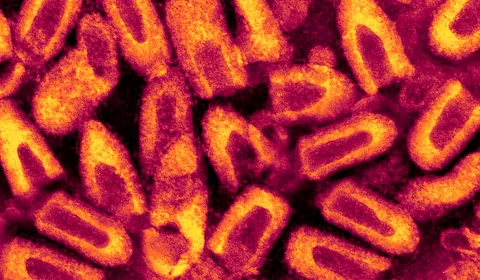
When viewed under an electron microscope, it has a shape resembling a bullet.
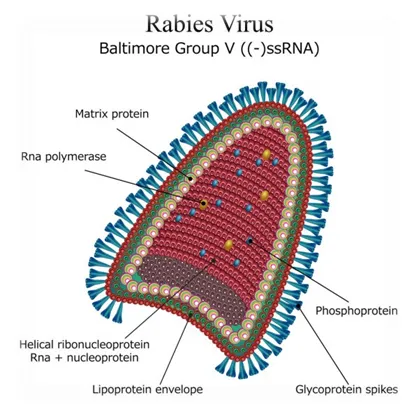
(For those who appreciate a little dark humor: even the shape of this virus looks like a warning.)
How Does Infection Occur?
The main route of infection is the bite of an infected animal.
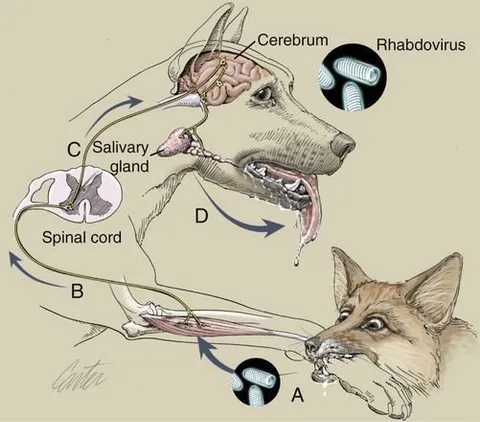
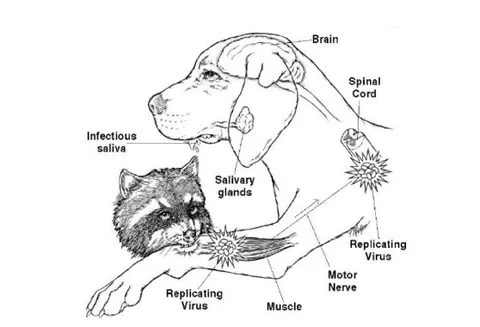
When an infected animal bites another animal or a person, the virus enters the tissues together with saliva.
After that, a very unusual process begins:
First, the virus enters muscle cells.
Then it moves into nerve cells and slowly travels upward along nerve fibers — toward the spinal cord and the brain.
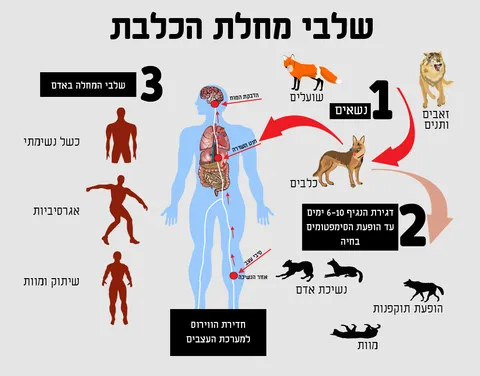
Unlike many infections that spread quickly through the bloodstream, the rabies virus moves extremely slowly.
It may take weeks or even months for the virus to reach the brain and cause active disease.
At the same time as it reaches the brain, the virus also reaches the salivary glands, where it begins multiplying in large quantities.
Once the virus has reached the brain and salivary glands, the disease becomes fatal: the animal usually dies within 7–10 days.
Why Do Infected Animals Change Their Behavior?
In the brain, the virus causes serious changes.
The most well-known symptom is aggression.
However, rabies can also appear in a completely different way: many animals become unusually calm, apathetic, or disoriented.
Different stages of the disease are often observed.
One of the important signs is loss of the natural fear of humans.
For example, if a jackal approaches a person in the wild and does not try to escape — this is abnormal behavior.
Wild animals usually avoid humans, so unusual trust or approaching people without fear may be a sign of rabies.
Other possible symptoms include:
* difficulty swallowing;
* fear of water (hydrophobia);
* changes in voice;
* excessive salivation;
* neurological disorders;
* seizures.
Why Is a Dog That Bit a Person Placed Under Observation for 10 Days?
This is not a punishment for the dog.
It is a safety measure.
If a dog is infected with rabies and is already able to transmit the virus through saliva, it is in the final stage of the disease.
After the animal becomes infectious, it usually dies within 7–10 days.
That is why the dog is placed under observation for 10 days:
* so that veterinarians can monitor its condition;
* if signs of disease appear during this period and the animal dies, testing for rabies can be performed;
* if rabies is confirmed, the person who was bitten must begin preventive treatment as soon as possible, before symptoms appear.
Once clinical signs of rabies develop, treatment is almost impossible.
Rabies Prevention
The only reliable way to protect against rabies is vaccination.
Rabies Vaccination in Israel
According to Israeli law, every puppy must receive its first rabies vaccination starting at the age of 3 months.
This is because by approximately this age, the level of maternal antibodies usually decreases enough to allow the vaccine to become effective.
In addition to vaccination, obtaining a license to keep a dog requires:
* a microchip;
* a valid rabies vaccination;
* payment of the required fees.
Why Is Rabies Vaccination Given at 3 Months, While Puppies Receive Multiple Core Vaccines at a Younger Age?
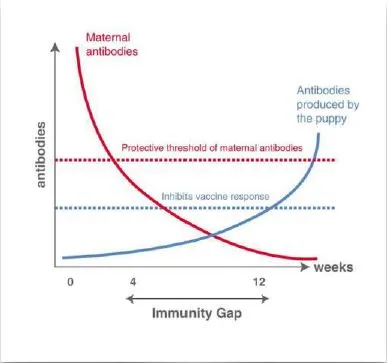
The reason is related to maternal antibodies.
After birth, puppies receive protective antibodies from their mother.
These antibodies help protect them from diseases, but at the same time they can interfere with vaccination.
There is a period when:
* the antibody level is no longer high enough to provide full protection against infection;
* but it is still high enough to reduce vaccine effectiveness.
Therefore:
Core vaccines (for example, against canine distemper, parvovirus, and other infections) are given several times during early puppyhood — to increase the chance that one of the vaccinations is administered at the optimal time.
The rabies vaccine is usually given later — around 3 months of age, because the risk of exposure for such a young puppy is lower, and the likelihood of a successful immune response is significantly higher.
Israeli Legislation: What Every Dog Owner Should Know
The main legal documents include:
* The Rabies Ordinance (1934) and related regulations;
* The Rabies Vaccination Regulations (2005);
* The Law for Regulation of Supervision of Dogs (2002).
If a Dog Bites a Person
The owner of the animal is required, within 24 hours after becoming aware of the incident, to:
* report the incident to the nearest government physician or government veterinarian;
* if the biting animal was a dog, cat, or monkey (yes, yes, this was relevant at one time, that's why it was included in the text of the law) — bring the animal to the nearest isolation facility.
In some cases, home observation ("home quarantine") may be permitted if specific legal requirements are met.
Conditions for Home Observation After a Bite
Among other requirements:
* a veterinary examination did not reveal clinical signs raising suspicion of rabies;
* the dog was not located during the previous 3 months in an area declared infected with rabies;
* the dog was not in contact with an animal suspected of having rabies during the 45 days before the bite;
* the dog had a valid license at the time of the bite;
* the dog had not previously been captured or documented as a stray more than twice during the two years before the bite.
How Often Should Rabies Vaccination Be Given?
Since April 2024, in Israel, after the first two rabies vaccinations, the vaccine may be given once every two years.
However:
* vaccination may only be performed by an authorized veterinarian;
* exemption from vaccination is possible only for medical reasons and requires official approval.
The Most Important Thing!
Rabies is one of the deadliest infectious diseases known to humans.
At the same time, it is a disease that can be almost completely prevented.
Regular vaccination, compliance with responsible dog ownership regulations, and proper care protect not only animals but also people.
Remember: the rabies vaccine is not just a legal requirement. It is protection of life.