Israel is a country with remarkable natural diversity. During walks, dogs may encounter many different creatures — some completely harmless, while others can pose a serious risk to their health.
Knowing which animals to watch out for and recognizing the first signs of danger can make a real difference and may even save your dog's life.
🐍 Snakes in Israel
Hemorrhois nummifer (also known as the coin-marked snake, Asian racer, and leaden-colored racer) — a Helpful Neighbor
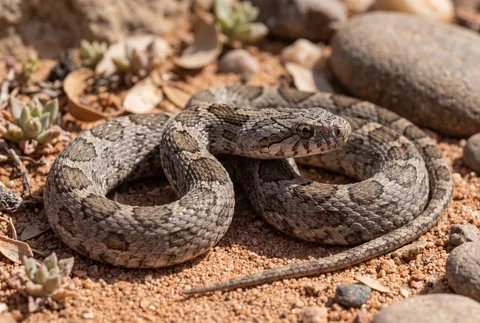
Not every snake is dangerous to dogs or humans.
The coin-marked snake can be identified by the clear separation between the markings on its body and its rounded head. This snake is not venomous.
In fact, coin-marked snakes are natural competitors of the Israeli viper and may even prey on young vipers. Therefore, if you find a coin-marked snake in your garden, it is usually a positive sign. These snakes help maintain the natural balance and can reduce the presence of venomous snakes in the area.
Palestine viper (Daboia palaestinae) — a Real Threat
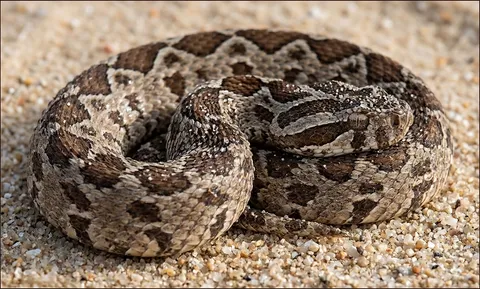
Unlike the whip snake, the Palestine viper is venomous.
It can often be recognized by several characteristics:
- the body markings usually form connected “coin-like” patterns;
- the head is more triangular in shape;
- the pupil is vertical, similar to a cat’s eye.
However, it is important to remember: if you are close enough to clearly see the snake’s pupil, you are probably already too close.
What happens after a viper bite?
Fortunately, most dogs survive a viper bite — around 95% of cases have a positive outcome, even without antivenom. However, without treatment, recovery is usually longer and more complicated.
A bite may cause:
- severe local swelling;
- significant tissue edema;
- blood clotting problems;
- risk of internal bleeding.
Most fatal cases occur due to either swelling that blocks the airways or severe bleeding caused by clotting disorders.
If you suspect your dog has been bitten by a snake, seek veterinary care immediately.
🕷 Mediterranean recluse spider (Loxosceles rufescens)
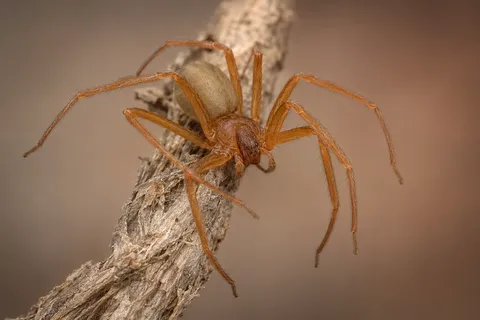
This small spider can cause serious injury.
Its bite may lead to:
- local tissue necrosis;
- severe skin damage;
- blood clotting disorders;
- swelling and systemic reactions.
In severe cases, treatment may require several surgeries to remove damaged tissue and skin grafts. In rare situations, the damage can become so severe that amputation is necessary.
🦂 Scorpions
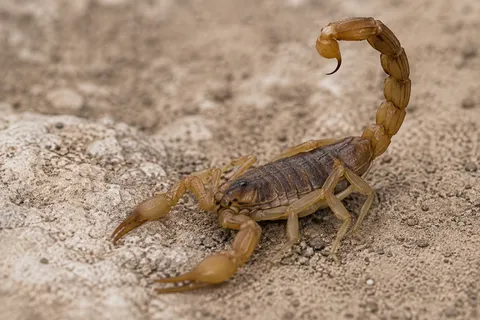
Israel is home to several species of scorpions. Most are not life-threatening to a healthy adult dog, but some species possess highly potent venom and can cause severe poisoning.
Dogs are most commonly stung when they sniff, investigate, or try to catch a scorpion during an evening walk or while exploring the yard.
Signs of a scorpion sting
Most dogs will show:
- sudden, intense pain;
- a sharp yelp or cry at the moment of the sting;
- limping or holding up the affected paw;
- swelling around the sting site;
- restlessness, trembling, or excessive drooling.
In severe cases—particularly in puppies and small breeds—the following signs may develop:
- muscle tremors;
- weakness;
- loss of coordination;
- difficulty breathing;
- seizures.
These symptoms require immediate veterinary attention.
What should you do?
If you suspect your dog has been stung by a scorpion:
- stay calm and keep your dog as quiet as possible;
- do not cut the sting site or attempt to suck out the venom;
- if it can be done safely, take a photo of the scorpion, as this may help your veterinarian identify the species;
- take your dog to the nearest veterinary clinic as soon as possible.
In most cases, treatment consists of pain relief, supportive care (such as intravenous fluids if needed), and careful monitoring. With prompt veterinary treatment, the prognosis is generally very good.
Tip: During the warmer months, especially if you live near open countryside, it's a good idea to do a quick check of your yard before letting your dog outside in the evening. Remove unnecessary piles of stones or debris, and avoid leaving shoes, toys, or other objects on the ground, as scorpions often hide underneath them.
🦟 Sand Flies (Phlebotomus) and Leishmaniasis
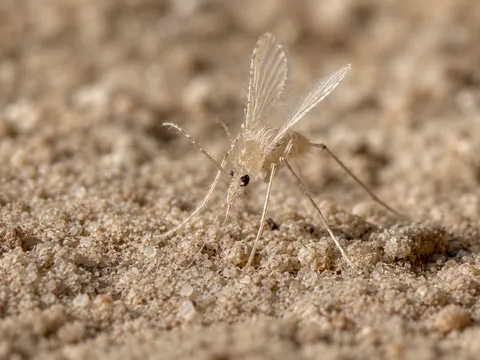
Sand flies are tiny insects that can transmit one of the most significant diseases affecting dogs in Israel — leishmaniasis.
In humans, some forms of the disease are known as “Jericho boil” — a localized skin lesion at the site of the bite.
In dogs, Leishmania infantum can cause a systemic disease affecting multiple organs.
It may involve:
- the skin;
- eyes;
- kidneys;
- internal organs.
Leishmaniasis is a zoonotic disease, meaning it can potentially be transmitted to humans. The transmission route is indirect: an infected dog → a sand fly → a human.
In most cases, treatment can control the symptoms and improve quality of life, but completely eliminating the parasite is usually not possible and long-term management may be required.
In areas with higher risk, veterinarians recommend using preventive treatments against external parasites, including products that repel sand flies.
🐛 Dangerous Caterpillars
Ocnogyna loewii and Pine Processionary Caterpillar (Thaumetopoea pityocampa)
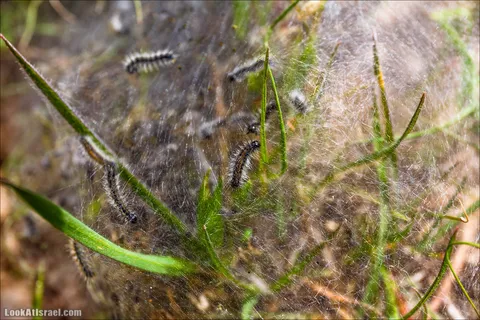
These caterpillars may look harmless, but they can be dangerous for both people and dogs.
Their bodies are covered with tiny hairs containing irritating toxins.
Contact may cause:
- skin irritation and rash;
- allergic reactions;
- severe damage to mucous membranes.
The greatest danger for dogs is contact with the mouth.
If a dog licks or picks up a caterpillar, the toxins may cause:
- necrosis of the tongue and oral tissues;
- severe swelling of the throat area;
- difficulty breathing.
This is a life-threatening emergency requiring immediate veterinary attention.
During the active season of these caterpillars, it is important to prevent dogs from sniffing, licking, or picking up unfamiliar objects during walks.
Protecting Your Dog 🐾
Israel’s nature is beautiful, and most encounters with wildlife are harmless and simply part of exploring the environment.
However, awareness of local dangers, careful supervision, and timely veterinary care can make a crucial difference in protecting your four-legged companion.