Why Does It Seem Like Corgis Shed More Than Any Other Breed?
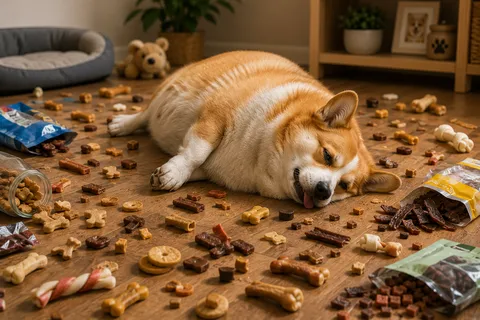
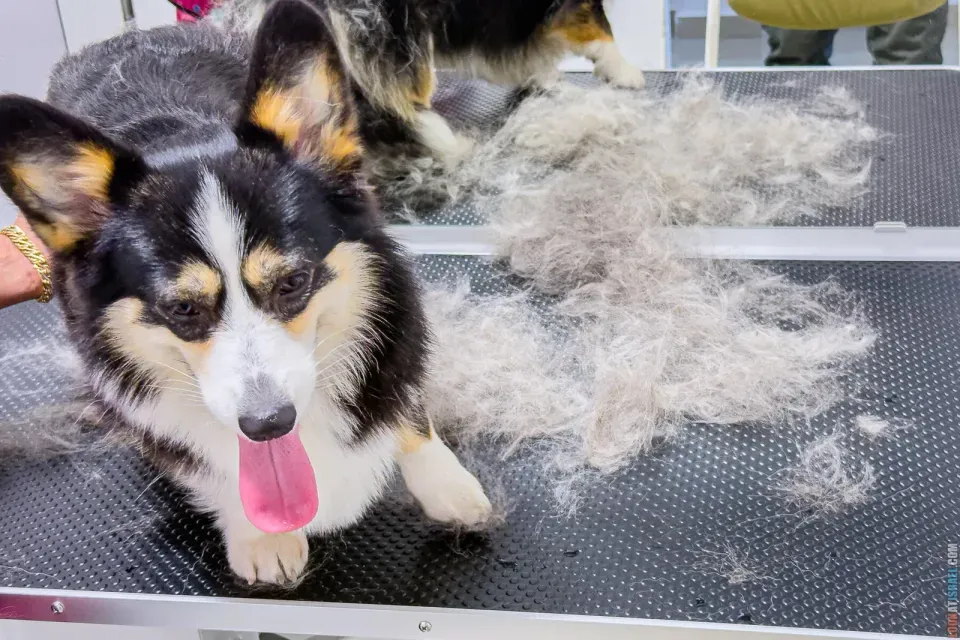
It often feels like during shedding season your corgi could “build” another corgi out of all the fur it’s losing. Probably every corgi owner has at least once joked that their dog sheds “twice a year — for six months at a time.”
In fact, that joke is not so far from the truth.
Corgis really do belong to the breeds with a very dense double coat. During seasonal shedding they blow an enormous amount of undercoat, which makes it seem like the fur just never ends.
But that doesn’t mean there’s anything wrong with your dog. On the contrary — this is a completely normal process.
Double Coat: The Main Secret
The most important thing is to understand that a corgi’s coat is not just one single layer.
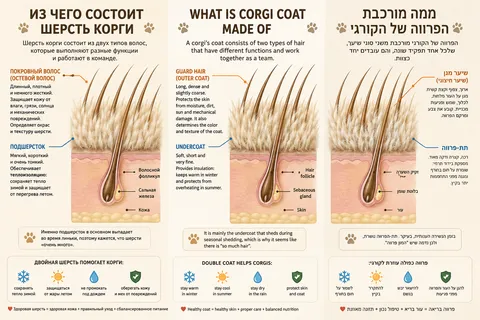
There are two different types of hair: guard hair (topcoat) and undercoat.
Guard Hair
These are the longer, denser and slightly harsher hairs that:
- protect the skin;
- keep rain from soaking the dog too quickly;
- shield from the sun;
- make the colour bright and clear.
They are replaced relatively slowly.
Undercoat
The undercoat is made up of soft, short and very fine hairs that are responsible for insulation.
In winter it becomes thick and dense, and in spring most of it is no longer needed and is shed. That’s why during the coat blow it feels like there is an unbelievable amount of fur — it’s not the guard hairs falling out, but thousands of the finest undercoat hairs.
Why Does a Dog Need Such a Coat at All?
Many people are surprised: “Why does a dog in Israel need such a warm coat?”
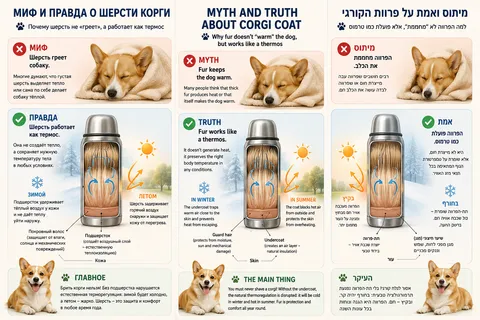
The answer is paradoxical: the undercoat works like a thermos — in winter it keeps warmth inside, and in summer it actually helps prevent overheating by slowing down the penetration of hot air to the skin.
That’s exactly why you must not shave a corgi. Shaving destroys the dog’s natural thermoregulation system and only makes things worse for the dog.
Why Does Shedding Happen Specifically in Spring and Autumn?
The coat does not change because “it got hot.”
The key factor is the length of daylight.
Changes in daylight hours affect hormone production, which triggers the growth of new coat and the loss of old coat. That’s why even pet dogs living in apartments with air conditioning still shed seasonally.
Why Do Many Corgis Shed Almost All Year Round?
This is where it gets really interesting.
Modern pet dogs live very differently from their ancestors.
They spend a lot of time:
- indoors;
- under artificial lighting;
- with air conditioners on in winter and summer;
- without a pronounced change in temperature.
The body receives conflicting signals and, as a result, instead of two clearly defined coat blows you get a constant renewal of part of the undercoat.
So a small amount of fur around the house all year round is completely normal.
Why Do Females Sometimes Shed More Than Males?
In addition to seasonal shedding, a female’s coat is strongly influenced by sex hormones.
Before a Heat
In many females, a more active change of coat begins a few weeks before the start of a heat. Sometimes it’s barely noticeable, and sometimes the dog practically starts “pouring” undercoat.
This is a completely normal reaction of the body to a change in hormone levels.
After Whelping
After the puppies are born, many owners understand for the first time what the expression “the dog stripped down” really means.
A few weeks after whelping most females almost completely blow out their accumulated undercoat. Sometimes it seems like the volume of coat has halved and the dog looks much slimmer.

This is a physiological process associated with a sharp change in hormone levels after pregnancy and lactation. Over time, the coat fully recovers, although it may take several months for the undercoat to become thick again.
Fun fact: experienced breeders can often guess that a female is about to come into season just by looking at her coat, even if there are no other signs yet. Increased shedding in some dogs becomes one of the first outward signals of an approaching heat cycle.
This is not a universal sign — it’s far from equally pronounced in all females — but in some dogs it’s so characteristic that it really does help predict the start of a heat.
Is It True That Neutered Dogs Shed More?
Yes, that does happen.
After spaying/neutering, the hormonal background changes, and the coat may become:
- denser;
- softer;
- more “cottony” in texture;
- prone to forming a heavy undercoat.
Such a coat needs more thorough brushing.
This is especially noticeable in some females after spaying.
Does Diet Affect How Much a Dog Sheds?
Yes.
To build a healthy coat, the body needs:
- complete, high-quality protein;
- omega-3 and omega-6 fatty acids;
- zinc;
- copper;
- B-group vitamins.
A poor-quality diet won’t necessarily intensify seasonal shedding, but it can make the coat:
- brittle;
- dull;
- drier;
- slower to recover after shedding.
When Is Shedding a Reason to See a Vet?
Normal shedding is never accompanied by skin disease, but you should see a vet if you notice:
- bald patches;
- skin redness;
- severe itching;
- unpleasant odour;
- scabs;
- pustules;
- hair loss in distinct spots.
These symptoms may point to an allergy, parasites, fungal infections or hormonal disorders.
Can You Reduce the Amount of Fur in the House?
Completely — no; but you can significantly cut down the amount of fur that ends up on your furniture and floors.
What helps best is:
- regular brushing;
- professional de-shedding during seasonal coat change;
- high-quality nutrition;
- regular bathing followed by thorough drying and blowing out of the undercoat.
After good grooming the house is noticeably cleaner for several weeks — most of the already dead undercoat is removed at once instead of slowly falling out all over the apartment.
You can read more about coat care in the article Corgi Care: Nails, Coat, Teeth and Ears.
What You Definitely Shouldn’t Do
❌ Shave a corgi “so it won’t shed.”
❌ Clip with a clipper in summer.
❌ Use a furminator too often — it can damage the guard hair if used incorrectly or excessively.
❌ Bathe the dog every month “so it’ll shed out faster” — frequent bathing by itself does not stop shedding and can dry out the skin if you use unsuitable products.
The Main Thing
Shedding is not a breed flaw; it’s how a healthy coat normally works.
Corgis really do shed more noticeably than many short-coated breeds, because they have a very dense double coat. But this very coat protects them from cold, heat and rain.
Once you understand how it works, it becomes clear: the owner’s goal is not to stop shedding, but to help the dog timely get rid of dead undercoat and maintain healthy skin and a good-quality guard coat.