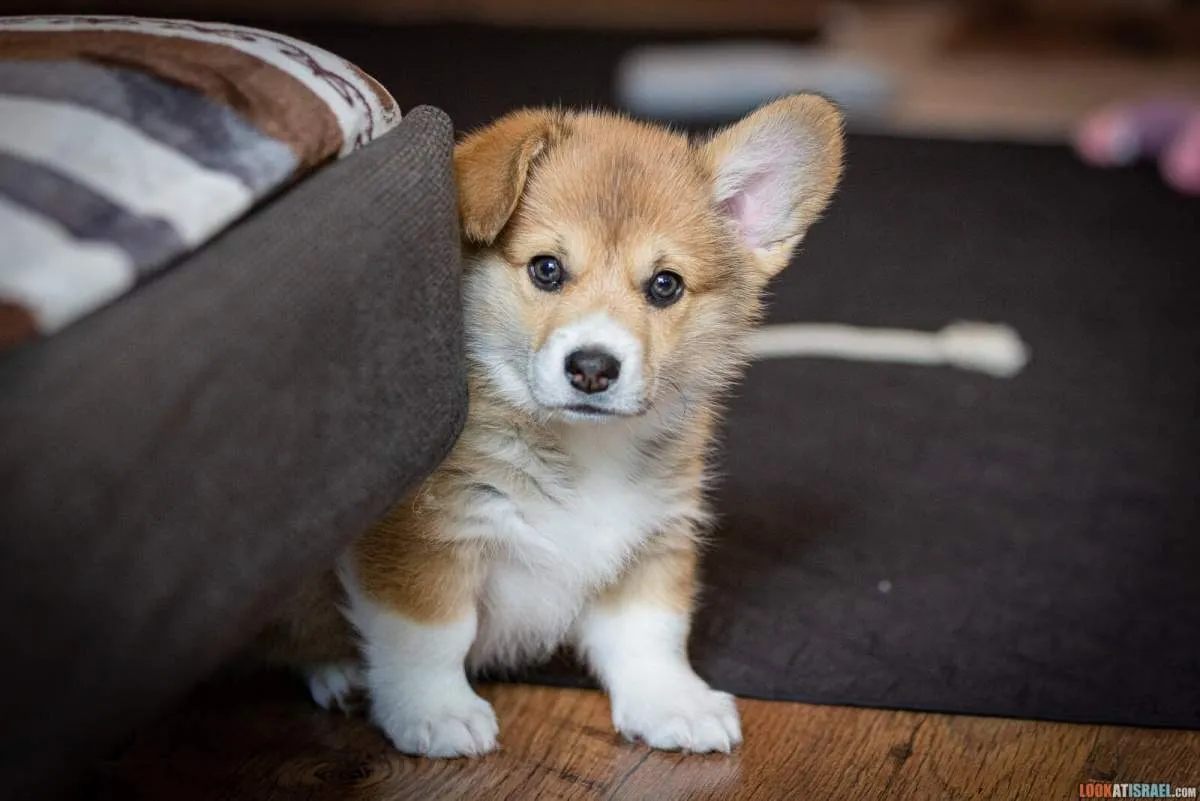
The First Days at Home
The most important advice is not to try to buy absolutely everything.
A puppy grows very quickly: toys, bowls, equipment sizes and even the puppy’s own preferences change. It is therefore more sensible to buy only the essentials at first and purchase the rest gradually.
What You Really Need
A Crate

Even if you do not plan to keep your dog in a crate all the time, it may become one of your most useful purchases.
When introduced properly, a puppy quickly learns that the crate is not a punishment but their own private bedroom. It helps them cope more calmly when you are away, makes toilet training easier, protects them from dangerous objects and often becomes indispensable during treatment, recovery after surgery or travel.
It is important to choose a crate large enough for the adult dog to stand up, turn around and lie down comfortably.
A Playpen or Puppy Barrier

If the crate is the bedroom, the playpen becomes the nursery.
While the puppy is still very young, it is impossible to watch them every second. A playpen allows you to leave the puppy safely with toys, water and a bed while you are busy with household tasks.
It is especially convenient to use it together with disposable puppy pads.
A Bed
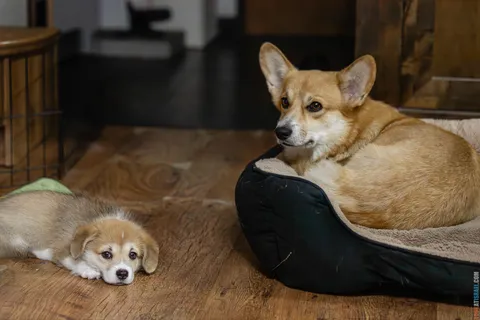
It is better to have two from the start.
Keep one in the main family area so the puppy can stay close to you, and place the second inside the crate or playpen.
(It is worth noting that our dogs use their beds only during the colder months. When the weather is warm, they prefer sleeping on the floor.)
Bowls

At least two:
- one for water;
- one for food.
It is also very convenient to have an additional hanging bowl for the crate or playpen, as it is more difficult to tip over.
Food
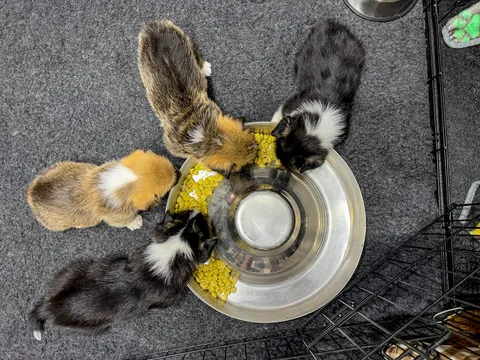
It is best to buy the same food the puppy was eating at the breeder’s home, at least for the first time.
A sudden change of diet during the first few days after moving only adds to the puppy’s stress and may cause digestive problems.
A Lead and Collar

Even if walks do not begin immediately after the puppy arrives, it is better to prepare everything in advance.
A few recommendations:
* We recommend attaching an identification tag to the collar with your details, including your name and telephone number.
* We do not recommend using a retractable lead or a harness for a corgi. Firstly, they do not provide enough control over the dog — and corgis love to pull. Secondly, an incorrectly fitted harness may interfere with the proper development of the puppy’s chest and the correct positioning of the front legs.
* If you plan to take your dog outdoors for picnics or camping, we recommend buying a long lead, approximately 7–10 metres. It will give the dog plenty of freedom while allowing you to relax, knowing that they cannot run away or get lost.
Toys
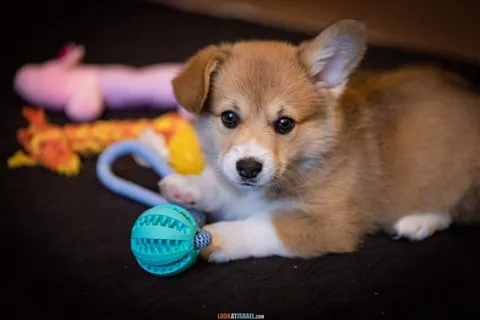
There is no need to buy twenty different toys.
A few are enough:
- a soft toy;
- a rubber toy;
- a safe chew toy;
- a toy that can be filled with treats.
Cleaning Products

Puppies will inevitably have accidents. In our experience, little “surprises” may continue appearing on the floor quite regularly until the puppy is at least 6–7 months old.
That is why an enzymatic cleaner that completely removes the smell of urine often proves more useful than an expensive dog bed.
Highly Recommended
Waterproof Mats
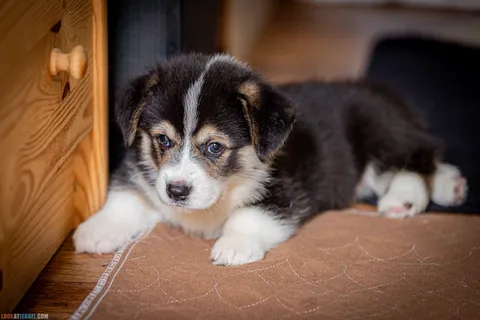
They are excellent for protecting the floor beneath the bowls, inside the playpen or near the puppy’s bed.
A Large Waterproof Cover
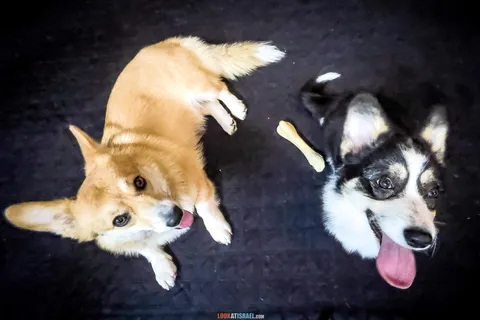
If the puppy will sit with you on the sofa, lie on your bed or accompany you when visiting friends, such a cover will quickly prove its value.
A Rear-Seat Car Cover

If you plan to travel with your dog, it is better to protect the car interior in advance.
A Carrier or Backpack

These are very useful during the first weeks after the puppy arrives, while the vaccination course is not yet complete.
You can safely take the puppy to new places for socialisation without allowing them to walk on the ground.
A Portable Water Bottle
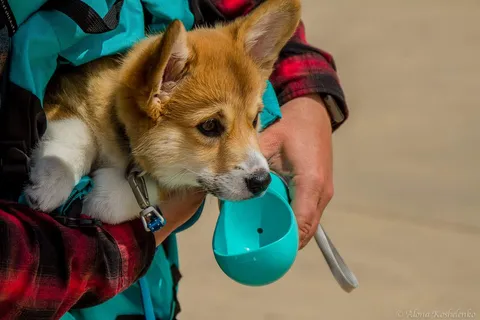
An indispensable item for walks, trips and dog shows.
A Brush and Nail Clippers
Even if the puppy does not yet require much grooming, it is important to begin calmly teaching them to accept brushing and nail trimming from the first weeks.
Useful Small Items
Sometimes these are the things that turn out to be the most useful.
- a spare lead;
- waste bags;
- treats for training;
- a small first-aid kit prepared according to your veterinarian’s recommendations;
- a towel for wiping paws;
- several old towels for bathing or unexpected accidents.
What About Home Monitoring?
It may sound amusing, but this really is one of the most useful things you can have, especially now that inexpensive home Wi-Fi cameras are widely available.
They allow you to see how the puppy behaves when left home alone, whether they bark, sleep calmly or try to escape from the crate or playpen. This is particularly helpful during the first weeks of adjustment.
Do Not Buy Everything at Once
It is very tempting to prepare perfectly and buy everything in advance.
But the truth is that your puppy needs a calm owner, a safe home and your attention far more than a large collection of accessories.
Most things can be purchased during the first few weeks, once you have begun to understand the habits of your new family member. Love, patience and time, however, cannot be ordered with delivery — and they will always be the most valuable gifts you can give your puppy.