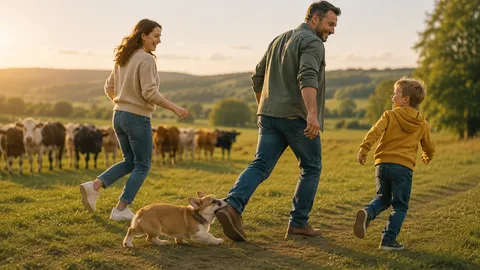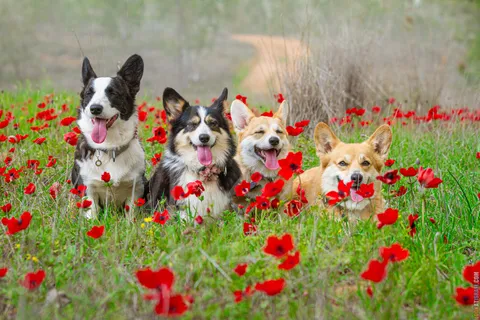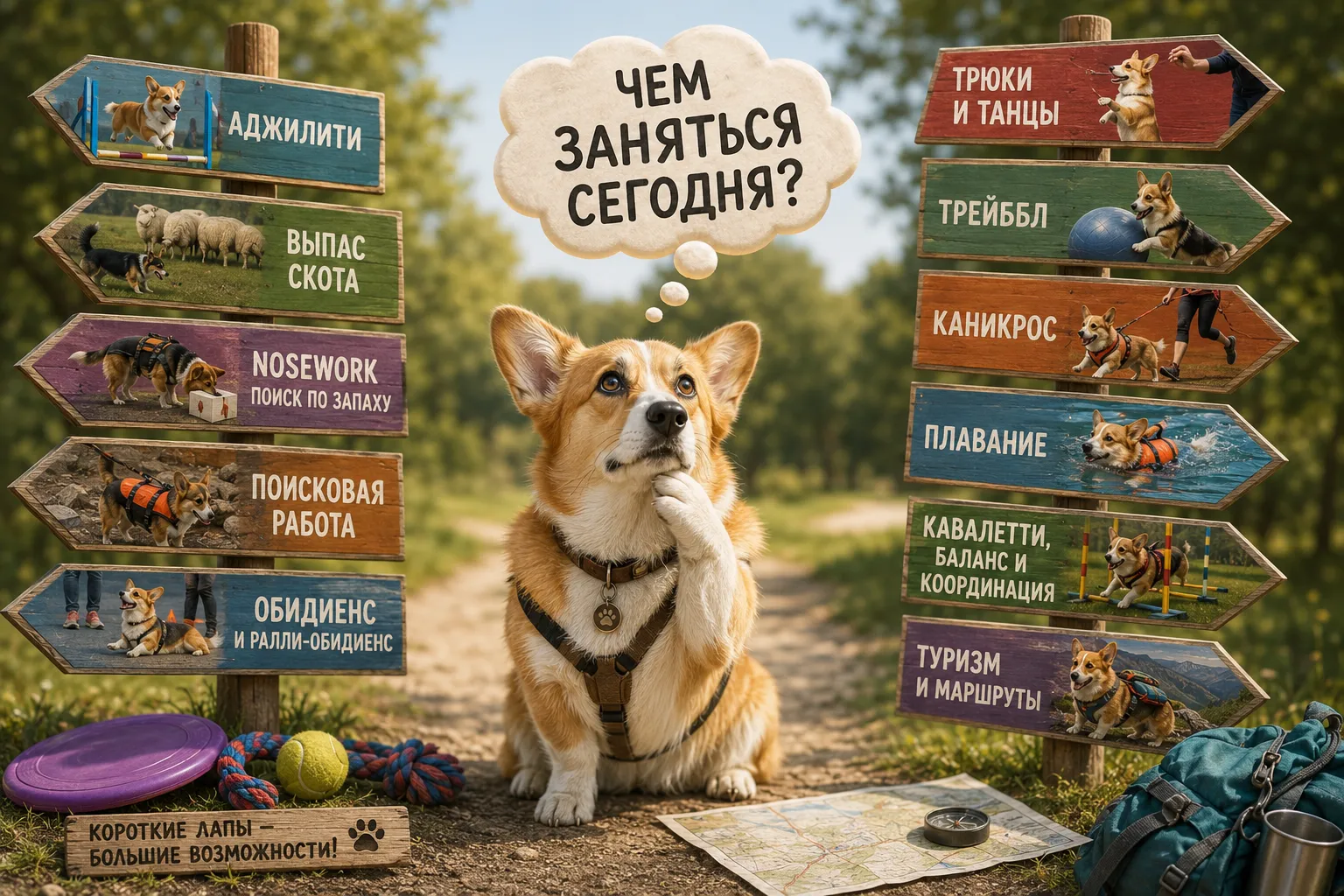
A corgi is not just a pet, but a true working dog with a huge supply of energy, intelligence, and willingness to cooperate with humans. Even very long walks are often not enough to meet all of their needs. Fortunately, there are many sports and enrichment activities today that help dogs tap into their natural abilities. Here’s an overview of the activities available to corgi owners in Israel and how to choose something your individual dog will truly enjoy.
Corgis Weren’t Bred to Be Couch Dogs
These days, most corgis live in families, stroll in parks, sleep on soft beds and become full-fledged family members. But if you look into the breed’s history, it becomes clear that this lifestyle is a very recent development.
For hundreds of years, welsh corgis were true working dogs. Their job was to drive cattle, help shepherds, and make independent decisions in all sorts of situations. The work required not only stamina, but also courage, quick wits, and the ability to react instantly to what was happening.
That’s why modern corgis are still incredibly intelligent, active and curious dogs. Even if they never see a real herd of cows, their inborn need to be doing something doesn’t disappear.
Why Walks Alone Are Sometimes Not Enough
Many owners are convinced that if the dog has covered several kilometers, then it must be tired and has gotten everything it needs.
Unfortunately, that’s not always the case.
Physical fatigue and mental workload are two very different things. Corgis can easily walk quite a distance, rest a bit, and then be ready for new adventures again, whereas fifteen minutes of solving an interesting task can sometimes tire a dog out more than an hour of calm walking.
Canine behavior specialists increasingly emphasize the importance of giving your dog a job, even if that job looks more like play.
Do We Have to Compete?
Not at all.
Many owners hear the words “sport” or “canine discipline” and immediately picture medals, trophies and serious competitions, but in reality most people do it simply for fun.
The dog gets interesting work, the owner spends quality time with their pet, and entering official trials remains entirely optional.
The main goal of these activities is not to beat everyone else, but to make the dog’s life richer and happier.
So, What Can You Do With a Corgi?..
Agility
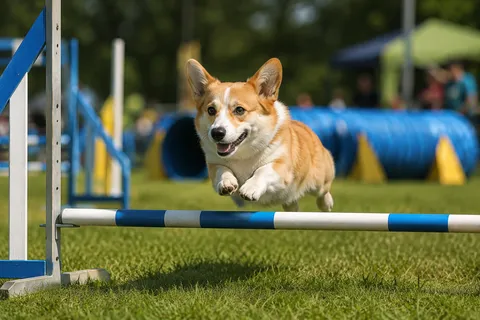
Agility is one of the best-known canine sports. Off leash, the dog completes an obstacle course: jumping hurdles, running over the dog walk and seesaw, going through tunnels and weaving through slalom poles. The handler runs alongside and guides the dog with voice, body language and hand signals.
From the outside it may seem that speed is the only thing that matters, but you can’t get good results without real teamwork between dog and human. Agility demands focus, precision, the ability to react quickly to cues and a high level of trust in the handler.
Corgis can certainly do agility. They’re smart, driven, love to move and usually work eagerly for food or toys. Their short stature by itself is not an issue: jump heights are set according to the dog’s height category.
However, a corgi’s anatomy must always be taken into account. A long back and short legs call for particular care with jumping and sharp turns. Puppies must not be asked to take high jumps, do lots of repetitions, or tackle complex contact equipment right away. First they learn to follow a hand target, move between cones, go through tunnels, keep their balance and work calmly around other dogs.
Before starting serious training, it’s best to make sure the dog is healthy, not overweight and physically ready for exercise. It’s especially important to work with an instructor who can adapt the exercises to the dog’s age and individual build.
In Israel, agility is an officially recognized branch of canine sport. The Israel Kennel Club publishes separate rules for this discipline and describes it as a jointly run obstacle course based on communication, concentration, precision and positive training.
We’ve taken two of our own dogs to agility classes – and they really enjoyed this activity.
Dog Frisbee
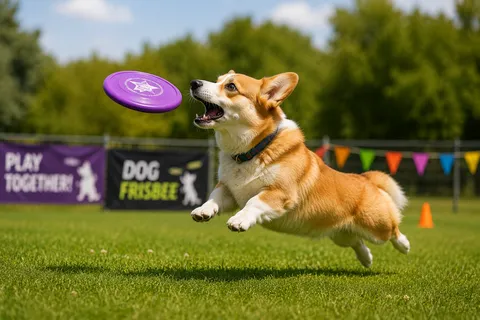
If your dog loves to run, jump and catch toys in mid-air, they might enjoy dog frisbee.
The essence of this sport is simple: the dog catches special safe discs thrown by the handler. But behind this apparent simplicity lies a full-fledged sport in which speed, accuracy, teamwork and even stylish acrobatic moves are evaluated.
For many corgis, dog frisbee becomes a great way to burn off energy. They’re enthusiastic, fast and love chasing a flying disc.
However, there is an important limitation in this discipline:
Corgis are a chondrodystrophic breed with a long spine and short limbs. So high jumps and complex acrobatic tricks often performed by Border Collies, Australian Shepherds or Belgian Shepherds are not suitable for them.
Low, safe throws, rollers (discs rolling along the ground), catches without big jumps and speed-based games, on the other hand, are a great fit for most healthy adult corgis.
As in any sport, workload must be increased gradually, and you should only start training once the dog’s skeleton has fully developed.
In Israel there are clubs and communities where you can learn safe throwing techniques and the basics of dog frisbee, so you can train not only on your own, but also under the guidance of experienced instructors.
Herding Livestock
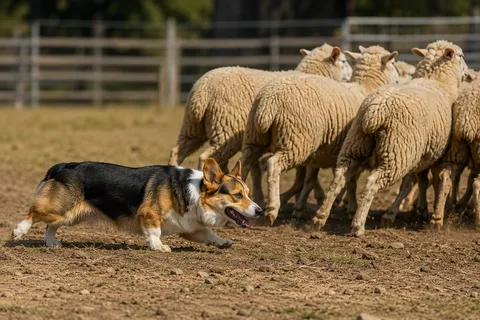
This is probably the most symbolic activity for a corgi.
Today, when people hear “herding dog”, many picture a Border Collie quietly controlling sheep with its gaze. But corgis worked differently. They were used primarily to drive cattle. A low dog could weave quickly between animals, nip at their lower legs and dodge kicks.
Of course, herding is not a chaotic chase after sheep. The dog has to learn to control the herd on the handler’s cue, change direction, stop, keep the right distance and avoid harming the animals.
The first session usually serves as a herding instinct test. The instructor watches whether the dog is interested in the stock, tries to gather the animals, how easily it becomes overexcited and whether it still listens to the handler.
Reactions may vary widely. One corgi starts working confidently right away, another has no idea what’s expected of them for a long time, and a third decides that sheep don’t deserve any attention at all. A lack of pronounced interest doesn’t make the dog “wrong”. Even within working breeds, abilities and temperament can differ greatly.
In Israel there are instructors who work herding dogs on stock. This is more of a niche hobby, so training may not be available in all regions or on a regular schedule. Before you go, it’s worth checking whether the instructor works with corgis and accepts beginners.
You don’t need to pre-train your dog to herd before the first introduction. But a good relationship with the handler, a reliable stop and the ability to wait calmly will greatly help further work.
Nosework — Working With the Nose
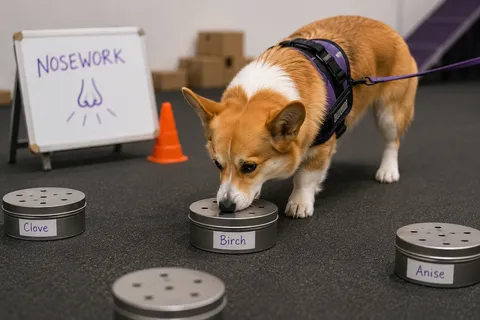
A dog’s nose can handle amazingly complex tasks. In professional work, dogs are taught to detect explosives, drugs, people and various biological scents. In sport nosework, the same principle is used, but in a safe and accessible format.
The dog learns to find a specific scent hidden:
- indoors;
- outdoors;
- among boxes and objects;
- on a vehicle;
- at different heights.
The handler’s task is not to lead the dog to the source, but to observe the dog and understand when it has truly found the target.
Nosework is suitable for almost all dogs. It doesn’t require high speed, jumping or perfect physical condition, so scent work can be an excellent option for puppies, seniors, dogs with exercise limitations and overweight corgis.
Scent work helps develop independence and confidence. The dog learns to solve the task on its own, and the handler learns to trust the dog’s abilities. In addition, searching demands intense concentration and tires out even very energetic corgis.
In Israel, classes in scent games and sport nosework are available, including group courses. Israeli instructors describe such work as searching for a given scent according to the same principles used for working dogs, and note its benefits for mental workload, confidence and the bond between dog and handler.
You can even start at home. First, ask your dog to find a treat in one of several open boxes. Gradually you can start closing the boxes with loose lids, moving them to other rooms and adding empty objects.
However, casual food searches at home and sport nosework are not the same thing. In sport, the dog learns to work on a specific target odor, systematically search an area and clearly indicate the exact source.
Searching for People and Tracking
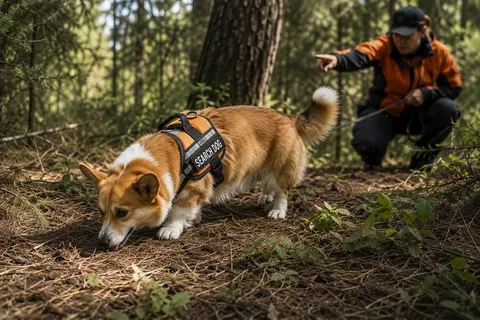
Searching for people is a more advanced area of work.
In its simplest game form, one person hides and the dog is sent to find them. You start with very short distances: the dog sees a familiar person walk behind a tree or around a corner, then receives a cue to search.
Gradually the tasks become more difficult: the person hides farther away, wind direction changes, there are forks in the path, distracting smells and unfamiliar locations.
These sessions can evolve into several directions:
- searching for a person by their individual scent;
- following a laid track;
- area search;
- sport tracking;
- search-and-rescue training.
A corgi can do amateur search and tracking work. Long legs or great physical strength aren’t necessary here; what matters far more is interest in searching, persistence, independence and willingness to cooperate with the handler.
But there is a huge difference between a fun “find the owner” game and real search-and-rescue work. A working SAR dog must maintain focus under difficult conditions, be steady around people, vehicles and noise, be in excellent physical condition and complete specialized training with their handler.
For most families, it’s better to start with amateur search games or tracking under the guidance of a trainer.
Obedience and Rally Obedience
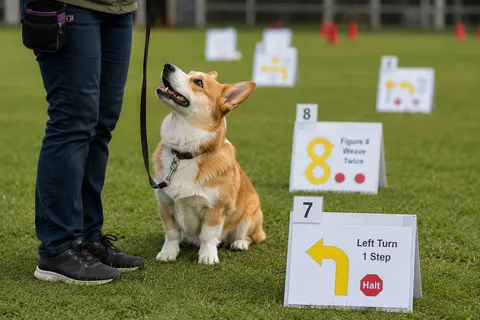
Obedience is a sport discipline based on precise performance of a set of exercises. The dog heels, takes various positions, stays in place, works on distance cues, retrieves objects and performs in the presence of distractions.
This is more than basic pet manners. In obedience, precision, attention, reaction speed and the quality of teamwork between dog and handler are all evaluated.
Corgis often do very well at this type of task. They learn quickly, watch their person closely and can remember long behavior chains. But they also tend to ask, “Why should I repeat this again?”, so monotonous drills can quickly lower their motivation.
It’s better to structure sessions in short blocks, change exercises frequently and reward generously for good work.
Rally obedience is usually easier for beginners to approach. Dog and handler follow a course with signs, each indicating an exercise: a turn, halt, sit, weaving, change of pace, or another task.
Unlike classic obedience, the handler in rally can usually talk to the dog more freely and encourage them throughout the course. That’s why rally is a good choice for owners who want to try sport obedience without the feel of a strict exam.
The Israel Kennel Club lists working dog tests and trials among its official activities; its materials also mention rally obedience as a separate canine discipline. However, specific groups and trials may be irregular, so it’s best to look up current activities in the club’s calendar and ask local trainers.
Dog Dancing and Trick Training
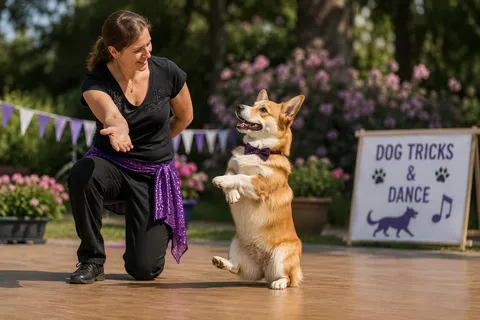
Dog dancing, or musical freestyle, combines elements of obedience, trick training and movement to music.
The dog can circle around the handler, heel in different positions, move backwards, spin, weave between the handler’s legs, bow, retrieve items and perform a small choreographed routine.
For corgis, this can be an excellent pastime. Many of them love attention, learn tricks quickly and enjoy performing for an audience – especially when there’s a worthy reward waiting backstage.
You don’t have to prepare a full dance routine right away. You can start with simple exercises:
- nose targeting to the hand;
- circling an object;
- spinning both ways;
- backing up;
- resting the head on a hand;
- choosing the right object;
- putting toys away in a box.
Trick training develops coordination, focus and mutual understanding. It’s especially convenient because you can practice at home without buying expensive equipment.
When choosing tricks, it’s important to consider a corgi’s build. Frequent rearing up on the hind legs, sharp turns on slippery floors and repetitive high jumps should not become the core of your sessions.
In the Israel Kennel Club’s regulations there is a separate discipline, “Dog Dancing”, and the club’s educational materials include dancing and trick training. This shows that the sport is known and developing in the Israeli dog community.
Treibball — Herding Without a Flock
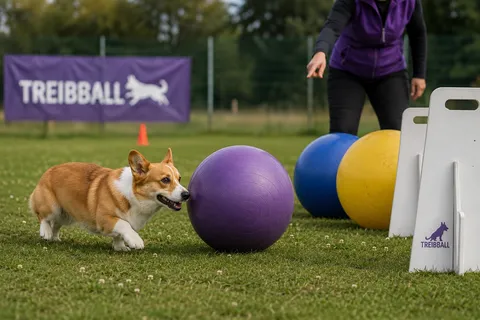
Treibball is sometimes called urban herding. Instead of sheep, several large exercise balls are used. The dog must, on the handler’s cues, go around the right ball, take the correct position and push it with nose or shoulder towards a goal.
This work requires:
- the ability to work at a distance;
- to distinguish directions;
- to listen to cues;
- to control arousal;
- to solve the task step by step.
Treibball taps into a herding dog’s tendency to control moving objects but doesn’t require access to real livestock.
Corgis can absolutely enjoy this activity, but the ball size must be chosen so it’s comfortable and safe for the dog to push. The dog must not be allowed to bite the ball, slam into it at high speed or work constantly on slippery surfaces.
In Israel, treibball is not yet among the most common disciplines, and finding a regular dedicated group can be difficult. But you can easily learn individual elements with a trick training instructor or on your own after studying correct techniques.
Canicross and Running Together
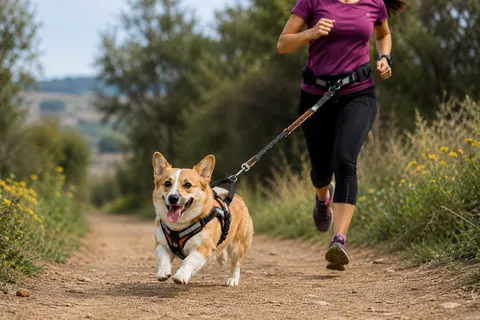
Canicross is running where the dog moves ahead of the person in a special harness, connected by a bungee line.
This is not the most obvious sport for a corgi. Some fit adult dogs are happy to run short distances, but the breed’s structure demands caution.
You shouldn’t ask a corgi to pull a heavy human, run long distances on asphalt, or train in the heat. For many corgis, easy running alongside their owner is more appropriate than classic pulling work.
In Israel’s climate it is especially important to choose cool times of day, consider surface temperature and always have water on hand. In summer, even evening can remain too hot for intense exercise.
Puppies, senior dogs, overweight corgis and dogs with joint or spinal issues should not start running programs without consulting a vet.
Swimming and the Underwater Treadmill
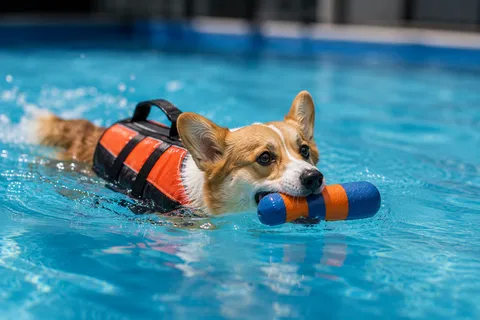
Swimming helps strengthen muscles without the impact on joints caused by running and jumping.
But not all dogs are natural confident swimmers. Some corgis are afraid of water, panic, or try to keep the front of their body too high, tiring quickly.
Supervised pool sessions at a canine facility help the dog learn correct movement in water and feel more confident. A life jacket is often used, especially at the beginning.
An underwater treadmill allows you to control water depth and belt speed. The water partially supports the body while its resistance makes the muscles work harder. Such sessions can be used both for conditioning and as part of rehabilitation programs.
However, pools and underwater treadmills are not a universal cure. In cases of pain, lameness, post-surgical recovery or neurological issues, a rehab-certified veterinarian must design the program.
We wrote about our sessions in a canine pool and on an underwater treadmill in the article “Strong Back, Strong Legs: Why Corgis Need Regular Physical Exercise”
Cavaletti, Balance and Coordination Work
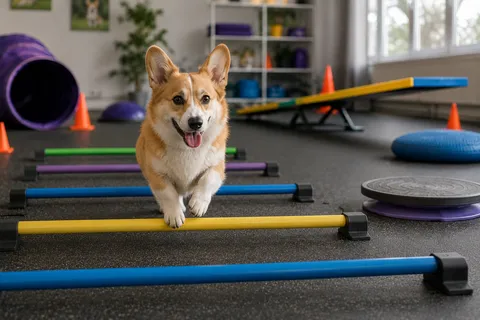
Not all dog activities have to be fast.
Cavaletti are low poles that the dog steps over at a calm walk. They help the dog pay more attention to paw placement, lift the limbs and maintain an even rhythm.
Also useful are:
- slow weaving between cones;
- front paws on a low platform;
- moving the hind legs around a platform;
- shifting weight from side to side;
- calm walking over different safe surfaces;
- backing up.
These exercises can strengthen core muscles and improve coordination, but only if done correctly. Poles that are too high, slippery floors and too many repetitions turn a beneficial session into unnecessary strain.
If exercises are used for rehab or gait correction, they must be prescribed by a specialist.
Hiking and Trail Walks
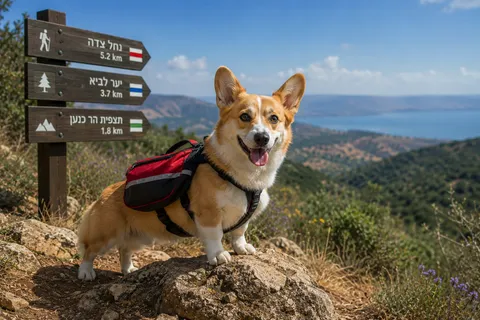
For many corgis, the best “club” is hiking together.
New trails provide several types of workload at once: walking over uneven ground, new smells, the need to choose a path and constant interaction with the owner. But hike length must match the dog’s fitness level, not the person’s desire to log a certain number of kilometers.
In Israel it’s especially important to consider:
- heat;
- lack of shade;
- scorching rocks and asphalt;
- thorny plants;
- snakes;
- ticks;
- water availability;
- areas where dogs must be on leash.
It’s better to start with short routes, take breaks and check paws regularly. A corgi will happily keep walking just to stay with their person even after getting tired, so it’s the human’s responsibility to ensure timely rest.
Our dogs love trips in nature, camping and sleeping in a tent. We talk about the most interesting routes we’ve hiked in Israel with dogs in the article “Walking With a Dog in Israel: 10 Corgi-Tested Routes”.
What If There’s No Suitable Club Nearby?
Not every owner can drive to a training field every week. But many valuable activities can be set up at home or in the yard.
For example:
- hiding treats and toys;
- teaching names of objects;
- setting up simple scent tracks;
- building a no-jump home obstacle course;
- learning new tricks;
- working with cavaletti;
- asking the dog to fetch items;
- teaching left and right;
- putting toys into a box;
- searching for a familiar person.
A good training session doesn’t require an hour of continuous work. Often, several five‑minute sessions throughout the day are enough.
It’s important to end the session before the dog loses interest, so next time they’ll look forward to training again.
How to Choose the Right Activity for Your Dog
Don’t choose a discipline just because it looks impressive on video or other owners enjoy it.
Watch your own corgi: one rushes into the tunnel with delight and eagerly waits for the next obstacle, another can spend half an hour searching for a tiny scent source, a third is happy to learn tricks endlessly for a piece of cheese, and a fourth sees sheep for the first time and suddenly shows behaviors no one ever taught.
You need to consider not only abilities but also:
- age;
- health;
- temperament;
- weight;
- arousal level;
- attitude to other dogs and people;
- the owner’s own characteristics.
A single unsuccessful first session doesn’t mean the activity doesn’t suit the dog. Sometimes they just need time to get used to a new place, instructor or equipment. But you also shouldn’t force a dog for months to do something that constantly causes fear or tension.
The best activity for a corgi is not the one where they earn medals fastest, but the one they’re happy to go to – and come home from relaxed and satisfied.
You can find more detailed information and contacts via the links below:
1. "ההתאחדות הישראלית לכלבנות"