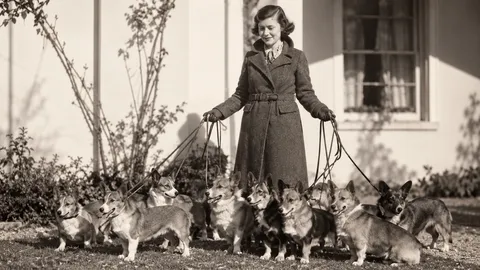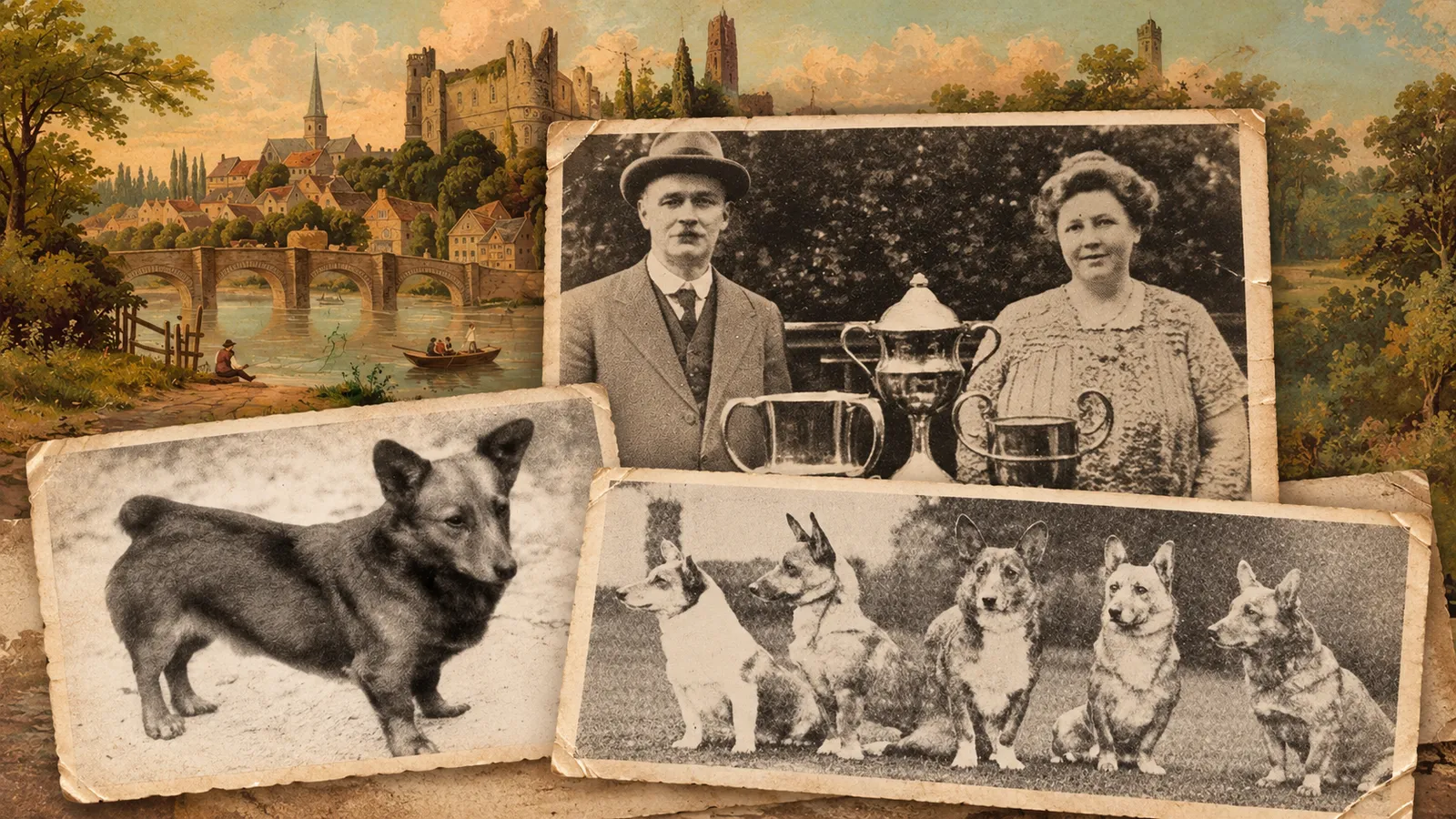
In 1925, the Pembrokeshire Welsh Corgi we know today did not yet exist.
On the farms of West Wales lived small working dogs. They herded and drove livestock, guarded the farmyard, caught rats, and accompanied their owners to market. They were called Corgis, but they were far from uniform in appearance: some were longer-legged, others shorter-legged; some had long coats, others short; some had tails, while others were born without them.
Freeman Lloyd, who grew up in Haverfordwest, recalled seeing dozens of these dogs accompanying farmers on market and fair days. For a small farm, the Corgi was an all-purpose worker — herder, watchdog, and ratter.
Only ten years later, Lloyd would marvel at how remarkably uniform the breed type of this newly recognised dog had already become.
One of the families at the very heart of this rapid transformation was Nellie and Sid Bowler.
Their kennel was called Bowhit.
A Conversation After the Dog Show
The story of organised Corgi breeding begins almost like an anecdote. Dai Rees, one of the people directly involved in these events, many years later recalled a Sealyham Terrier Club show in Haverfordwest.
After the show, several dog breeders went to the Castle Hotel. Sid Bowler was among them. There, the conversation unexpectedly turned to the future of local dog breeding: the popularity of the Sealyham Terrier was declining, and those present discussed what other Welsh breed might take its place. Someone remembered the old local dogs that had long been known in the area as Corgis.
D. T. Davies, who had grown up in Llangeitho, suggested that some of these dogs might still be found in that district. And indeed, several Corgis were located. According to Rees, however, they varied considerably in appearance: some were long-legged and some short-legged, some long-coated and some short-coated, some had long tails, some short tails, and some no tail at all.
Rees admitted that at that point the people involved did not yet know what kind of dog they wanted to produce.
The solution was to form a club.
On 15 December 1925, a meeting was held at the Castle Hotel in Haverfordwest that led to the creation of the Welsh Corgi Club. Among the aims of the new organisation were the promotion of pure breeding, the description of the desired type, the creation of a breed standard, and support for dog shows.
The people involved in drawing up the early breed description and scale of points included those who knew the local dogs well. Freeman Lloyd specifically names S. Bowler among them. Sid was therefore not simply one of the first owners of show Corgis — he belonged to the generation of people who had to answer a much more fundamental question: what should a pedigree Corgi actually be like?
Nellie and Sid Bowler
Bowhit belonged to Nellie Bowler, née White, and was a joint undertaking of the couple.
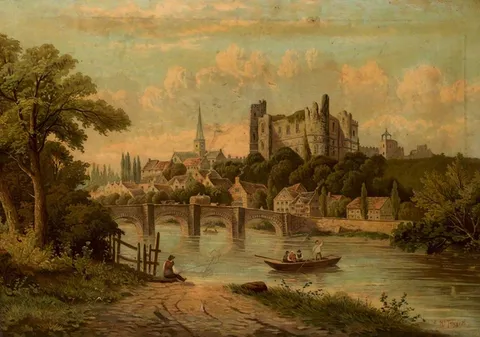
They lived at Benton House on Goat Street in Haverfordwest — a town that breed historian Simon Parsons calls the cradle of the Pembroke.
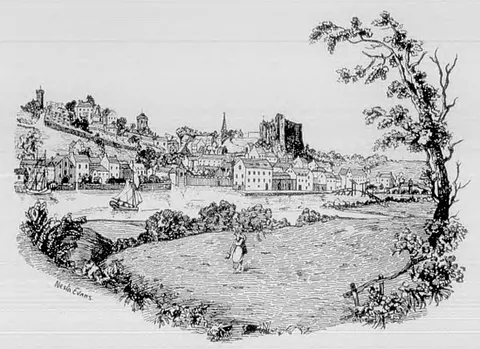
Sid, born in 1875, ran the large family grocery business on High Street.
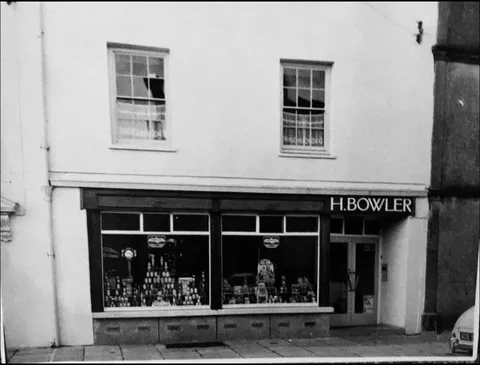
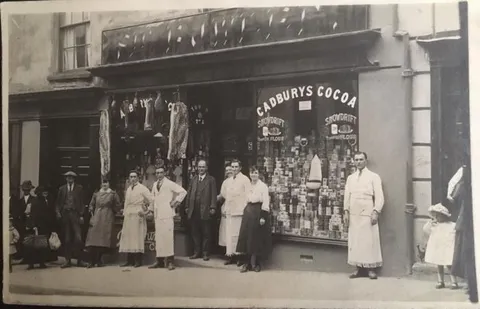
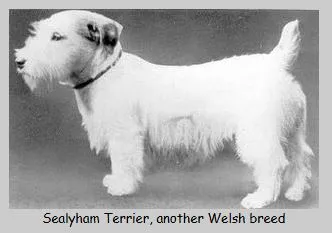
Before Corgis, the couple were already experienced breeders of another local Welsh breed — the Sealyham Terrier. Their Ch Bowhit Peter and Ch Bowhit Spargonie were successfully shown long before the Bowhit name became associated primarily with Corgis.
Later accounts and reminiscences often place Sid in the foreground: he was a club official, judge, and prominent public figure in early canine circles. Yet a publication about Bowhit from the mid-1930s gives us a somewhat different picture of how the roles within the kennel were perceived:
“For a number of years Mrs. Bowler, with the loyal support of her husband, Mr. Sid Bowler, has done remarkable work in popularising the smart little Pembrokeshire Corgi; probably but for them the Corgi would not have come so steadily to the front, where it is now sure to remain.”
The author then refers to the dogs as “Mrs. Bowler’s team”, listing her young dogs and their show successes.
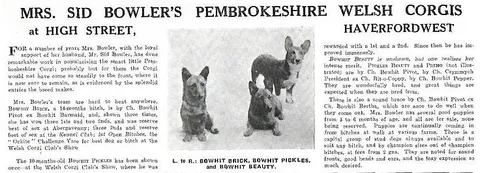
Breeding records also repeatedly list Mrs Sid Bowler as the breeder. It is therefore more accurate to see Bowhit not as “Sid Bowler’s kennel”, but as a family enterprise in which Nellie played a central role in breeding, while Sid was simultaneously her partner, a club organiser, a judge, and one of the people helping to shape the new breed.
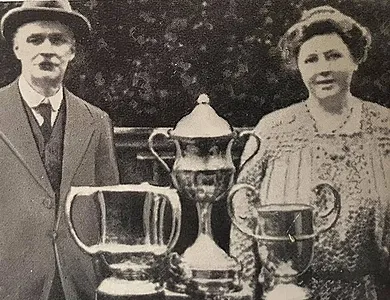
And before long, they acquired the dog that would change everything.
Ch Bowhit Pepper — the Dog That Made Bowhit Famous
Bowhit Pepper was born on 16 October 1926 — less than a year after the founding of the Welsh Corgi Club.
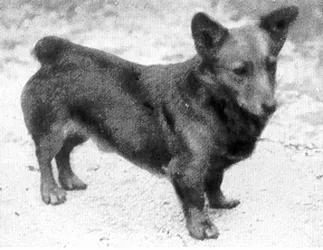
His sire was Caleb, one of the early stud dogs of the developing breed; his dam was the black-and-tan Glandofan Fury, whose ancestry remained unknown.
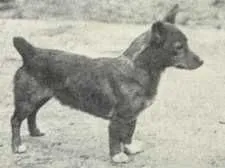
Today, that detail seems almost incredible: one of the most important sires in the history of the pedigree Pembroke had a dam of unknown ancestry. But in the late 1920s, this was far from exceptional.
When Welsh Corgis were first awarded Challenge Certificates in 1928, Pembrokes and Cardigans were still shown together. Moreover, among the dogs placed in the Limit and Open classes at the three championship shows that year, Bowhit Pepper was the only one that did not have unregistered parents on one or both sides of the pedigree.
The first show Corgis were still very close to the local working population from which the breed was being created.
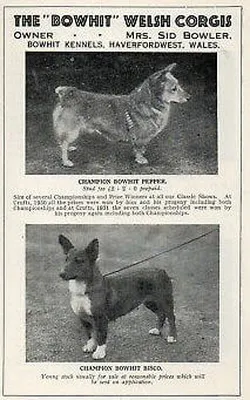
Pepper himself matured rather slowly. Two of his daughters — Shan Fach and Bowhit Bisco — gained their championship titles before he did, while among the males Bonny Gyp and Mirador Sensation also became champions before him.
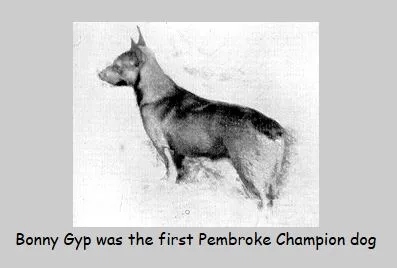
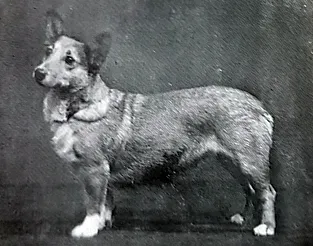
But as a sire, Pepper soon eclipsed the other early dogs.
The Pembrokeshire Corgi Handbook describes him as the outstanding stud force of his time and notes that Pepper probably appeared in more pedigrees than any other early Pembrokeshire Champion. His greatness lay not so much in his own show career as in his influence as a sire.
The First Corgi Champion Was a Daughter of Pepper
Shan Fach, a daughter of Bowhit Pepper, became the first champion among Corgis — before the official separation of the Welsh Corgi into two breeds, the Pembroke and the Cardigan.
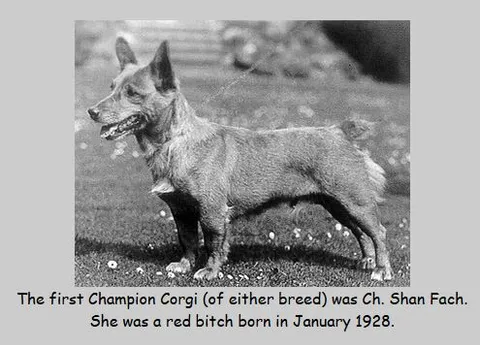
She was born in January 1928 and belonged to Miss E. Gwyn Jones. Shan Fach received her first Challenge Certificate in July 1928 at the South Wales Kennel Association show in Cardiff under judge J. M. Symmons, and her second in October that year at the Kennel Club show.
She was then sold to Oliver Jones, owner of the Pantyblaid kennel.
Shan Fach received the third CC that completed her championship at Crufts in February 1929.
The judge was Sid Bowler.
It makes for an almost symbolic scene: one of the people involved in shaping the early breed type awards the decisive certificate at Crufts to a daughter of his own Bowhit Pepper — and she becomes the first champion in Corgi history.
Pepper would eventually sire six Pembroke champions, but the count did not end there.
When the Brother Was a Pembroke and the Sister a Cardigan
Today, the Pembroke and Cardigan are two separate breeds with their own standards and closed breeding populations, but in the 1920s things were considerably more complicated.
At first, the Kennel Club registered the Welsh Corgi as a single breed divided into two types. Pembrokes and Cardigans were interbred, so Cardigan blood appeared in Pembroke pedigrees and vice versa. Sometimes there was even uncertainty over which type an individual dog should belong to.
In The Complete Pembroke Welsh Corgi, Pepper is described as one of the few notable dogs to appear in the pedigrees of both future breeds. The book also relates a remarkable episode: according to surviving accounts, at one of the early shows in Cardiff, Pepper was shown and won as a Pembroke, while his litter sister, called Jill in the book, was entered at the same show as a Cardigan.
Pedigree records add another intriguing detail to this story. Pepper does indeed have a recorded litter sister, born on 16 October 1926 to the same parents, Caleb and Glandofan Fury, but she is listed under the name Jinks. Even more remarkably, today her record can be found in databases for both Pembroke Welsh Corgis and Cardigan Welsh Corgis — and in the Cardigan database, both of her parents are explicitly identified as Pembrokes.
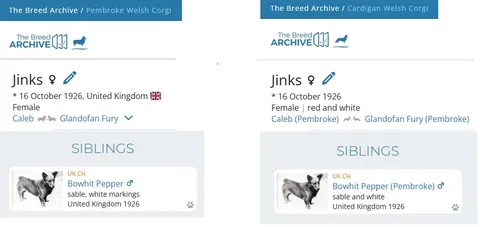
Jill from the book and Jinks from the database are most likely the same dog, although we have not found an explanation for the difference in names. But the confusion itself illustrates remarkably well the state of the breed in the late 1920s, when the boundary between Pembroke and Cardigan — so obvious to us today — was still taking shape.
The final official separation came only in 1934, and by then Pepper had already left his mark on both sides of the future divide.
A mating to Fancy, a daughter of the first male champion Ch Bonny Gyp, produced Ch My Rockin Mawer — a Cardigan champion.
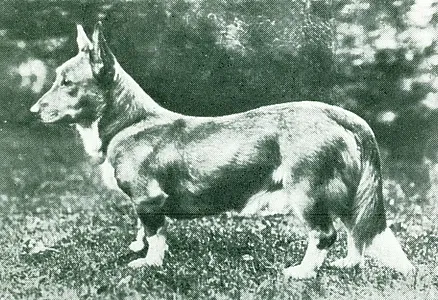
Thus, the seventh champion sired by Pepper was not a Pembroke at all, but a Cardigan.
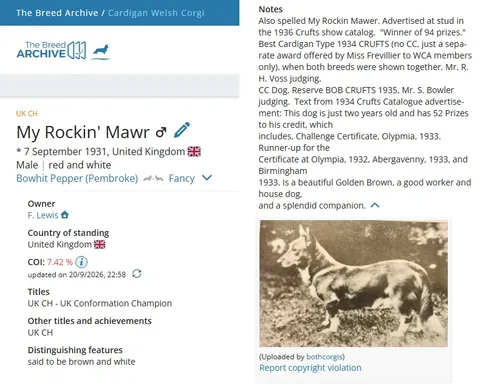
And the story did not end there: My Rockin Mawer later sired Defiant Girl of Merriedip, who won Best of Breed at a Pembroke Welsh Corgi Club of America Specialty.
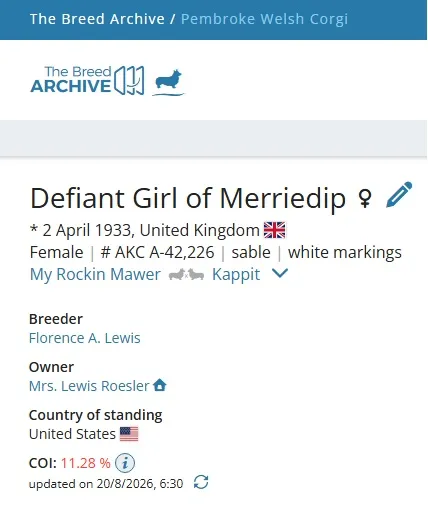
In short, the boundary between the two modern breeds was far more permeable then than we are accustomed to imagining today.
There Was Too Much Pepper
In The Complete Pembroke Welsh Corgi, Pepper, together with Ch Crymmych President and Ch Rozavel Red Dragon, is identified as one of the three major early sires upon whom many later lines were built.
But Pepper came first.
He was used so extensively that breeders eventually faced a very practical problem: where could they go next with dogs already heavily saturated with Pepper blood?
The answer appeared in 1929.
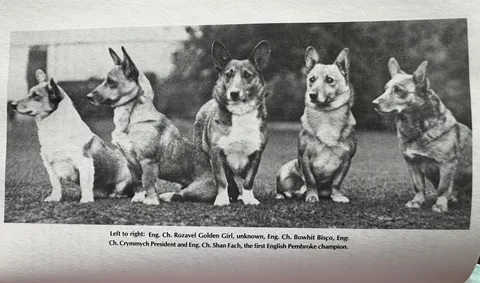
Ch Crymmych President was an important new sire and, crucially, unrelated to Pepper. He could be used with bitches whose pedigrees already contained Pepper too closely.
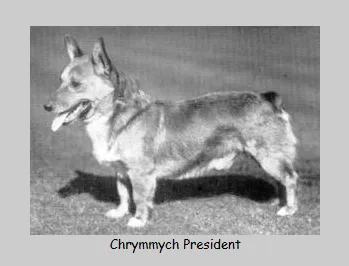
This marked the beginning of the next stage in the development of the breed.
Then came President’s son, Ch Rozavel Red Dragon, whom contemporaries regarded as another extraordinarily powerful breeding influence.
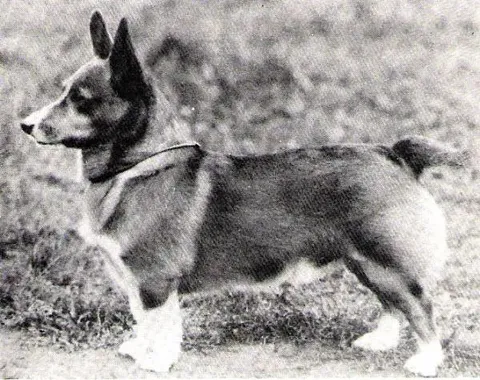
The early history of the Pembroke reveals a kind of succession: Bowhit Pepper → Crymmych President → Rozavel Red Dragon — not as a simple sire-to-son line, but as a sequence of stud dogs, each of whom had a major influence on the direction of the breed.
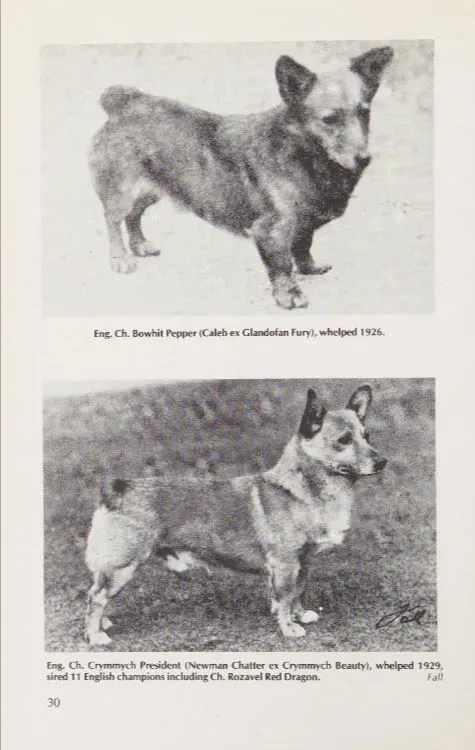
But the Pepper and President lines soon began to come together again, and one such combination would have an enormous impact across the Atlantic.
How Bowhit Was Organised
The same mid-1930s publication gives us an idea not only of the dogs at Bowhit, but also of how its breeding programme was organised.
At the time, Nellie Bowler had several puppies between three and eight months old, all of them offered for sale. The author adds an intriguing detail: “Puppies are continually coming in from bitches at walk at various farms.”
In British dog breeding, the expression at walk meant that a dog was not kept directly by the breeder, but lived and was raised by someone else — in Bowhit’s case, according to the text, on surrounding farms. The kennel’s breeding programme therefore extended beyond the dogs physically living in the Bowlers’ home. In some respects, this resembles the modern practice of co-ownership: Bowhit dogs did not necessarily live permanently with the Bowlers, while the kennel’s breeding programme could include animals living with different families and on different farms. The source, however, does not describe the ownership or breeding arrangements for these bitches.
The same publication says that Bowhit always had a group of stud dogs available “to suit any bitch”. Stud fees began at two guineas, and the dogs were particularly noted for sound fronts, good heads and ears, and the “foxy expression” considered so desirable in the Pembroke.
Together, these details give us a vivid picture of Bowhit: dogs living with the Bowlers themselves, bitches living on farms, a steady arrival of puppies, several available stud dogs, and the active spread of these bloodlines among other owners.
The presence of the Bowhit prefix in a dog’s name therefore did not always mean that the puppy had actually been bred by the Bowlers.
A good example is Bowhit Pivot.
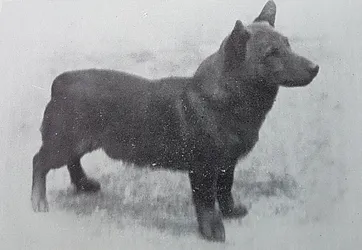
The Dog Who Changed His Name Three Times
The future Ch Bowhit Pivot was born on 4 May 1933. His breeder was Lord Hothfield, and his sire was Ch Crymmych President.
At Crufts in 1934 he was shown as Vipont Scamp. Sid Bowler bought him for Nellie, after which he became Bowhit Pivot.
The purchase proved exceptionally successful: in May 1934, Pivot won Best in Show at Carmarthen and soon afterwards gained his English championship title.
But he did not remain with the Bowlers for long. In early 1935, Pivot was sent to California to E. M. Tidd, where Sierra was added to his name.
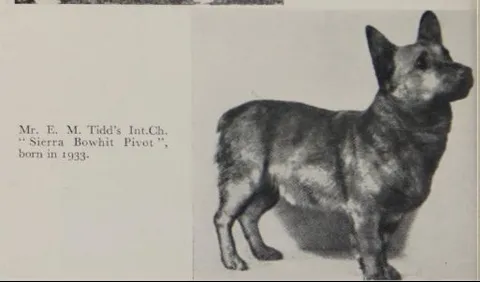
Sierra Bowhit Pivot became the first Pembroke to earn an American championship. In the United States, he was also the first Pembroke to place in the Working Group. A contemporary report in the AKC Gazette highlighted the combination of two of the breed’s most important early lines in his pedigree — Crymmych President and Bowhit Pepper.
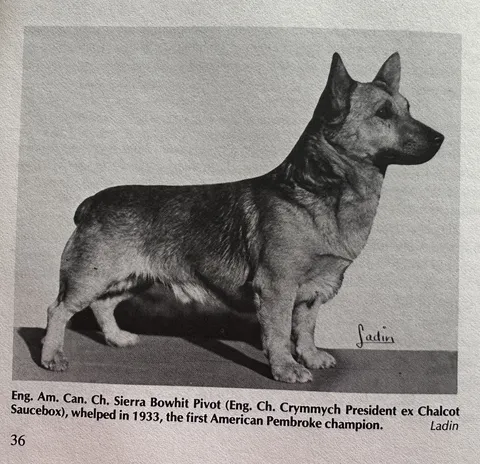
Before leaving Britain, however, Pivot had already sired numerous offspring.
Among them were Bowhit Primo, Booty, Brenda, Pim, Pilot, Beatie, Pickles, Dora of Penty-Parc, Rozavel Peggy Pivot, Mill Rose, Foxred Tarny, Miss Tip Toes, Golden Sarnita, and others. His daughter Rozavel Peony later became the foundation of the famous Lees line of Pat Curties.
His son out of Ch Cherry Bark went to America under the name Robin Hood of Down East.
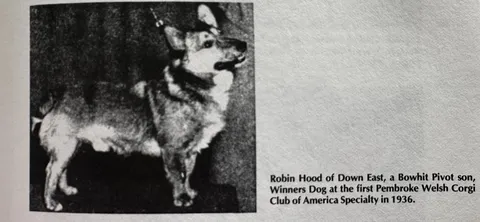
In 1936, at just 14 months old, Robin Hood won BOB at Westminster and placed third in the Working Group — an extraordinary result for a breed that had been virtually unknown to the American public only a few years earlier.
Little Madam Goes to America
Another American Bowhit story begins almost like a scene from a film.
In 1933, Margery Roesler, later Renner, spotted a small bitch at Paddington Station in London who had arrived from Wales with her owner, Mrs Lewis of Fishguard.
It was Little Madam.
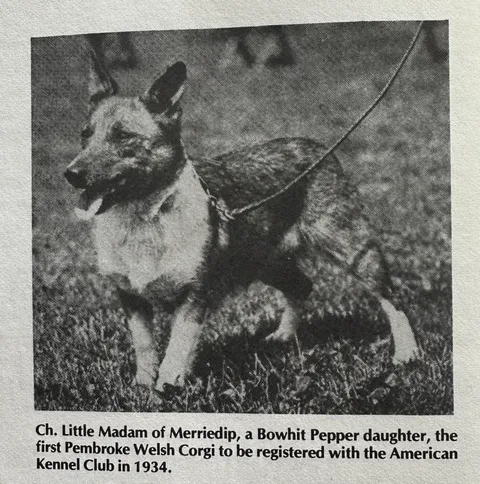
Roesler bought her there and then for £12.
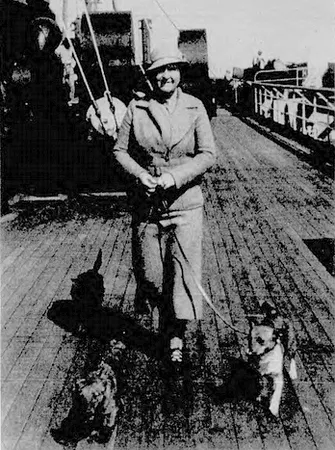
Little Madam had been bred by Nellie Bowler and descended from Bowhit Pepper. In the spring of 1934, she travelled to the United States together with Captain William Lewis. She became the first Pembroke registered with the American Kennel Club, and later the first Pembroke bitch to earn an American championship.
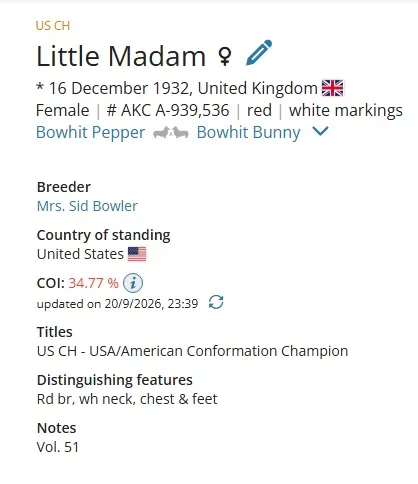
Pivot became the breed’s first American champion, with Little Madam becoming the second.
Later, Little Madam was bred to Ch Bowhit Punter of Merriedip, another son of Pepper. Their descendants continued the Merriedip line through subsequent generations of American dogs.
Pepper entered the early American population through several routes at once — through Little Madam, Punter, Pivot’s pedigree, and other imported lines — and before long his blood was becoming concentrated there just as it had been in Britain.
Pepper + President — Now in America
One of the early American bitches, Toots, was a double granddaughter of Pepper and at the same time a half-sister to Crymmych President. When she was bred to Bowhit Pivot, the two major early lines — Pepper and President — were brought even closer together.
On 15 August 1935, the first AKC-recorded litter of American-bred Pembrokes was born.
Subsequent matings of Toots to Pivot produced Ch Sierra Vixen, the first American-bred Pembroke bitch to become a US champion, and Ch Sierra Bruin, the first American-bred male champion.
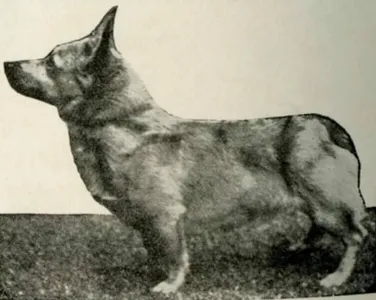
At this point, the influence of Bowhit was no longer simply the story of a Welsh kennel. It had become part of the foundation of a new Pembroke population on another continent.
Seven Champions in Eleven Years
By the mid-1930s, Bowhit could no longer be regarded as simply one of many early kennels.
In 1935, the Kennel Club registered around 420 Welsh Corgis, approximately 74 percent of them of the Pembroke type. At Crufts in 1936, 165 Corgis were entered across 12 classes — a record entry at the time.
Bowhit Brick won a particularly strong Open Bitch class.
Freeman Lloyd wrote that if this Challenge Certificate completed her championship, Bowhit had produced its seventh champion in eleven years.
Among the kennel’s champions and other notable dogs were Bowhit Bisco, Belle, Bertha, Pivot, Pompom, and Prince.
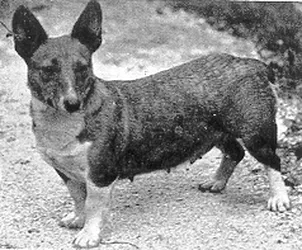
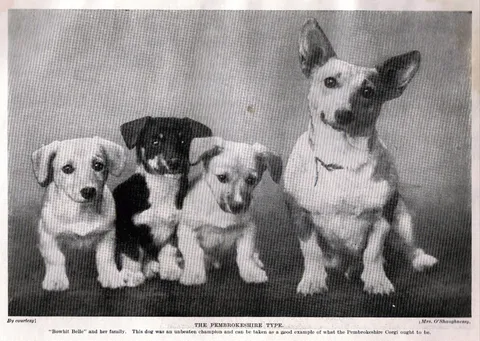
The kennel did not try to retain all of its best dogs, and this became one of the reasons for Bowhit’s enormous influence.
The Dogs They Did Not Keep
Today, a breeder may wait years for a promising puppy to retain in their own breeding programme. In pre-war dog breeding, however, adult dogs — even champions — moved between kennels much more readily.
Bowhit made full use of this practice.
Ch Bowhit Bisco was not only a successful show dog but also a valuable brood bitch whose name appeared in many pedigrees.
She later went to Thelma Gray’s Rozavel and was subsequently sold to New Zealand. There, Bisco became the first Corgi imported into the country. She and one of her daughters were later sold to Australia.
Bowhit Belle went to Fox-Red.
Bowhit Pompom — to Lisaye.
Bowhit Prince — to Teekay.
Pivot — to Sierra in the United States.
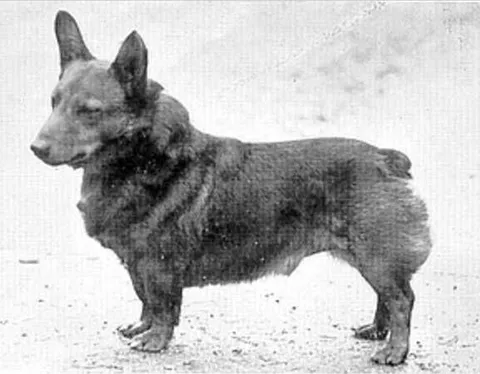
And these were only some of the best-known examples. Parsons notes that many other Bowhit dogs went to other kennels; males were usually given names beginning with P, while females were given names beginning with B.
Bowhit seemed almost to dissolve into other bloodlines.
One Corgi and a Box of Chicks
Sometimes a single surviving story tells us more about a dog than a list of titles ever could.
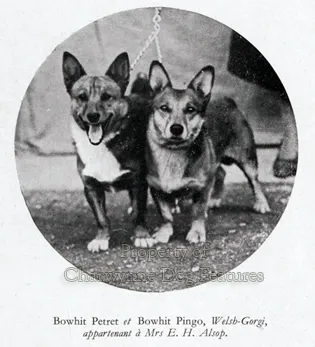
Soon after the outbreak of the Second World War, Pompom was given to a former Lancashire police sergeant living near Horsham. He had been in his new home for only a few days when his owners, already away from the house, suddenly remembered that they had left him in the kitchen with a box of day-old chicks.
They returned home fearing the worst.
But there had been no need to worry. The box was empty, the chicks had climbed out and settled around Pompom, while he lay calmly among them. One chick had even made itself comfortable on his head. Not a single bird had been harmed.
In the recollection of the incident, the author wonders whether Pompom had decided that the chicks were now under his care, and ends the story with a short phrase:
“A true Corgi!”
From Wales to New Zealand
By the end of the 1930s, Bowhit’s influence could no longer be confined to Pembrokeshire, or even to Britain.
Through exported dogs and their descendants, the kennel’s lines appeared in the United States and Canada. Bisco went to New Zealand, and her line later continued in Australia. After the war, Bowhit Purser was among the first English imports to arrive in Australia.
At the same time, Bowhit was becoming part of the foundations of new British kennels. Through Rozavel Peony, Pivot stood at the beginning of Lees; Bisco entered Rozavel; Prince went to Teekay. Other dogs found their way into Fox-Red, Lisaye, Thorwill, and numerous less well-known lines.
By then, the story of Bowhit had ceased to be the story of a single kennel in Haverfordwest. Its influence travelled with its dogs — from one breeder to another and from one country to the next.
Sid Bowler — From Shaping the Standard to Judging
While Nellie concentrated on breeding, Sid became increasingly involved in the organisational life of the breed.
He was one of the people involved in the creation of the Welsh Corgi Club and helped formulate the early description of breed type. By the mid-1930s, he was already regarded as an authoritative judge: Freeman Lloyd described him as one of the best judges in England.
When a new organisation, the Welsh Corgi League, was formed in 1938, Sid — then chairman of the Welsh Corgi Club — supported its creation.
He was invited to judge the League’s first Open Show in 1939. A personal recollection of that show has even survived. Patsy Hewan, founder of Stormerbanks, recalled how her young Stormerbanks Cocktail first entered the ring “under Sid Bowler” and won, as she remembered it, six first prizes and around four cups.
Sid continued judging after the war.
Sid Bowler had a remarkable career in the breed: he was present during the earliest discussions about forming a club, helped define the desired Corgi type, judged the breed’s first champion, and later went on to judge dogs of the next era.
A House Full of Dogs
The history of Bowhit survives not only in pedigrees, catalogues, and show results, but also in much more personal memories.
Nellie and Sid Bowler’s daughter Thora, who later married William Jenkins, owner of the Thorwill kennel, recalled that their house always seemed to be full of dogs. Two of her father’s particular favourites were his champions Pepper and Prince.
That brief recollection adds something important to what other sources tell us about Bowhit. Behind the numerous champions, stud dogs, bitches living on surrounding farms, dog shows, and club work was an ordinary family life in which dogs occupied an enormous place.
For Thora, Bowhit was not a famous kennel from the history of the breed — it was simply the home in which she grew up, a home that was always full of Corgis.
Bowhit for Wales, Rozavel for England
Bowhit’s success coincided with a period when the Pembroke was rapidly transforming from a local Welsh dog into a popular British breed. In 1934, the Kennel Club registered 240 Pembrokes; two years later the figure had risen to 562, and by 1938 registrations were approaching one thousand. Growth continued after the war: 3,142 Pembrokes were registered in 1946, and by 1950 the figure had risen to more than four thousand.
The geography of the breed was changing too. The first Corgis from which the future Pembroke was developed had been sought in Pembrokeshire, but by the end of the 1930s major kennels existed far beyond Wales, while British dogs were being exported overseas.
The Pembrokeshire Corgi Handbook offers a particularly apt assessment of Bowhit’s place in this story. Writing about the extraordinary success of Thelma Gray’s Rozavel, author Clifford L. B. Hubbard describes it as the most successful Pembroke kennel in England and writes that Rozavel did for England and Scotland what Nellie and Sid Bowler’s Bowhit had done for Wales.
The comparison is particularly interesting because the two kennels were closely connected. Thelma Gray did not begin with a line isolated from Bowhit: dogs from the Bowlers entered Rozavel, among them Ch Bowhit Bisco, while descendants of Bowhit Pepper and Bowhit Pivot were used in the breeding programme. The success of the next generation of major English kennels therefore grew, in part, from breeding work that had begun several years earlier in Wales.
In this way, Bowhit gradually ceased to be simply one kennel in Haverfordwest. Its dogs spread among other breeders, and with them Bowhit’s influence spread first across Britain and then far beyond it.
The End of Bowhit
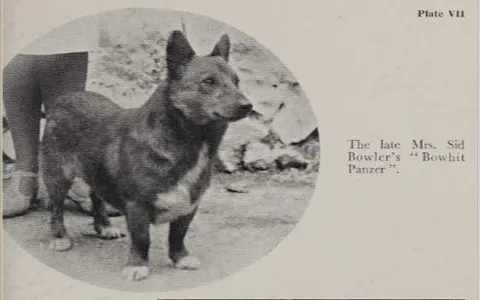
Nellie Bowler died in April 1947. Sid survived her, but after the war Bowhit itself gradually began to disappear from the show and breeding scene. Simon Parsons identifies Bowhit Budding, dam of two post-war Parmel champions, as the kennel’s last truly significant dog.
That might have marked the end of the kennel’s own story — but not the end of its influence. The direct male line of Ch Bowhit Pepper survived until around 1960, while in other branches of pedigrees his descendants had already become so numerous that Bowhit’s legacy could no longer be traced through any single line.
The authors of The Complete Pembroke Welsh Corgi put the result of this work much more simply: it would be difficult to find a Pembroke that did not have some Bowhit blood many generations back.
==========================================
Sources:
- The Pembrokeshire Corgi Handbook: Giving the Origin and History of the Breed, Its Show Career, Its Points and Breeding, Clifford L. B. Hubbard.
- The Complete Pembroke Welsh Corgi, Mary Gay Sargent.