
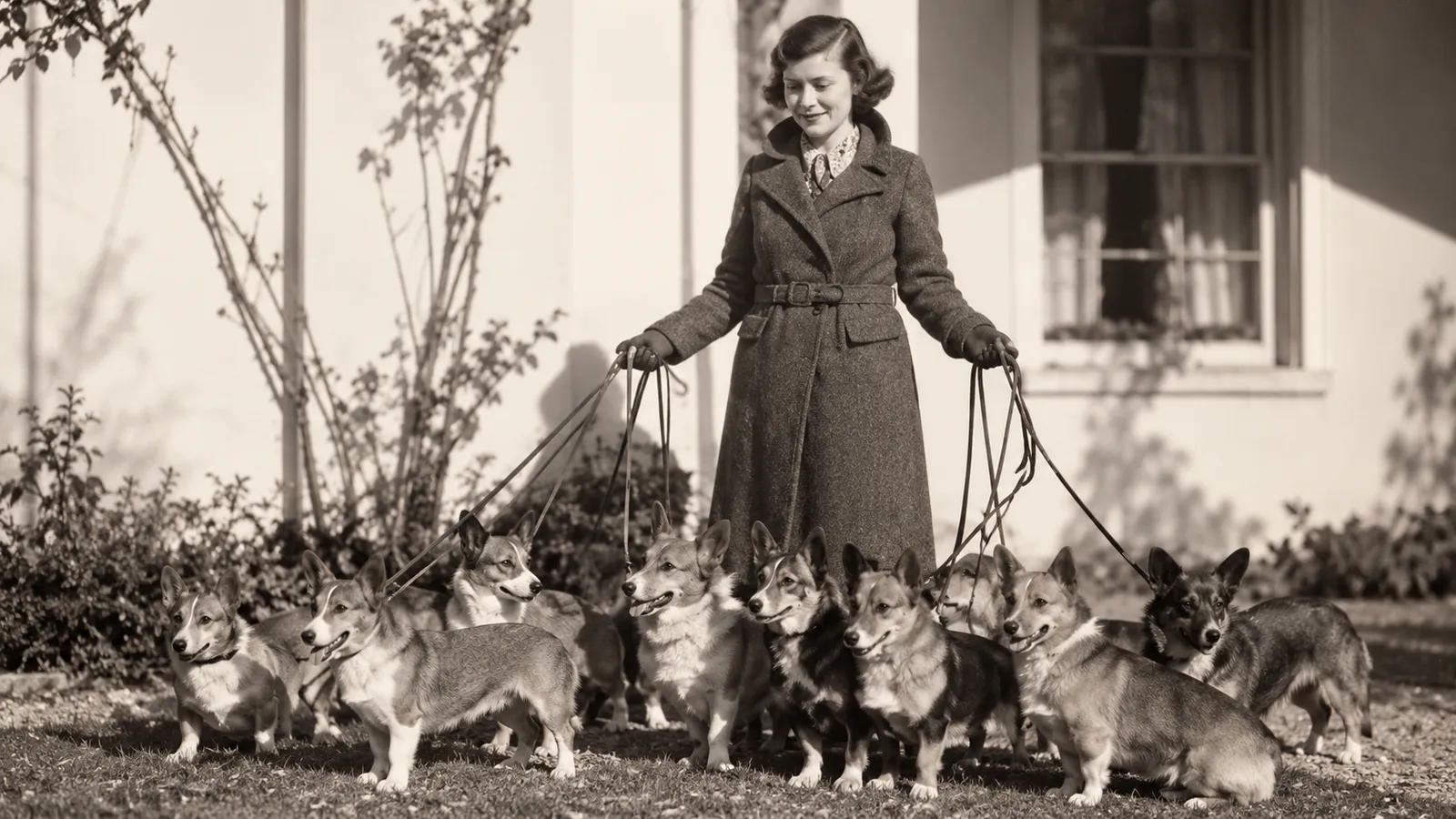
Today, the name Rozavel has to be sought in old stud books, yellowing show catalogues, and the pedigrees of dogs that lived many decades ago. The kennel itself is long gone. But start tracing the history of the Welsh Corgi backwards, and Rozavel appears again and again — in Britain and the United States, Australia and New Zealand, in the pedigrees of royal dogs and modern champions.
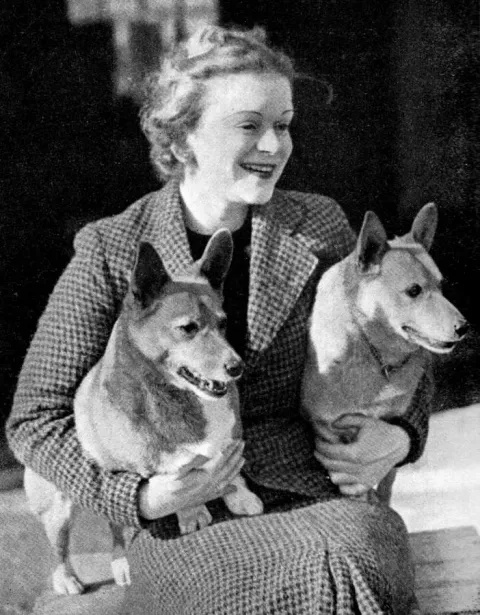
Behind that name stood Thelma Gray — breeder, judge, author of books and articles, one of the founders of the Welsh Corgi League in Britain, and a woman who witnessed an extraordinary period when the modern Corgi as we know it had, in many ways, yet to be created.
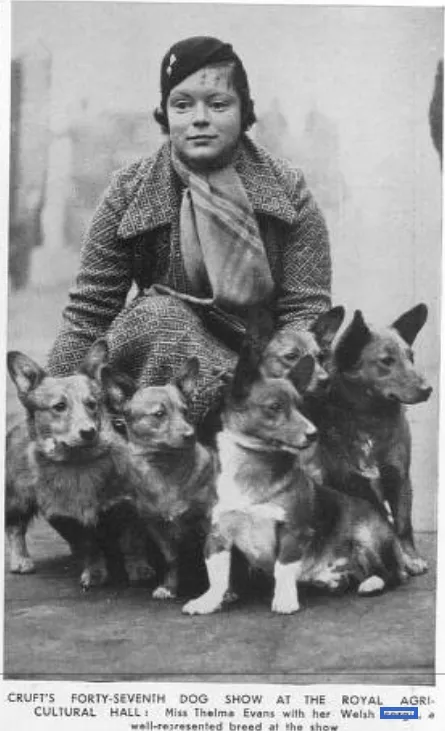
She began working with the breed when the Pembroke and Cardigan were still shown as two varieties of the same Welsh Corgi. She saw dogs brought directly from Welsh farms, took part in shaping breed type, debated acceptable colours, experimented with breeding, lived through the war together with her kennel and, almost half a century later, took the last representatives of Rozavel with her to the other side of the world.
And this story began long before the first Corgi entered the Royal household...
The Girl Who Wrote to a Future King
There is a story too good not to tell at the very beginning.
When Thelma Evans was nine years old, her dog was killed by a car. The owner of the car, the Duke of York — who, in an extraordinary twist of fate, would later become King George VI — was so distressed by what had happened that he wrote to Thelma’s parents offering to give the family another dog. However, “as little Thelma’s grief over the death of her pet was so great, her parents thanked the Duke and said that they thought it would be wiser not to have another dog.”
They told Thelma about their letter and, once the first shock of grief had passed, she decided to take matters into her own hands. Without telling her parents, she wrote to the Duke in the sprawling handwriting of a nine-year-old girl, explaining that she, for one, would be very happy to accept his offer of another dog.
She received a diplomatic reply saying that the Duke would have been delighted to give her a dog, but felt that they must both defer to her parents’ wishes!
We do not have the correspondence itself. The story was published only after the death of George VI, in Macdonald Daly’s 1955 book Royal Dogs, so it should be treated as a biographical account rather than as an event documented by surviving archival correspondence. But if it is true, it is difficult to imagine a more symbolic beginning to a relationship that, years later, would connect Thelma Gray with the British Royal Family for decades.
For now, however, the Royal Corgis were still a long way off.
In the late 1920s, the Welsh Corgi was still a young show breed. The Kennel Club recognised the Corgi in 1925, with Pembrokes and Cardigans initially regarded as two varieties of a single breed; they were not given separate status until 1934. Outside Wales, the little cattle dogs were far less familiar than they are today.
Thelma became interested in them during this transitional period.
In 1928, she registered the Rozavel affix. The name was not Welsh: Roz-Avel was the name of a seaside villa in Brittany where Thelma had spent time with her parents as a child. The Kennel Club would not allow the hyphen to be included in the registered affix, and so Roz-Avel became Rozavel.
Together with another enthusiast of the emerging breed, Barbara Douglas-Redding, who would later establish the Wolfox kennel, Thelma travelled from Surrey to Wales — journeys very different from a modern couple of hours on the motorway. The women travelled to Pembrokeshire, visited shows and breeders, and searched for dogs in small villages and remote farms. A later history of the Welsh Corgi League recalls that they sometimes drove back to Surrey accompanied by several newly acquired Corgis.
In effect, they encountered the breed where it had originated, before several generations of deliberate selection made it far more uniform.
The Red Dragon
One of Gray’s first important acquisitions was Ch. Crymmych President, born in 1929.
Then, in 1932, a male puppy was born to breeder Gwyn Jones, by President out of Felcourt Flame. He would become the most famous dog in the history of Rozavel.
Ch. Rozavel Red Dragon.
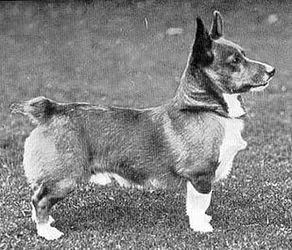
One detail is important here: despite his affix, Red Dragon was not bred by Thelma Gray. His breeder was Gwyn Jones. Gray acquired him, and from that point onward his story became inseparable from that of her kennel. Today, the Welsh Corgi League names him among the sires that helped establish a recognisable Pembroke breed type with remarkable speed. He won 12 British Challenge Certificates and left numerous descendants.
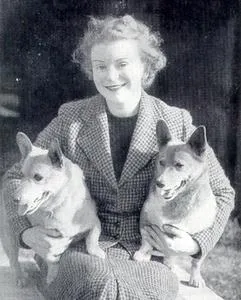
Just how influential a sire he became can be seen in the recollections of John Holmes, later the well-known breeder behind Formakin.
In 1932, Holmes, still a newcomer to the breed, wrote to Thelma Evans asking about Corgis and the possibility of buying a puppy. He later bred his brindle bitch Nippy of Drumharrow to the young Red Dragon.
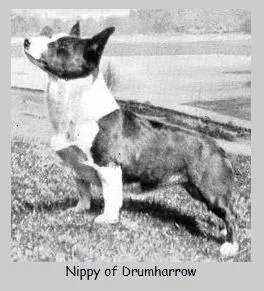
Gray liked Nippy so much that she kept a puppy from the mating — the future champion Rozavel Gwyneth.
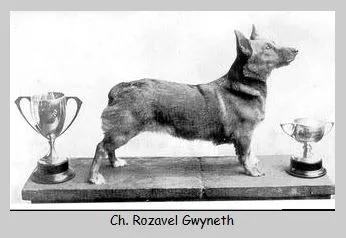
The mating was repeated many times: according to Holmes, Nippy produced almost forty (!) puppies by Red Dragon.
Red Dragon became one of those dogs whose influence gradually grew far beyond the boundaries of a single kennel.
One of his sons, Rozavel Rufus C.D., travelled to the United States with Margery Renner, became a champion there and was used extensively for breeding. Gray recalled that Rufus came from Red Dragon’s very first litter. Through him, one of the early branches of Rozavel crossed the Atlantic.
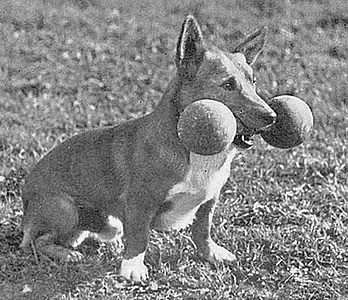
Another branch soon returned to Rozavel itself — and there Red Dragon appeared several times within the pedigree of a single dog.
When a Pedigree Becomes a Tool
One of the best-known sires of Gray’s next generation was Eng. & Am. Ch. Rozavel Lucky Strike, born in 1943.
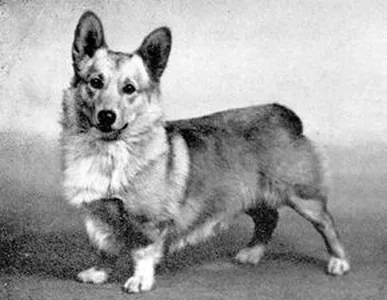
His sire was Red Dragon. But Red Dragon also appeared on his dam’s side: Lucky Strike’s dam, Rozavel Land Girl, was herself a daughter of Spring Robin — a son of Red Dragon. The famous sire was therefore both Lucky Strike’s father and his maternal great-grandfather.
Such pedigrees may look unusual to a modern reader, but early breeders were working with a small population and made extensive use of close linebreeding and inbreeding in an effort to establish the desired type.
What is particularly interesting is that Gray did not pretend that this approach brought only advantages.
In “The Welsh Corgi (Pembroke) in the Past”, published in the first issue of The Welsh Corgi League Handbook in 1946, Gray compared the Pembrokes of her own time with the dogs she had first encountered almost twenty years earlier. The early Corgis, she wrote, varied greatly in size; soft ears, poor fronts, incorrect bites, bodies that were too short, and different coat types were all seen.
Much had changed over two decades: fronts had improved considerably, soft ears had become less common, bodies and bites had improved, and overall type had become far more uniform. But the improvements brought new problems as well.
Gray noted that Corgis were becoming smaller and directly associated this trend with intensive inbreeding and linebreeding. In trying to fix particular traits, breeders used closely related dogs — and alongside the qualities they wanted, they sometimes fixed traits they did not want at all. Gray mentioned ears that had become too small, lighter bone and excessively narrow heads as some of the new extremes appearing as breeders worked to improve other aspects of conformation.
This is perhaps one of the most fascinating parts of Thelma Gray’s legacy: we can see not only photographs of the dogs that resulted, but also the thought process of a breeder watching a breed change almost in real time.
Her advice to fellow breeders still sounds remarkably relevant eighty years later: do not choose a stud simply because he happens to live nearby; study every dog and every name in the first generations of the pedigree.
The Corgi Comes to the Palace
Meanwhile, Rozavel had become known far beyond the show ring.
In 1933, the Duke of York and his wife decided to acquire a Corgi for their daughters — seven-year-old Princess Elizabeth and three-year-old Margaret. The girls had discovered the breed through the children of Viscount Weymouth, who owned a Pembroke, and their parents turned to the well-known breeder Thelma Gray.
Thelma brought three puppies for the family to choose from. The Duke of York probably saw before him simply a well-known Corgi breeder. Thelma, however, remembered perfectly well that, as a nine-year-old girl, she had once written a letter to this very man.
Standing before her was the man whose car had killed her dog many years earlier and with whom she had exchanged letters afterwards — but Gray said nothing. According to her later account, the Duke never learned that the well-known breeder who would help his family with Corgis for decades was the same nine-year-old girl who had once written to him.
Of the three puppies, the family chose a red male, Rozavel Golden Eagle, who became known at home as Dookie. He was later joined by Rozavel Lady Jane. Photographs of the young princesses with their unusual short-legged dogs appeared throughout the press, giving a breed previously little known to the wider British public a kind of publicity that money could never have bought.
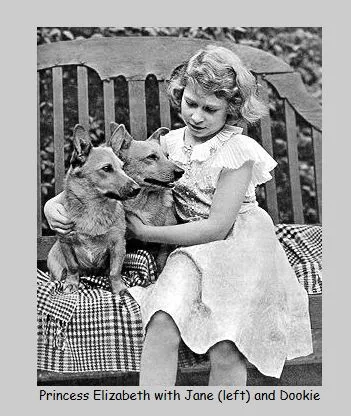
But Gray’s relationship with the Royal Family did not end with the sale of two puppies.
Jane was bred to Gray’s male Tafferteffy. Later, when Princess Elizabeth turned eighteen, she received another Pembroke — Susan, registered as Hickathrift Pippa. Susan became the foundation of Elizabeth II’s own line of Royal Corgis.
And for Susan’s first mating, the Royal household once again turned to Thelma Gray.
The chosen sire was Rozavel Lucky Strike. The mating produced Sugar and Honey, and the Windsor line founded by Susan would continue for 74 years and fifteen generations.
It became a remarkable exchange that continued for decades: Rozavel sent dogs into the Royal kennel, Windsor developed its own line using Rozavel blood — and years later, one branch of that line would return to Thelma herself.
But before that, Britain — and the kennel itself — had a war to survive.
War and Eighty Dogs
By the beginning of the Second World War, Rozavel was no longer a small home breeding establishment.
According to a later biographical account of the kennel, it housed around 30–40 Corgis and approximately 80 dogs in total. After the outbreak of war, the farm where Rozavel was based was requisitioned to accommodate Canadian troops, and the family was given just three weeks to move their child, dogs, furniture and other belongings. Some of the dogs had to be rehomed, several elderly ones were put to sleep, while others were placed in boarding kennels or entrusted to other people under breeding arrangements. Thelma herself was left with only around a dozen dogs.
The war almost brought organised canine activities to a halt. Yet just before this enforced interruption, Gray had managed to help create something that would prove even more enduring than any individual kennel.
A Club Born in a Drawing Room
The original Welsh Corgi Club had existed since 1925 and was based in Wales. For enthusiasts living in Surrey, regular journeys to Pembrokeshire were fascinating — but hardly convenient.
Corgis were also appearing increasingly often at English shows, and for organisers to provide separate classes for them, someone had to guarantee financially that enough entries would be received. Thelma Gray and Barbara Douglas-Redding had long done this themselves, but gradually another idea emerged: this was something a club should be doing.
On 21 June 1938, enthusiasts of the proposed new organisation gathered in Oxshott, Surrey. There was a great deal to be done: a name had to be chosen, rules drawn up, funds raised, challenge trophies established and officers elected. Thus the Welsh Corgi League was born, with Thelma Gray elected as its first chairman.
The young organisation had little money, so holding its own show initially seemed risky: if it made a loss, the League could lose a substantial part of its modest funds. Two vice-presidents, Mrs Biddlecombe and Mrs Croysdale, provided the solution by agreeing to guarantee the show financially and share any losses.
Thanks to them, on 20 April 1939 the Welsh Corgi League held its first breed show. There were twenty classes, the entry was remarkably large for the time and, contrary to the organisers’ fears, the show even made a profit. Sid Bowler, chairman of the Welsh Corgi Club, was invited to judge — another gesture reflecting the good relationship between the older club and the new League.
One of the most popular innovations was a separate obedience class for Corgis. It was won by Thelma Gray’s Rozavel Wild Rose, who was also named best bitch at the show.
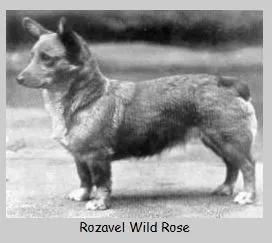
Years later, Gray would recall the circumstances surrounding the League’s birth with humour. But only months after those first shows, there was little to laugh about: war had begun. Eight months later, in February 1940, League members called an extraordinary general meeting to decide on emergency measures and arrange for the League’s trophies to be stored somewhere safe. Conditions were still normal enough, however, for the League to plan and hold one more limited show. It took place in May 1940, and the eight-year-old Red Dragon was awarded Best in Show.
After that, the war hit Britain with renewed force, and the League suspended its activities until June 1946.
The war changed Rozavel profoundly, but it did not bring its story to an end. As dog shows and organised canine life began to return to Britain, Thelma rebuilt her work with the kennel — and before long, the name Rozavel was appearing ever more frequently far beyond the country’s borders.
From The Rozavel Kennels to World-Famous Rozavel
Surviving advertisements allow us to see quite literally how Rozavel changed over the years. In one early advertisement, the kennel was still based at New Lodge, Reigate, Surrey, and anyone wanting further information was instructed to contact Miss Thelma Evans — Thelma had not yet married Phil Gray.
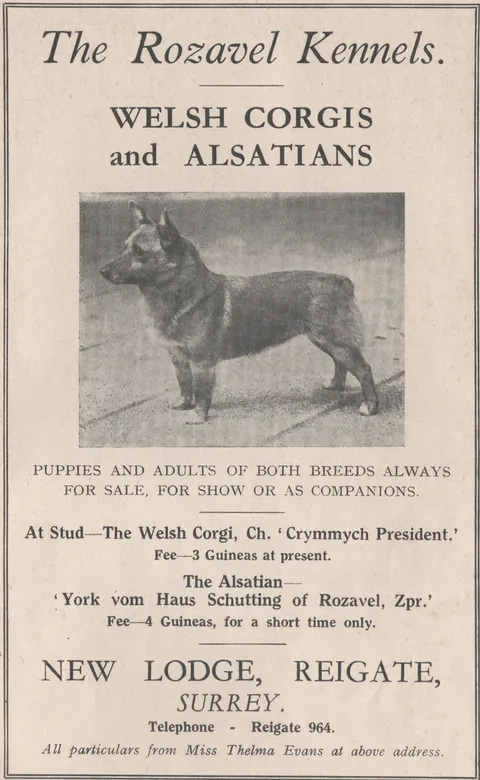
At the time, Rozavel bred not only Corgis but also German Shepherds, then commonly known in Britain as Alsatians. The advertisement offered puppies and adult dogs of both breeds “for show or as companions”. The principal Corgi standing at stud was Ch. Crymmych President — one of the most important Pembrokes from the early years of the breed. His stud fee was three guineas. Interestingly, the German Shepherd York vom Haus Schutting of Rozavel, advertised alongside him, commanded a slightly higher fee of four guineas.
A few years later, the kennel's publicity looked very different. A 1943 feature announced, with little attempt at modesty, “The World-Famous ‘ROZAVEL’”. By then, the kennel was based at Boveridge Farmhouse, Cranborne, Dorset, and its owner was identified as Mrs. Phil Gray. Smooth Fox Terriers had also joined the Corgis and German Shepherds.
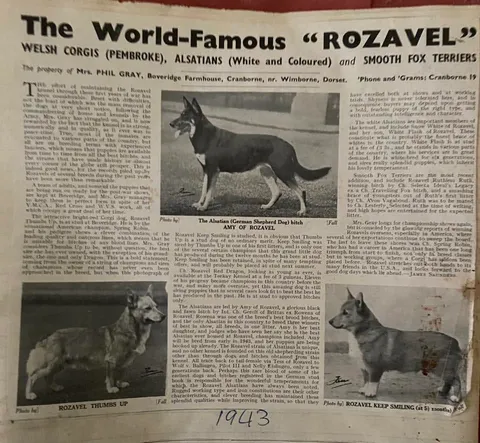
But more interesting than the list of breeds is what Rozavel took pride in about its dogs. The article stated that they had excelled both at shows and at working trials, and that shyness was never tolerated in the kennel. Buyers were told they could expect a bold, fearless puppy of the right type, with outstanding intelligence and character. For Thelma, a good dog was clearly about much more than attractive conformation.
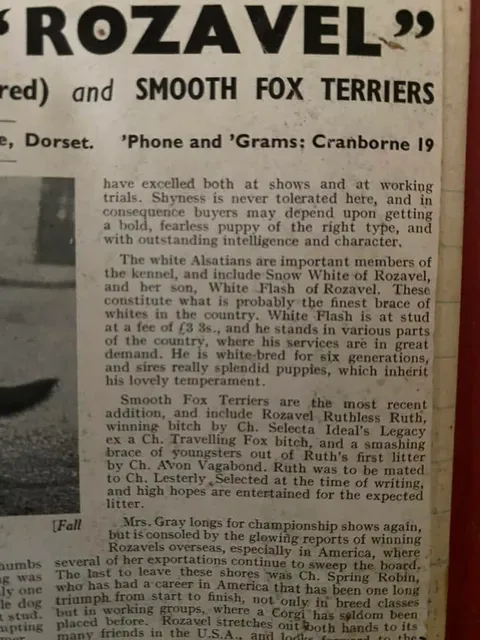
By then, the war had brought normal championship show life in Britain almost completely to a halt. The article noted that Gray longed for championship shows to return, while taking comfort in reports of Rozavel dogs winning overseas, particularly in the United States. Ch. Spring Robin was singled out for his successful American career, not only in breed classes but also in the groups.
The feature ended with a line that must have carried particular resonance in 1943: Rozavel “stretches out both hands to its many friends in the U.S.A.” and looks forward to “the good dog days which lie ahead.”
From Surrey Across the Atlantic
Gray’s connections with American breeders had begun before the war.
One of the key figures was Margery Renner, whom Thelma met around 1933–1934. The two women remained friends for decades, corresponded regularly and visited one another on numerous occasions.
Renner became one of the pioneers of the Pembroke Welsh Corgi in the United States. The already mentioned Rozavel Rufus, a son of Red Dragon, was among the early dogs to cross the Atlantic. After the war, when transporting dogs across the Atlantic once again became possible, Renner turned to Gray again, hoping to broaden the breeding base of American Pembrokes with British lines.
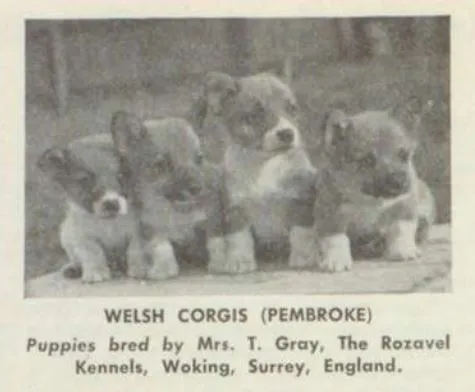
More British dogs followed. Particularly interesting were three littermates by Lucky Strike: Rozavel Lucky Fellow, Rozavel Uncle Sam and Rozavel Miss Bobbysox. All three went to the United States. Miss Bobbysox became one of the foundations of the future Kaydon kennel, while Uncle Sam went to the American kennel Waseeka.
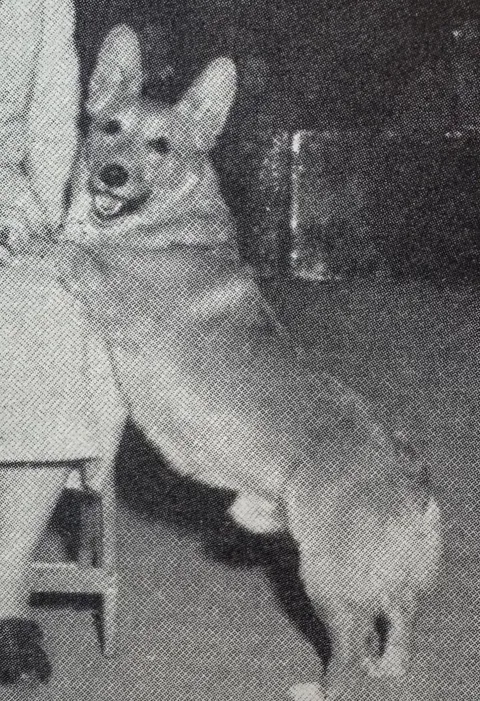
By the early 1950s, Canadian dog publications were already listing an entire group of North American dogs related to Lucky Strike, while advertisements for Kaydon emphasised that its dogs were linebred to the famous Rozavel sire.
The influence of a single English kennel was no longer a local story. It had crossed the Atlantic.
Yet Gray’s most unusual breeding project was perhaps not connected with the Pembroke at all.
How Rozavel Brought Back the Blue Merle Cardigans
Thelma Gray bred both Corgi breeds; one of her early Cardigans, Rozavel Blue Belle, was born as early as 1929. But her great dream was to own a Cardigan of the rare blue merle colour.
Before the war, blue merle Cardigans existed in Britain in the Geler line of Miss D. F. Wylie, who began breeding and showing Welsh Corgis in 1928. She firmly believed that the Cardigan type represented the old, original Welsh Corgi from the Bronant area — a small village in central Cardiganshire. In this remote countryside, Corgis had been bred for many years by farmers to drive cattle and Welsh mountain ponies, and it was from this area that Miss Wylie obtained the breeding stock she regarded as representing the purest and oldest Cardigan type.
Wylie was known for being reclusive and extremely reluctant to part with her dogs, which made obtaining a Cardigan from Geler difficult. The blue merle line proved particularly vulnerable.
In an article entitled Who Brought the Merles? Fairies or Collies?, published in the Cardigan Welsh Corgi Association Year Book in 1962, Gray recalled that all the good pre-war blue merle Cardigans known to her came from Geler. Among them were Ch. Geler Caressa and Ch. Geler Cledwyn. But by the time Miss Wylie was able to resume breeding after the war, the line that produced the colour had been lost. For several years, it seemed that blue merle Cardigans had disappeared from Britain forever.
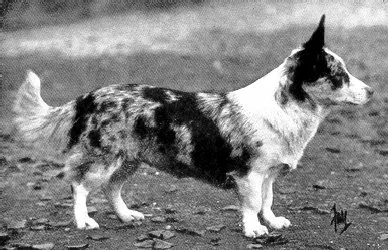
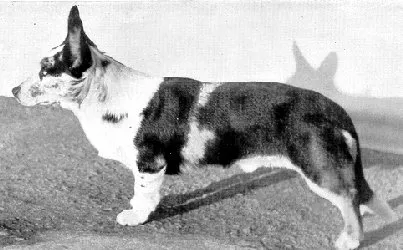
Then the colour unexpectedly reappeared — on both sides of the Atlantic. In California, a brother-to-sister mating between dogs descended from red and brindle stock unexpectedly produced blue merle puppies. Soon afterwards in Britain, Mr Jones of the Taxicar kennel bred a red male called Minor with one blue eye.
Minor was mated to a tricolour bitch, and the litter produced a beautifully marked blue merle male, Samswn Bach. According to Gray, he was the first blue merle to appear in British show rings since the pre-war champions Geler Caressa and Geler Cledwyn.
Samswn Bach was not an ideal Cardigan. Gray considered him somewhat too high on the leg, with small, pointed ears, although she praised his excellent coat and well-shaped triangular head. But he possessed something she had wanted for many years — merle.
Gray later explained her motivation very simply: all her life, she had longed for a blue merle Cardigan. So she decided to try to restore the colour while at the same time improving the conformation.
The ideal next step, she wrote, would have been to find a very good tricolour bitch for Samswn Bach. But tricolour Cardigans were scarce at the time, and Gray could not find a suitable one. She had to work with the breeding stock already available at Rozavel.
She had the red-and-white Goldie of Greenfarm, litter sister to Ch. Lisaye Rebecca of Greenfarm; Goldie’s brindle daughter Rozavel Cariad, sired by Ch. Withybrook Caesar; and a light red-and-white daughter of Cariad by Ginger of Rode. Gray mated the two young bitches to Samswn Bach several times. As she expected, the litters consisted mainly of light red puppies, some with one or two blue eyes.
The work took several generations. Gray bred the blue-eyed daughters back to their father, Samswn Bach. The desired result did not come every time, but in September 1956 one of the bitches, Brithwyn, finally produced two well-marked blue merle puppies — a female and a male.
The female died. The male survived.
And Gray gave him a name that seems to capture all the relief of those years of trying — Rozavel Blue At Last: “blue at last”.
Blue At Last was not perfect: he had an incorrect bite and therefore could not be shown. In other respects, however, Gray considered him a considerable improvement on Samswn Bach. He was very low to the ground, of ideal size, with an excellent coat, a good head and large, rounded ears. According to Gray, he did not pass the faulty bite on to his offspring.
But most importantly, merle was back.
Gray herself described Rozavel Blue At Last as the foundation from which the British blue merle Cardigans of her day descended. He became the sire and grandsire of numerous show winners, and by the time her article was published, three blue merles from the restored lines had already won Challenge Certificates.
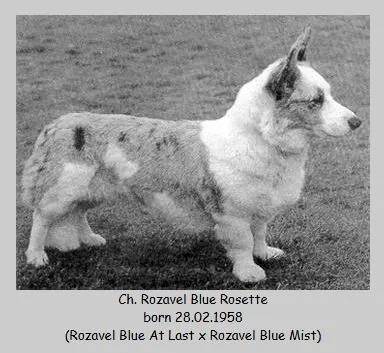
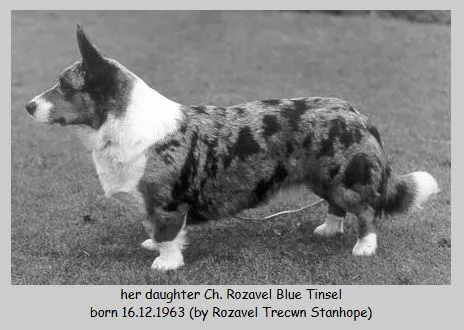
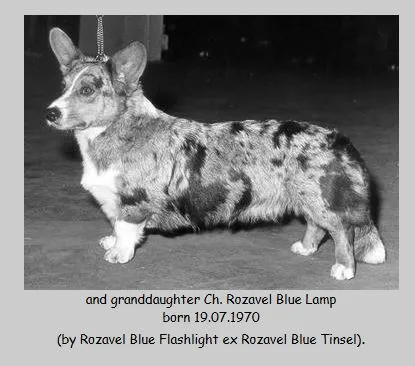
Blue At Last was followed by Ch. Rozavel Blue Rosette, then her daughter Ch. Rozavel Blue Tinsel, and her granddaughter Ch. Rozavel Blue Lamp.
The story of the post-war merles was also surrounded by controversy. Rumours circulated among breeders that the colour might have reappeared as the result of a relatively recent cross with a Collie, potentially introducing undesirable conformation traits into the Cardigan along with it.
Gray rejected this theory. She did not deny that, in the distant past, Corgis may have been crossed with Welsh Collies and other local dogs; indeed, she regarded such crosses as almost certain and pointed out that Pembrokes and Cardigans had continued to be crossed much more recently, right up until the breeds were officially separated in 1934. But she saw no reason to regard the post-war Samswn Bach as the result of a recent Collie cross.
As evidence, Gray pointed to the quality of the dogs that were being produced. In one of the best litters she had seen, Samswn Bach appeared five times in the pedigree, yet in her assessment the puppies remained typical Cardigans, with correct coats, heads and legs.
For Gray, restoring merle was important for another reason as well. By then, Cardigan breeders were already facing the problem of very narrow and repeatedly interwoven bloodlines. With such a limited breeding population, faults could become consolidated along with desirable traits. Gray regarded the restored merle lines as a source of additional genetic diversity that combined well with the successful Kentwood and Withybrook lines, already widely represented in the breed’s pedigrees.
Of course, when assessing Gray’s experiments in restoring the blue merle colour in Cardigans, it is important to remember that this work took place in the 1950s. It involved close backcrosses, and in her 1962 article Gray also considered merle × merle matings acceptable when undertaken with a thorough knowledge of the bloodlines and breeding stock. Today, such matings are considered unacceptable because of the risk of producing double merle dogs, which have a significantly increased risk of hearing and vision impairments. Modern genetics has given breeders knowledge and tools that Gray’s generation simply did not possess to the same extent.
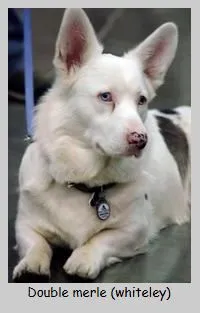
But the story did not end at Rozavel. Descendants of Rozavel Blue At Last made their way into other well-known kennels, including Beckrow and Kentwood, where the blue merle lines were developed further.
Gray ended her account almost like a fairy tale. She recalled the old Welsh legend according to which blue merle Cardigans had originally been brought by the fairies. If the legend was to be believed, she wrote, the fairies had taken them away again in 1939.
But after the war, it was the breeders who brought the blue merle Cardigans back — and this time, as Gray hoped, they were here to stay.
Far More Than Corgis
To judge Thelma Gray solely by her role in Corgi history would give a very incomplete picture of the scale of her life in dogs.
Over the years, she successfully bred and showed German Shepherd Dogs, Beagles, Chihuahuas, West Highland White Terriers and Rottweilers. Her interest in other breeds went well beyond showing and breeding. She wrote about them too: alongside several editions of The Welsh Corgi, her works included books on Beagles and Chihuahuas, as well as a book on the Alsatian (German Shepherd Dog), co-authored with Joseph Schwabacher.
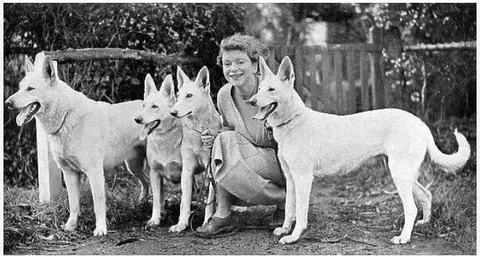
During the war, Gray also bred white German Shepherd Dogs — at the time, because of the negative associations with the word German, the breed was known in Britain as the Alsatian. According to later accounts, the white dogs were easier to see under wartime blackout conditions.
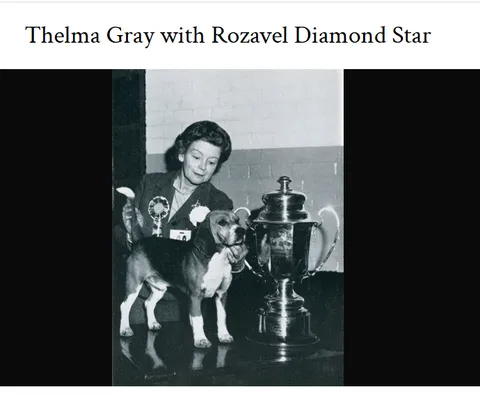
Beagles also played a far greater role at Rozavel than one might assume from the kennel’s place in Corgi history. Gray worked with the breed for many years, showed her dogs, and devoted an entire book to them — The Beagle, which went through several editions. One of the best-known Rozavel Beagles was the English champion Rozavel Elsy’s Diamond Jerry: he won three CCs, including one at Crufts, won a group, and for five consecutive years won the stud dog class at the American National Beagle Specialty. Among his descendants was Rozavel Diamond Star, whom we can see in a surviving photograph with Thelma Gray herself.
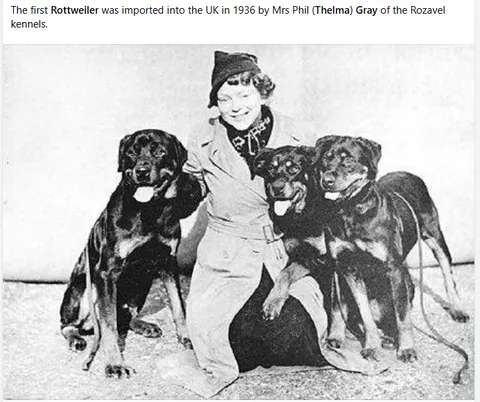
Gray was also present at the very beginning of Rottweiler history in Britain. The Rottweiler Club credits her with importing the first Rottweiler into Britain in 1936 — the bitch Rozavel Diana von der Amalienburg, SchH I. Gray imported several more dogs before the war, but they were sent to Ireland during the conflict and could not be traced afterwards.
She trained dogs, showed them and became an internationally known judge.
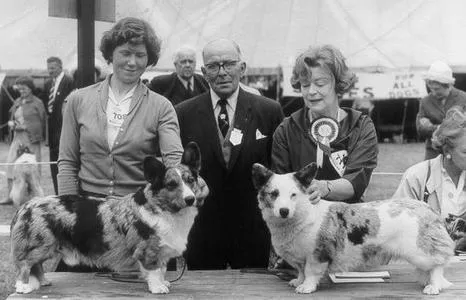
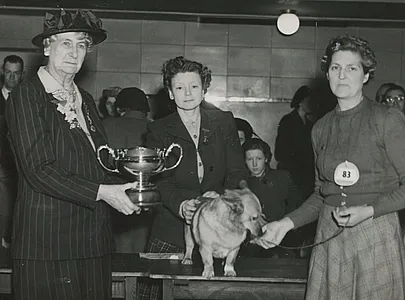
At Crufts in 1972, Gray judged the Working Group and awarded the group to the Pembroke Ch. Kaytop Marshall.
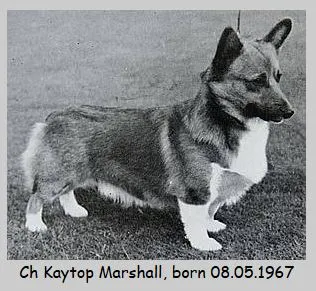
In 1975, Gray received one of the most prestigious judging appointments in the dog-show world — Best in Show at Crufts.
By then, almost half a century had passed since the registration of Rozavel. And that same year, a completely new chapter began in Thelma’s life.
From England to Australia
In 1975, Gray moved to South Australia with her son Jeremy.
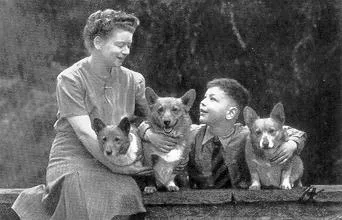
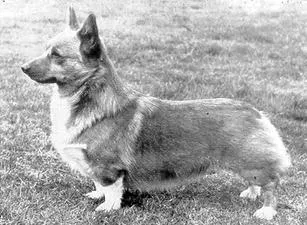
It could hardly be described as a quiet retirement. In the Adelaide Hills, she found a new home and established Rozavel once again. Back in England, the kennel had grown enormously, and deciding which dogs to take to the other side of the world was no easy matter. In the end, only two Corgis made the journey: Windsor Loyal Subject and his son Rozavel Roderick.
And here, a circle that had begun decades earlier came almost literally full turn.
Windsor Loyal Subject had been bred by Queen Elizabeth II. His sire was the famous Ch. Kaytop Marshall, his dam Windsor Brush, and behind Brush lay an old Rozavel line.
The Queen gave Loyal Subject to Thelma as a gift. She called him Edward and asked permission to show a dog carrying the Windsor affix. Permission was granted — an exceptional case, since the Queen’s other home-bred Corgis were not shown. Loyal Subject won two British Challenge Certificates.
But the story becomes even more interesting when Windsor Brush’s pedigree is traced backwards. Through Windsor Foxy, Windsor White Heather, Rozavel Honey Bee and Windsor Honey Bun, it leads back to Rozavel Lucky Strike and Susan — the same Susan with whom Elizabeth II’s own Corgi dynasty began.
The result is a remarkable genealogical loop: Rozavel Lucky Strike helped establish the Royal line. Several generations later, his descendant Windsor Loyal Subject returned to Rozavel as a gift from the Queen to Thelma Gray — and then travelled with her to Australia.
His son Rozavel Roderick, out of Rozavel Roberta, became an Australian champion. Another son from the same mating, Rozavel Robyson, went to New Zealand — yet another branch of the old Rozavel crossing an ocean.
Windsor Loyal Subject’s own story ended tragically. According to an account published later in Welsh Corgi News, he was killed in a fight with another dog when he was only a few points short of his Australian championship. We have been unable to find independent documentary confirmation of these circumstances, so we present them as the account of a later source rather than as a fact established by archival records.
The Last Rozavel
Although Thelma Gray was no longer young when she moved to Australia, she certainly did not become an honorary veteran content simply to watch dog shows from the sidelines.
John Holmes — the well-known breeder and founder of Formakin already mentioned earlier — met her at the Melbourne Royal in 1979, where Gray was both showing dogs and judging. When he visited her in the Adelaide Hills, there were only two Corgis, but plenty of Beagles, Chihuahuas and Rottweilers. A few years later he saw her at another show: the tent belonging to Gray and her son was surrounded by a pen that, in his recollection, seemed to be filled with dozens of Chihuahuas.
After the devastating Adelaide Hills bushfires of 1980, Gray joined other local dog enthusiasts in establishing the Adelaide Hills Kennel Club.
Even when she became seriously ill, her first concern was the future of her dogs. Holmes recalled that doctors had given her only a few months to live. Thelma had already found homes for her Beagles and Corgis, arranged for the Rottweilers, decided where the remaining Chihuahuas could go, and tried to put in order everything she could before her death.
When the two months the doctors had given her had passed, Holmes telephoned again. Gray was still joking: “They’re not finding it easy to get rid of me!”
Thelma Gray died in November 1984. Holmes wrote an obituary that ended with a memory of someone who always wanted to win, but whom he had never heard complain about losing — right to the end.
The story of Rozavel might have ended there.
It did not.
A Name That Remained in the Pedigrees
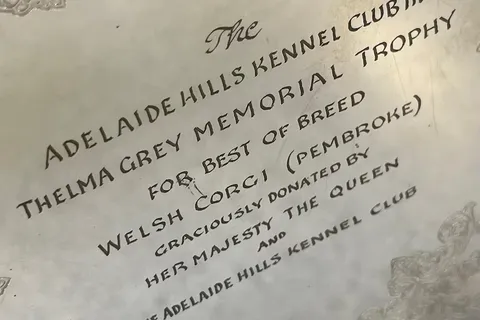
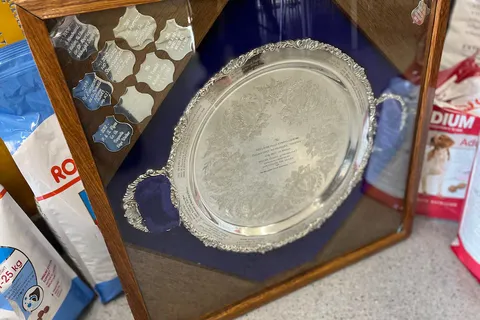
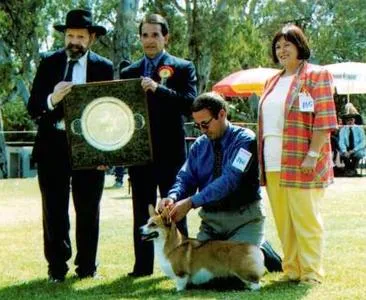
In 1985, the Thelma Gray Trophy appeared in Australia. The Adelaide Hills Kennel Club established a memorial show in her name, and in January 1986 Her Majesty Queen Elizabeth made a generous donation to the Club for the purchase of a perpetual trophy in memory of the late Thelma Gray, to be awarded to the best Pembroke Welsh Corgi at the show.
In Britain, the Welsh Corgi League still awards the Ch. Rozavel Red Dragon Memorial Challenge Cup for Best of Breed at its championship show. The League also has a separate trophy in Thelma Gray’s memory, awarded to the best puppy of the year.
But perhaps the most fascinating legacy of Rozavel is not kept in trophy cabinets. It is written into pedigrees.
The modern Corgi is, of course, no longer the same dog Thelma Gray saw in the 1930s. She herself understood perfectly well that a breed never stands still: as early as 1946, Gray wrote about how dramatically the Corgi had changed in just two decades. Over the following eighty years, the dogs’ appearance, breeders’ ideas and the tools available to them changed still further.
But the story of Rozavel reveals something else — just how long the work of a single kennel can endure.
The kennel itself is long gone. Dogs carrying the Rozavel affix remain in old photographs and the pages of show catalogues; Gray’s books have become bibliographical rarities; and almost no one who knew her and saw her dogs with their own eyes is still here.
And yet Rozavel did not disappear without a trace. Its lines spread into other kennels, crossed oceans, merged with dozens of other lines and became less visible with every generation. The name of a distant ancestor gradually receded deeper and deeper into a pedigree, until it became a tiny entry more than twenty generations behind a modern dog.
That is what happened with our own Eevee and Kaya. When we began tracing individual branches of their pedigrees further and further into the past, familiar names gave way to less familiar ones, then to dogs born earlier still, until eventually the chain took us back almost a century.
To a dog born in 1932.
To Rozavel Red Dragon.
===================================