A Little Preface
While working on this article, I came across an astonishing number of photographs of the Queen and her dogs scattered across the internet. The vast majority are protected by copyright, and purchasing the rights to use them would cost a truly royal sum.
That is why this article contains many links to photographs rather than the photographs themselves.
I hope this won't spoil your enjoyment of the story too much.
🐾🐾🐾🐾🐾🐾🐾🐾🐾🐾🐾🐾🐾🐾🐾🐾🐾🐾🐾🐾🐾🐾🐾🐾🐾🐾
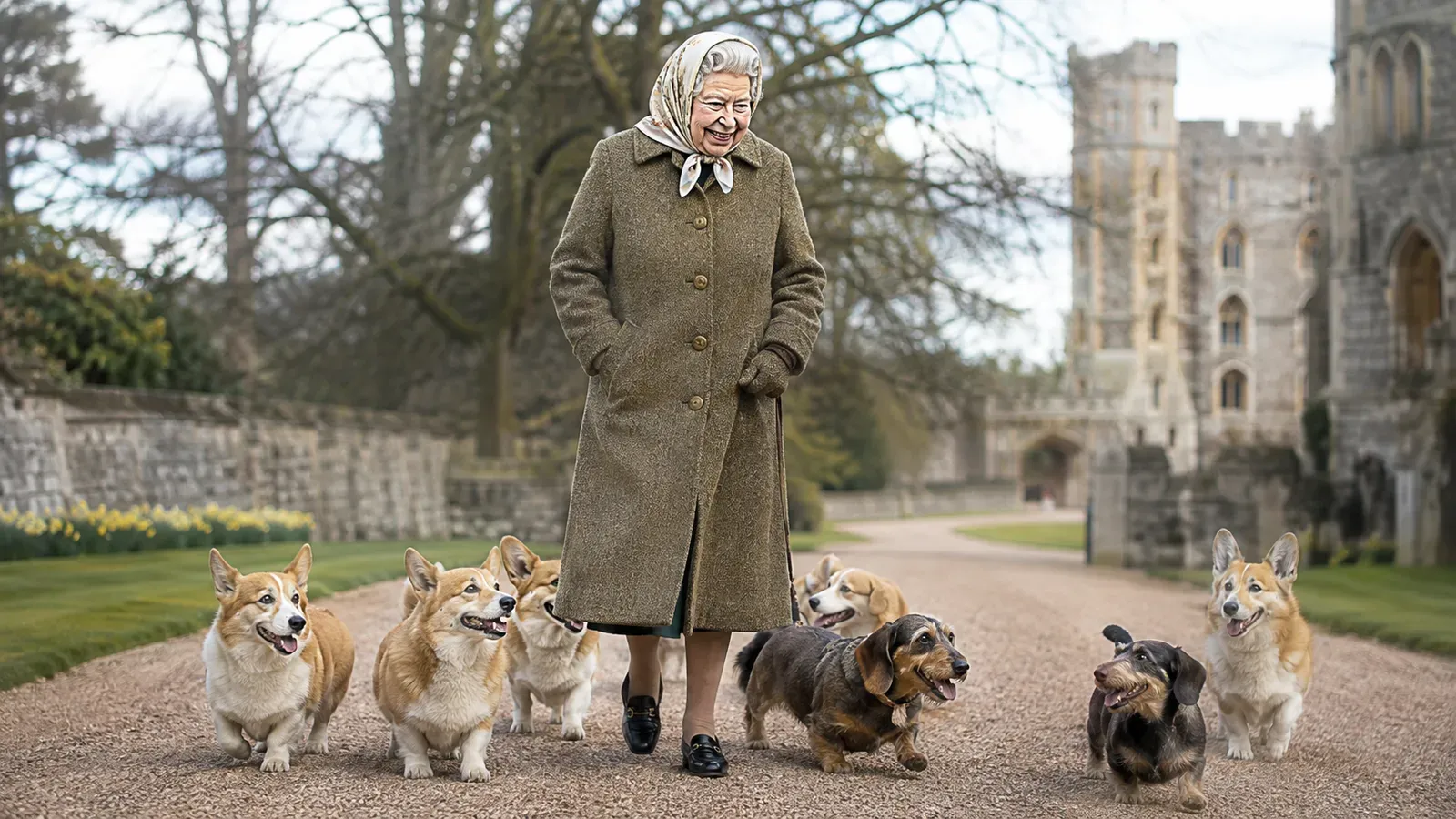
Corgis have long been one of the most recognisable symbols of the British monarchy. In photographs, Elizabeth II can be seen walking with them at Windsor and Balmoral, receiving guests, getting into cars and stepping off aeroplanes. The little red-and-white dogs became so firmly associated with the Queen that it is easy to imagine they had simply always been there.
But behind those photographs lies a story far more interesting than a monarch's lifelong affection for a particular breed.
Elizabeth II bred Pembroke Welsh Corgis herself. She studied pedigrees, selected stud dogs, worked with established British kennels, kept puppies for future breeding and, over several decades, maintained a line descended from a single bitch.
Her name was Susan.
She came into the future Queen's life in 1944, when Elizabeth turned eighteen. The last representative of that line, Willow, died in 2018.
Between them lay almost fifteen generations and 74 years of royal corgi history.
But the story began even earlier.
The Future Queen's First Corgi
In the early 1930s, corgis were not yet the world-famous breed they would later become. But the little Welsh herding dogs had already caught the attention of two young girls: Princess Elizabeth and Princess Margaret.
Elizabeth's first encounter with a corgi came through family friends. She and her younger sister Margaret played with the children of Viscount Weymouth (the future Marquess of Bath), whose family owned a Pembroke Welsh Corgi. The princesses liked the dog so much that they began asking their parents for one of their own.
In 1933, Thelma Gray, owner of the Rozavel kennel, brought three puppies to the Duke of York's London home in Piccadilly so that the family could choose their new pet.
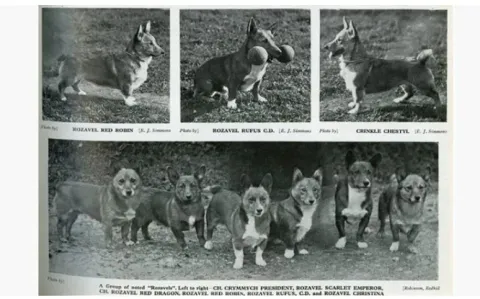
The family chose a red male, Rozavel Golden Eagle, who would become known as Dookie. According to Thelma Gray's recollections, the deciding factor was rather amusing: his tail was slightly longer than those of the other two puppies. The future Queen Mother explained her choice quite simply. She wanted the dog to have something to wag — otherwise, how could anyone tell whether he was happy?
And so the future Queen's family acquired its first corgi, chosen, in effect, for his ability to demonstrate a cheerful disposition more convincingly.
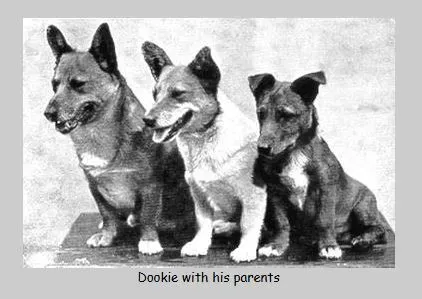
Thus the first Pembroke joined the Royal Family.
Dookie quickly became a genuine family pet. Princesses Elizabeth and Margaret fed him themselves, walked him in Windsor Great Park and taught him various tricks.
One trick was particularly impressive: Margaret would get down on all fours, and Dookie was expected to jump over her. A successful jump earned him a piece of chocolate cake.
From the perspective of modern dog training, absolutely everything about this story is wonderful: both the training method and the choice of reward. Today, of course, nobody would offer chocolate to a dog, but in the 1930s the dangers of theobromine, the substance found in chocolate, were nowhere near as widely understood as they are now.
And Dookie, apparently, had no objections whatsoever to the royal system of positive reinforcement. 😁
Dookie's arrival in the Royal Family unexpectedly became an advertisement for a breed still relatively unfamiliar to the general public. At first, British journalists did not always understand what sort of dog they were photographing beside the princesses. Dookie was variously described as a 'Labrador puppy', a 'Welsh sheepdog' and, particularly often, a 'Welsh terrier'.
But photographs of the royal pet appeared in major newspapers, the breed's name gradually became familiar, and demand for Pembrokes began to rise. According to contemporary recollections, puppies that had previously sold for 30 shillings or less soon commanded around four guineas, with the offspring of champions fetching even higher prices. The royal fashion for corgis began long before Elizabeth became Queen.
Before long, Dookie was joined by a female companion, Jane (Rozavel Lady Jane), also from Thelma Gray's kennel.
Dookie and Jane with Elizabeth, July 1936
Jane was later mated to another of Gray's dogs, Tafferteffy. In 1938, she produced two puppies, Carol and Crackers. Crackers subsequently lived with the Queen Mother.
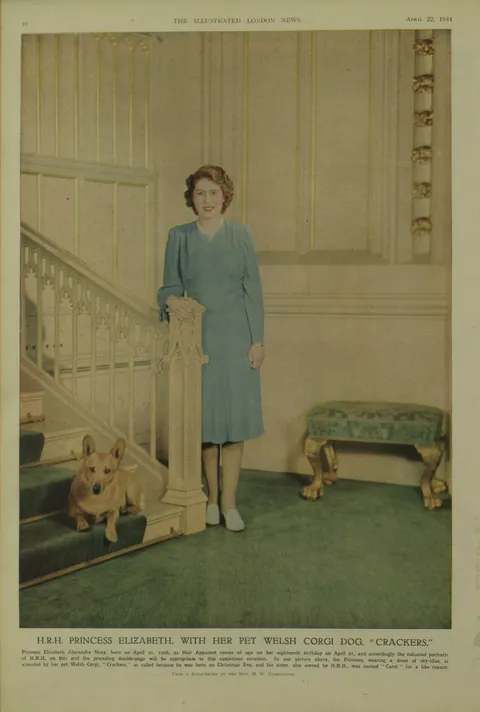
This first branch of royal corgis, however, did not continue.
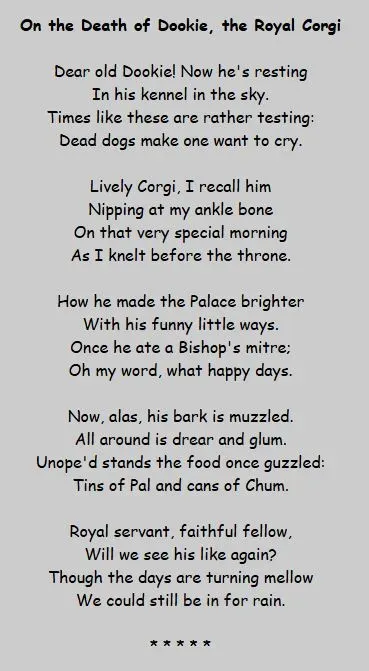
Dookie died shortly after the outbreak of the Second World War. Following his death, a humorous poem appeared entitled On the Death of Dookie, the Royal Corgi. It is often attributed to the well-known British poet John Betjeman, although there is no reliable evidence of his authorship, and it was most probably an anonymous parody of his style. The poem remembers Dookie as a cheerful corgi who bit people's ankles and once supposedly ate a bishop's mitre.
Jane outlived her companion Dookie by several years, but tragedy struck in 1944: she was accidentally run over by a car driven by a member of the Windsor Park staff. Elizabeth was deeply upset by the dog's death, yet wrote to the driver that very day to assure him that she was certain the accident had not been his fault.
Carol died young, and the other dogs left no descendants through whom the line could be preserved.
But that same year, another dog entered Elizabeth's life — and with her, an entirely different story began.
Susan — An Eighteenth Birthday Present
For her eighteenth birthday, Elizabeth received a Pembroke bitch registered as Hickathrift Pippa. At first she was called Sue, but her pet name gradually became Susan.
This was no longer a dog shared by the two princesses. Susan belonged to Elizabeth herself and very quickly became her constant companion.
28 September 1952: Queen Elizabeth II at Balmoral Castle with her corgi Susan
Susan accompanied Elizabeth not only in everyday life. After Princess Elizabeth married Philip on 20 November 1947, the dog went along with the newlyweds on their honeymoon.
According to recollections, Susan was hidden beneath blankets in the royal carriage on the way to Waterloo Station. From there, Elizabeth and Philip travelled by train to Broadlands, Lord Mountbatten's estate in Hampshire. Just a few days later, photographers captured the newlyweds walking with Susan.
And so the dog Elizabeth had received for her eighteenth birthday was also beside her during the first days of her married life.
The newlyweds on their honeymoon, accompanied by Susan, 6 December 1947
But something else was far more important to the history of the breed: Susan became the foundation bitch of Elizabeth's own breeding line.
She was mated to Ch. Rozavel Lucky Strike, a male from the kennel of the very same Thelma Gray who had introduced young Elizabeth to her first corgi fifteen years earlier.
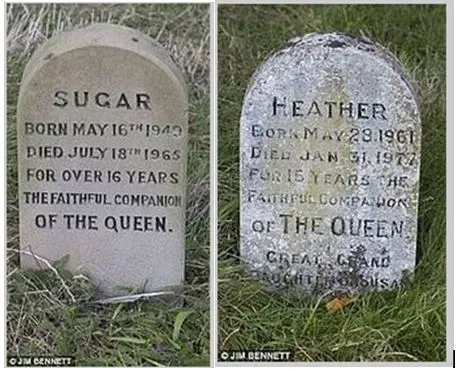
In 1949, Susan produced two daughters, Sugar and Honey. Sugar stayed with Elizabeth, while Honey later lived with the Queen Mother.
Their Majesties King George VI and Queen Elizabeth (the Queen Mother)
This was not Susan's only litter. Another Rozavel dog, Rozavel Rebellion, was later chosen for her, and Elizabeth also kept two puppies from that litter.
Thus a beloved pet became the foundation of a breeding line her owner would preserve for decades to come.
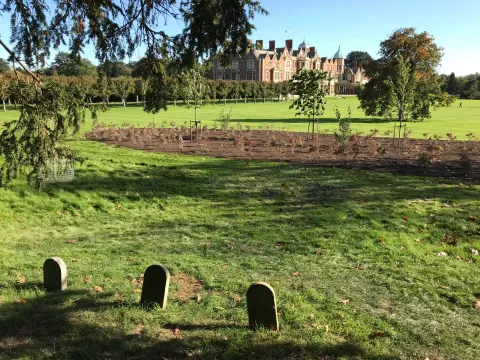
Susan lived for almost fifteen years. She died on 26 January 1959 and was buried in the pet cemetery at Sandringham. The cemetery had originally been established by Queen Victoria after the death of her collie Noble in 1887, and was revived by Elizabeth II in 1959 when she was looking for a resting place for her first corgi, Susan.
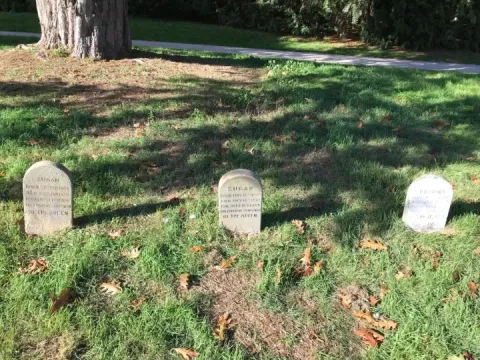
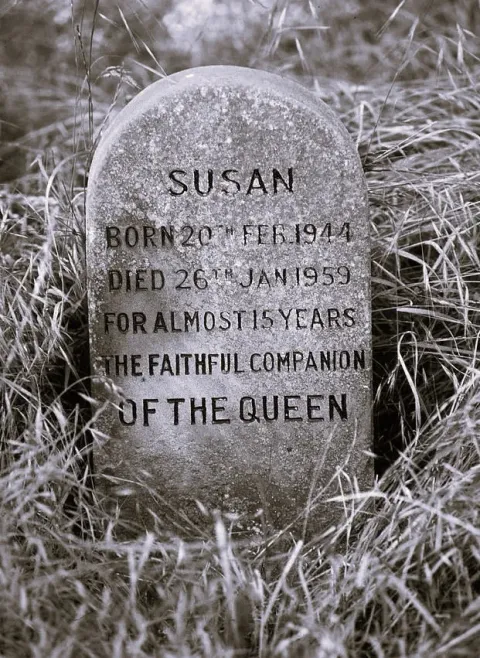
Elizabeth took a personal interest in the wording of Susan's gravestone. At first, she asked for an inscription stating that Susan had been her faithful companion for fifteen years. Then she found the dog's exact date of birth and asked for it to be added. Later, she returned to the wording once more.
The Queen had recalculated the years and realised that the inscription was not quite accurate. Susan had been with her not for fifteen years, but for almost fifteen.
The wording was corrected.
The stone described Susan as the Queen's faithful companion 'for almost fifteen years'.
It is a tiny detail, especially against the backdrop of decades of reign, palaces and national history. Yet perhaps it says more about Elizabeth's feelings for her dogs than any official portrait ever could.
The Windsor Kennel
Dogs bred by Elizabeth herself were registered under the Windsor kennel name.
And this is where the story of the 'royal corgis' becomes a story of genuine dog breeding. Elizabeth studied pedigrees and selected stud dogs from established British kennels. Their owners would bring their dogs to Windsor, and the mating arrangements were not very different from those familiar to breeders today: sometimes, instead of a stud fee, the owner of the male received a puppy from the litter. Once the puppies were born, decisions had to be made about which to keep for future breeding and which to place in new homes.
Over the decades, the royal line developed numerous branches, with a chain of fifteen generations connecting Susan to its last representative.
If we follow just the branch that eventually led to Willow, the succession looks like this:
Susan → Honey → Bee → Heather → Foxy → Brush → Geordie → Smoky → Spark → Dash → Rush → Quiz → Emma → Linnet → Willow.
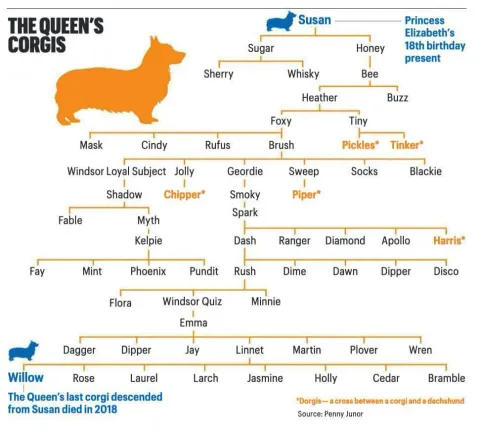
Of course, this is only one branch of an enormous family tree. Over the years, dozens of Susan's descendants were born to the Queen. Some went to other owners and breeders, while others remained within the Royal Family. Elizabeth used stud dogs from British kennels for new matings, so the Windsor line was never a closed breeding population.
In short, the ordinary life of a kennel — with the minor distinction that the breeder happened to be the Queen of the United Kingdom, and she took the job very seriously indeed.
Breeders who worked with Elizabeth recalled her remarkable memory for pedigrees. She could discuss dogs that had lived several generations earlier, remembering their ancestry and the qualities they had passed on to their offspring.
When choosing a stud dog, she was interested in more than appearance: temperament mattered greatly to her.
The Only Windsor in the Show Ring
There is one rather unusual detail in this story, at least from a breeder's point of view: Elizabeth almost never showed the corgis she bred.
This was certainly not because she had no interest in canine competitions. Her working Labradors and Cocker Spaniels competed successfully in field trials. But with corgis, things were different.
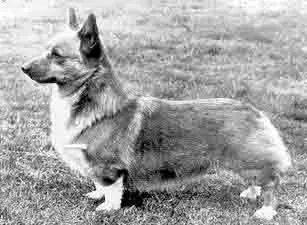
According to the Royal Kennel Club, only one dog bred under the Windsor kennel name ever entered the show ring.
He was Windsor Loyal Subject, known at home as Edward. His dam was Windsor Brush, and his sire was Kaytop Marshall. Elizabeth gave the puppy to Thelma Gray — the very breeder who had first introduced the Royal Family to corgis.
Gray asked permission to show Edward, and the Queen agreed.
As a result, Windsor Loyal Subject earned two Challenge Certificates (CCs) — two of the three certificates required to gain the title of Champion in Britain.
The other Windsor corgis, however, continued to live without show careers.
For Elizabeth, breeding corgis appears to have been less about producing champions than about preserving dogs of the type and temperament she valued.
'We All Have Fluffs'
People who discussed breeding with the Queen left behind several stories in which she comes across much more as a fellow breeder than as a monarch.
One of the best concerns long-coated corgis.
While describing the virtues of his stud dog, a breeder proudly remarked: 'He's never thrown a fluff' — meaning that the dog had never produced a long-coated puppy.
The Queen replied:
'We all have fluffs.'
Any breeder will understand the meaning of that brief remark perfectly. You can select breeding partners as carefully as you like, study pedigrees and make elaborate plans — recessive genetics will still occasionally make its presence felt.
Even at Windsor.
A Stud Dog Goes to Visit the Queen
In 1984, Elizabeth selected Ch. Penmoel Such Fun of Rivona, owned by breeder Maureen Johnston, as a mate for her bitch Windsor Spark.
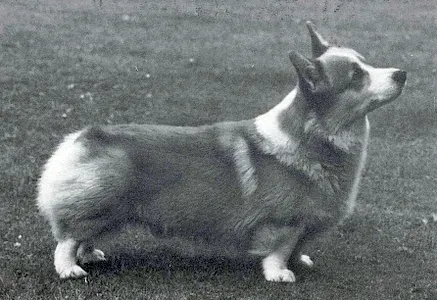
Normally, the bitch travels to the stud dog for mating. But the owner of this particular bitch was the Queen, so on this occasion the stud dog travelled to Windsor.
Johnston later recalled asking where matings were usually carried out — whether there was a special room for the purpose. As it turned out, there was no designated 'royal' mating facility. Everything took place where the dogs normally lived, in an ordinary domestic setting.
The mating produced Ranger, Beau, Lark, Gambol and Dash. Dash would become an important link in the continuation of Susan's line.
Mudge — The Dog the Queen Noticed Beyond His Beautiful Colour
Another interesting story concerns Kaytop Dice of Rossacre, known at home as Mudge.
His breeder, Ally Boughton, recalled that judges at shows were constantly commenting on his magnificent, rich red coat. She found this rather irritating: she wanted the judges to look beyond the beautiful colour and finally notice the dog himself.
The Queen did.
In 1990, Elizabeth's assistant Nancy Fenwick telephoned Boughton to say that the Queen would like to use Mudge for her bitch Dash. It was not just his colour that appealed to Elizabeth — she also liked his type and pleasant temperament.
The mating was successful, and Dash produced six puppies.
When they were about six weeks old, Ally Boughton visited Windsor to see the litter. Elizabeth joined her, and before long both women were sitting on the floor among puppies climbing all over them, biting their fingers and doing everything that six-week-old corgis normally do.
One woman was a professional breeder; the other was the Queen of the United Kingdom.
The puppies couldn't have cared less whose fingers they were biting.
A Puppy Instead of a Stud Fee
Dash's daughter, Windsor Rush, continued the line.
For Rush, Elizabeth chose Ermyn Quest for Fame, known at home as Timmy, who belonged to breeders Mary and Jeff Davies.
The Davies family later recalled how thoroughly the Queen knew her pedigrees and how much importance she placed on the temperament of a prospective stud dog.
The litter produced Minnie, Flora, Swift and Windsor Quiz at Ermyn.
Quiz went to live with the Davies family. The reason was perfectly ordinary in the breeding world: the puppy was given in lieu of a stud fee.
Thus a representative of the royal line left Windsor and entered the breeding programme of the Ermyn kennel. Her ancestry can be traced clearly through her pedigree: her sire was Ermyn Quest for Fame, her dam was Windsor Rush, and further back on her maternal side were Windsor Dash and Windsor Spark.
But Quiz's connection with the royal kennel did not end there.
According to the Davies family's recollections, when Quiz later produced a litter of her own, Elizabeth needed a young bitch to continue her line. This time, the Queen asked for a puppy from the breeders to whom she had once given Quiz.
And so Emma, Quiz's daughter, arrived at Windsor.
It was an almost perfect circle: a puppy bred at Windsor left as payment for a mating, grew up and produced a litter of her own — and one generation later, her daughter returned to the place where that branch had begun.
This story illustrates how the Windsor line never existed in isolation behind palace walls. Elizabeth used dogs belonging to other British breeders, placed her own puppies with them and, years later, could return to the lines developed through those very arrangements.
Corgis Were Not Always Model Courtiers
Corgis fitted beautifully into royal family life, but not always into other people's ideas of impeccable palace etiquette.
Queen Elizabeth II with Prince Philip and one of her dogs at Windsor Castle, Berkshire, 1959
The royal corgis were not always particularly well behaved. In the summer of 1954, the British press reported two incidents: one of the corgis bit the royal clockmaker, Leonard Hubbard, while Susan bit Guardsman Alfred Edge, who was on duty outside Buckingham Palace. Edge's story took an unexpected turn: the injured guardsman was sent home on two weeks' leave, but refused to blame the dog, suggesting that she had mistaken the movement of his leg for an attempt to kick her. 'For a little dog, she couldn't even bite properly,' he remarked to journalists.
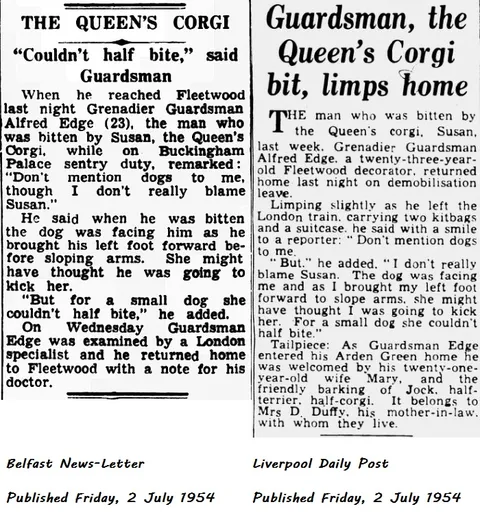
The American newspaper The Columbus Dispatch, retelling the story, even joked that footmen, sentries and royal clockmakers had long been considered 'legitimate prey' for the lively, short-legged corgis.
Such stories, however, hardly surprised people who knew the breed well. Animal behaviourist Roger Mugford, who worked with the Royal Family's dogs for many years and owned corgis himself, said of them: 'A corgi has the heart of a giant, just contained in a little body.' He pointed out that beneath those short legs and almost toy-like appearance was a sturdy herding dog accustomed to controlling animals many times its own size. One of Mugford's own corgis, Rusty, worked quite successfully with cattle.
Mugford also linked the famous corgi habit of nipping at heels to this working heritage: a herding dog needs to persuade a stubborn cow to move, and the size of its opponent is hardly a deterrent.
In other words, even a royal upbringing could not always overcome the corgi. 😁
The corgis' herding instincts were not always appreciated by palace staff. Footmen and other servants were particularly vulnerable: with no cattle available in the palace, the little herders apparently considered the legs moving along its corridors perfectly suitable subjects for supervision.
Attempts were made to tackle the problem professionally. In one humorous 'interview', a royal corgi confesses: 'We had a habit of biting footmen on the calves... What can I say? It's a weakness of mine!' After numerous complaints, he explains, a canine behaviour specialist was called to the palace, and the corgis were fitted with special collars that emitted an ultrasonic signal in response to unwanted behaviour.
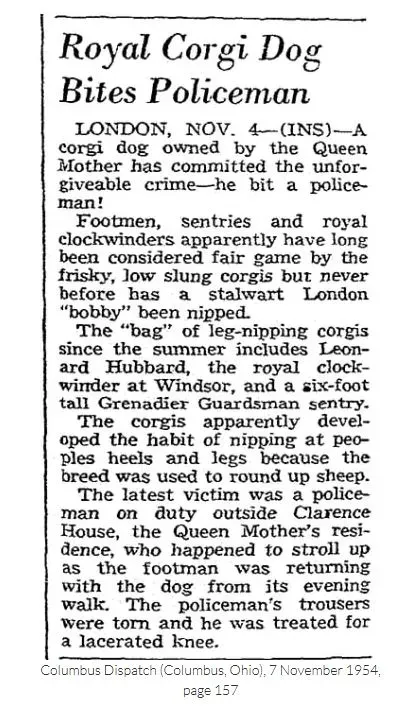
Over time, Elizabeth's collection of corgis grew. In 1981, for example, thirteen corgis accompanied her to Balmoral for the summer.
A pack of royal dogs surrounding Queen Elizabeth II
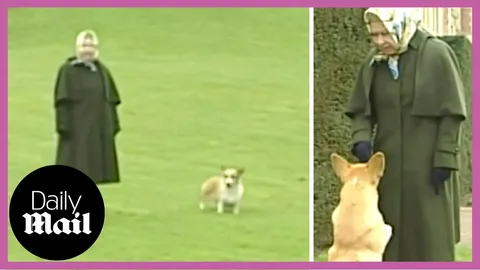
Nor did the royal dogs travel only by car between palaces. Corgis accompanied Elizabeth aboard aircraft, too: photographs and videos survive showing an entire little pack climbing or descending the aircraft steps behind the Queen.
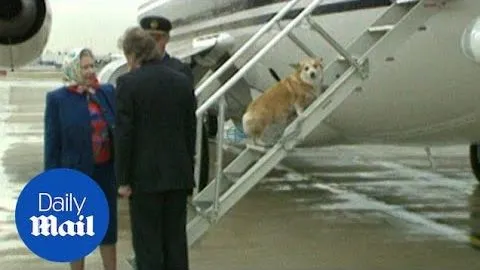
For them, flights between royal residences were as much a part of everyday life as walks at Windsor or summers at Balmoral.
One of the royal corgis makes a 'crash landing' after jumping from the steps of an aircraft, 1983
And where there are many dogs, conflicts sometimes arise. In 1991, Elizabeth tried to break up a fight between her corgis and was bitten on the hand herself. The injury required medical attention and stitches. As it turned out, the owner's royal status made very little impression on dogs settling their differences.
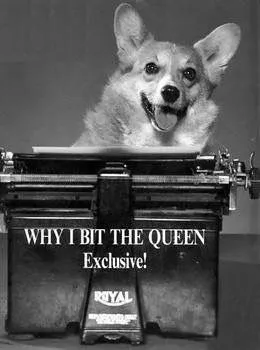
The incident immediately became material for British humour. On 21 April 1991, You Magazine, the supplement to The Mail on Sunday, published a satirical piece entitled Confessions of a Royal Corgi. Written as an exclusive interview by journalist Hunter Davies with Sparky, a corgi supposedly willing to reveal the truth behind the attack on the Queen in exchange for a substantial fee, the article described palace life from a dog's perspective, mocked the tabloids and portrayed relations between Elizabeth's corgis and the Queen Mother's dogs as a confrontation between two street gangs: the Buck House Mob and the Clarence House Gang.
According to Sparky, whenever the two groups met, things went 'wham, bam, sorry Ma'am'. Eventually, Sparky admitted that he had indeed bitten Elizabeth, but offered a remarkable explanation: the Queen had been wearing a long, fair-haired wig for a family game, and he had mistaken her for Princess Michael of Kent. Only when the wig fell off after the bite did he supposedly realise: 'Blow me, it's the Queen!'...
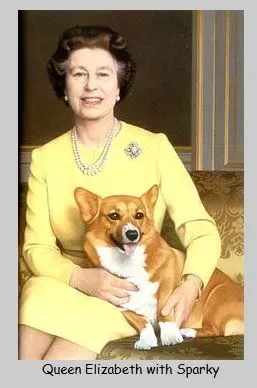
Perhaps this piece illustrates better than anything else the place corgis had come to occupy not only in Elizabeth's life but also in British popular culture. Their personalities, palace antics and even family dog feuds had become a familiar part of the Royal Family's public image.
The Royal Corgi Wars Through the Eyes of the Press
The royal corgis were not merely Elizabeth's household pets. Before long, they had also become regular characters in the British — and sometimes foreign — press. Journalists delighted in transforming their very real mischief, fights and rivalries into miniature palace chronicles, in which the dogs behaved almost like spoiled aristocrats.
We have already mentioned Confessions of a Royal Corgi, in which Sparky supposedly agreed, for a generous fee, to tell a journalist the whole truth about life at court. He described relations between Elizabeth's dogs and those of the Queen Mother as a feud between two gangs, the Buck House Mob and the Clarence House Gang. Sparky even called the Queen Mother's dogs 'dishonourable and disloyal mongrels who could not accept that they had been dethroned'.
Later, the French magazine Point de vue took up a similar idea, publishing a humorous interview with one of the royal corgis. This time, readers were treated to the story of a long-running war between two canine courts.
Behind the joke lay very real events. In 1989, Elizabeth's dorgi Chipper died following a fight with Ranger, who belonged to the Queen Mother. But in the magazine's version, the story became almost a medieval chronicle: the narrator intended to challenge Ranger to a duel and avenge his fallen relative. The vendetta was brought to an end by Prince Edward, who, according to this thoroughly unserious account, simply threw both opponents into a lake.
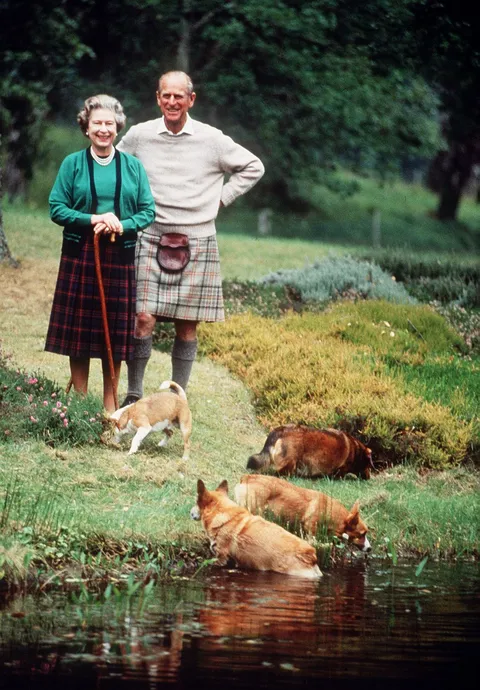
Such pieces cannot, of course, be read as factual accounts, but they show just how recognisable the royal corgis had become. The public knew their names, read about bitten footmen and canine quarrels, and readily understood jokes about rival palace 'clans'. Over the decades, corgis had become an independent part of the British monarchy's image: little four-legged courtiers with their own personalities, privileges, scandals and, as it turned out, even dynastic wars.
Not all palace employees, however, shared Elizabeth's affection for her dogs. In 1999, the British press reported on a footman who had supposedly found a rather unusual way to take revenge on the royal corgis: he mixed gin and whisky into their food, then amused himself by watching the intoxicated dogs stagger around the palace garden. According to the reports, when the story came to light, the footman was demoted and transferred to other duties.
Life with the Royal Pack
Corgis were not merely decorative additions to the official residences. They were part of Elizabeth's everyday life.
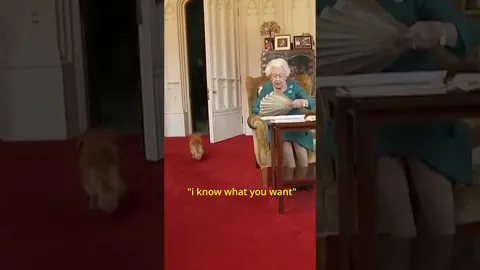
At Windsor, they had their own room, known as the Corgi Room. The dogs slept in raised wicker baskets, accompanied their owner between residences and went for walks with her. Their meals were prepared in the royal kitchen.
Nancy Fenwick provided invaluable help in caring for the dogs and raising puppies. She also contacted breeders whenever Elizabeth was selecting a new stud dog. But despite having plenty of assistance, the Queen herself remained closely involved in her dogs' lives.
Animal behaviourist Roger Mugford, who worked with the Royal Family's dogs for many years, recalled being invited to Windsor on one occasion because of fights between the corgis. Watching Elizabeth with her dogs, he was astonished by how well she controlled them. According to Mugford, the corgis obeyed their owner without question, despite the breed's considerable capacity for stubbornness.
He was particularly impressed by feeding time. Each dog had its own menu, and a footman served the food in old silver and porcelain bowls. Elizabeth would sit the corgis in a semicircle in front of her and feed them one at a time, in order of seniority within the pack. The others sat quietly, waiting their turn. For such a large group of dogs, Mugford observed, that degree of control was exceptional.
Yet the Queen's methods were not harsh. Mugford described her approach as 'kind but firm': Elizabeth had very definite ideas about how dogs should be treated and would not tolerate rough handling.
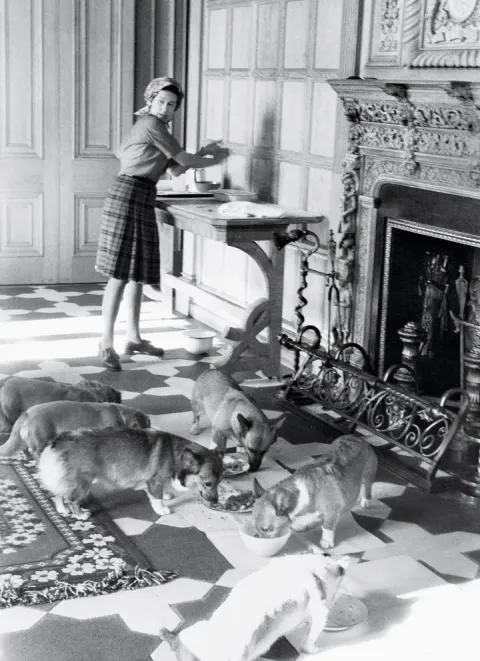
It was a genuine palace protocol — only for corgis.
Mugford noticed something else, too: whenever Elizabeth began talking about dogs or horses, she visibly relaxed. 'Dogs don't care about social status,' he observed, suggesting that for someone who had spent her entire life surrounded by ceremony and protocol, this might have been one of the particular pleasures of their company.
And Then Along Came a Dachshund...
And then the carefully maintained, multigenerational history of Pembroke breeding took a completely unexpected turn.
Elizabeth's younger sister, Princess Margaret, owned a male long-haired Miniature Dachshund named Pipkin, who managed to mate with one of the Queen's corgis, a bitch called Tiny, in 1971.
Nobody had planned this mating.
The result was Dachshund–Pembroke Welsh Corgi crossbreeds — dogs that later became known as dorgis, a combination of the words dachshund and corgi.
The Indian Express recounts a famous story: when the Queen was asked how little Pipkin had managed to mate with a corgi, she supposedly replied:
'Oh, it's very simple: we have a little brick they can stand on.'
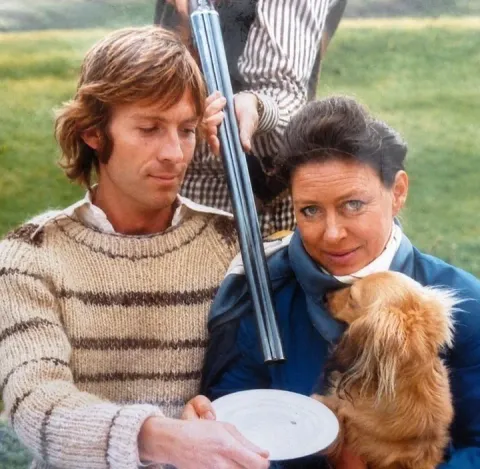
The Royal Family liked the results of this unexpected experiment so much that the story did not end with the first accidental litter. Later, such dogs were bred deliberately.
Among the royal dorgis were Tinker, Pickles, Chipper, Piper, Harris, Brandy, Cider and Berry. In later years, Elizabeth was also accompanied by the dorgis Vulcan and Candy.
In the official portrait taken for Elizabeth's ninetieth birthday in 2016, four dogs sit beside her: the Pembrokes Willow and Holly, and the dorgis Vulcan and Candy.
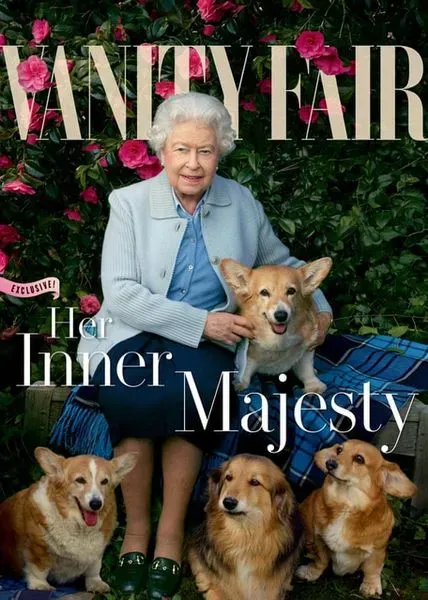
Dorgis are sometimes described as a 'breed created by the Queen', but from a canine breeding perspective, that is incorrect. They never became a separate breed: dorgis have no Kennel Club-recognised breed standard, no closed stud book of their own and no stable, independent pedigree population.
They are simply Dachshund–Pembroke Welsh Corgi crossbreeds.
But the story itself is wonderful. You can spend decades studying pedigrees, carefully selecting British stud dogs and preserving Susan's line... and then your younger sister's Dachshund comes to visit. 😆
The Kennel Club was considerably less enthusiastic about this experiment. Its reaction was later quoted by animal behaviourist Roger Mugford:
'Dachshunds were bred to hunt badgers down their setts, and corgis to herd cattle. If anyone ever loses a herd of cows down a badger sett, these dogs will be just the thing.'
Still, the lack of any practical need to find cattle in badger setts does not appear to have troubled Elizabeth in the slightest. Dorgis lived alongside her for many years and eventually became just as recognisable a part of her royal canine household as the corgis themselves.
The Last Windsor Litter
The last litter of corgis bred by Elizabeth II herself was born on 9 July 2003. The puppies' dam was Linnet.
There were eight puppies in the litter, all named after plants: Bramble, Cedar, Holly, Jasmine, Larch, Laurel, Rose and Willow.
Elizabeth kept Holly and Willow.
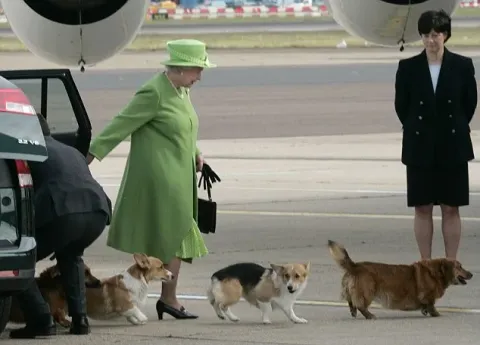
There were no further Windsor litters after that. Exactly why the Queen decided to stop breeding is not known. The Royal Kennel Club notes that the difficult events of the previous year may have influenced her decision: in 2002, Elizabeth lost both her sister, Princess Margaret, and her mother.
Later accounts suggested that, as she grew older, the Queen deliberately chose not to leave young dogs behind after her death. This may also have played a part, but we cannot confidently identify a single reason.
Elizabeth would have corgis again in later years, but they were no longer dogs from her long-established breeding programme.
The Last Representative of Susan's Line
Willow died in April 2018, just a little short of her fifteenth birthday.
The Royal Kennel Club described her as the last corgi bred by Elizabeth herself and a fourteenth-generation descendant of Susan.
And so ended the line that had been with the Queen since her eighteenth birthday.
Susan came into Elizabeth's life when she was still a princess. Her descendants were beside her through the births of her children, her coronation, the arrival of grandchildren and great-grandchildren, state visits, changes of government and most of the events of Elizabeth II's long reign.
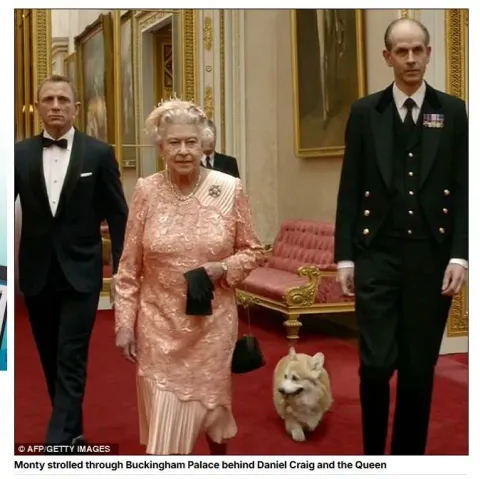
The last representative of the line died when the Queen was already ninety-two.
1944–2018. Seventy-four years.
There is, however, an important distinction to make when we say that the line ended: Willow marked the end of the branch of Susan's descendants that Elizabeth herself had continued to keep. Over the decades, individual Windsor dogs had gone to other breeders and been used in breeding programmes outside the royal kennel. It is therefore entirely possible that Susan's genes can still be found in the pedigrees of modern Pembrokes.
For a breeder, this is perhaps one of the most fascinating aspects of the entire story.
After Willow
Willow's death in 2018 marked the end of Elizabeth's own breeding line, but not the end of her life with corgis.
In 2021, when the Queen was ninety-four, two puppies arrived: a Pembroke named Muick and a dorgi named Fergus. They were given to the Queen by Prince Andrew's family while her husband, Prince Philip, was in hospital.
Fergus lived only a short time and died while still a puppy. Elizabeth was later given another young Pembroke bitch, Sandy.
So, in her final years, the Queen once again had two corgis beside her — Muick and Sandy — although neither belonged to Susan's breeding line.
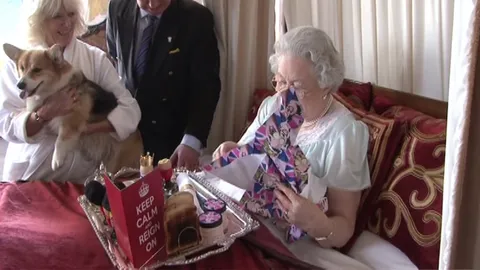
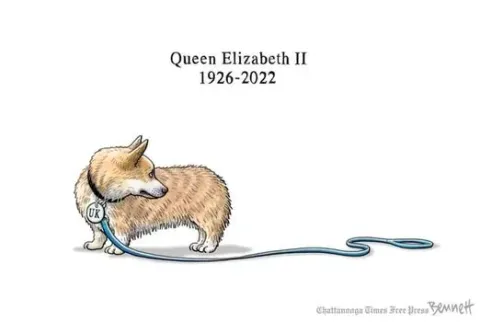
On 8 September 2022, Elizabeth II died at Balmoral at the age of ninety-six.
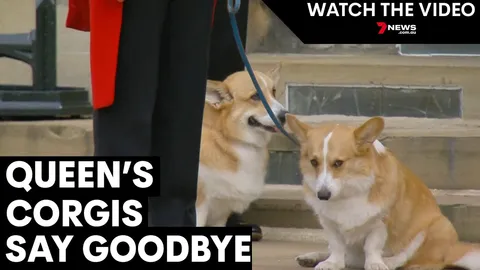
Muick and Sandy were there. When the Queen's coffin was brought to Windsor before her burial, the two corgis were led into the castle courtyard. They waited beside the steps as the funeral procession passed.
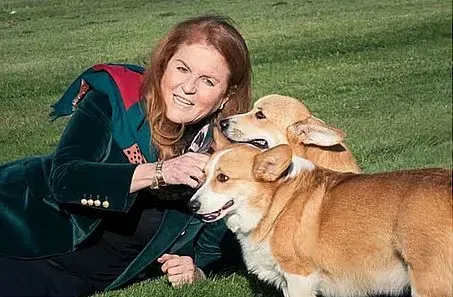
After Elizabeth's death, arrangements for the dogs were made quickly. Muick and Sandy went to live with Prince Andrew and Sarah Ferguson, Duchess of York, at Royal Lodge in Windsor. Sarah later said that the dogs had settled well into their new home and become part of her own pack.
Thus, corgis remained beside Elizabeth until the very end of her life, even though these last companions were no longer Windsors bred by the Queen herself.
The story of her own line had ended four years earlier, with Willow.
Over the course of Elizabeth II's long life, dozens of corgis and dorgis shared her home. There were litters and carefully selected stud dogs, an accidental mating with a Dachshund, dogs given to friends, a puppy accepted in lieu of a stud fee, and almost fifteen generations descended from a single bitch.
But the entire story began with Susan — an eighteenth-birthday present, a honeymoon companion and the foundation bitch of Elizabeth's own breeding line.
And that is why the history of the royal corgis is more than the story of one person's love for one breed.
It is also the story of a breeder, her first bitch, and the 74 years of breeding history that connected Susan to Willow.