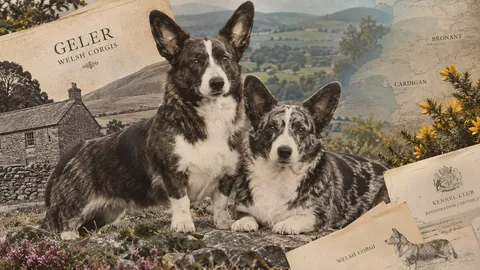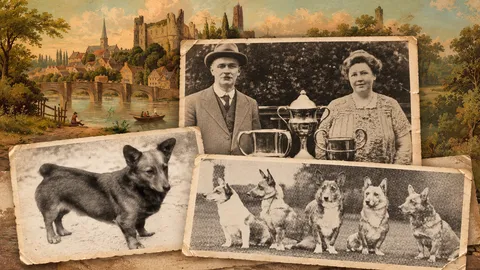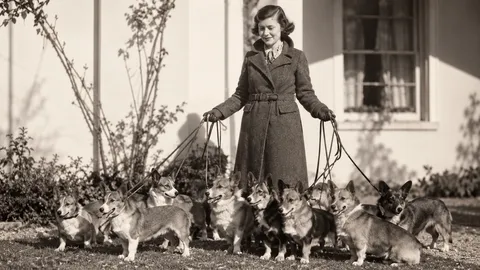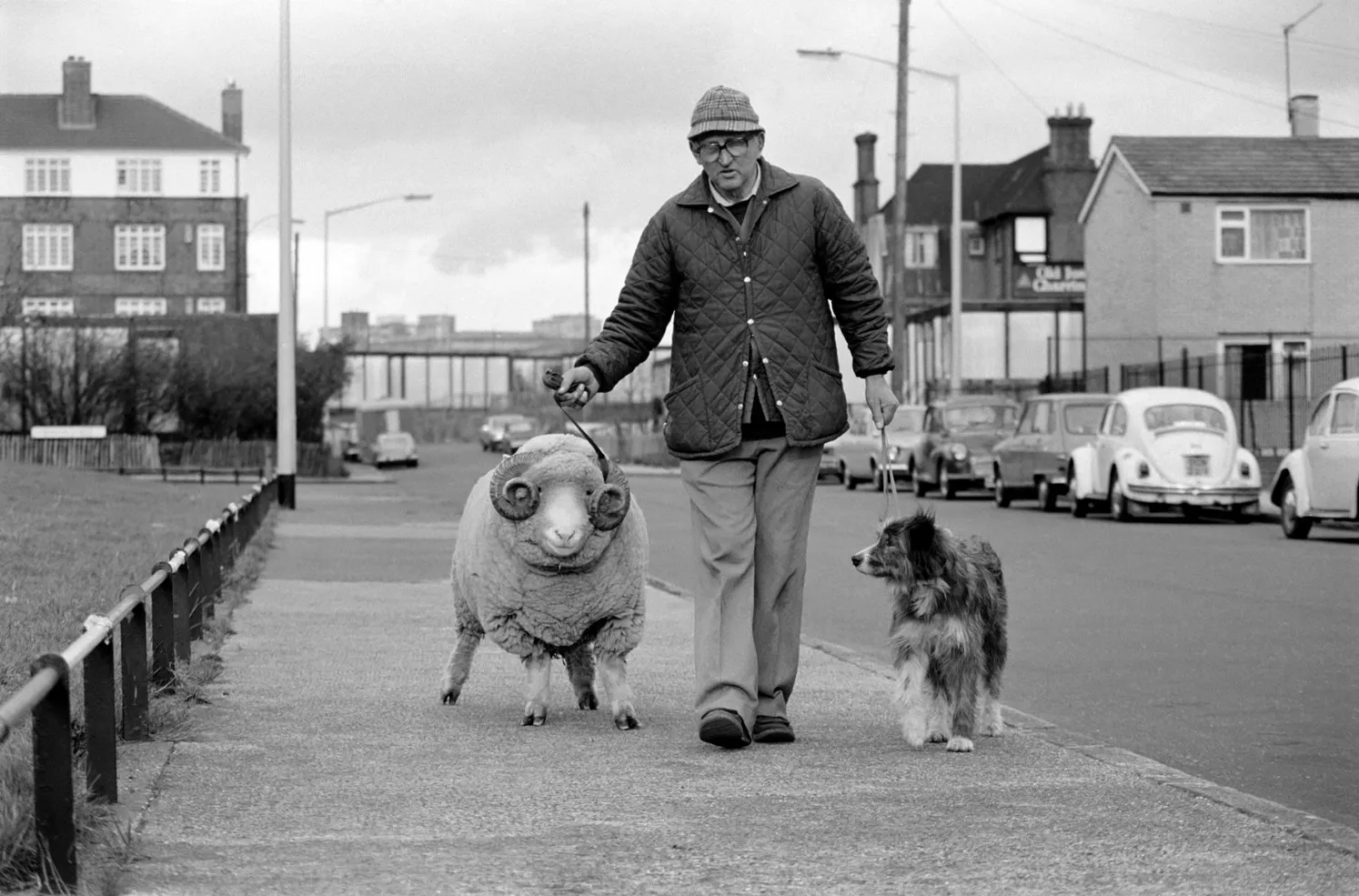
At the beginning of the 1930s, an unusual passenger set off from South Wales for Scotland.
She was eight weeks old, her name was Nippy of Drumharrow, and she made most of the journey alone.
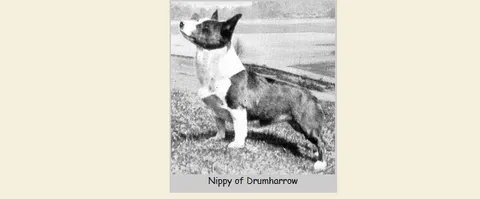
The little Pembroke was put on a train that was to take her to her new owner, a young Scotsman named John Holmes. Nippy travelled the final leg of the journey not by rail but in a postal van, sitting on the front seat beside the driver.
Today, it is difficult to imagine a breeder sending an eight-week-old puppy halfway across the country in such a way...
But the reason for the journey is even more interesting. Holmes was not looking for a future show champion — he needed a small working dog that could help with cattle while also dealing with rats on the farm. A Corgi was suited to both jobs: small and agile enough to hunt rodents, yet bold and persistent enough to work around animals many times its own size.
Many years later, Holmes would describe his first Corgi as the best ratter and the hardiest cattle dog he had ever known. He also added another important detail: every Pembroke in the line he developed descended from Nippy.
And that line would prove to be anything but ordinary.
It would produce British and American champions. Formakin Orangeman would become the first post-war champion of the breed in Britain and win on both sides of the Atlantic. Holmes's Corgis would leave the show ring for obedience competitions and public demonstrations. The touring Formakin Canine Stars would follow, and later a professional centre training animals for film and television.
Holmes himself would become a professional animal trainer and an author of books about dogs. He would work not only with Corgis and Border Collies, but with cats, birds, sheep and many other animals. And almost half a century later, he would return once again to a breed created to work cattle, becoming, together with his wife Mary, part of the early history of the Australian Cattle Dog in Britain.
But all that lay ahead.
For now, eight-week-old Nippy was travelling north to a man who simply needed a good farm dog.
Before Nippy
John Holmes was born in Scotland in 1913 and grew up in a world where breeding and showing animals existed quite naturally alongside the work those animals were expected to do.

His family was closely connected with agriculture. His father and grandfather successfully showed Clydesdale horses, and Holmes later recalled that agricultural shows were among the great events of his childhood.
At the same time, it was a world of working animals. Holmes grew up around livestock, worked with Border Collies herding sheep, and later attended agricultural college. A 1963 article about his Formakin Animal Centre described him as the son of a Scottish farmer who had gained his first experience with dogs as a young man, working his own Border Collies.
Holmes's first serious experience of breeding animals was not with dogs at all, but with Border Leicester sheep.
In The Farmer's Dog, he recalled one of the first lessons he learned before Corgis ever entered his life. At eighteen, he bought two Border Leicester ewe lambs. One was very good and the other just as obviously poor, and to the inexperienced young breeder the obvious solution seemed simple: breed from the good animal and discard the bad one.
A more experienced stock breeder explained that breeding was not quite so straightforward. The qualities visible in an individual animal do not by themselves tell you what it will pass on to its offspring: its ancestry, the hereditary qualities of its family and the animal to which it is mated all matter. Holmes later recalled that this practical lesson taught him more than the little “Mendelism” he had picked up at agricultural college.
Holmes never tells us what eventually became of the two ewe lambs. What mattered to him was the lesson itself: in breeding, it is not enough to choose the animal that looks better today; you have to try to understand what lies behind its own qualities and what it may pass on to the next generation.
In essence, the question that would occupy him for decades was already there: what has an animal inherited — and what can be developed from it?
Before long, an opportunity to explore that question in practice arrived by train from South Wales.
What Should a Working Corgi Be Like?
Nippy was more than simply a fortunate choice for a first Corgi. Through her, Holmes encountered the kind of working behaviour that he would continue to observe and discuss in Corgis for the rest of his life.
In The Farmer's Dog, he dated the beginning of his involvement with Pembrokes to 1933. In time, his breeding programme grew far beyond the scale of a hobby: by his own account, there was a period when he had as many as twenty brood bitches at once.
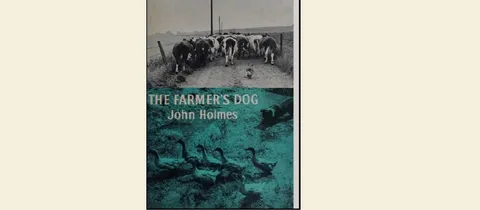
Over the years, he saw hundreds of Corgis and became convinced that their original working purpose could not be understood by imagining them simply as smaller Border Collies.
A Border Collie excels at gathering scattered stock and controlling it from a distance. A Corgi works differently. It is primarily a droving dog, whose job is to make livestock move in the required direction.
Two characteristic techniques were used for this work. In heeling, the dog nipped at the heel to drive an animal forward. In nosing, it could attack from the front to stop or turn it. Holmes stressed that where and how a dog gripped was determined to a considerable extent by its innate behaviour: it was not simply a matter of teaching any dog how to bite livestock correctly.
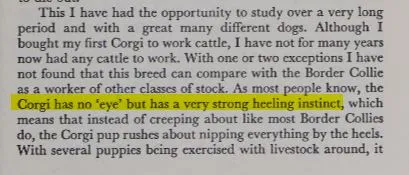
Thanks to its height, the Corgi worked extremely low, gripping the soft part of the heel just above the hoof.
Holmes even challenged the appealing story that a Corgi would supposedly flatten itself against the ground after a bite to escape a cow's kick. In all his years of watching working dogs, he had never seen such behaviour. A good working Corgi did indeed carry its head very low and might almost drop onto its elbows, but it kept moving, caught the hind leg and moved out of the way of the kick.
This style of work had its limitations.
In The Farmer's Dog, Holmes readily acknowledged that as an all-round farm dog the Corgi could not compare with the Border Collie. But when the job was to keep a group of cattle moving, push animals through a muddy gateway, load them into transport, or keep them away from feeding troughs until the right moment, he considered a good Corgi virtually unequalled.
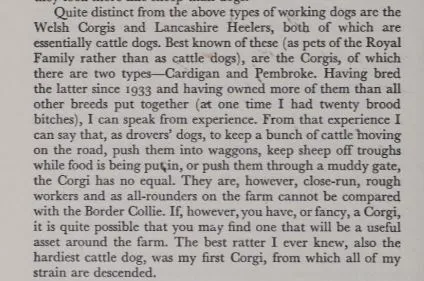
What impressed him particularly was something else: of the several hundred Pembrokes he had raised, most showed the characteristic working instinct at some point — even when their pedigrees contained no dogs that had actually worked for six or seven generations.
But an inherited instinct could not only be developed. It could also be accidentally destroyed.
Holmes gave the example of a puppy repeatedly punished for chasing bicycles or other moving objects, whose owner later wondered why it refused to chase sheep. To a person, these are entirely different activities; to a young dog, the distinction is far less obvious.
If a puppy is stopped every time it shows a desire to chase and control movement, the unwanted chasing may be suppressed — but so may the herding instinct that could later have been put to useful work.
The idea that innate abilities exist, but that people can either develop or spoil them would become one of the central themes of Holmes's work with dogs.
Nippy Meets Rozavel
Before long, Holmes's story became entwined with another of the most important lines in the early history of the Pembroke — Thelma Gray's Rozavel. Nippy was bred several times to one of the most influential sires of the period, Ch. Rozavel Red Dragon.
Modern databases of old pedigrees are far from complete, so they cannot tell us how many litters Nippy actually had. Holmes himself recalled ten litters and 41 puppies (!). Surviving pedigrees do, however, show at least several repeated Red Dragon × Nippy matings.
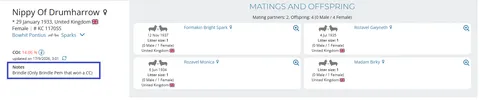
Among the known daughters of this combination were Rozavel Monica, Rozavel Gwyneth and Formakin Bright Spark.
Holmes would later describe Gwyneth as his first champion.
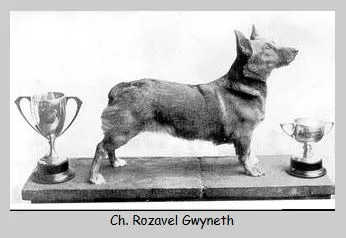
English
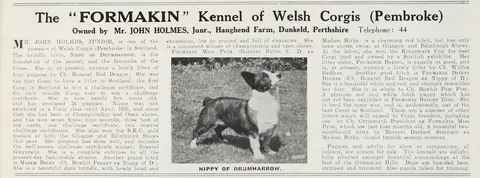
In December 1937, a feature about the Formakin kennel appeared in a supplement to the British magazine Our Dogs. The heading gave the kennel's address at the time — Haughend Farm, Dunkeld, Perthshire — while a photograph of Nippy took centre stage. She was described not only as the foundation of the kennel but also as the favourite of the household.
By then, Nippy was nearly five years old. According to the article, she had already produced four litters by Ch. Rozavel Red Dragon and was nursing another litter of four puppies at the time of publication. She had also enjoyed a remarkable show career: Holmes described her as the first Corgi in Scotland to win a Challenge Certificate and the only brindle Corgi ever to have won a CC. Her achievements included seven first places, three Best of Sex awards and two Reserve CCs.
The feature also named several other dogs from the early Formakin kennel: Rozavel Gwyneth, Madam Birky, Formakin Miss Prim, Formakin Brinda, Formakin Dainty Blonde and Formakin Bright Eyes. It offers a rare opportunity to see the kennel's dogs not through reconstructed pedigrees, but as they were presented in December 1937.
And at the very end of the advertisement, there is another intriguing line: “Also pupils taken for training.” This shows that Holmes was already offering dog-training services in pre-war Scotland, long before the touring Canine Stars and the Formakin Animal Centre came into existence.
For the later history of Formakin, however, Bright Spark is particularly interesting. Through her, the blood of Nippy and Red Dragon continued through several generations of Formakin and eventually led to Holmes's most famous dog.
Nippy also produced a daughter, Madam Birky, by Ch. Bowhit Pepper.
And in the following generation, descendants of Nippy and Red Dragon came together again in a single dog.
In 1938, Rozavel Red Flag and Madam Birky produced Peppercorn Formakin Fascination of Andely. This American show catalogue from 1941 confirms her date of birth — 9 May 1938 — her parents, and her breeder, listed as J. Holmes, Jr.
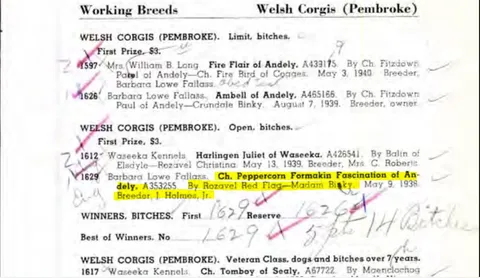
Her pedigree once again brought together the two lines that were central to the early history of Formakin: Nippy and Rozavel Red Dragon.
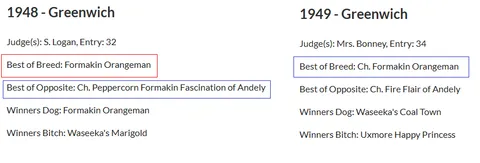
Fascination went to the United States and became an American champion. In 1940 and 1941 she was Winners Bitch at events held by the Pembroke Welsh Corgi Club of America, and in 1946, under Thelma Gray herself, she was awarded Best of Breed. In 1948 she was Best of Opposite Sex — the same year that another Formakin, the already famous Orangeman, took Best of Breed.
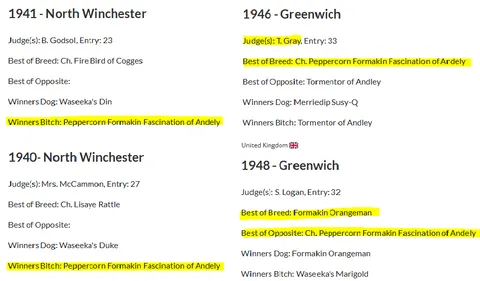
Thus, even before the war and in the years immediately following it, Holmes's dogs were already part of the international history of the breed.
Orangeman: A Star in Difficult Times
The Second World War profoundly changed British cynology.
Holmes moved from Scotland to Kent, where he managed a farm. He took with him one of Nippy's descendants.
He later told the story of how the next famous Formakin dog came into being: a pregnant bitch was given to a man in Northern Ireland on the condition that one puppy from the litter would be returned to Holmes. That puppy was Formakin Orangeman.
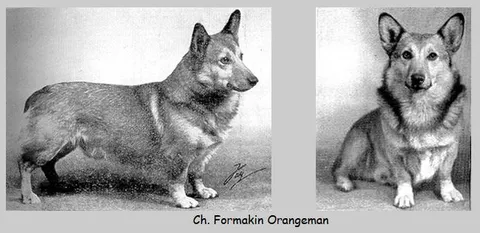
There is an interesting detail here that can easily be overlooked because of the famous affix: Orangeman carried the Formakin name and came from Holmes's line, but surviving records list his breeder as C. I. Moore.
He was born on 3 May 1944, by Teekay Burnet out of Formakin Bright Flame. Bright Flame, in turn, was a daughter of Formakin Coincidence and Formakin Bright Spark — the daughter of Red Dragon and Nippy we met earlier. It is a long chain leading all the way back to the eight-week-old farm dog who had travelled to Scotland by train.
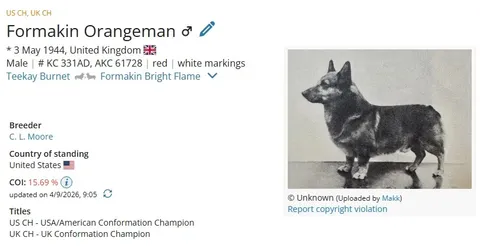
But Orangeman appeared during an extremely difficult period in the history of Formakin. Holmes recalled losing many puppies in those years to an illness then known as hard pad. In the mid-twentieth century, the term was generally used for a syndrome associated with severe canine distemper, although it would be misleading to equate the historical diagnosis directly with modern veterinary terminology.
The repeated loss of puppies also left Holmes in serious financial difficulty, and eventually he was forced to part even with Orangeman: the dog was sold to the United States.
By then, however, Orangeman had already made the Formakin name known far beyond the kennel.
The First Post-War Champion
Championship dog shows in Britain ceased during the war, effectively putting the show careers of an entire generation of dogs on hold. When the rings finally reopened in 1946, Formakin Orangeman emerged as one of the first new stars of post-war British dog showing.
In June, the Welsh Corgi League held its first post-war championship show. The scale was impressive: 122 Pembrokes and 382 entries. Orangeman won the Dog CC — the first of the three certificates required for his championship title.
What followed secured his special place in the history of the breed. Orangeman won CCs at the first three championship shows after the war at which certificates were once again available, and by the autumn, at the Welsh Corgi League show in Stockport, he had completed his title, becoming the first post-war Pembroke champion.
But his British championship was only the beginning. In March 1947, Holmes took Orangeman to Dublin for the famous St Patrick's Day Show. There, the Corgi defeated dogs of all other breeds to win Best in Show. Historical accounts of the breed cautiously describe this as possibly the first known occasion on which a Pembroke won the top award at an all-breed championship show.
A wonderful photograph survives from that day, showing Holmes with judge Alex Dalzell and his dark sable Orangeman — the same puppy who, only a few years earlier, had been returned to him from Northern Ireland under the terms of a breeding arrangement.
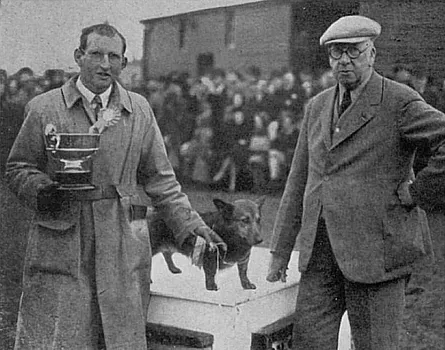
Soon afterwards, Holmes and his champion went their separate ways. Financial difficulties forced Holmes to sell Orangeman, and the dog crossed the Atlantic. The move to America did not bring his show career to an end — on the contrary, it made it international.
In the United States, Orangeman was owned by Irene Green of Greencorg. In 1948, he was named Winners Dog and Best of Breed at the Pembroke Welsh Corgi Club of America national event, and in 1949 he again took Best of Breed. As mentioned above, the 1948 Best of Opposite Sex was Ch. Peppercorn Formakin Fascination of Andely — another dog bred by Holmes, ten years before Orangeman.
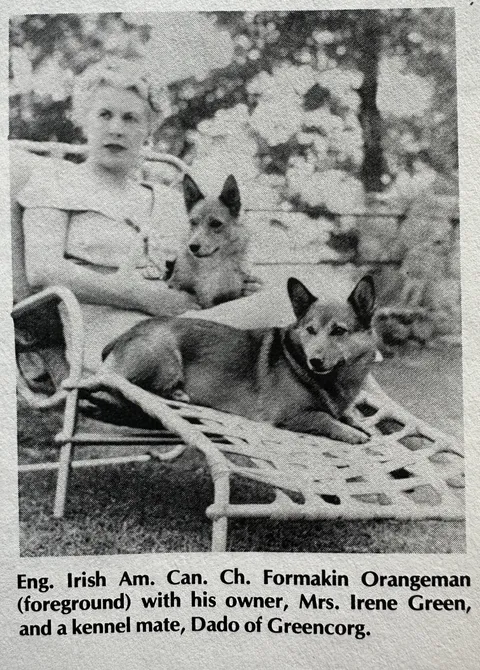
His career continued in Canada as well. In a later photograph, Orangeman is pictured with Irene Green and another Corgi from her kennel, Dado of Greencorg. The caption lists four championship titles: English, Irish, American and Canadian Champion. Thus, the dog whose show career began in post-war Britain ultimately became a champion in four countries.
For a kennel whose story had begun with a working dog on a Scottish farm, it was an impressive journey. Yet the most interesting part of Holmes's story begins just where a conventional account of a successful breeder might have ended.
A Dog Should Be Able to Do Something
Reading Holmes's books, one gradually notices something curious: for a man who bred champions, he seems remarkably uninterested in championship titles themselves.
What interested him far more was what a dog could do, and why it did it.
After the war, Holmes became increasingly involved in obedience, working trials and public demonstrations.
One Formakin dog in particular neatly connects the two sides of his life.
In The Obedient Dog, Holmes recalled his Pembroke Formakin Expectation, who competed in obedience. One of the exercises was the long jump. At the time, the standard obstacle was nine feet long — approximately 2.7 metres.
For a Corgi...
Expectation jumped and landed on the final board, so the exercise did not count. The judge offered Holmes a second attempt, but he declined: he knew perfectly well that the dog was physically incapable of jumping any farther.
All the points for the exercise were lost, yet Expectation still qualified CD Excellent.
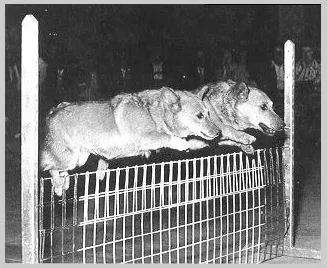
In 1951, he and his litter sister Formakin Pip performed at the Royal Horticultural Hall in Westminster. A wonderful photograph survives of the two Corgis flying over an obstacle in perfect unison.
This was a very different Formakin: not simply a kennel where dogs were posed in the show ring, but a place where people wanted to find out what else those dogs could learn to do.
And before long, one Corgi would no longer be enough.
The Formakin Canine Stars
Holmes met his future wife, Mary, through the world of dog training. Together they created The Formakin Canine Stars, a touring group of trained animals. Dogs were, of course, the principal stars, but far from the only ones. In a surviving group photograph, a goat and rabbits pose alongside Corgis, Border Collies and dogs of several other breeds; cats, ducks and other animals also took part in Formakin performances.
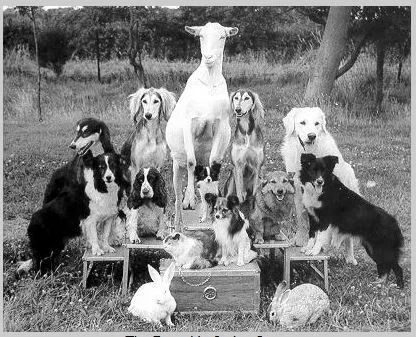
The group travelled around Britain performing for audiences. Later accounts even mention a specially converted bus in which the entire company travelled.
For Holmes, this was no longer the world of dog shows. Now he had to teach animals to perform particular actions at precisely the right moment, surrounded by people, noise and unfamiliar surroundings — and to do it in such a way that the audience saw a performance rather than the training behind it.
In The Obedient Dog, he recalled one of his demonstration Corgis, an incorrigible scrounger. Holmes turned the dog's weakness to his advantage, deliberately creating situations involving food and teaching it how to behave around the temptation.
Elsewhere in the book, he writes not “I” but “my wife and I” when describing the methods they used with their own dogs. Mary was therefore not simply the wife of a well-known dog man: Formakin was gradually becoming their shared professional enterprise.
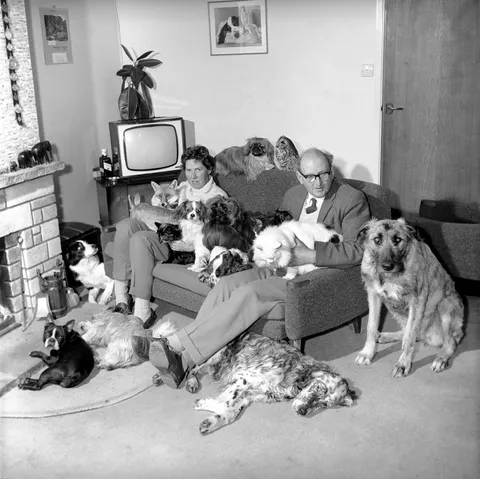
The stage proved excellent preparation for the next step: the film set.
From the Canine Stars to the Formakin Animal Centre
By the beginning of the 1960s, the Formakin Animal Centre was operating near Wallingford.
A 1963 article explicitly described John and Mary Holmes's centre as a successful “training academy” for animals used in film and television.
Holmes now faced tasks considerably more complicated than teaching an ordinary “sit” or “heel”. An animal might have to perform a specific action at a precise spot on a film set, surrounded by unfamiliar people, lights, cameras and scenery. It might appear on screen for only a few seconds — but those few seconds might have to be repeated again and again.
Holmes believed that the essential quality of a good trainer was an understanding of the mental and physical capabilities of the individual animal.
And by then, those animals were certainly not limited to dogs. The centre also worked with birds and many other species. Photographs survive of Holmes training two cats to walk between two rows of dogs.
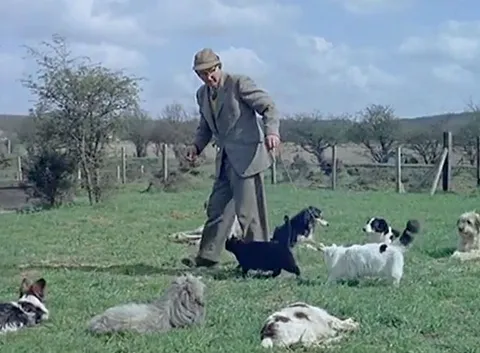
Sometimes Formakin turns up in production records in the most unexpected places. In 1965, for example, Holmes supplied a trained hawk for the Doctor Who serial The Crusade; the production records give the address of the Formakin Animal Centre as Benson, Oxfordshire.
The man who had once been looking for a small dog to work cattle and kill rats had become a professional animal trainer for British film and television.
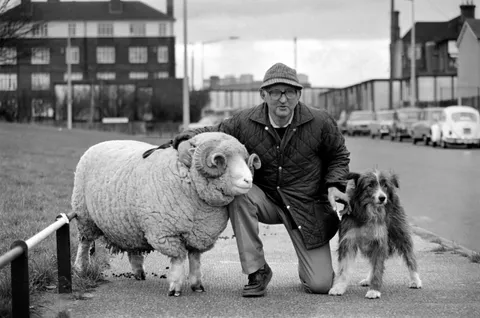
Now Holmes Steps in Front of the Camera
Holmes did not work only behind the scenes. By the early 1970s, his accumulated experience also allowed him to use television to teach people.
In 1971, Southern Television broadcast Training the Family Dog, a series involving Holmes and the training of an ordinary family dog.
For the programme, he deliberately bred a litter from a Bearded Collie bitch and a working Border Collie, allowing viewers to see not only the teaching of commands but also how a puppy's character develops and how important it is to choose the right dog for a particular owner.
Holmes later told the story of one of these puppies, Spot, in The Obedient Dog.
At about six weeks, Holmes assessed the temperaments of the puppies. He rejected the most dominant puppy as unsuitable for the intended owner and selected another instead.
But things did not prove straightforward with him either. Spot's first family returned him because of concerns about his dominant behaviour. He was later taken by a farmer, where the young dog began chasing poultry and killed three hens, after which the farmer intended to shoot him. Holmes took the dog back.
The story neatly illustrated an idea to which Holmes returned repeatedly: behaviour cannot be explained by a single factor — “temperament”, “breed” or “training”. Innate qualities matter, but so do environment and the experiences a dog has already had.
Another participant in the television series, Ben, was so quiet that teaching him to bark on command became an exercise in itself.
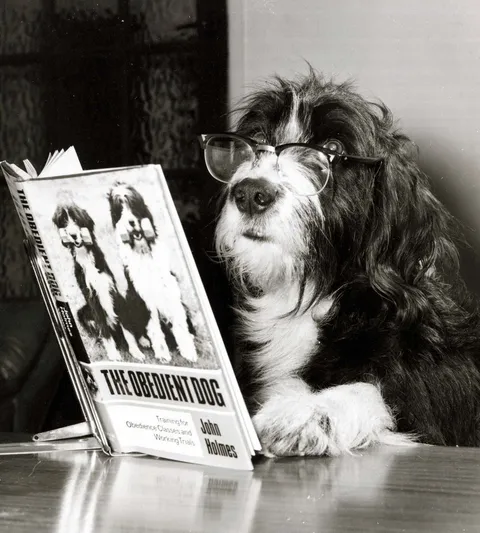
Holmes and Mary did not try simply to make Ben bark. Instead, they created a situation in which barking would arise naturally. One of them played the role of a visitor approaching the door, while the other engaged the dog and rewarded him when he finally gave voice. Only once Ben was reliably repeating the behaviour did they associate it with the command Speak.
The episode illustrates a characteristic feature of Holmes's approach to training: rather than demanding an action the dog did not yet understand, he first looked for a way to elicit it naturally and then gradually associated the now-familiar behaviour with the required cue.
How Holmes Understood Dog Training
Holmes's ideas about training developed long before modern schools of dog training emerged, which can make his books an unusual read today. On some pages he discusses motivation, temperament and the importance of understanding the individual dog; on others, he matter-of-factly describes physical corrections that many modern owners would consider quite harsh.
Holmes himself drew a fairly clear distinction between teaching and punishment. In his view, correcting a dog made sense only when the animal already knew what was expected of it and deliberately failed to obey a familiar command. Punishing an animal for something it had never been taught was pointless. At the same time, he believed that the appropriate degree of correction depended on the individual dog: something that barely affected one could frighten another and damage its confidence for a long time.
Timing mattered just as much. Holmes offered a simple example: a dog chases a rabbit, ignores its owner, but eventually returns. If the owner punishes it when it comes back, the person may be convinced that the punishment is for chasing the rabbit. The dog, however, may associate the unpleasant consequence with the last thing it did — returning to its owner — making it even harder to persuade the dog to come back next time.
Holmes paid a great deal of attention to individual temperament. He did not believe that the same approach suited every dog. A strong, assertive dog could be too much for a gentle, uncertain owner, while an overly forceful handler could easily overwhelm a sensitive dog. Choosing a dog therefore involved more than judging the quality of the animal itself; it also meant considering how well the dog and person suited one another.
Holmes also understood the limits of his own ability to predict adult temperament. He and Mary generally began assessing puppies at around eight weeks, taking both the puppy's behaviour and its breeding into account. Yet even with their enormous experience, by the age of six to twelve months about half of the puppies they had selected proved unsuitable for the work for which they had originally been kept. A first impression of an eight-week-old puppy could tell them a great deal — but far from everything.
Alongside corrections, Holmes also made regular use of rewards. His books contain examples of training with food, praise and deliberately arranged situations designed to elicit a desired behaviour. Particularly interesting is his view of working motivation: for a dog that genuinely wants to herd sheep, being allowed to return to the flock can itself serve as a reward. In such a case, work is not an obligation imposed on the dog but something the dog actively wants.
Holmes's methods therefore fit poorly into today's familiar division between “harsh” and “positive” training. He used physical corrections, many of which modern trainers would reject, yet at the same time he constantly observed the dog's motivation, took temperament into account, and warned how easily a poorly judged intervention could produce exactly the opposite of the desired result.
Behind all this lay another belief that was important to Holmes: to work successfully with an animal, you first have to try to understand it as an animal. He disliked anthropomorphising dogs and attributing human reasoning and motives to them. A 1963 article about the Formakin Animal Centre described his approach in fairly simple terms: people may make use of animals' abilities, but they also have a duty to care for them properly and respect their nature. The trainer's task was to understand an animal's physical and mental capabilities rather than expect it to think like a human being.
For all his years of experience, Holmes did not believe he had finished learning about animals. The author of the same article observed that he was still learning from them. For a man who by then had been breeding and training dogs for around thirty years, performing with them before audiences and preparing animals for film and television, this seems a particularly apt description of his attitude to his profession.
Perhaps that attitude was also shaped by the extraordinary range of animals with which he worked. Over the decades, Holmes dealt with farm dogs, show Corgis, competitors in obedience and working trials, and animals used in public demonstrations, film and television. There could hardly have been a single method that suited them all.
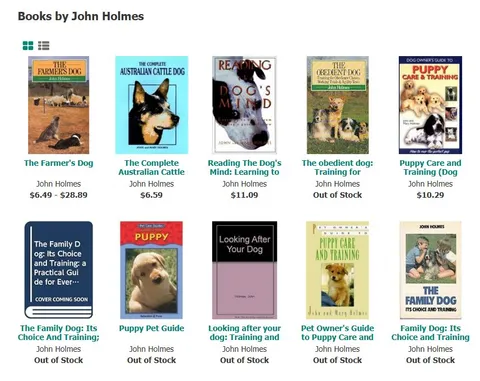
That experience also found its way into his books, from Obedient Dogs and How to Have One and The Farmer's Dog to the later The Obedient Dog: Training for Obedience Classes and Working Trials. Yet for a man with such an impressive show record, Holmes wrote surprisingly little about titles and victories. Far more often, he was interested in what a dog could do, why it behaved as it did, and how a person could learn to work with it.
In one photograph, Holmes stands surrounded by several of his dogs. The caption calls them not pets, but “some of his workers.”
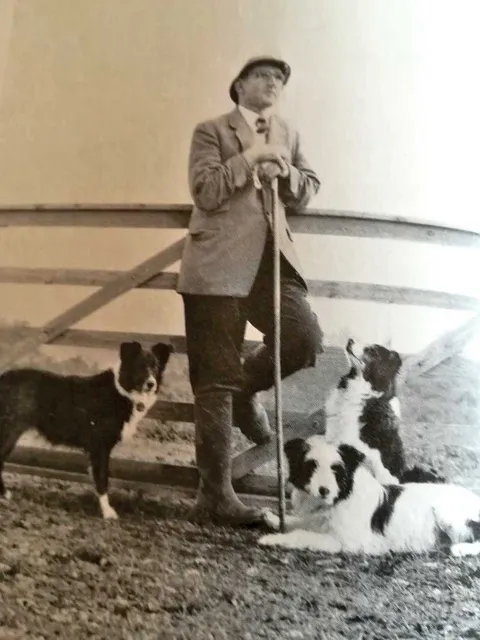
For a man who had once bought his first Corgi to herd cattle and catch rats, it is difficult to imagine a more appropriate description.
Back to Cattle Dogs
In the late 1970s, another breed entered Holmes's life, bringing him in a curious way back to the very beginning of his own story with dogs. During a visit to Australia, John and Mary encountered the Australian Cattle Dog — also known as the Australian Heeler — a breed developed specifically for working cattle.
The breed impressed them enough that they decided to become involved with it after returning to Britain. From Australian breeder Connie Redhead of Landmaster, they acquired a red bitch, Australian Ch. Landmaster Darling Red, known at home as Honey. She travelled to Britain already in whelp to Australian Ch. Landmaster Eureka.
Under the British import regulations then in force, Honey had to spend time in quarantine, and her puppies were born before she was able to reach her new home. The Australian Cattle Dog Society of Great Britain describes this as the first litter of Australian Cattle Dogs born in Britain.
The Holmeses did not stop with one dog. In 1980 they imported Pwca Blue Boomerang from the Netherlands, and Formakin became one of the first British kennels to work with the breed. During the same period, Malcolm Dudding was breeding Australian Cattle Dogs under the Swordstone affix. Dogs from the Swordstone and Formakin lines were subsequently bred together, and their descendants became part of the foundation of the developing British population.
Their interest in Australian Cattle Dogs was no passing enthusiasm. John and Mary bred them and later drew on their experience in the book The Complete Australian Cattle Dog.
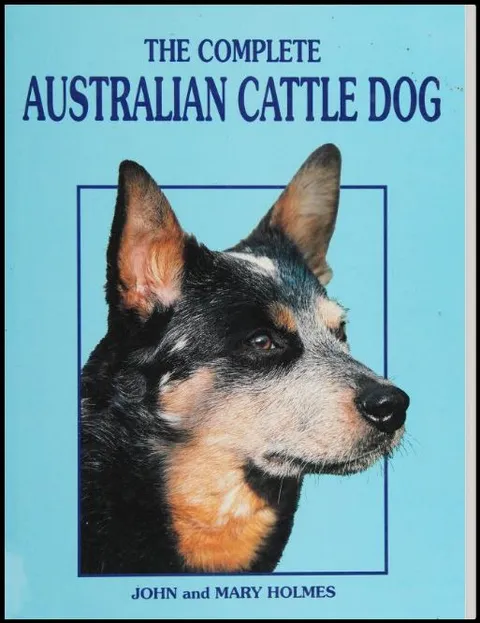
There is a pleasing echo of the beginning of Holmes's story in this late interest. Almost half a century earlier, he had chosen a Corgi not because of the breed's success in the show ring, but because he needed a small, tough and persistent dog to work cattle. In the decades that followed, his life had encompassed championship show rings, obedience, the touring Canine Stars, film, television and books on dog training — yet in the end he was once again fascinated by a dog whose principal purpose was working livestock. This time, however, it came to him not from South Wales, but from the other side of the world.
Fifty Years Later
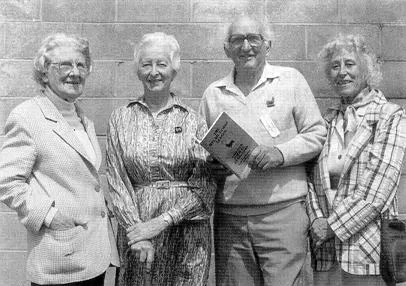
In 1988, during the Golden Jubilee celebrations, a photograph was taken of four people who had been there at the beginning of the Welsh Corgi League.
Jessie Fitzwilliams — Fitzdown.
Pat Curties — Lees.
John Holmes — Formakin.
Rosemary Lee — Cogges.
At the centre stands an elderly John Holmes.
In the decades since Nippy's arrival, the world of the Corgi had changed almost beyond recognition.
The farm dog had become one of the world's best-known companion breeds, and the working abilities for which Holmes had once sought his first Pembroke had long since ceased to be the main consideration in most breeding decisions.
During those same decades, Holmes had travelled from farm work to championship show rings, from obedience to touring performances, from training animals for film and television to books and television programmes — before returning once again to cattle-working dogs through the Australian Cattle Dog.
Yet this enormous story had begun much more simply: an eight-week-old puppy travelled alone from South Wales to Scotland because a young man on a farm simply needed a good dog for cattle and rats.
He got one.
================================