Why Do So Many Dogs End Up Needing a New Home?
Almost no one gets a puppy thinking that one day they may have to find it a new home. On the contrary, most people genuinely dream of many long and happy years together.
But sometimes life turns out differently. Some people realize they were not prepared for the daily walks, training, and constant attention a puppy requires. Others face unexpected changes in their circumstances: moving, illness, financial difficulties, or changes within the family.
Sometimes the problem is simply a mismatch between expectations and reality. People imagined a calm companion who would happily relax at home, but instead found themselves with an energetic herding dog that needs exercise, training, and regular mental stimulation.
Unfortunately, situations like these are often what lead to people searching for a new home for a dog that has already grown beyond puppyhood.
The good news is that many of these situations can be avoided before a puppy ever joins the family — simply by honestly answering a few important questions and taking your time with the decision.
Choosing More Than Just a Puppy
Most people begin their search in much the same way: they look through photos of puppies and try to decide which one is the prettiest, the fluffiest, or looks most like that perfect corgi they once saw online.
But choosing a puppy should begin much earlier. First, a prospective owner needs to answer a far more important question: Is this particular breed really right for my family and my lifestyle?
Even the most wonderful dog can turn out to be the wrong choice if its natural traits do not match the owner's expectations. And the opposite is equally true: the right breed can become a companion for life.
Sometimes the Right Decision Is Not to Get a Puppy Just Yet
It may sound surprising, but sometimes the most responsible decision is not to get a puppy, but to wait a little longer.
If you are expecting a move, a long business trip, a new baby, home renovations, or other major changes in the coming months, it may be better to get through that period first.
Don't worry that you will miss your chance: there will be other puppies. The first months of a dog's life in a new home are much better spent at a time when you genuinely have the time and opportunity to give your puppy the attention it needs.
When a dog joins the family at the right time, the adjustment is much easier both for the dog and for everyone else in the household.
You Are Not Choosing a Dog for Just a Year
Puppies grow astonishingly fast. Before long, those baby proportions will change, the muzzle will lengthen, the tiny paws and irresistible clumsiness will disappear, and yesterday's fluffy little puppy will begin turning into an adult dog who will remain by your side for many years.
Sometimes people say, “If it doesn't work out, we'll find another home for the dog.” But a dog is not an object that can simply be returned to a shop. It is a living being that feels, loves, and experiences fear. Moving to a new family is a major source of stress for any dog, let alone ending up in a shelter.
The decision to bring home a puppy should not be made on impulse. Not because of a beautiful video you saw online; not because your child has been asking for a dog for years; and not because everyone happens to be free during the summer holidays. It should happen because the entire family is genuinely ready to welcome a new family member for many years to come.
So when choosing a puppy, think not only about what that puppy will be like next week or next month, but about the dog it will become in two, five, or ten years.
Will you still be able to give your dog enough time?
Will you still be prepared to take care of its health, training, and everyday needs once the initial excitement has worn off?
If the answer to these questions is “yes,” then you are not simply choosing a cute puppy. You are making the decision to be responsible for a dog throughout its entire life.
Every Puppy Is Different
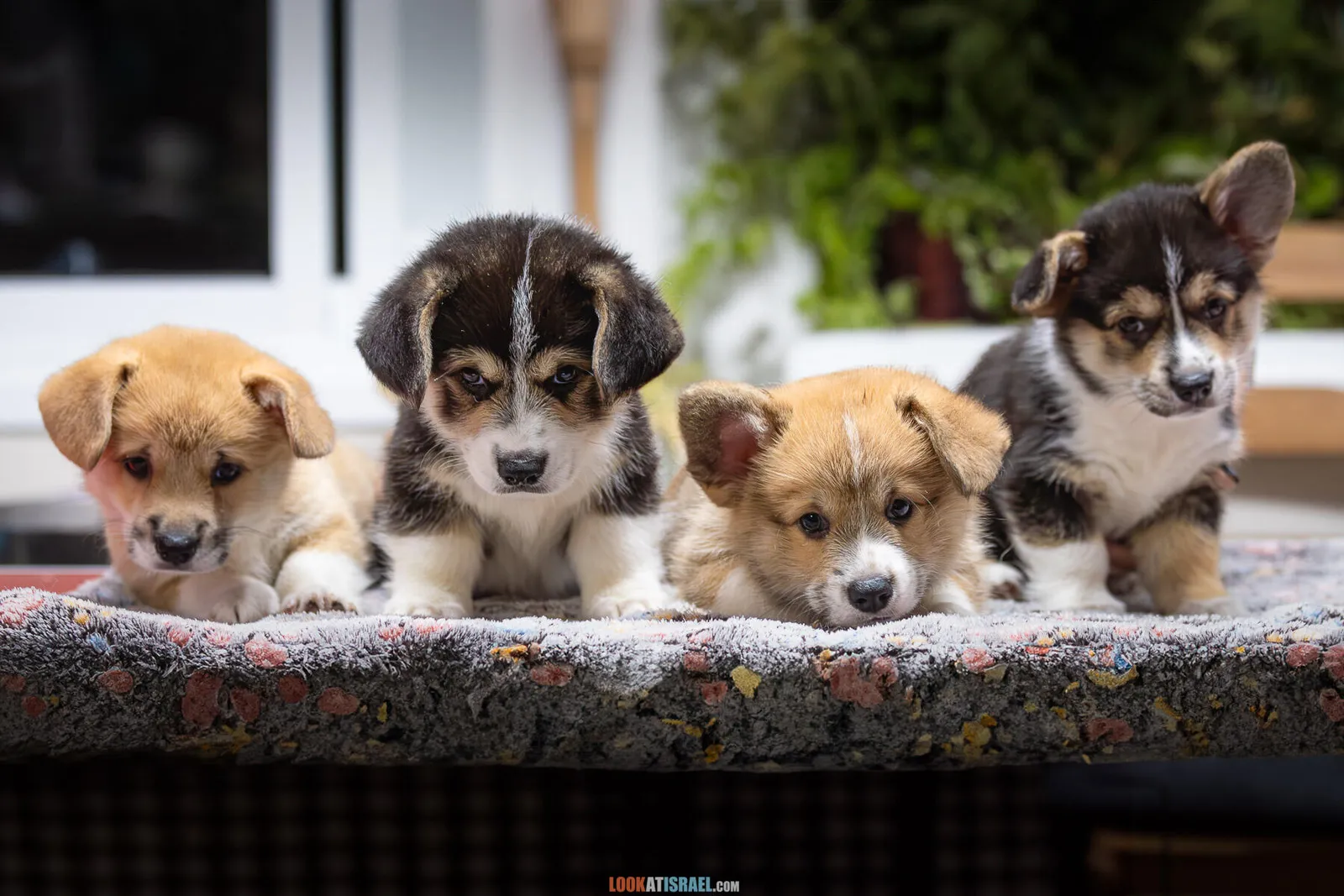
Even within the same litter, no two puppies are exactly alike.
One confidently explores everything new from the very first weeks.
Another prefers to watch from a distance before joining in.
One handles car rides, noise, and visitors with ease.
Another needs a little more time to adjust to unfamiliar situations.
As puppies grow, differences become increasingly noticeable in temperament, activity level, confidence, sensitivity to new experiences, and the way they interact with people. It is impossible to say in advance that “this puppy is the best one.”
It is much more accurate to say: this is the puppy that is the best match for this particular family.
A Dog Is Not a Way to Teach a Child Responsibility
We often hear the same phrase: “We want to get our child a dog so they can learn responsibility.”
The intention is understandable and sincere. Pets really can help children become kinder, more attentive, and more caring.
But there is one important distinction: a child can learn responsibility through caring for a dog, but cannot be expected to take full responsibility for it. This is not because children are lazy or irresponsible — they simply grow up, and their interests and priorities change.
Today a child may happily take the puppy for walks, but a few years later their life will look very different. There will be school, exams, friends, extracurricular activities, military service, university, or perhaps a move to another city. This is a natural part of growing up.
The dog, meanwhile, is still a member of the family and still needs daily walks, food, veterinary care, attention, and love.
So before getting a puppy, the adults in the family need to answer one question honestly: “If, in a few years, our child loses interest or simply can no longer take care of the dog, are we prepared to take full responsibility ourselves?”
If the answer is “yes,” then the decision has been made on the right basis.
But if everything depends on the child continuing to care for the dog, perhaps this is not yet the right time to bring one home.
Our Experience
It took us about three years to finally decide to get our first dog, even though our daughter spent all that time begging us for one and promising that she would take care of it herself.
But we understood that having a dog is, in many ways, like having another child — and ultimately, the responsibility would be ours.
Who Should Choose the Puppy?
We are always happy when prospective owners come to meet the puppies as a whole family. For a child, this is an important event they may remember for the rest of their life. But the final decision should still be made by the adults.
Children choose with their hearts. They are drawn to the funniest puppy, the fluffiest one, or the little one who runs up to greet them first — and that is completely natural.
Adults, however, need to consider very different things: the sex of the puppy, its temperament, the characteristics of the breed, the family's lifestyle, and how well this particular puppy is likely to fit into its future home.
Sometimes a child falls in love with one puppy while the breeder recommends another. This is not because the first puppy is “worse,” but because the breeder's job is to help find the puppy with whom the family will be comfortable living for many years.
A dog can become a child's best friend, but responsibility for that dog must always belong to the adults.
Why Does the Breeder Ask So Many Questions?
Prospective owners are sometimes surprised by the long list of questions.
- Where will the dog live?
- Are there children or other animals in the home?
- How much time will the dog spend alone?
- Do you have previous experience with dogs?
- Are you planning to work with a dog trainer?
This is not a test or an examination. A responsible breeder is not looking for “perfect” owners. They are simply trying to understand what kind of home the puppy will be living in and which puppy is most likely to be a good match for that particular family.
Sometimes saying “no” is also a way of caring for a puppy.
Sometimes the Breeder Knows the Puppies Best
During the first eight to ten weeks of their lives, the breeder is with the puppies almost around the clock. They see which puppy is the first to approach a new person, which one recovers quickly after an unexpected fright, which loves energetic games, and which prefers to sit back and calmly observe what is happening.
Of course, a dog's personality continues to develop as it grows, but early differences in temperament can already be seen at a young age. An experienced breeder can often match a puppy to a family more accurately than someone who has spent only an hour meeting the litter.
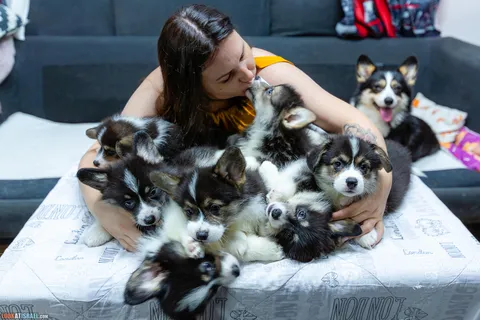
Can You Choose a Puppy from a Photo Alone?
A photograph captures only a single moment. It cannot show a puppy's temperament, activity level, attitude toward people, or behavioral traits, which is why choosing a puppy purely on appearance is rarely the best strategy.
Beautiful photographs may help you fall in love with a puppy, but understanding its temperament is what helps build a happy life together.
Why Does a Good Breeder Sometimes Say No?
This is probably one of the most difficult situations. Being turned down can be upsetting, but sometimes saying no is the most responsible thing a breeder can do.
If someone dreams of a dog that will happily lie around the house all day but chooses an active herding breed, the likelihood of disappointment is very high.
If a family is home for only a few hours a day and the puppy will spend the rest of the time alone, that is also something that needs to be discussed seriously.
Sometimes another breed would be a much better match.
Sometimes it is simply not the right time to get a dog.
And sometimes another puppy from the same litter would be a better choice.
A responsible breeder's goal is not to sell every puppy as quickly as possible. Their job is to find the right home for each one.
Our Experience
In our own breeding experience, we have already had to say no to prospective owners.
Once, an elderly woman contacted us because she wanted to buy one of our puppies and was ready to pay a deposit immediately.
But as we talked, it became clear that she spent most of her time at home, rarely went outside, and did not have a car. There was also the possibility that, several years down the road, she might herself need assistance and care. We had to think not only about the present moment and the immediate benefit of making a sale, but about what might happen to a young, active dog ten or twelve years later.
We genuinely did not want to disappoint her, but we understood that our responsibility to the puppy mattered more than making another sale.
That is why a responsible breeder sometimes says “no” — because their decisions should be made in the best interests of the dog.
A Good Breeder Stays in Touch
Sending a puppy home with its new owners is not the end of a breeder's work. For a responsible breeder, it is the beginning of a new stage.
They stay in touch, offer advice, answer questions about feeding, training, health, and choosing the right equipment, and often become the first person owners call when they encounter a problem. A responsible breeder takes responsibility not only for bringing a puppy into the world, but also for what happens to that dog in the future.
The Most Important Thing
When we choose a puppy, we are not really choosing the prettiest little one. We are choosing a future member of the family.
That is why a good breeder tries not simply to find an owner for a puppy, but to find a family in which that puppy can live a long, secure, and happy life.