🍽️ Episode 1: “Dog Nutrition Without Myths”
Today you’ll learn:
- why the manufacturer matters more than fancy packaging;
- which signs indicate a responsible approach by the company;
- which questions veterinary nutritionists recommend asking;
- why transparency from the manufacturer is a good sign.
Who Made This Food?
Imagine you have two bags of dog food in front of you, both at the same price point.
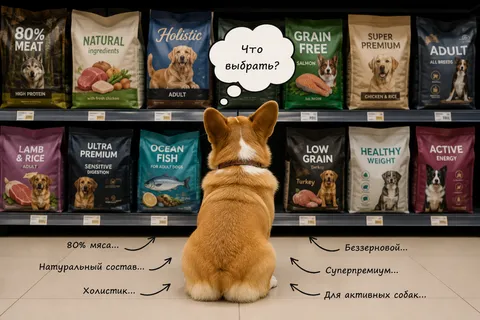
One says “Superpremium. Holistic. 80% meat.”
You know far less about the second, but on the manufacturer’s website you can find detailed information about where the food is made, who develops the formulas, how each batch is quality‑checked, and who you can contact with questions.
Which manufacturer would you trust with your dog’s health?
That is exactly the question you should ask yourself even before you start studying the ingredient list.
Why Is the Manufacturer So Important?
The quality of the finished food depends on more than just ingredients.
Equally important are:
- raw material quality control;
- production technology;
- adherence to the formula;
- laboratory testing;
- staff qualifications;
- the company’s willingness to acknowledge mistakes and fix them.
Veterinary nutritionists recommend evaluating not only the product itself, but also the company that makes it.
Five Questions to Ask the Manufacturer
You don’t necessarily have to write an email to the company; often the answers are already available on the official website.
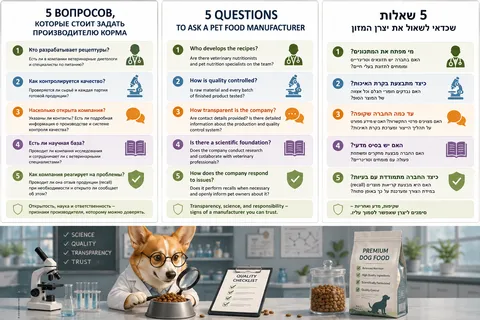
📋 Buyer’s Checklist
1. Who develops the formulas?
A good sign is when veterinary nutritionists, veterinarians, animal nutrition specialists, and food technologists are involved in creating the diets.
2. How does the company control quality?
A responsible manufacturer explains:
- how raw materials are checked;
- which control stages the finished product goes through;
- what happens if a discrepancy is found.
3. How transparent is the company?
Pay attention to whether:
- the manufacturer and their contact details are listed;
- the official website is easy to find;
- the company responds to customer questions;
- detailed information about the products is available.
Transparency alone doesn’t guarantee quality, but it is a good indicator of a responsible attitude to their work.
4. Is there a scientific foundation?
Developing a complete diet is more than just picking ingredients.
Companies that invest in research, publish scientific materials, and collaborate with veterinary professionals usually pay more attention to the quality of their diets.
5. How does the company act when a problem arises?
Mistakes can happen even to the most well‑known manufacturers.
What matters far more is this: a responsible company openly reports a problem, recalls products when necessary, and informs owners about the measures taken. That kind of transparency is what inspires trust.
What Does WSAVA Recommend?
The World Small Animal Veterinary Association (WSAVA) advises owners to look beyond the packaging.
When choosing a manufacturer, it’s important to understand:
- who develops the formulas;
- which specialists work for the company;
- whether quality control is carried out;
- whether there is scientific research behind the products;
- whether the manufacturer is willing to answer owners’ questions openly.
These criteria allow you to assess a manufacturer far more objectively than advertising claims or flashy names of product lines.
Can You Only Trust Well‑Known Brands?
No.
Brand popularity still doesn’t guarantee that any product they make is automatically the best choice. Likewise, a small or less well‑known manufacturer doesn’t necessarily produce poor‑quality food.
Experts recommend evaluating not the size of the company, but its approach to development, production, and quality control.
What to Remember
A responsible manufacturer doesn’t hide behind flashy advertising promises.
They are ready to explain:
- who develops the food;
- how quality control is organized;
- where the product is made;
- which studies and standards it complies with;
- how you can get in touch with them.
The more transparency and specific information a company provides, the more reason you have to trust its products.
If after reading this article you start looking not only at the ingredient list, but also at who is behind the product, you’ve already taken a big step toward making informed nutrition choices for your dog.
🦴 Myth of the Week
“If the manufacturer is well‑known, then any food they make is automatically the best.”
Even the most reputable companies produce different food lines designed for different dogs’ needs.
You should evaluate not just the brand name, but the specific formula.
🔜 What’s Next?
➡️ Article 3. Why You Can’t Choose Food Based on the Ingredient List Alone
In the next article we’ll finally turn the package over and look at it through the eyes of a veterinary nutritionist.
You’ll learn:
- why the ingredient list often misleads owners;
- how manufacturers decide the order of ingredients;
- why “meat in first place” still doesn’t mean high quality;
- and how to learn to read the composition without common mistakes.