Corgis are not couch potatoes
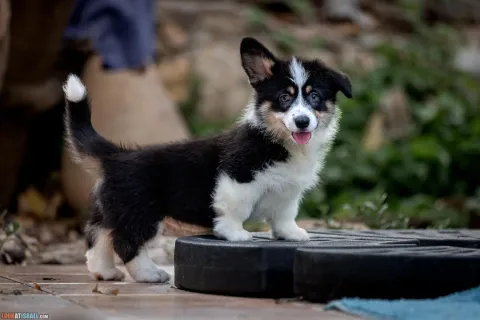
Many people think of the corgi as a small decorative breed.
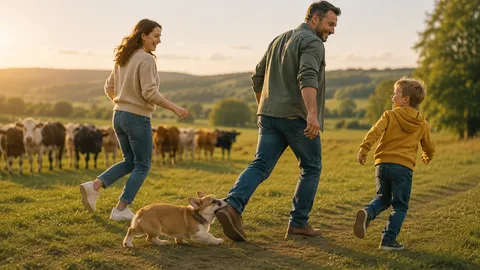
In fact, it is a sturdy herding dog, bred to work with cattle. For many hours corgis would accompany the herd, quickly change direction, accelerate sharply, turn almost on the spot and work tirelessly all day long.
The modern family corgi has kept the same anatomy, but its lifestyle has changed dramatically. Today, most dogs spend a significant part of the day at home, and their only physical activity is a few calm walks. For such an active breed, this is often simply not enough.
Why muscles are so important for a corgi
Because of their long spine, the load on a corgi’s back is higher than in many other breeds.
A strong muscular “corset” performs several tasks at once:
- supports the spine;
- reduces the load on the intervertebral discs;
- stabilizes the shoulder and hip joints;
- lowers the risk of injuries while running and jumping;
- helps the dog recover more easily after exertion and surgery.
Essentially, the muscles become a natural “corset” that protects the dog’s body every day.
Excess weight and weak muscles: a bad combination
Obesity is talked about a lot, but no less dangerous is the situation when a dog has a normal weight yet almost no developed musculature.
Such a dog gets tired faster, is less stable on slippery floors, copes worse with long walks, and places more stress on the spine with every jump. That’s why weight control and muscle development should always go hand in hand.
Which activities are truly beneficial
Not all activities are equally good.
The most beneficial are considered to be:
- long walks;
- walks over uneven terrain;
- uphill walking;
- walking on different surfaces;
- controlled balance exercises;
- swimming;
- underwater treadmill work.
Endless ball throwing, jumping for frisbees and sharp starts and stops are better limited, especially for young dogs.
Why we chose the pool
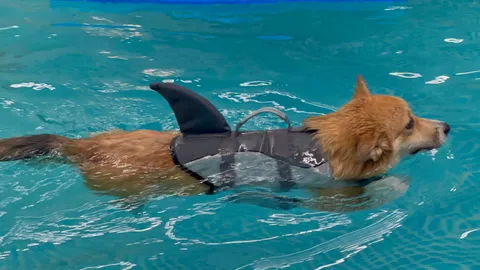
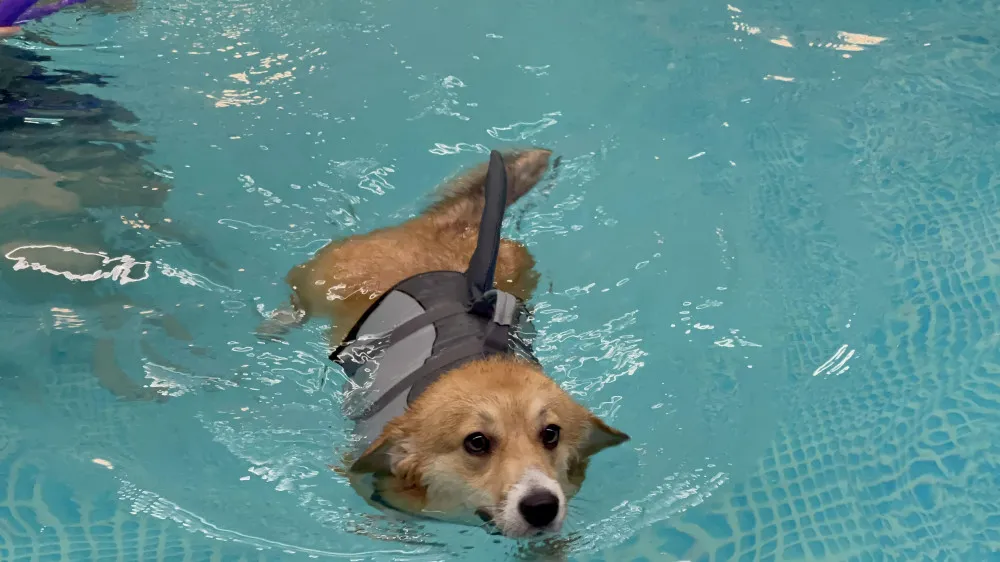
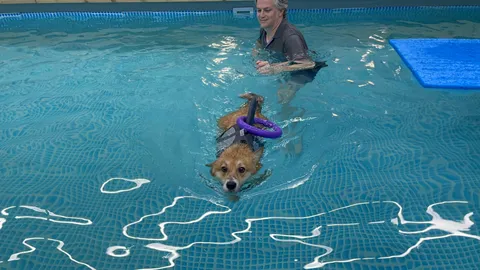
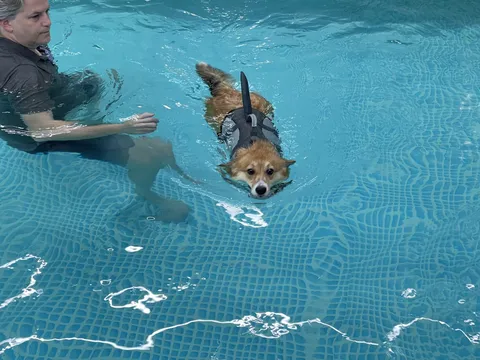
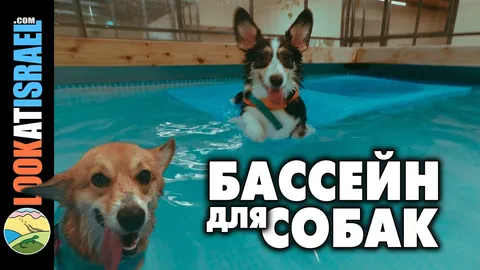
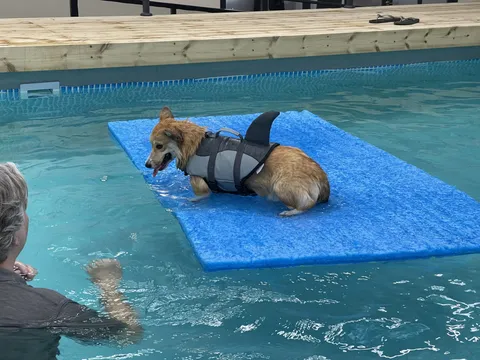
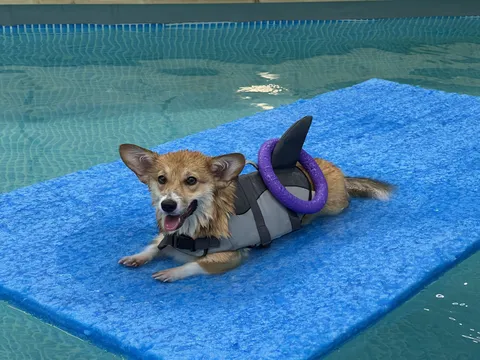
For our dogs, the pool has become one of their favorite workouts.
When swimming, almost all muscle groups are engaged while there is no impact load on the joints.
Water creates natural resistance, which makes the muscles work much more actively than during a regular walk.
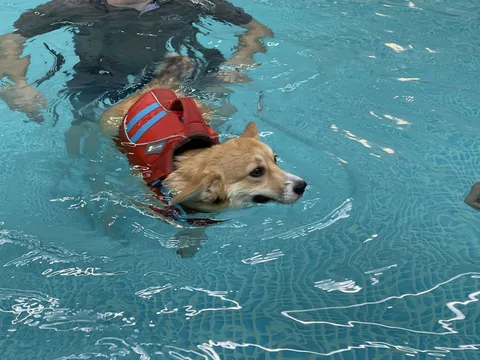
After a course of swimming we notice in our dogs:
- more confident movement;
- better stamina;
- well-developed muscles of shoulders and thighs;
- improved overall physical condition.
In addition, most of our dogs genuinely enjoy swimming.
The pool is about more than muscles
There is a common belief that all dogs can swim from birth. In reality, that’s a myth.
Yes, most dogs are capable of making paddling movements once in water, but far from every dog feels confident there. Many get scared when they no longer feel the ground under their paws, start to panic, move chaotically and quickly become exhausted.
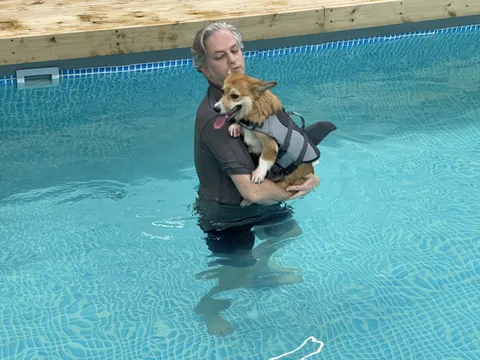
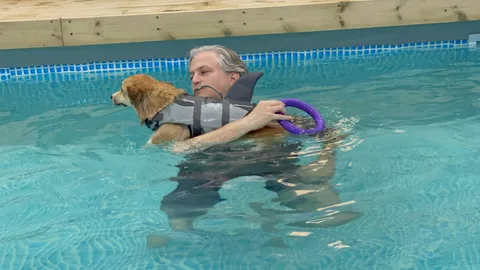
Pool sessions help the dog gradually get used to water in a calm and safe environment. Under the instructor’s supervision the dog learns to hold its body correctly, coordinate movements, stay calm and swim confidently when walking is no longer possible.
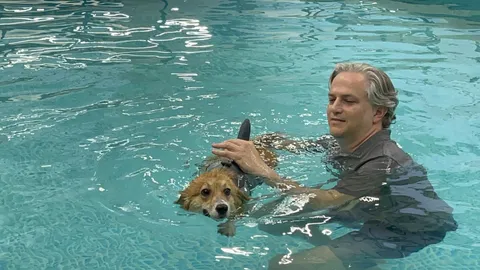
This not only turns swimming into full-fledged physical exercise, but also develops an important life skill. If one day the dog accidentally ends up in deep water, the absence of panic and confidence in its own abilities can play a very important role.
What an underwater treadmill is
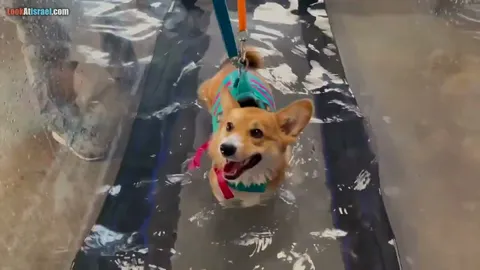
The underwater treadmill (הליכון מים) combines the benefits of walking and water resistance.
The dog walks on a moving belt inside a transparent chamber; the water level is adjusted individually.
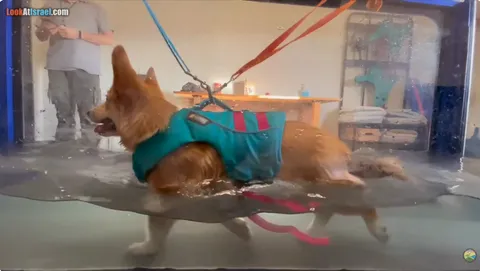
This type of training allows you to:
- develop muscles evenly;
- control the walking speed;
- almost completely eliminate impact load;
- use the exercises even after injuries and surgeries (as prescribed by a veterinarian).
For many dogs, the underwater treadmill turns out to be even more effective than free swimming, because it allows you to control correct movement mechanics.
Our experience
We started using the pool and the underwater treadmill as part of the regular physical conditioning of our adult dogs.
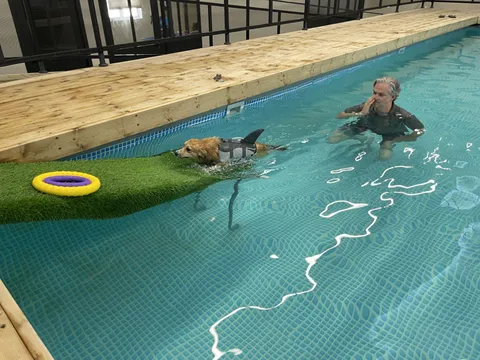
This is not treatment and not a way to “fix” health problems. It is the same sort of preventive care as high-quality nutrition, weight control, or annual vet check-ups.
We want our dogs to stay active, move easily and maintain good physical condition for many years, so several courses of such training throughout the year have become part of our dogs’ lives.
A few important rules
Any intensive exercise must match the dog’s age and health condition.
You should not:
- overwork puppies;
- force a dog that is terrified of water to swim;
- start training right after surgery without the vet’s approval;
- continue training through pain or obvious fatigue.
Regular moderate sessions bring the best results, not rare extreme workouts.
The main thing to remember
For a corgi, muscles are not just nice body contours; they are one of the most important systems protecting the spine and joints. The better the dog’s physical condition, the easier it is for the dog to move, the lower the risk of injury and the longer it can lead an active, happy life.
Building muscles at home
To keep your dog in good physical shape you don’t necessarily need a pool or a professional rehab center. Many exercises can be done during regular walks or at home. The main rule is to train regularly, little by little, and always in a playful way.
5 simple at-home exercises to strengthen muscles
1. Uphill walking
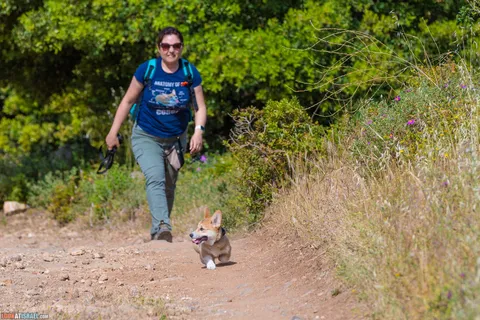
Walking up gentle slopes is excellent for strengthening the muscles of the hind legs, pelvis and lower back.
Going downhill is useful too, but it is the ascent that makes the dog actively work with the hind legs.
It is important to walk at a calm pace, without jerking or running.
2. Cavaletti
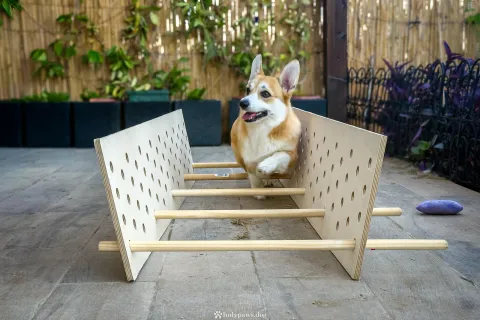
Cavaletti are a row of low poles which the dog steps over slowly.
This exercise:
- improves coordination;
- teaches the dog to place its feet correctly;
- strengthens the muscles of the shoulder girdle and hind limbs;
- develops body awareness (proprioception).
The pole height should match the dog’s size. For a corgi, very low obstacles are enough.
The key is a slow walk. The goal of the exercise is not to jump over the poles, but to step carefully over each one.
3. Balance on an unstable surface
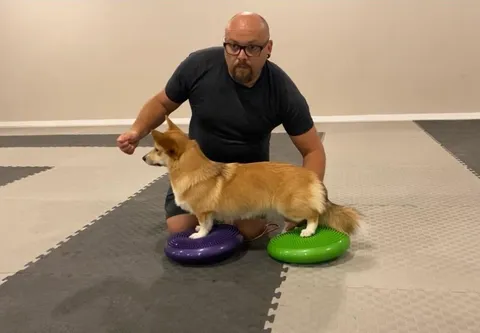
For this, special balance cushions, inflatable discs or other stable yet slightly springy surfaces are used.
When the dog is trying to keep its balance, the deep core muscles start working – muscles that are almost impossible to load with a regular walk.
You should start with just a few seconds, gradually increasing the duration of the exercise.
Never force the dog into unnatural positions or make it stand on a surface that is too small.
4. Backing up
One of the most underrated exercises.
Slow movement backward is excellent for strengthening the hind limb muscles, improving coordination and helping the dog better understand its own body position.
Most dogs don’t understand at first what is being asked of them, so the exercise is taught gradually, using treats and positive reinforcement.
Just a few steps per set are enough.
5. Controlled stand
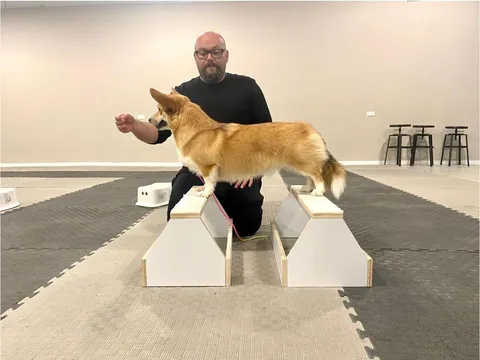
Ask the dog to stand calmly on a flat surface and hold a natural stance for a few seconds.
This may look like a very simple exercise, but it is during a still stand that numerous stabilizing muscles that support the spine and joints are at work.
You can gradually increase the duration of the exercise or perform it on a slightly unstable surface under the owner’s control.
A few important training rules
Any exercise should be enjoyable for the dog.
You should not train if the dog:
- is clearly tired;
- is in pain;
- is limping;
- has recently undergone surgery and has not yet received the vet’s approval for physical activity.
It is better to have short 5–10 minute sessions several times a week than to arrange one long workout once a month.
And most importantly, always watch the technique. Slow, careful and controlled movements are much more beneficial than speed and the number of repetitions.
In our kennel we try to focus not only on genetics, proper rearing and nutrition, but also on our dogs’ physical conditioning. This is why the pool, underwater treadmill, long walks and home exercises have become part of our corgis’ lives. We are convinced that strong muscles are one of the most important contributions to the health of the spine, the joints and to our dogs’ active longevity.