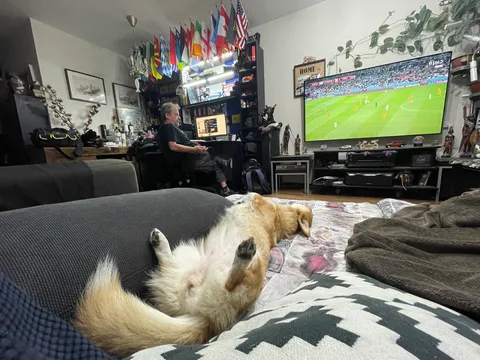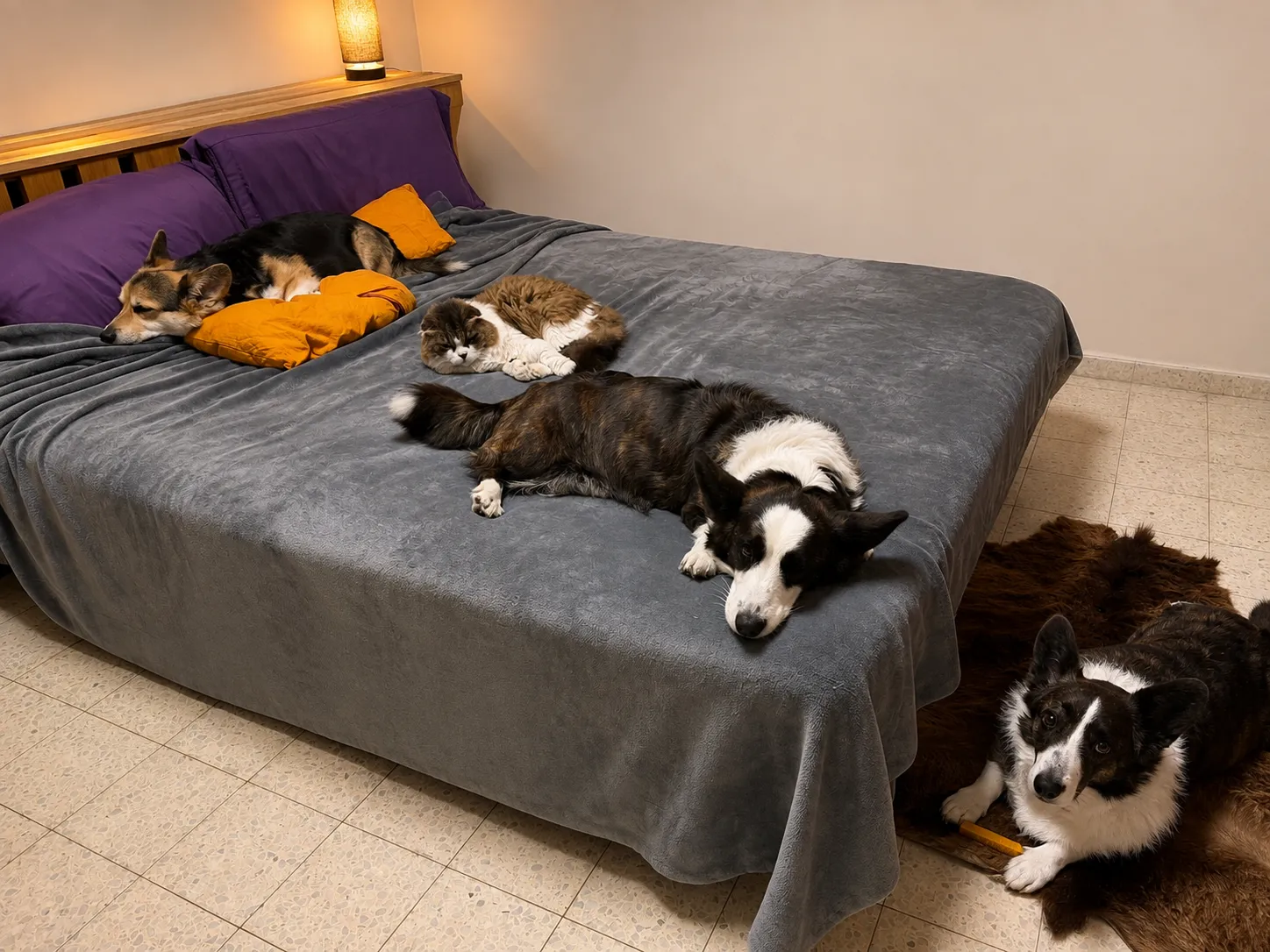
For some owners, a dog in the bed is a completely natural part of family life; for others, the bedroom – and especially the bed – is a people-only zone. Both options are perfectly fine.
From the perspective of a healthy dog’s behavior, there is no rule saying you must forbid your dog from sleeping on the bed. Sharing a bed does not, by itself, make the dog “the boss of the house”, ruin training, or lead to domination over the owner.
But there are some situations when it really is worth reconsidering the habit of sleeping together.
Will the dog start thinking it’s in charge?
One of the most persistent myths goes something like this: “If you let your dog sleep on the bed, it will decide it’s equal to the owner or higher in status.”
Modern understanding of canine behavior is much more complex than that. A dog does not build a family status chart based on who sits on the sofa, who walks through doors first, or who sleeps higher off the floor.
For the dog, the bed primarily means a soft, warm, safe place next to the humans.
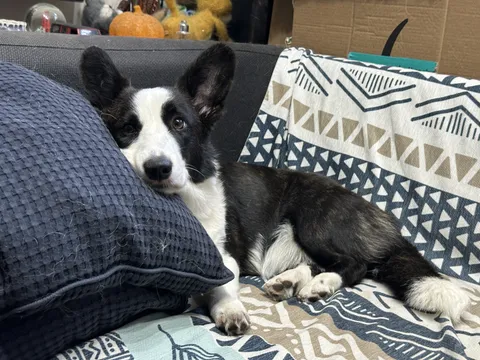
If the dog calmly comes onto the bed, sleeps nearby, gets off when asked, and doesn’t get into conflicts over this spot, there is no reason to view this behavior as a problem.
What if the dog growls when you try to move it?
That’s a different situation.
Growling when someone approaches the bed, tries to shift the dog, or asks it to get off may be a sign of resource guarding, where the resource is not the owner’s “throne”, but a valuable resting place.
You should not punish growling. Growling is a warning signal, and if you suppress it with punishment, the conflict may not disappear: the dog might simply stop warning before a more serious reaction.
It’s better to temporarily limit access to the bed and work separately on calm response to a cue to get off, resource exchanges, and the dog’s attitude to touch. In cases of pronounced aggression, it’s best to consult a behavior specialist.
It’s also important to remember: if the dog used to let you move it without protest and then suddenly starts growling, especially while sleeping or when touched, the cause may be pain, not a behavior problem. In that case, a veterinary exam should come first.
A dog should be able to sleep separately
Even if you’re completely fine with your dog in your bed, it’s useful for the dog to have its own comfortable place and the ability to sleep there calmly.

You’ll need this more often than it might seem.
For example:
- when the owner is ill;
- after the dog has had surgery;
- during a heat cycle;
- when a baby appears in the family;
- when traveling;
- in a hotel or someone else’s home;
- when activity has to be restricted for a time;
- or when one day the owner simply wants to sleep well without a corgi lying across the bed.
So the rule doesn’t have to be “no bed ever”, but rather “you may come on the bed, but it’s not the only place where you’re able to sleep peacefully”.
Hygiene: how dirty is it to sleep with a dog?
A dog really does bring into the house things that would be much less present in your bed without it: hair, dust, sand, bits of soil, and microorganisms from outside.
But for a healthy adult human and a healthy house dog with normal hygiene, sharing a bed usually doesn’t pose a significant risk.

You can reduce risks with some simple measures:
- regularly treat the dog for external and internal parasites according to a schedule appropriate for your region;
- monitor the condition of the skin and coat;
- after walks, check and, if needed, clean the paws;
- don’t let a dog with diarrhea, vomiting, skin infection, or an unknown illness into the bed;
- change bed linen more often;
- regularly wash the bedspread or separate blanket the dog lies on.

For corgis, that last point is especially relevant: the amount of hair in the bed can sometimes make you suspect the presence of a second dog made entirely from undercoat.
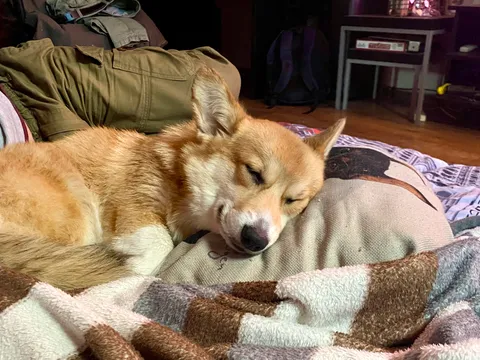
When sharing a bed may be undesirable
There are situations where risks matter more than convenience.
Allergy or asthma in a person
If the owner is allergic to dogs or has significant asthma, it’s often recommended to make the bedroom an animal-free zone. Eight hours of close contact with allergens every night can matter much more than short interactions during the day.
Sleep disruption
Dogs move, change position, scratch, lick themselves, may snore, dream, and react to sounds.
Some owners sleep just fine through all this, while others wake up repeatedly, even if they don’t consciously notice it.
If a person is regularly sleep‑deprived, it’s worth trying, at least for a few nights, to set up a separate sleeping spot for the dog and compare sleep quality.
Guarding the bed
If the dog guards the bed from people or other animals, access to it is best temporarily restricted until the behavior issue is addressed.
Very young children
A dog and a small child should not be left together without adult supervision, including while sleeping.
A sleeping dog might be startled by a sudden touch, a kick, a hug, or an attempt by the child to lie on top of it. Even a very friendly dog has every right not to expect to be woken up this way.
Some human medical conditions
For people with severely weakened immune systems, recommendations about contact with animals may differ. In such cases, it’s better to discuss bed‑sharing with the treating physician.
What about a puppy?
With a puppy, the issue is a bit more complicated.
On the one hand, closeness to a human helps the puppy feel calmer after moving from the kennel to a new home. On the other hand, if the puppy sleeps only in the human bed from the very first night, it may later turn out that it simply hasn’t learned to stay alone calmly.
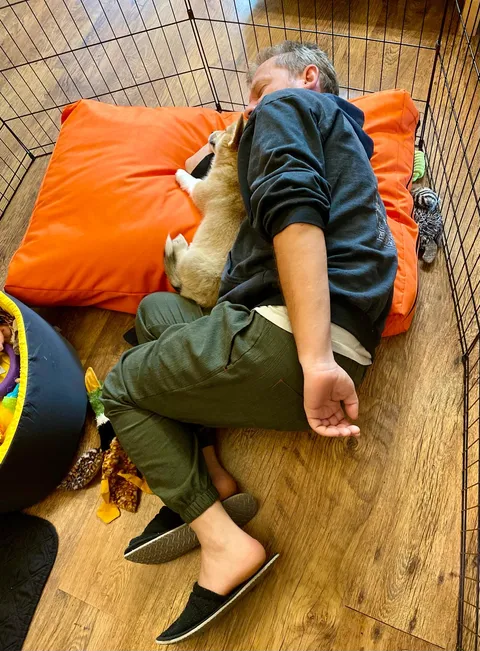
In addition, a small puppy can:
- fall off a high bed;
- jump down from it;
- wake at night and pee on the floor;
- chew something in the bedroom while the owners are asleep.
So in the first months, a convenient compromise can be a dog bed, playpen, or another safe spot next to the bed.
If the puppy is still allowed into the bed, it’s especially important to think through a safe way to get on and off and not allow regular jumping from a high bed.
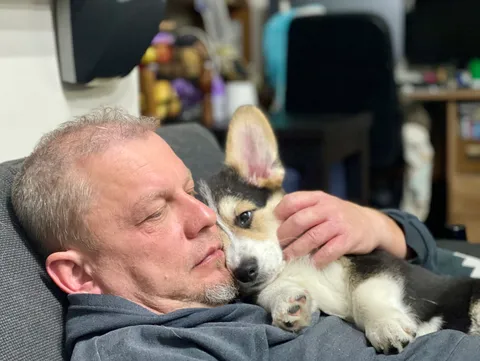
Corgis and a high bed
For a corgi there is another practical nuance.
The problem is not that the dog lies on the bed, but how it gets up there and how it gets down.
Constant jumping from a high surface creates additional impact load on the legs and spine. This is especially undesirable for puppies, senior dogs, overweight dogs, and dogs with spinal or joint disease.
If a corgi regularly sleeps on a high bed, it makes sense to use a stable, non‑slip ramp or suitable steps. A ramp is usually preferable to a very steep little staircase.
After surgery or injury
After orthopedic surgery, spinal surgery, and with some injuries, the vet may prescribe strict activity restrictions. During this period the bed can become a dangerous place: a dog may suddenly jump down even if it normally uses a ramp.
Sometimes it’s safer to temporarily arrange a sleeping place on the floor or limit the space so that jumping is physically impossible.
Can sharing a bed increase separation anxiety?
Sleeping next to the owner is not considered a cause of separation anxiety by itself.
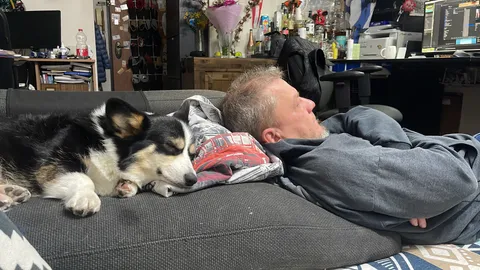
A dog does not become pathologically dependent just because it lies next to a human at night.
But if a dog is unable to relax without the owner at all – follows them from room to room, panics behind a closed door, and struggles even with short absences – then the issue isn’t the bed. Such a dog needs to gradually learn to feel safe and rest on its own.
A bed ban alone will not solve this problem either.
Do you need rules?
Yes – but rules are needed not for “leadership”, but for comfort and safety.
For example, you can teach the dog two simple cues:
“Up” (or “OK”) – an invitation to get on the bed.
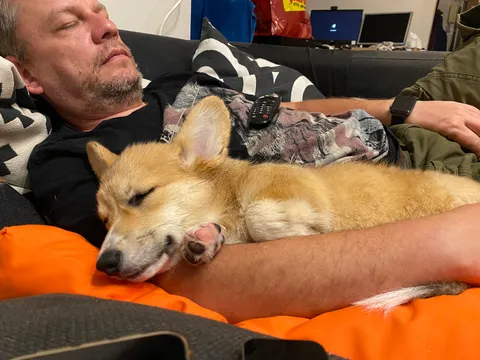
“Place” or “Off” – calmly go to its own bed.
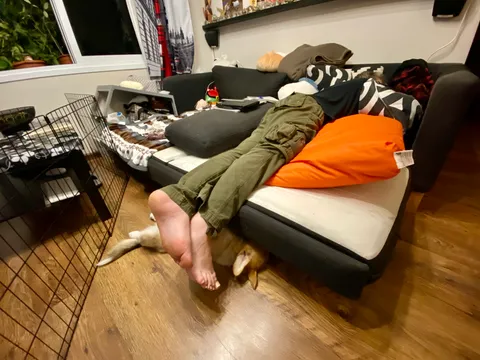
This is especially convenient in a household with several dogs: access to the bed stops being something each dog has to earn or defend on its own.
If there are several dogs
Sharing a bed gets a bit more complicated when there’s more than one dog in the home.
The bed is a limited and very valuable resource. In one place you have the owner, a comfy rest spot, and close physical contact. So even dogs that get along perfectly during the day may conflict over who lies closer to the human or who gets a favorite spot.

Pay attention to:
- freezing when another dog approaches;
- staring;
- blocking the way;
- attempts to push another dog away;
- growling;
- tense body posture.

If this happens, it’s better not to wait for a serious fight, but to change the sleeping arrangements. It’s often much calmer when each dog has its own place next to the bed.
What if the dog doesn’t want to sleep with the human?
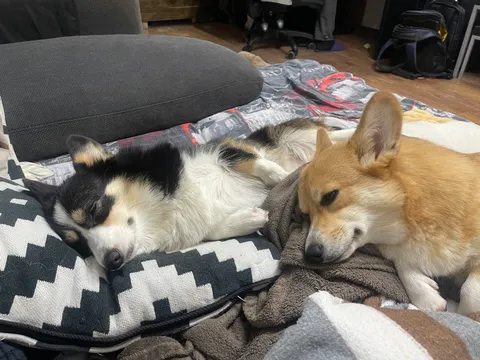
That’s absolutely fine as well.
Some dogs love sleeping pressed up against the owner, others come for a bit and then go to the floor, and others prefer their own bed, cool tiles, or even a different room. This doesn’t mean they’re less attached.
Especially in a warm climate, it may simply be too hot for the dog under the blanket or right next to a person.

How things work at our home
In our house, the dogs have quite a lot of freedom. They can lie on sofas and armchairs, rest next to us and, if they feel like it, arrange group corgi hangouts on the soft furniture.
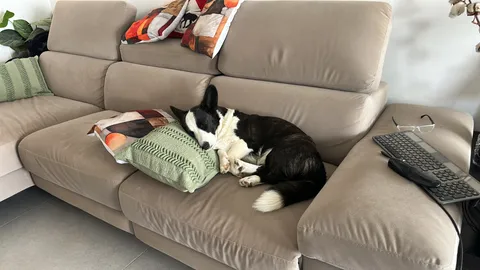
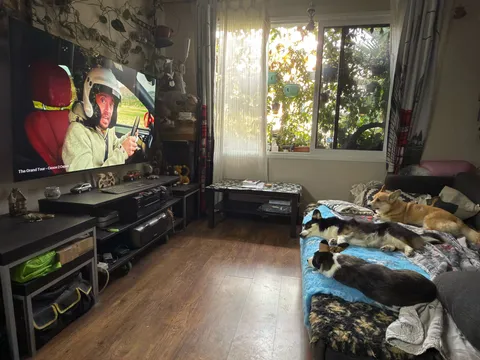
But we do have one rule: dogs don’t go into the bedroom and don’t sleep in our bed.
Our reasons are entirely practical, not about training or “domination”.
First, when you live with several corgis, hair becomes practically part of the interior. We’d like the bed to be at least relatively free of it.
Second, our dogs are rather noisy roommates. They change spots, sigh, scratch, walk around the room, react to sounds, and periodically start a night life of their own when people are actually trying to sleep. So for us, the bedroom is a quiet zone.
At the same time, we don’t consider this option the only correct one.
We know owners who adore sleeping with their dogs and can’t imagine a night without a warm dog body next to them. And we know people who don’t allow their dogs not only on the bed, but even on sofas and armchairs at all.
As long as the rules are clear to the dog, are applied consistently, and suit the whole family, both approaches are absolutely normal.
Moreover, the absence of dogs in our bedroom doesn’t mean we never sleep with them. Sometimes I fall asleep on the sofa surrounded by dogs.

And that has a very different charm – especially when it’s hard to fall asleep or something is worrying me. Kaya, for example, is an amazingly soothing dog, and in those moments I really love sleeping next to her.

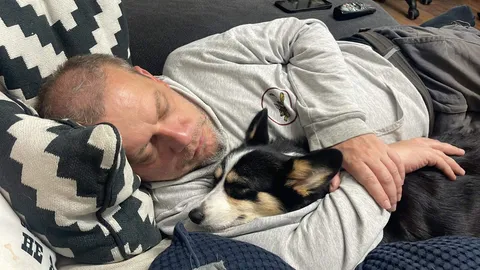
This probably illustrates the main point: you don’t have to settle the bed‑sharing question once and for all on a “the dog must” or “the dog must never” basis.
You can set rules that suit a particular family: allow the sofa but keep the bedroom off‑limits; allow the dog on the bed only by invitation; sleep together sometimes; or prefer separate sleeping places altogether.
The key is not to follow myths about status and dominance, but to choose an option that keeps both humans and dogs calm, comfortable, and safe.
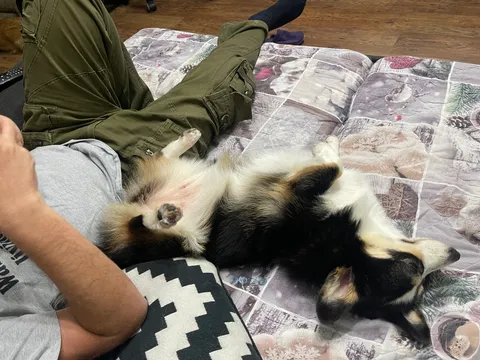
So is it allowed or not?
Yes, if it’s comfortable and safe for everyone.
Sharing a bed with a dog doesn’t make it dominant, doesn’t mean it’s untrained, and doesn’t in itself create behavior problems.
But a good habit looks like this: a dog can sleep with a human – and can calmly sleep without them.
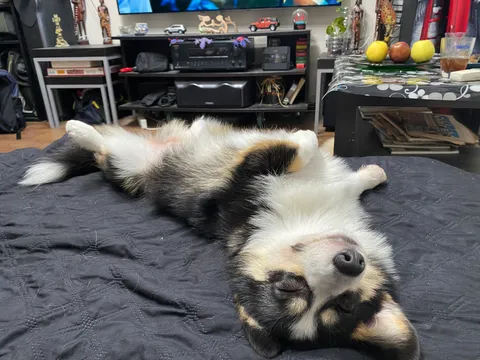
The dog doesn’t guard the bed, gets off when asked, has its own comfortable place, and can get on and off safely. Beyond that, the issue is no longer about dog training, but about family preferences.
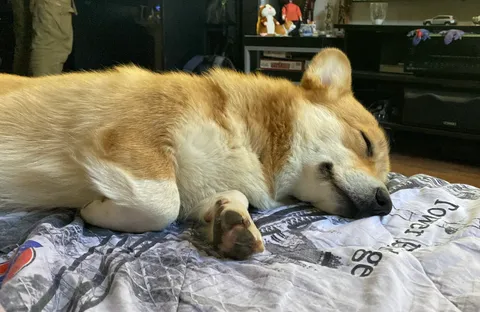
If you like waking up next to a corgi, there is no reason to give that up because of an old “pack leader” myth.
If you prefer a clean bed without hair, sand, and a corgi stretched diagonally across two‑thirds of the mattress, your dog doesn’t have to agree with you – but you still get to set the bed rules.