
Why Does Every Dog Need Year-Round Flea and Tick Protection?
Fleas and ticks are much more than a nuisance.
Fleas may cause:
- flea allergy dermatitis;
- severe itching and skin irritation;
- secondary bacterial skin infections;
- anemia in heavy infestations;
- transmission of certain tapeworm species.
Ticks are capable of transmitting serious diseases, including ehrlichiosis, anaplasmosis, babesiosis, and several other tick-borne infections.
In warm climates, parasite activity is often continuous throughout the year.
For this reason, preventive protection should also be continuous, without long gaps between treatments.
Today, flea and tick preventives are available in several different forms:
- oral chewable tablets;
- topical spot-on treatments;
- flea and tick collars;
- sprays;
- combination products that protect against both external and some internal parasites.
There is no single product that is perfect for every dog.
The best choice depends on the dog's age, body weight, health status, lifestyle, and the parasites commonly found in your area.
What Are Isoxazolines?
Bravecto, NexGard, Simparica, and Credelio all belong to the same family of medications known as isoxazolines.
Although each product contains a different active ingredient, they all work in a very similar way.
Their active ingredients are:
- Bravecto — fluralaner;
- NexGard — afoxolaner;
- Simparica — sarolaner;
- Credelio — lotilaner.
After the dog swallows the chewable tablet, the active ingredient is absorbed into the bloodstream.
When a flea or tick bites the dog and begins feeding, it ingests the medication.
The drug then affects the parasite's nervous system, causing paralysis and death.
An important point often misunderstood by dog owners is that most oral isoxazoline products do not repel fleas or ticks.
The parasite usually has to attach to the dog and begin feeding before it is exposed to the medication.
Therefore, finding an attached tick does not necessarily mean the treatment has failed.
It may simply not have died yet.
Bravecto
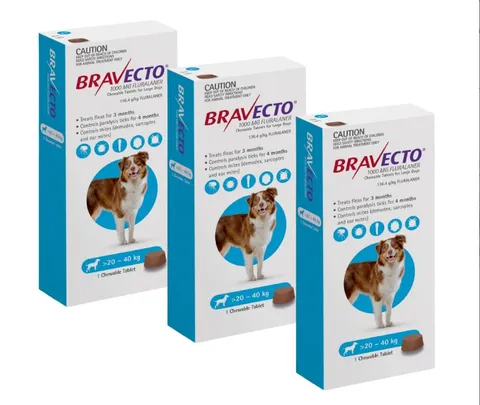
Bravecto contains fluralaner.
Its main advantage is its long duration of action.
A single chewable tablet provides protection against most fleas and ticks for up to 12 weeks, making it one of the longest-lasting oral flea and tick preventives currently available.
Advantages of Bravecto
- protection lasting approximately three months;
- fewer treatments each year;
- ideal for owners who frequently forget monthly medications;
- bathing and swimming do not reduce effectiveness;
- no pesticide remains on the dog's coat;
- convenient for households with children or multiple pets;
- highly effective against fleas and several tick species.
Potential Disadvantages
- if an adverse reaction occurs, the medication remains in the body longer than monthly products;
- the correct tablet must be carefully selected according to body weight;
- it does not repel fleas or ticks;
- some dogs with sensitive stomachs may vomit after taking any oral medication;
- minimum age and weight requirements vary depending on the specific product and country.
Bravecto is often an excellent choice for healthy adult dogs whose owners prefer fewer treatments throughout the year.
NexGard
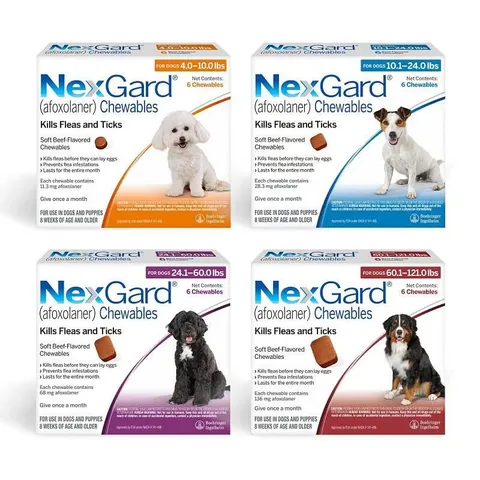
NexGard contains afoxolaner and is administered once every month.
Like Bravecto, it kills fleas and ticks after they begin feeding.
Advantages of NexGard
- simple monthly dosing schedule;
- widely used around the world;
- bathing and swimming do not affect its efficacy;
- no greasy residue on the coat;
- easier to discontinue if the dog experiences an adverse reaction;
- combination formulations are available in some countries, providing additional protection against heartworm disease and certain intestinal parasites.
Potential Disadvantages
- requires strict monthly administration;
- missed doses leave periods without adequate protection;
- does not repel fleas or ticks;
- gastrointestinal or neurological adverse effects may occur, as with other drugs in the same class;
- not every dog willingly accepts chewable tablets.
NexGard is a good option for owners who prefer a monthly preventive schedule and want greater flexibility if changing products becomes necessary.
Simparica
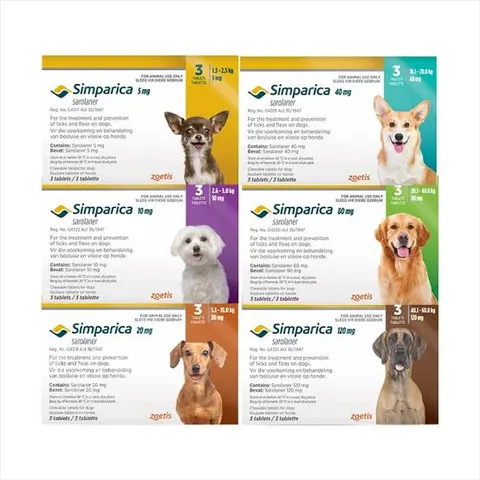
Simparica contains sarolaner and is administered once a month.
Like the other oral isoxazolines, it kills fleas and ticks after they attach and begin feeding.
Although the manufacturer states that protection lasts up to 35 days, it should still be given every month to maintain continuous protection.
Advantages of Simparica
- simple monthly dosing schedule;
- protection extends slightly beyond 30 days, providing a small safety margin if the next dose is delayed by a few days;
- bathing and swimming do not affect its efficacy;
- no pesticide remains on the dog's skin or coat;
- combination products such as Simparica Trio are available in some countries, offering additional protection against heartworm disease and several intestinal parasites.
Potential Disadvantages
- requires monthly administration;
- does not repel fleas or ticks;
- belongs to the same isoxazoline class and carries the same neurological warnings;
- combination products are not necessary for every dog and should be chosen according to local parasite risks.
For many owners, Simparica offers a convenient balance between long-lasting efficacy and the flexibility of monthly treatment.
Credelio
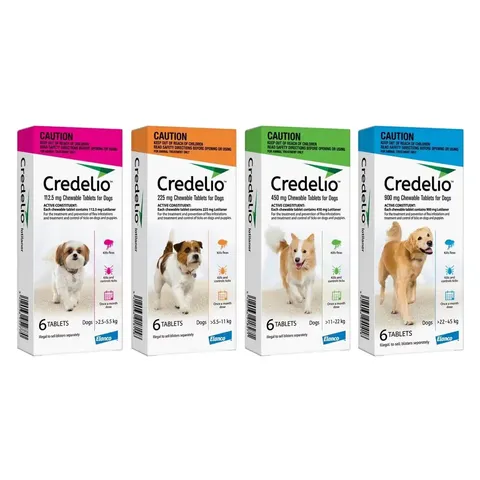
Credelio contains lotilaner and is also administered once every month.
One important feature of Credelio is that it should be given with food or within about 30 minutes after a meal, as food significantly improves absorption and helps ensure maximum effectiveness.
Advantages of Credelio
- small chewable tablet that many dogs readily accept;
- convenient monthly dosing;
- approved for young puppies in many countries at relatively low body weights;
- bathing does not reduce its effectiveness;
- combination products are available in some regions for protection against additional internal parasites and heartworm disease.
Potential Disadvantages
- should always be given with food;
- monthly dosing can occasionally be forgotten;
- does not repel fleas or ticks;
- belongs to the isoxazoline family and therefore carries similar safety considerations;
- availability varies between countries.
Credelio may be particularly attractive for owners looking for a small monthly chew that is easy to administer during feeding.
Comparing the Oral Products
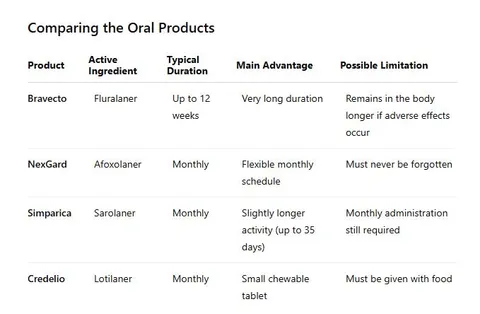
It is tempting to compare these medications only by how quickly they kill fleas or ticks.
In reality, much more important factors include:
- whether the product is appropriate for the individual dog;
- correct dosing according to body weight;
- consistent administration without missed doses;
- the dog's medical history;
- the parasites that are common in the region.
The most effective preventive is not necessarily the one that kills parasites the fastest—it is the one that is safe for the individual dog and used consistently throughout the year.
How Safe Are Oral Isoxazolines?
For the vast majority of dogs, isoxazoline medications are considered both safe and highly effective.
However, all products in this class carry warnings regarding the possibility of neurological adverse reactions.
Reported reactions include:
- muscle tremors;
- loss of coordination;
- seizures.
These events have occasionally been reported even in dogs with no previous history of neurological disease.
It is important to emphasize that such reactions are considered uncommon, and regulatory authorities continue to regard isoxazolines as safe and effective for most dogs.
Nevertheless, additional caution is recommended for dogs with:
- epilepsy;
- previous seizures;
- unexplained tremors;
- balance disorders;
- other neurological conditions.
This does not automatically mean these medications should never be used.
Instead, the decision should be made together with a veterinarian after weighing the expected benefits against any potential risks.
Whenever a dog receives a new oral flea and tick medication for the first time, owners should observe it carefully over the following days.
Contact your veterinarian promptly if you notice:
- severe weakness;
- repeated vomiting;
- persistent diarrhea;
- difficulty walking;
- tremors;
- unusual behavior;
- seizures.
Fortunately, most dogs tolerate these medications without any significant side effects.
Why Shouldn't You Split Flea and Tick Tablets?
Oral flea and tick medications are manufactured for specific weight ranges.
Although the tablets may appear uniform, the active ingredient is not guaranteed to be distributed perfectly evenly throughout the chew.
For this reason, dividing a tablet may result in one dog receiving too little medication while another receives too much.
An underdosed dog may not be adequately protected, while an overdosed dog has a higher risk of adverse effects.
Always choose the correct tablet according to your dog's current body weight, especially for growing puppies.
Oral Tablets vs. Spot-On Treatments
Spot-on products are applied directly to the dog's skin.
Depending on the active ingredients, they may:
- kill fleas and ticks;
- repel ticks before they bite;
- repel mosquitoes and sand flies;
- reduce the risk of bites from disease-carrying insects.
Unlike most oral isoxazolines, some topical products have repellent activity, meaning parasites may avoid attaching to the dog altogether.
This can be particularly valuable in areas where parasites transmit serious infectious diseases.
Advantages of Spot-On Products
- some products repel parasites before they bite;
- useful for dogs that refuse oral medication;
- products outside the isoxazoline class are available;
- may provide additional protection against mosquitoes and sand flies.
Potential Disadvantages
- the product must be applied directly to the skin, not simply onto the coat;
- temporary oily residue may remain on the fur;
- the application site should not be touched until completely dry;
- frequent bathing or shampooing may shorten the duration of protection for some products;
- mild skin irritation may occasionally occur.
One particularly important point:
Products containing permethrin must never be used on cats.
If cats live in the same household, owners should carefully follow the manufacturer's instructions and prevent cats from licking or closely contacting the treated area until it has dried completely.
Flea and Tick Collars
Modern flea and tick collars are very different from the strongly scented collars used decades ago.
Products such as Seresto® gradually release active ingredients over several months, providing long-lasting protection against fleas and ticks.
Some collars also repel ticks before they attach and feed.
Advantages of Flea and Tick Collars
- long-lasting protection;
- no need to remember monthly treatments;
- repellent activity against ticks;
- parasites may be prevented from biting at all;
- useful for dogs that cannot take oral medication.
Potential Disadvantages
- the collar must remain in continuous contact with the skin;
- very thick coats may reduce effectiveness;
- collars may occasionally become damaged or lost;
- some dogs develop local skin irritation around the neck;
- frequent swimming may shorten the duration of protection for certain products;
- counterfeit collars exist, making it important to purchase only from trusted veterinary clinics or reputable retailers.
A properly fitted collar should be snug but comfortable, with enough space to fit approximately two fingers between the collar and the dog's neck.
Tablets or Repellent Products?
There is no universal answer.
The best choice depends on the individual dog and its lifestyle.
Oral tablets may be the better option if:
- you prefer simple administration;
- your dog swims frequently;
- you do not want pesticides remaining on the coat;
- consistent parasite killing is your primary goal.
Spot-on products or collars may be preferable if:
- reducing parasite bites is particularly important;
- your dog lives in an area with a high risk of tick-borne diseases;
- mosquitoes or sand flies are a concern;
- your dog cannot take oral medications;
- your veterinarian recommends avoiding isoxazolines because of neurological concerns.
In some situations, veterinarians may recommend combining different types of parasite prevention.
However, owners should never combine products on their own without veterinary advice, since certain combinations may increase the risk of overdose or unnecessary exposure to active ingredients.
What About "All-in-One" Products?
Several combination chewable tablets are now available, including products such as:
- NexGard Spectra or NexGard Plus;
- Simparica Trio;
- Credelio Plus;
- other regional formulations.
Depending on the product, they may protect against:
- fleas;
- ticks;
- heartworm disease;
- roundworms;
- hookworms;
- whipworms;
- and, in some countries, additional parasites.
The main advantage is convenience.
One chewable tablet may replace several different preventive treatments.
However, broader protection does not automatically make a product better.
The most appropriate choice depends on:
- which parasites are actually present in your area;
- whether heartworm prevention is necessary;
- whether heartworm testing is recommended before starting prevention;
- the dog's age and body weight;
- any other medications the dog already receives.
Combination products should always be selected with the guidance of a veterinarian.
Which Product Should You Choose?
Bravecto may be an excellent choice if:
- your dog is healthy and fully grown;
- you prefer treating only four times a year;
- remembering monthly treatments is difficult;
- your dog swims frequently.
NexGard or Simparica may be preferable if:
- you are comfortable with monthly dosing;
- you want greater flexibility if changing medications becomes necessary;
- you already follow a monthly preventive care schedule.
Credelio may be appropriate if:
- your dog readily accepts medication with food;
- you prefer a small monthly chewable tablet;
- your veterinarian considers it the most suitable option.
Spot-on products or flea collars may be better if:
- repelling parasites before they bite is especially important;
- your dog has experienced neurological problems in the past;
- oral medications are difficult to administer;
- mosquito or sand fly protection is also required.
There is no "best" flea and tick preventive for every dog.
The right choice depends on the individual animal, its lifestyle, and the infectious disease risks where it lives.
Key Takeaways
Bravecto, NexGard, Simparica, and Credelio all belong to the same family of medications and work in very similar ways.
Their main differences lie in:
- duration of protection;
- dosing schedule;
- approved age and weight ranges;
- availability of combination formulations;
- individual tolerance.
Spot-on treatments and flea collars work differently and may provide the additional benefit of repelling parasites before they bite.
When choosing a preventive, it is far more important to consider your own dog's needs than advertising claims or online opinions.
The best flea and tick preventive is not necessarily the newest, the most expensive, or the longest-lasting. It is the one that is safe for your dog, used correctly, and provides reliable protection throughout the year.