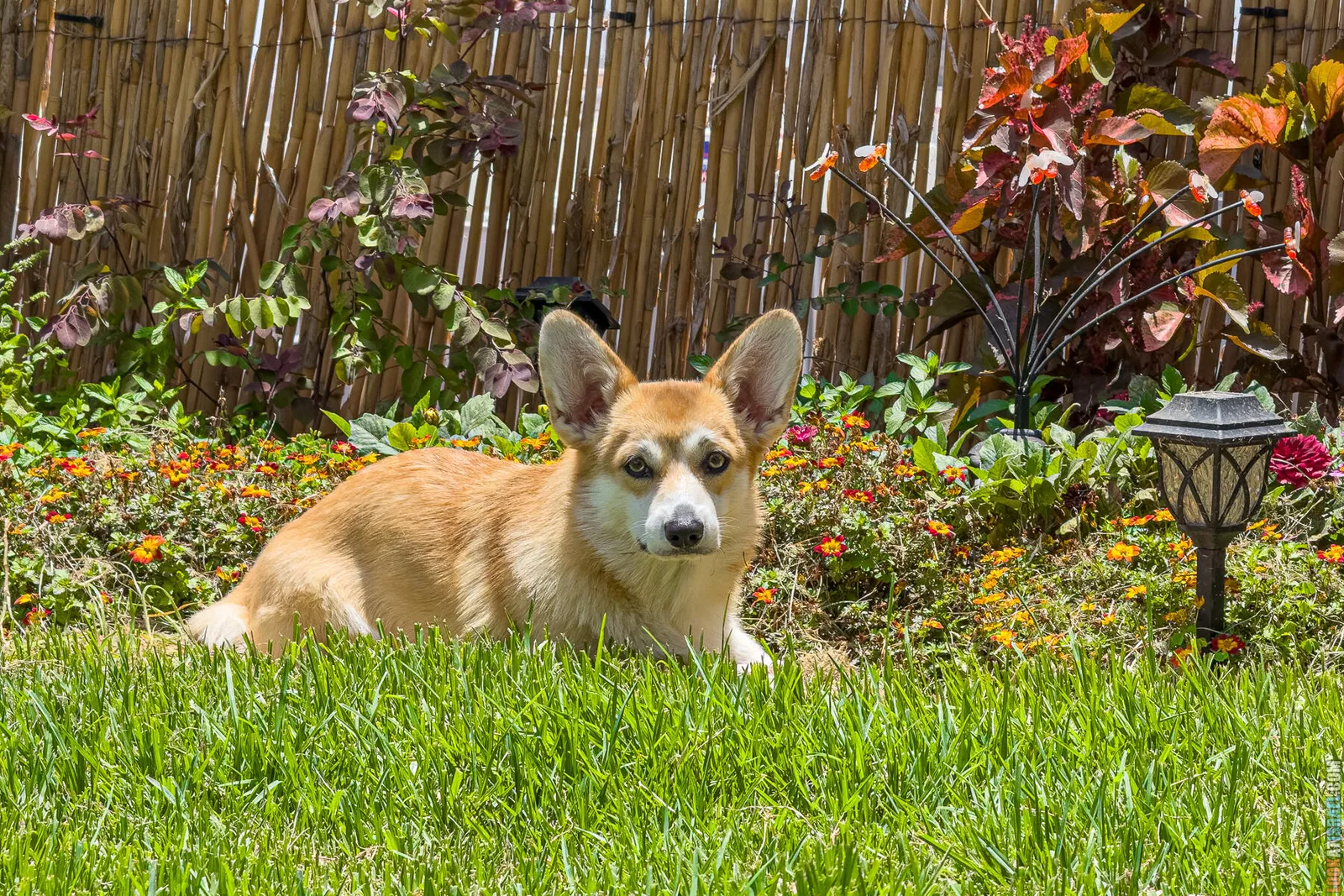
Why do puppies love chewing on plants so much?
Almost every puppy owner has at least once noticed their pet sniffing houseplants with interest, trying to dig soil out of the pot, or testing the leaves with their teeth.
There are several reasons for this: during teething, puppies feel a constant need to chew on something; in addition, this is how they explore the world around them — just like human children put everything into their mouths.
Fortunately, most adult dogs gradually lose interest in houseplants. However, it’s during those first months of life that you should think in advance about making your home safe.
Indoor and garden plants are different stories
In this article we’re talking only about houseplants that are grown indoors in pots.
If you’re interested in ornamental shrubs, trees, and flowers that your dog might encounter while walking in Israel, we recommend reading our article “Plants in Israel that are dangerous for dogs”. In it we cover oleander, sago palm (Cycas revoluta), lantana, and other dangerous plants that are commonly found in gardens, parks, and along streets.
The most popular houseplants that are dangerous for dogs
Important: The division of plants into categories is approximate. The severity of poisoning depends on the dog’s size, the amount of plant material eaten, and the pet’s individual sensitivity. Even plants that usually cause only mild irritation may still require veterinary care if the symptoms are pronounced or rapidly getting worse.
🔴 High risk
These plants contain substances that can cause severe irritation of the mucous membranes, marked gastrointestinal upset, cardiac arrhythmias, or neurological symptoms. If a dog has eaten one of these plants, especially in large quantities, you should contact a veterinarian as soon as possible.
Dieffenbachia
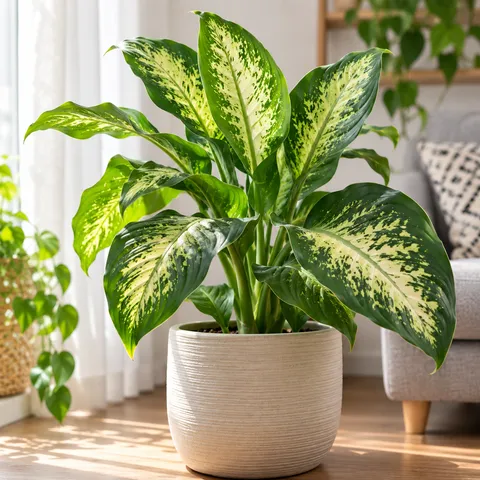
Dieffenbachia is one of the most common houseplants, very popular for its large decorative leaves.
However, its sap contains calcium oxalate crystals that cause severe irritation of the mucous membranes.
Dangerous: the whole plant.
Possible symptoms of poisoning:
- intense burning in the mouth;
- profuse drooling;
- swelling of the tongue and lips;
- pain on swallowing;
- refusal to eat.
Monstera
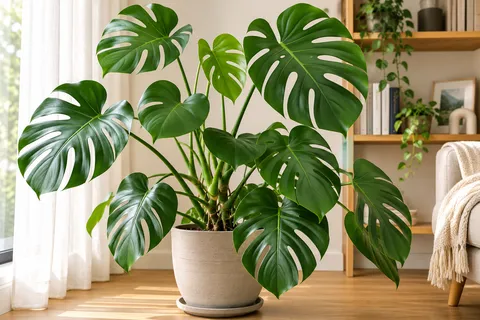
Monstera has long been one of the trendiest indoor plants.
Despite its striking appearance, its leaves also contain calcium oxalate crystals.
Dangerous: leaves and stems.
Possible symptoms of poisoning:
- irritation of the oral mucosa;
- drooling;
- vomiting;
- refusal of food.
Philodendron
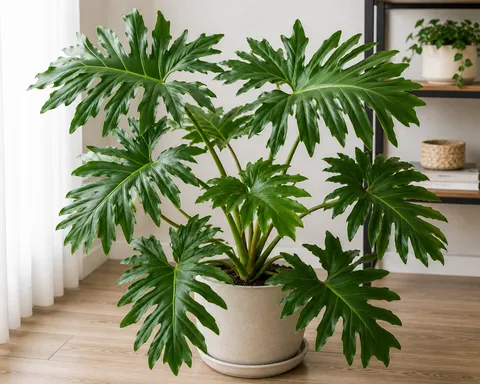
Philodendrons belong to the same family as monsteras, so when eaten they cause similar symptoms.
Dangerous: leaves and stems.
Possible symptoms of poisoning:
- burning in the mouth;
- increased salivation;
- vomiting;
- pain when swallowing.
Alocasia (“Elephant’s ear”)
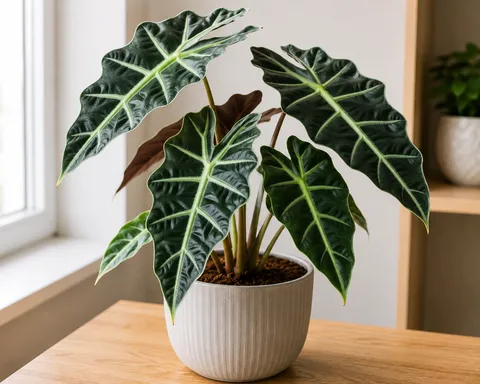
Its large decorative leaves have made alocasia one of the most popular plants for modern interiors.
However, all parts of the plant contain insoluble calcium oxalate crystals. When bitten, they literally penetrate the mucous membranes, causing intense pain and inflammation.
Dangerous: leaves and stems.
Possible symptoms of poisoning:
- intense burning in the mouth;
- pain and swelling of the tongue, lips, and mucosa;
- profuse drooling;
- difficulty swallowing;
- vomiting.
Syngonium
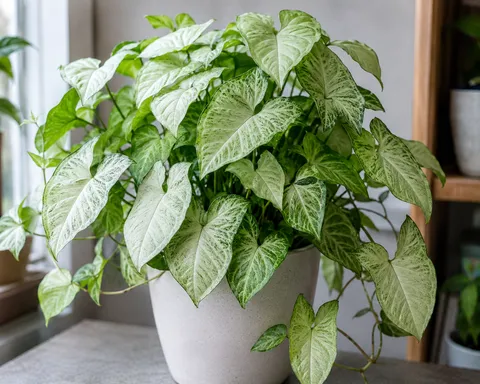
Syngonium is a popular ornamental vine with beautiful arrow-shaped leaves. Young plants are often grown as compact bushes, while mature ones produce long shoots.
Like many members of the arum family, syngonium contains calcium oxalate crystals.
Dangerous: leaves and stems.
Possible symptoms of poisoning:
- intense burning in the mouth;
- profuse drooling;
- pain when swallowing;
- vomiting;
- swelling of the tongue and lips.
Aglaonema
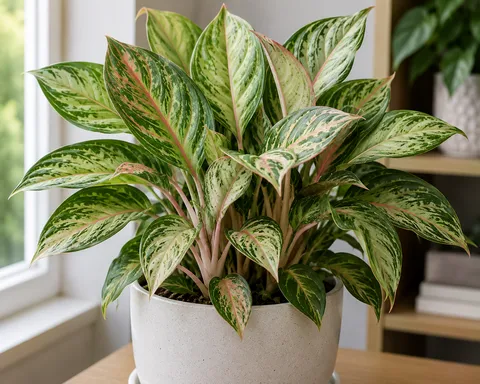
Aglaonema is one of the most popular shade-tolerant houseplants.
It belongs to the same family as dieffenbachia and peace lily, so the mechanism of toxicity is almost identical.
Dangerous: leaves and stems.
Possible symptoms of poisoning:
- irritation of the mucosa;
- pain in the mouth;
- drooling;
- vomiting.
Spathiphyllum (peace lily)
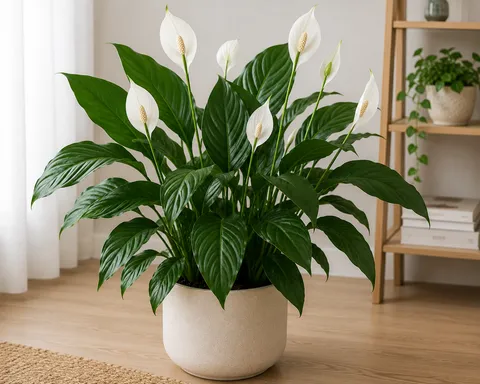
One of the most popular flowering houseplants.
Despite its popularity, it is not safe for dogs.
Dangerous: the whole plant.
Possible symptoms of poisoning:
- irritation in the mouth;
- vomiting;
- drooling;
- refusal to eat.
Anthurium
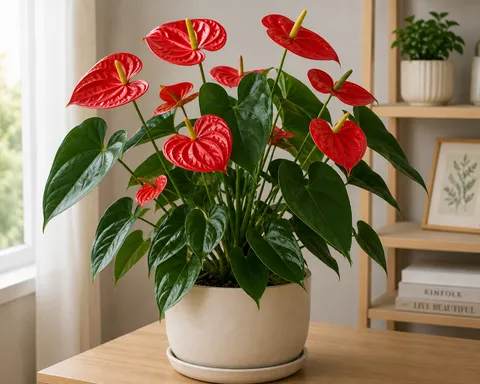
Anthurium is valued for its unusual bright flowers and glossy leaves.
Like many members of the arum family, it contains substances that irritate the mucous membranes.
Dangerous: the whole plant.
Possible symptoms of poisoning:
- intense burning;
- tongue swelling;
- pain in the mouth;
- drooling.
Cyclamen
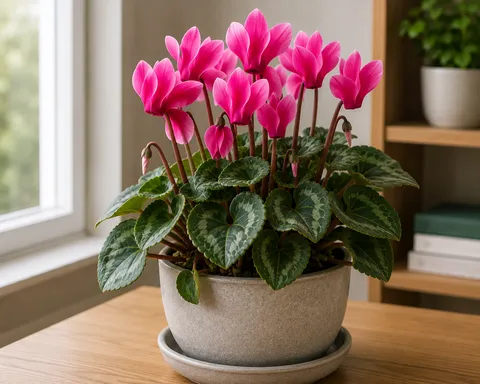
It most often appears in homes in winter as a decorative flowering plant.
The most toxic part is the tubers.
Dangerous: primarily the tubers.
Possible symptoms of poisoning:
- severe vomiting;
- abdominal pain;
- seizures;
- cardiac rhythm disturbances.
🟠 Moderate risk
These plants rarely cause severe poisoning, but they can lead to marked irritation of the mucous membranes, vomiting, diarrhea, and a general decline in condition. If symptoms persist or worsen, the dog needs to be examined by a veterinarian.
Pothos (golden pothos, Epipremnum aureum)
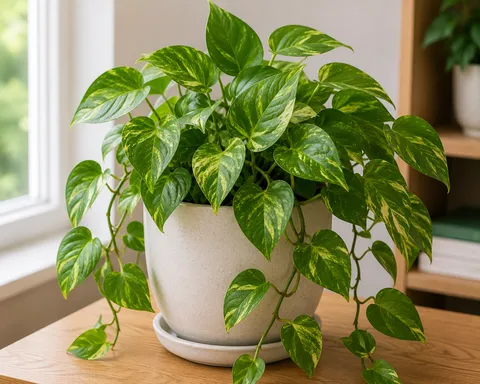
Pothos is one of the most common trailing houseplants. You can often see it in hanging baskets or on high shelves.
Although in most cases poisoning is not life-threatening, the plant can cause severe irritation of the oral mucosa.
Dangerous: leaves and stems.
Possible symptoms of poisoning:
- burning in the mouth;
- irritation of the tongue and lips;
- increased salivation;
- vomiting;
- diarrhea;
- lethargy.
In a strong reaction, marked mucosal swelling and breathing difficulties are possible.
Zamioculcas (ZZ plant, “dollar tree”)
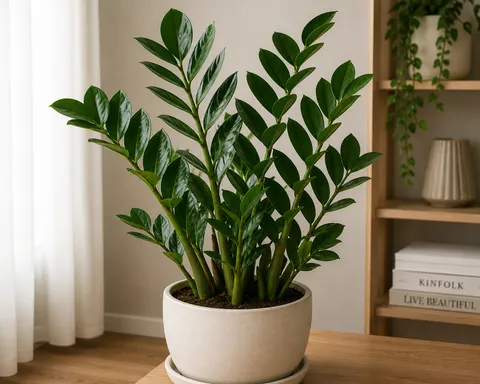
Zamioculcas is one of the most popular houseplants of recent years.
It is sometimes mistakenly called “Zamia”, although this is a completely different plant.
Dangerous: leaves and stems.
Possible symptoms of poisoning:
- irritation of the oral mucosa;
- drooling;
- vomiting;
- digestive upset.
Sansevieria (snake plant, “mother-in-law’s tongue”)
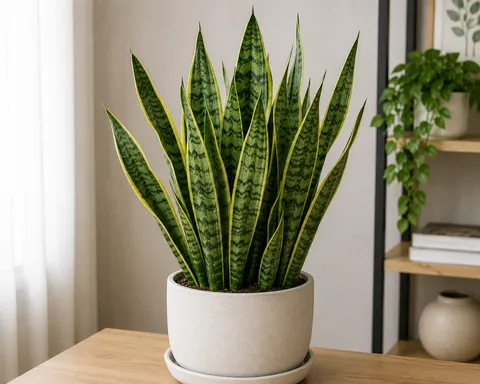
A very undemanding plant that is often recommended to beginner plant owners.
Dangerous: leaves.
Possible symptoms of poisoning:
- vomiting;
- diarrhea;
- increased salivation.
Kalanchoe
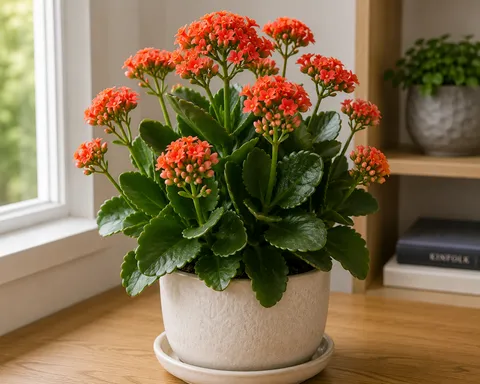
A pretty flowering plant that can be found in many homes.
Dangerous: the whole plant.
Possible symptoms of poisoning:
- vomiting;
- diarrhea;
- weakness.
If a large amount is eaten, cardiac arrhythmias are possible.
Aloe vera
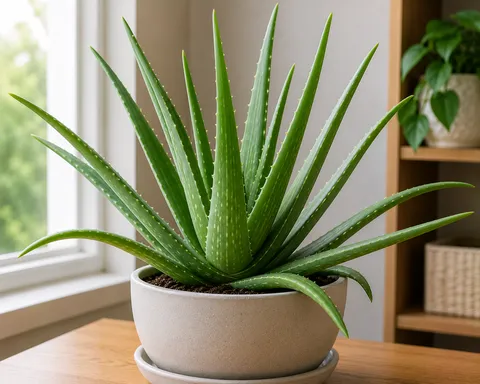
Aloe vera is well known for its healing properties for humans and is often used for burns and skin irritation.
However, for dogs this plant cannot be considered safe.
Dangerous: leaves, especially the sap and latex under the leaf skin.
Possible symptoms of poisoning:
- vomiting;
- diarrhea;
- lethargy;
- tremors;
- depression of the central nervous system.
Begonia
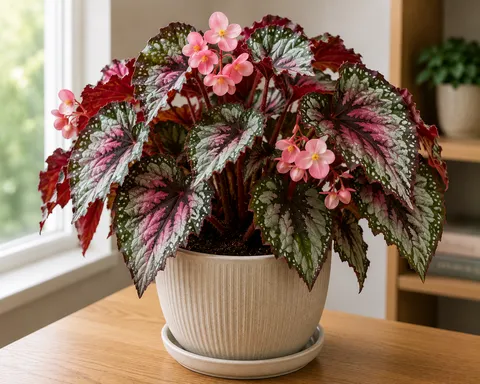
There are hundreds of begonia varieties, and they are very often grown indoors for their beautiful foliage and abundant flowering.
The most toxic parts are considered to be the tubers and rhizomes, but it is better not to allow the dog contact with any part of the plant.
Dangerous: the whole plant, especially the tubers.
Possible symptoms of poisoning:
- irritation in the mouth;
- increased salivation;
- vomiting;
- refusal to eat;
- dehydration;
- swelling of the tongue and mucosa.
Croton
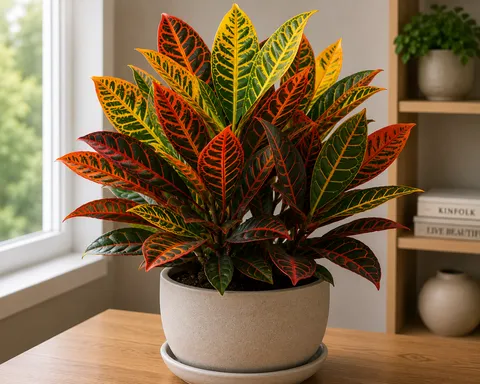
Croton is loved for its unusual multicolored leaves, but its sap can irritate the gastrointestinal tract.
Dangerous: leaves and stems.
Possible symptoms of poisoning:
- vomiting;
- diarrhea;
- irritation of the mucous membranes.
Potted tulips and daffodils
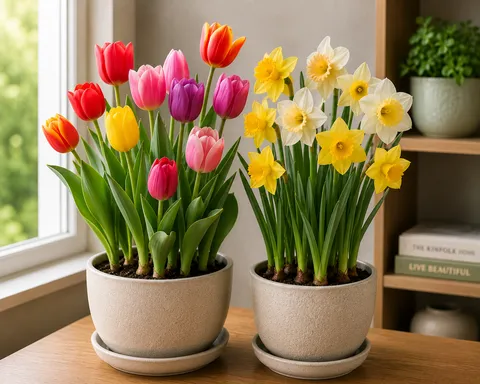
In spring many people grow bulb flowers indoors. For dogs the bulbs are the most dangerous part.
Dangerous: primarily the bulbs.
Possible symptoms of poisoning:
- vomiting;
- diarrhea;
- increased salivation;
- weakness.
🟡 Low risk (irritant plants)
These plants usually do not cause severe poisoning, but they can lead to irritation of the skin, mucous membranes, or short-term digestive upset.
Tradescantia
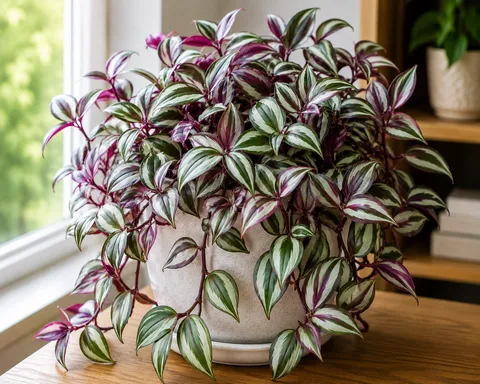
Tradescantia is one of the most undemanding houseplants. Thanks to its long trailing stems and decorative striped leaves, it is often grown in hanging baskets or placed on high shelves.
For dogs, tradescantia is not considered highly toxic, but when eaten it can cause irritation of the mucous membranes and digestive upset. In addition, the sap of some species can provoke skin irritation with prolonged contact.
Dangerous: leaves and stems.
Possible symptoms of poisoning:
- irritation in the mouth;
- increased salivation;
- vomiting;
- diarrhea;
- redness and itching of the skin (contact dermatitis).
Symptoms are usually limited to irritation of the mucous membranes or gastrointestinal tract and subside after symptomatic treatment. However, if the dog has eaten a large amount of the plant or its condition is rapidly deteriorating, you need to contact a veterinarian.
Ivy (Hedera)
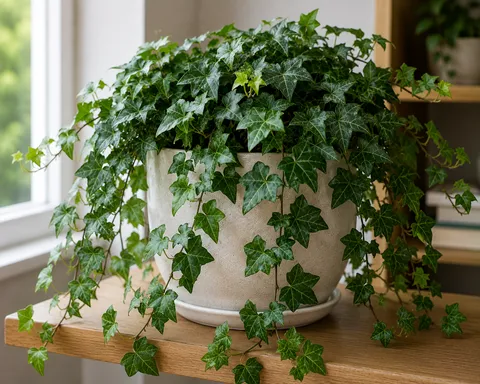
English ivy is a popular climbing plant that is often grown in hanging baskets, on shelves, or used for vertical greening. Despite its decorative look, it contains saponins and other substances that can cause irritation of the gastrointestinal tract and mucous membranes in dogs.
Puppies usually show the most interest in ivy, as they like the long dangling vines.
Dangerous: leaves and berries (if the plant is flowering and fruiting).
Possible symptoms of poisoning:
- irritation in the mouth;
- increased salivation;
- vomiting;
- diarrhea;
- abdominal pain;
- lethargy.
If a large amount of the plant is eaten, more severe symptoms are possible, including loss of coordination and breathing difficulties, but such cases are rare.
Poisoning with indoor ivy is usually limited to gastrointestinal upset and resolves after symptomatic treatment. Nevertheless, if there is repeated vomiting, marked weakness, or worsening of the condition, the dog should be seen by a veterinarian as soon as possible.
Worth remembering:
Almost all of the high-risk plants in the red list belong to the Arum family (Araceae):
- Dieffenbachia
- Monstera
- Philodendron
- Syngonium
- Aglaonema
- Spathiphyllum
- Anthurium
- Pothos
- Alocasia
They share the same mechanism of toxicity — insoluble calcium oxalate crystals (raphides), which, when a leaf or stem is damaged, literally penetrate the mucous membrane of the mouth, tongue, and throat. This explains why the symptoms for these plants are almost identical: sharp pain, drooling, swelling, and refusal to eat.
🟢 Houseplants that are generally considered safe for dogs
If you’re just planning to fill your apartment with greenery or want to replace potentially dangerous plants, take a look at species that are considered safe for pets.
Fortunately for us (since we have many plants of this kind at home), most hoya species (Hoya spp.) are considered non-toxic for dogs.
Hoya (wax plant)
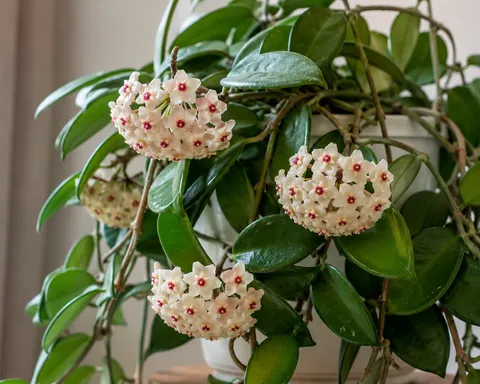
Hoya is one of the most beautiful indoor vines. It is appreciated for its thick glossy leaves, unusual waxy flowers, and unpretentious nature. There are hundreds of hoya varieties differing in the shape and color of the leaves, but most of them are considered safe for dogs.
Even if a curious puppy accidently bites off a small piece of a leaf, serious poisoning usually does not occur. Nevertheless, you should not deliberately let a dog chew on the plant — a large amount of any greenery can cause stomach upset.
Dangerous: no toxic parts identified.
If the dog has chewed on the plant, the following are possible:
- mild digestive upset (when a large number of leaves is eaten);
- a single episode of vomiting or soft stool (rarely).
Hoya is considered one of the best options for homes where dogs and cats live.
In some older sources you may find mentions that certain hoya species contain a mild milky sap. However, as of today neither the ASPCA nor most veterinary toxicology references list hoya among toxic houseplants for dogs. Even so, we will repeat: no houseplant should be used as a toy or treat.
A pleasant bonus: hoya is a long-lived plant that can grow in a home for decades and delight the owner with unusual fragrant flowers every year. If you are looking for a beautiful vine for a home where a dog lives, this is one of the best choices.
Spider plant (Chlorophytum)
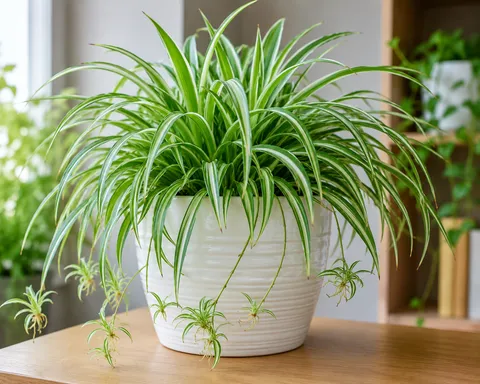
An undemanding plant that does a great job of purifying the air and is considered safe for dogs.
Chamaedorea
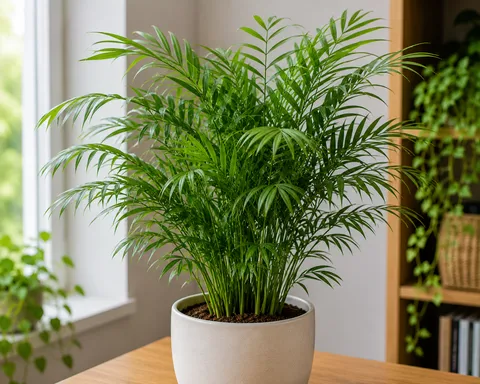
A compact indoor palm well suited for apartments.
Calathea
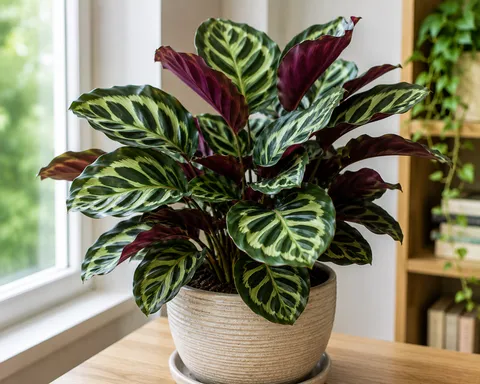
A striking plant with beautifully patterned leaves. Considered safe for pets.
Maranta (prayer plant)
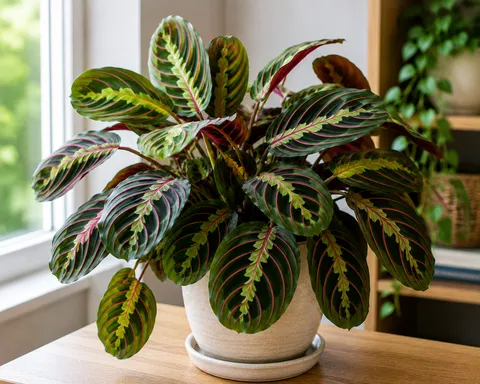
Known for its unusual leaves, which lift slightly upwards in the evening.
Peperomia
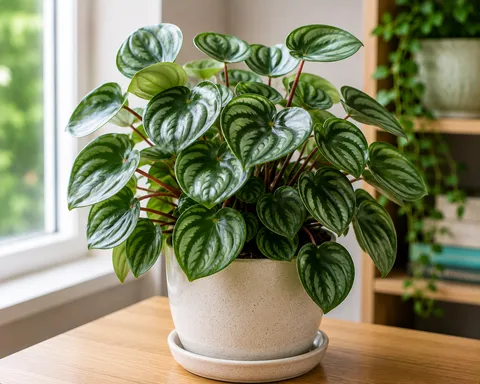
A small ornamental plant represented by dozens of varieties.
Pilea
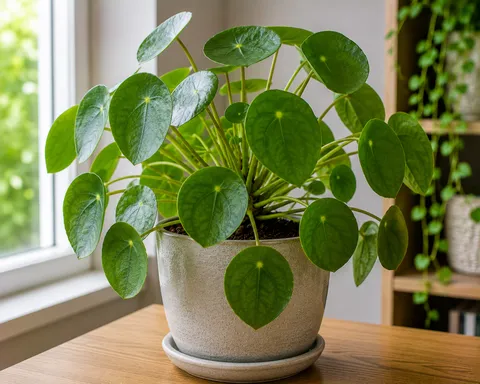
A popular modern houseplant with round leaves.
Orchid (phalaenopsis)
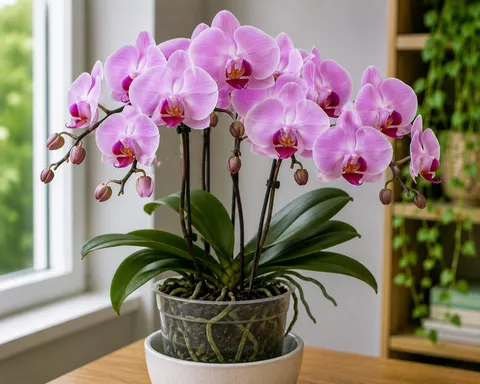
Most common indoor orchids are considered safe for dogs.
Fittonia
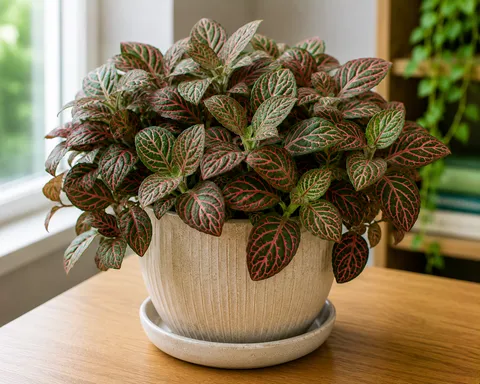
A small plant with decorative leaves and bright veins.
What to do if your dog has eaten a plant
Stay calm.
Not every plant causes severe poisoning, and sometimes a dog only eats a single small leaf. Nevertheless, it’s better to be on the safe side.
If you notice that your pet has tasted a plant:
- gently remove any remaining leaves from the mouth;
- rinse the mouth with clean water if the dog allows you to do this;
- take a photo of the plant or remember its name;
- contact a veterinarian and explain which plant was eaten and what symptoms have appeared.
Do not try to induce vomiting in your dog on your own without a vet’s recommendation — in some cases this can cause more harm than good.
If there is marked weakness, breathing difficulties, seizures, or loss of consciousness, you must immediately go to the nearest 24-hour veterinary clinic.
In conclusion
There is no need to give up houseplants entirely. In most cases it’s enough to know which species may be dangerous and to place them where the dog can’t reach them, or to replace them with safer alternatives.
And if you have a new puppy in your home, the most sensible step is to look around your apartment in advance and make sure that their new “green toys” won’t turn out to be a serious source of danger.