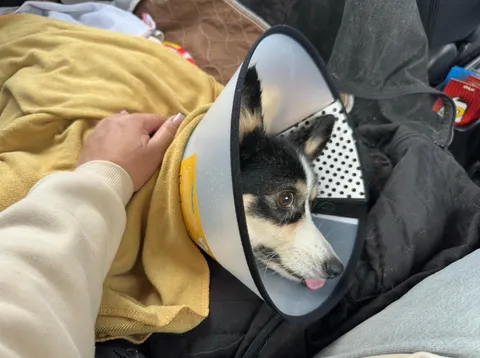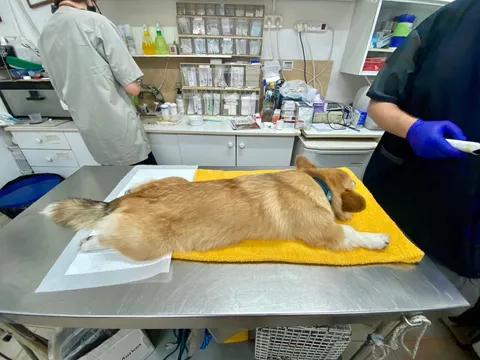
Leishmaniosis is rarely the first disease that comes to a dog owner’s mind. Ticks, fleas, and heartworm sound much more familiar. However, for dogs living in Israel, leishmaniosis is a very real risk.
The disease is caused by microscopic single‑celled parasites of the genus Leishmania. In dogs in Israel, most confirmed cases are associated with Leishmania infantum — the causative agent of a systemic disease that can affect the skin, lymph nodes, eyes, joints, kidneys, and other organs.
At the same time, infection and disease are not the same thing. One dog may be infected and remain completely symptom‑free for years; in another, the disease gradually progresses and, without treatment, can become severe.
Who transmits leishmania?
The main route of infection is through bites from phlebotomine sand flies (Phlebotomus spp.), commonly referred to in English as sand flies.
These are not mosquitoes and not the large, long‑legged insects that people sometimes also call “mosquitoes”. Phlebotomine sand flies are tiny blood‑sucking insects only a few millimetres long.
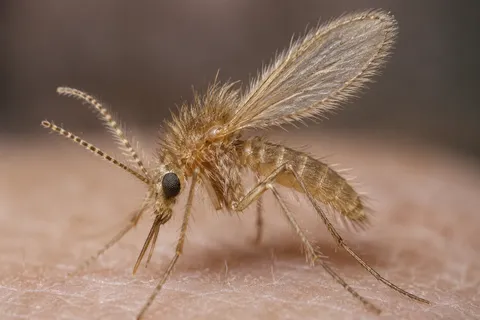
Female sand flies feed on blood. If a sand fly takes a blood meal from an infected animal, the parasite continues to develop in its body. During subsequent feedings, the insect can transmit the infection to another animal.
Sand flies are especially active from dusk till dawn. For Mediterranean regions, ESCCAP indicates an approximate activity season from April to November, although the actual timing depends on the climate and the specific area.
In Israel’s warm climate, it’s better to select preventive measures together with a veterinarian, taking local conditions into account rather than relying solely on the calendar boundaries of the European season.
Where does leishmaniosis occur in Israel?
The disease cannot be considered a problem of just one small area.
A study conducted at the Veterinary School of the Hebrew University included 658 dogs with Leishmania infection diagnosed between 1994 and the end of 2023. Cases were recorded in different parts of the country, but most were in central and northern Israel. The highest number of cases was reported in the Jerusalem area, and the highest density in the Tel Aviv area. Marked foci were also identified near Modi’in and Akko. Since 2020, individual cases have also been recorded in the south of the country, including the Negev.
At the same time, the risk of infection is not the same across Israel. It depends on how widespread sand flies and Leishmania are in a given area, as well as on environmental conditions and the dog’s lifestyle.
If a dog is infected, does that mean it will definitely get sick?
No.
One of the features of leishmaniosis is the large number of subclinical infections. Some dogs’ immune systems can control the parasite for a long time, so the animal appears completely healthy. In other dogs, the immune response is not sufficient to keep the infection in check, and clinical disease develops.
A lot of time can pass between infection and the onset of symptoms, so the absence of signs a few weeks or months after a suspected exposure doesn’t prove anything.
How does leishmaniosis manifest?
The disease does not have one single characteristic symptom that would allow an owner to say, “This is leishmaniosis.”
Possible manifestations include:
- weight loss and reduced muscle mass;
- lethargy;
- enlarged lymph nodes;
- skin changes, flaking, hair loss, small ulcers;
- poorly healing skin lesions;
- excessive growth or deformation of the nails;
- nosebleeds;
- eye lesions;
- lameness and joint pain;
- increased thirst and urination when the kidneys are affected.
Changes in laboratory values may sometimes appear before obvious external symptoms.
The condition of the kidneys is particularly important. Immune complexes that form during the disease can damage the renal glomeruli. For this reason, urinalysis and assessment of kidney function are part of the work‑up for dogs with suspected leishmaniosis and have a major impact on prognosis.
Why can’t the diagnosis be based on a single positive test?
A positive Leishmania test result does not always mean that a dog is ill with leishmaniosis.
LeishVet distinguishes between:
- a clinically healthy infected dog — the parasite is detected, but there are no signs of disease or characteristic laboratory abnormalities;
- a dog with clinical leishmaniosis — infection is confirmed and there are corresponding symptoms and/or changes in laboratory parameters.
So the diagnosis is made up of several components.
The veterinarian assesses the dog’s clinical state, the results of CBC and biochemistry, urinalysis, quantitative serology for antibodies and, if necessary, PCR, cytology, or other tests.
Even the choice of material for PCR matters. LeishVet notes that the sensitivity of blood PCR is significantly lower than that of some tissues, such as lymph nodes, bone marrow, or affected skin. In other words, the test must be interpreted together with the clinical picture.
Can leishmaniosis be cured?
The disease can be treated, and many dogs feel well for a long time after therapy.
But it’s important to understand the difference between clinical recovery and complete elimination of the parasite.
Modern therapy can greatly reduce parasite numbers, suppress the disease, and achieve clinical remission. However, completely clearing Leishmania from the body is usually not possible. Relapses are therefore possible, and the dog requires ongoing monitoring.
The choice of treatment regimen depends on the stage of disease, kidney function, and other factors. LeishVet uses four clinical stages that help determine treatment and prognosis.
For this reason we intentionally do not list drug dosages and treatment protocols here: leishmaniosis therapy must be prescribed by a veterinarian after a full evaluation.
Is leishmaniosis a life sentence?
No.
The prognosis strongly depends on the stage at which the disease is detected and especially on kidney function.
In a dog without serious organ damage, treatment can provide a long and good quality of life. In severe chronic disease with marked kidney failure, the prognosis is much worse, so early diagnosis and subsequent monitoring are very important.
Can a person catch it from a sick dog?
Leishmania infantum is a zoonotic parasite, and dogs are one of its main reservoirs.
But this does not mean that a person becomes infected by petting a sick dog or living in the same household.
The usual route of transmission involves a sand fly vector: the insect acquires the parasite when feeding on an infected host and can later transmit it to another host.
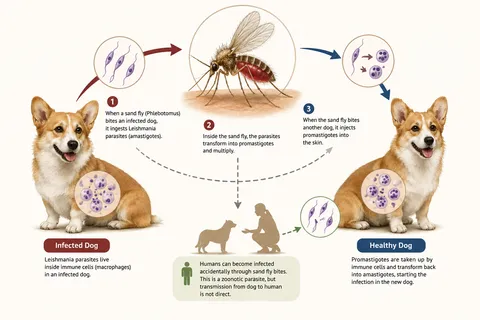
Therefore, detecting infection in a pet dog is not a reason to isolate it from the family. It is much more important to protect the infected animal from sand fly bites, as this reduces the likelihood of further spread of the parasite.
How can you protect your dog?
There is a fundamental difference between leishmaniosis prevention and routine tick and flea control.
Not every tick and flea product repels sand flies.
To prevent Leishmania infection, you need a product with proven repellent activity against sand flies, meaning it should reduce the likelihood of the bite itself.
LeishVet recommends that dogs in endemic areas receive topical ectoparasiticides with proven efficacy against sand flies throughout the entire risk period. These include certain permethrin‑based products and deltamethrin collars; the duration of protection depends on the specific product.
This is an important point for owners of dogs receiving systemic tick and flea tablets. A tablet may kill a tick or flea very effectively after it bites, but it does not create a repellent barrier against sand flies.
Therefore, tick protection and leishmaniosis prevention are not always the same thing.
What else reduces the risk of bites?
Since sand flies are most active at dusk and at night, in high‑risk areas it is useful, where possible, to limit the dog’s time outdoors from sunset to sunrise.
But this measure alone cannot fully solve the problem. Sand flies are very small, and a dog living in Israel will still regularly be outdoors, so appropriately chosen repellent protection remains the cornerstone of prevention.
Is there a vaccine?
Vaccines against canine leishmaniosis are available in some countries.
However, vaccination does not provide absolute protection against infection and does not replace products that prevent sand fly bites. LeishVet considers it an additional component of a comprehensive prevention strategy.
The availability of specific vaccines and recommendations for their use vary between countries, so for Israel this issue should be discussed with a veterinarian, taking into account which products are currently registered.
Should a healthy dog be tested?
Routine regular screening of every pet dog is not always necessary.
However, LeishVet discusses testing apparently healthy dogs from endemic areas when it comes to blood donors and breeding animals, as well as dogs that have come from an endemic region.
For kennels this is particularly relevant. A positive test in a clinically healthy dog requires further evaluation, not an automatic conclusion that the animal is severely ill.
LeishVet also recommends not using seropositive dogs for breeding or as blood donors.
Why this disease matters in Israel
Leishmaniosis cannot be called one of the most common diseases in Israeli dogs. According to retrospective data, the incidence of clinically diagnosed leishmaniosis between 2007 and 2023 was approximately 0.03–0.09 cases per 1,000 registered dogs per year.
But this figure refers to clinically diagnosed cases, not to all infected animals. Studies in individual foci in Israel have shown a much higher proportion of subclinically infected dogs. For example, in a 2018–2020 study in one focus in central Israel, Leishmania DNA was detected in 22.8% of the dogs examined. These data cannot simply be extrapolated to the whole country, but they clearly illustrate the difference between infection prevalence and the number of dogs that actually become ill.
So there is no need to panic about leishmaniosis. But for a dog owner in Israel it is useful to know three things: the infection is present here, it can remain unnoticed for a long time, and prevention starts with protection against sand fly bites.
This article is based on information from the following sources:
1. "Retrospective study of canine leishmaniosis in Israel - The Hebrew University of Jerusalem"
2. "Retrospective study of canine leishmaniosis in Israel - PMC"
3. "Ectoparasites - Insects | ESCCAP"
6. "LeishVet guidelines for the practical management of canine leishmaniosis - LeishVet"
8. "Leishmania tropica and Leishmania infantum infection in dogs and cats in central Israel - PMC"