A Dog Show Is Not a Sporting Competition
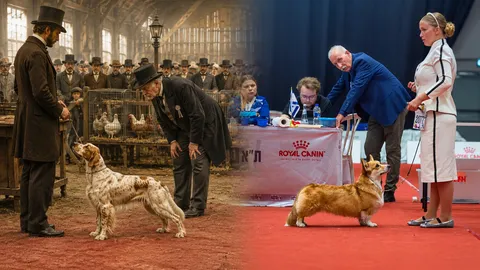
A very common misconception is to think of a dog show as a sporting competition.
At a dog show, dogs do not race each other, and the winner is not the one that runs around the ring the fastest. Nor are dogs compared by the number of commands they have learned or tested to see who performs “sit,” “down,” or “come” best.
There are separate canine sports and working trials for this purpose: agility, obedience, herding, search work, tracking, and many other disciplines.
At a dog show, movement is assessed for an entirely different reason. The judge looks at how correct, free, and efficient the dog’s movement is in terms of its anatomy and breed standard. The dog should calmly walk or trot along the required pattern, stand for examination, and allow the judge to examine it.
Although a dog show is not a competition in speed or obedience, show training is highly desirable — and, in practice, essential. Its purpose is to help the dog present its breed qualities in a way that allows the judge to assess them objectively.
“It’s Just a Beauty Contest” — the Most Common Myth
If you have never been to a dog show, what happens there can indeed look rather strange from the outside.
People run around a ring with their dogs.
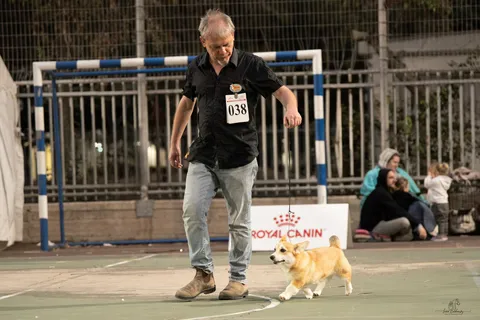
A judge carefully examines every participant, feels the dog’s body, checks its teeth, asks the handler to move it at a trot, and then awards grades and trophies.
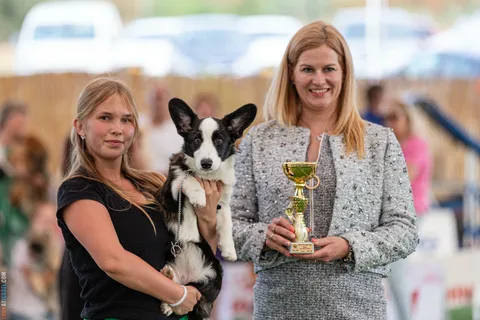
It can easily look like a competition to decide “which dog is the prettiest.”
But that is not what a dog show is about.
A dog show is, first and foremost, an evaluation of how closely a dog conforms to its breed standard. You can read the Pembroke Welsh Corgi breed standard here, and the Cardigan Welsh Corgi breed standard here.
The judge is not simply deciding whether they personally like a particular dog.
First and foremost, each dog is assessed against the official breed standard approved by the FCI. For example:
- Is the shape of the head correct?
- Does the body structure conform to the standard?
- Does the dog move correctly?
- What is its temperament like?
- Are there any faults or disqualifying faults?
- Are the bite, ear carriage, eye shape, and tail carriage correct?
However, no breed standard can describe absolutely everything down to the smallest detail. So when several genuinely high-quality dogs that all conform closely to the standard enter the ring, the judge’s experience and professional opinion come into play.
Every judge has their own understanding of what the ideal representative of the breed should look like. One may place greater emphasis on a beautiful head, another on movement, another on overall balance or breed expression. Some prefer more substantial dogs, while others favour a more moderate or smaller type.
This is why the same dog may win under one judge and lose under another — sometimes even on the same day. It is not because the dog suddenly became better or worse, but because different judges may place slightly different emphasis on particular qualities within the framework of the same breed standard.
For this reason, experienced breeders always pay close attention to which judge awarded a particular win.
Breeders often say, “I really wanted to show under this judge.” From the outside, it may seem that all judges should judge exactly alike. In practice, however, the standard establishes the framework, while within that framework there is still room for professional judgement, experience, and individual interpretation.
Why Dog Shows Are So Important to Breeders
Every responsible kennel aims to produce more than simply attractive puppies. The main goal of responsible breeding is to preserve and improve the breed.
No serious breeder can assess their own dogs completely objectively. An outside perspective is necessary — and preferably not just from one person, but from different judges from different countries, with different backgrounds and different interpretations of breed type.
That is why good breeders return to dog shows again and again, not only for another trophy but also for professional evaluation.
If several independent judges repeatedly point out the same strengths or weaknesses in a dog, this becomes extremely valuable information for future breeding decisions.
Why You Cannot Simply Breed “Beautiful Dogs”
It is very common to hear:
“Our boy is so beautiful. We want him to have puppies.”
Or:
“Our girl is wonderful. She really should have at least one litter.”
Unfortunately, beauty is subjective, and what an owner finds beautiful does not necessarily correspond to the breed standard.
Sometimes people simply fail to notice faults in their own dog. At other times, they worry about features that are actually perfectly acceptable.
Show evaluation provides an independent professional opinion and helps determine how closely a dog conforms to the breed standard and whether it may be suitable for breeding. For responsible breeders, show results are not simply decorations on a pedigree — they are one of several important criteria used when evaluating breeding dogs.
Dog Shows Are Not Only for Breeders
Even if you never intend to breed your dog, attending a show can be a very interesting experience.
First, you can receive a detailed written critique of your dog from a judge.
Second, you will see many representatives of your breed from different bloodlines, age groups, and kennels.
Third, you can meet other owners, breeders, handlers, and dog professionals.
And finally, many people simply enjoy working together with their dog.
For many dogs, a show becomes a real adventure — a new place, new smells, and an opportunity to demonstrate everything they have learned.
What If My Dog Does Not Win?
This is probably one of the most common questions asked by newcomers.
In reality, a good breeder never evaluates a show solely by the number of rosettes won. Sometimes a second place under a highly respected breed specialist can be far more valuable than ten wins at other shows.
A judge is also evaluating the dog on that particular day. Age, shedding, physical condition, mood, preparation, and even behaviour in the ring can all influence the result.
That is why experienced exhibitors rarely draw conclusions from a single show. They look at the overall picture.
How Does a Dog Show Work?
If you are attending your first dog show, everything may initially seem rather confusing. In reality, however, the process follows a fairly clear structure.
Dogs do not all enter the ring at once. They are first divided by breed, sex, and age. The judge then evaluates each participant, and only after that are the best dogs compared with one another.

First Come the Age Classes
Dogs compete against others at a similar stage of development, which makes sense: it would be impossible to compare a six-month-old puppy objectively with a fully mature adult dog.
Dogs at shows are divided into classes.
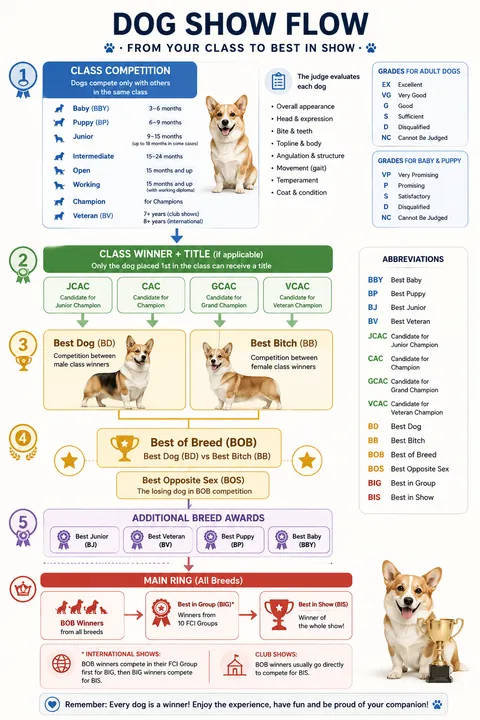
The main classes include:
- Baby — 3–6 months.
- Puppy — 6–9 months.
- Junior — 9–15 months (in some cases up to 18 months).
- Intermediate — from 15 months to 2 years.
- Open — adult dogs over 15 months.
- Working — for dogs with the required working qualifications.
- Champion — for dogs that already hold a champion title.
- Veteran — for older dogs (from 7 years at Israeli club shows and from 8 years at international shows).
This system allows each dog to compete against others that are as close as possible in age and stage of development.
What Does the Judge Do in the Ring?
Each dog is examined individually.
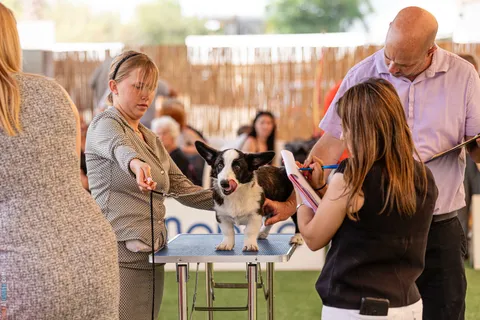
The procedure usually follows a similar pattern.
The judge:
- assesses the overall impression;
- checks the teeth and bite;
- examines the head, body, tail, and limbs;
- assesses coat quality;
- evaluates temperament;
- asks the handler to move the dog so that its gait and trot can be assessed.
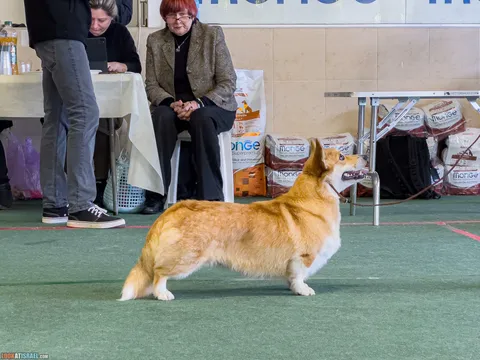
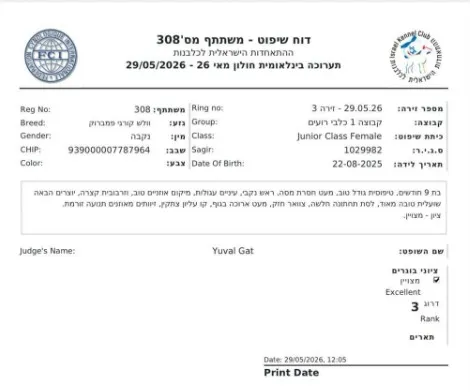
After the examination, the judge prepares a written critique describing the dog’s strengths and weaknesses.
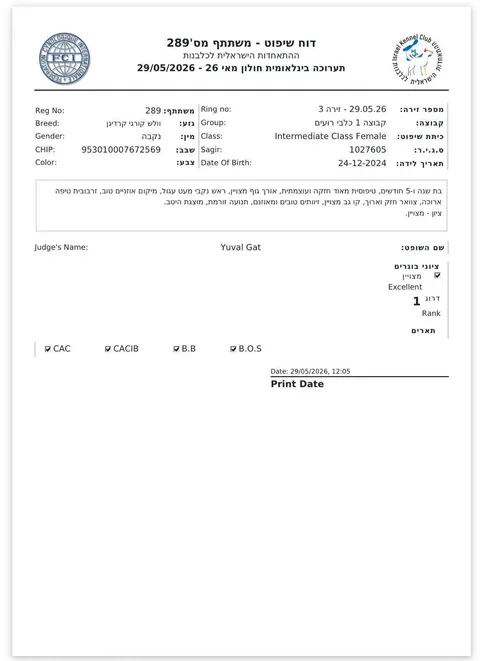
For a breeder, this document can often be even more valuable than the rosette received at the show.
First the Grade, Then the Comparison
This is another point that often surprises newcomers.
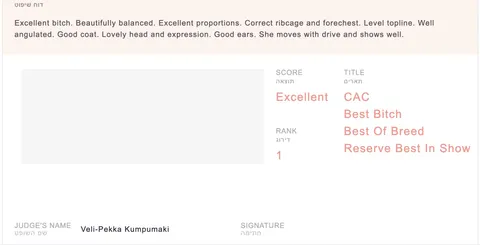
The judge does not immediately begin choosing the winner. First, each dog receives an individual quality grade.
For adult dogs, these may include:
- Excellent;
- Very Good;
- Good;
- Sufficient;
- Disqualified;
- Cannot Be Judged.
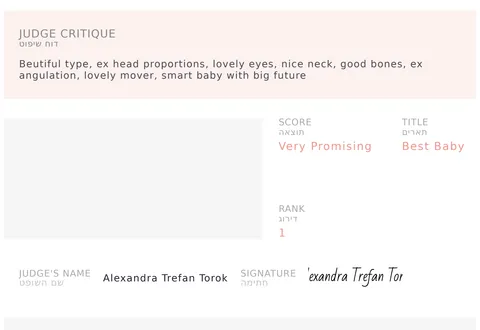
For puppies, the grading system is slightly different. Instead of “Excellent,” grades such as Very Promising, Promising, Satisfactory, and others may be used because the puppy is still developing and it is too early to draw final conclusions.
Only after all the dogs have received their grades does the judge place them within the class.
This means that several dogs may all receive an Excellent grade, but only one can become the class winner.
Awarding Certificates and Titles
Within the classes, dogs are compared with one another, and at this stage the judge may award various certificates.
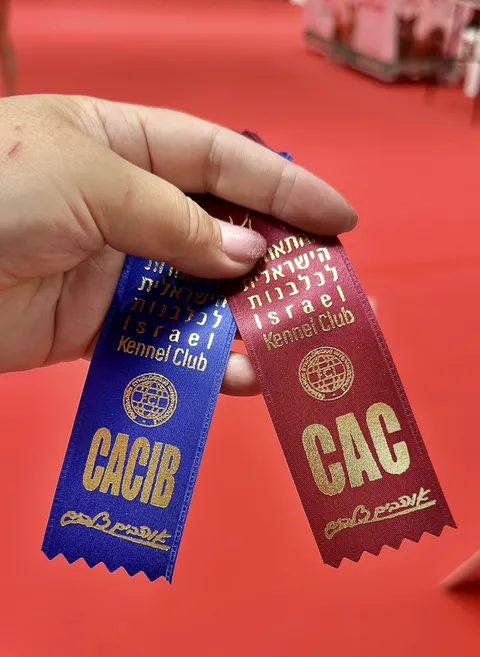
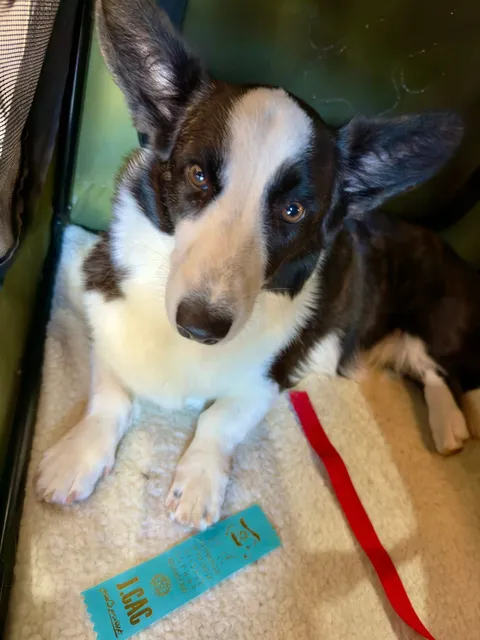
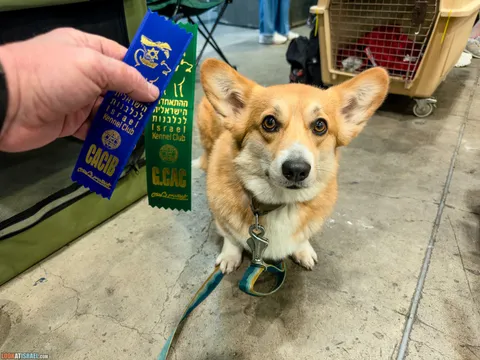
At national shows in Israel, these include, for example:
- JCAC — candidate for the Israeli Junior Champion title;
- CAC — candidate for the Israel Champion title;
- GCAC — candidate for the Israeli Grand Champion title;
- VCAC — candidate for the Israeli Veteran Champion title.
At international FCI shows, additional international certificates may be awarded, including CACIB, CACIB-J, and CACIB-V.
To newcomers, all these abbreviations may initially seem complicated, but they soon become quite familiar.
What Is a Reserve?
You may sometimes hear that a dog received Reserve CAC or Reserve JCAC.
This is, in a sense, the “second position” among the dogs competing for that certificate.
A reserve can become important if the winner no longer needs that certificate or in other situations provided for by the rules, in which case the reserve may be converted into the full certificate. For example, if the dog that placed first in the Junior class and received the JCAC already holds the Junior Champion title, the JCAC may pass to the dog that received Reserve JCAC.
This is why experienced exhibitors are always pleased with a good reserve result — it is far from being merely a “consolation prize.”
After the Classes Comes the Most Interesting Part — the Comparisons
Once all dogs have received their grades and placements within their classes, it may seem that the show is over. In reality, this is only the beginning.
The judge now starts selecting the best representatives of the breed.
This is where abbreviations such as BBy, BP, BJ, BB, BD, BOB, BOS, and many others begin to appear.
First, the Best Babies and Puppies Are Chosen
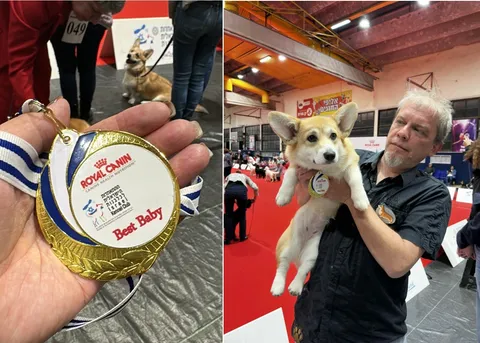
The male and female puppies that have won their respective classes are compared. The winners of these comparisons receive Best Baby (BBy) and Best Puppy (BP).

Then the Best Dog and Best Bitch Are Chosen
Males and females are judged separately. Once the class winners have been determined, the winners are brought together for another comparison.
Among the males, the judge selects the Best Dog (BD).
Among the females, the judge selects the Best Bitch (BB).
For these comparisons, the dogs that won the Junior, Open, Champion, and Veteran classes are called back into the ring, and the judge chooses the best representative of each sex.
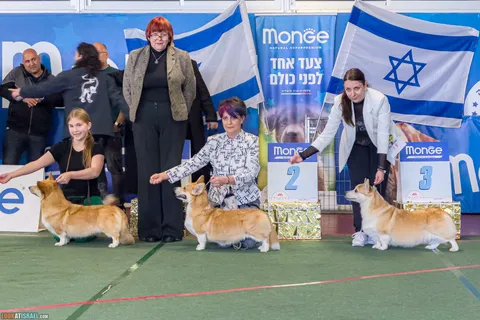
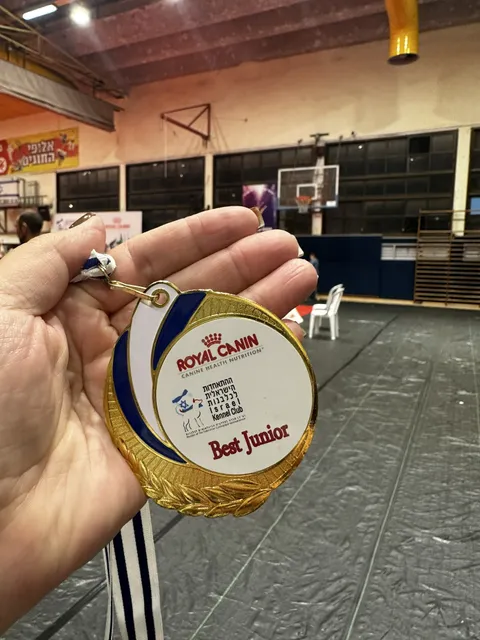
Best Junior and Best Veteran
The best representatives of certain age categories are also selected separately.
For example:
- BJ (Best Junior) — the best junior of the breed;
- BV (Best Veteran) — the best veteran of the breed.
The best junior male is compared with the best junior female, and the best veteran male with the best veteran female.
And Finally — Best of Breed (BOB)
This is one of the most prestigious awards at a dog show.
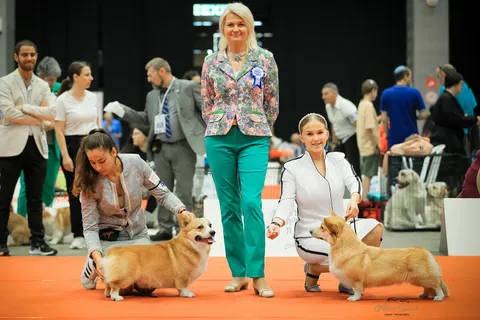
Once the Best Dog and Best Bitch have been selected, they enter the ring once again. The judge is no longer comparing age or sex, but answering just one question:
Which dog best represents the breed today?
The winner receives BOB (Best of Breed).
The dog of the opposite sex receives BOS (Best Opposite Sex).
And Then Comes the Main Ring — Best in Show
If a dog has received BBy, BP, BJ, or BOB, its day is not over yet.
It will now represent not only itself, but its entire breed.
At the main ring:
- Baby and Puppy winners from different breeds compete for Best Baby in Show and Best Puppy in Show.
- Junior winners from different breeds compete for Best Junior in Show.
- Dogs that received BOB (Best of Breed) compete for Best in Show (BIS) — the best dog of the show.
At international shows, there is an additional stage between these levels.
All breed winners first compete within their respective FCI groups. There are ten FCI groups; for example, Welsh Corgis belong to FCI Group 1 — Sheepdogs and Cattle Dogs.
The best dog in each group receives BIG (Best in Group).
Only the winners of all ten groups then enter the final ring, where BIS (Best in Show) — the best dog of the entire show — is selected.
Why BOB Is Already a Major Achievement
Newcomers sometimes think that only BIS counts as a “real” victory. In reality, that is far from true.
For most breeds, winning BOB is already a highly prestigious achievement. Before reaching the main ring, a dog may have had to:
- win its class;
- win the comparison among dogs of its sex;
- defeat the best dog of the opposite sex.
For many breeders, BOB is one of the most valuable show wins.
A quick reference guide to help you understand the titles:
Is It Worth Showing a Puppy?
Many owners believe that shows do not make much sense until the dog reaches adulthood — or at least nine months of age and the Junior class.
To some extent, this is true.
Titles won in the Baby and Puppy classes do not count towards adult championship titles and do not appear in the pedigree. Even a Best Puppy in Show remains a lovely achievement and a wonderful memory, but does not become part of the dog’s official list of championship titles.
Nevertheless, we believe that introducing a puppy to dog shows early can be enormously beneficial.
First, it provides invaluable experience for the puppy.
The puppy learns to cope calmly with a noisy environment, unfamiliar smells, large numbers of people and dogs, examination by a judge, standing for presentation, and moving around the ring. As a result, if the owner decides to continue showing the dog as an adult, its show career can begin much more calmly and confidently.
Second, early shows are useful for the owner.
At this stage, you can begin to see the puppy’s strengths, hear the opinions of different judges, and understand how closely the dog conforms to the breed standard. Even if the dog never enters the ring again, this information can still be extremely useful.
Of course, it is important to remember that puppies are constantly growing and changing. A successful or unsuccessful performance at four, six, or eight months does not determine the dog’s future show career. Many magnificent adult champions looked rather awkward as puppies, while some spectacular puppies changed less favourably as they matured.
At our kennel, we try to show every puppy at least a few times at an early age. Not for titles, but for experience, socialisation, and the opportunity to receive an independent evaluation from judges.
That experience is often far more valuable than another beautiful rosette.
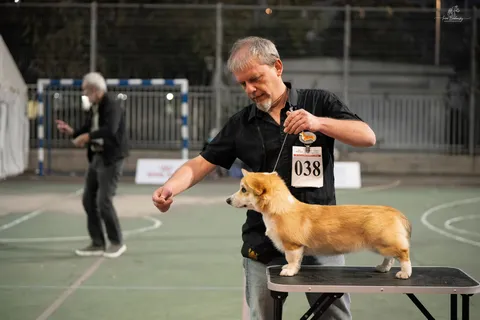
Don’t Be Afraid of Your First Dog Show
Almost every owner feels nervous before entering the ring for the first time.
Fortunately, the dog-show community is usually very welcoming to newcomers — as it is, for example, in our club. Most experienced exhibitors will happily tell you where to go, when to enter the ring, and what you need to do.
After just one or two shows, everything begins to make much more sense. From then on, the best part is simply enjoying working together with your dog, watching it develop, and meeting people who love the breed just as much as you do.
How Do You Earn a Champion Title in Israel?
Winning one show does not automatically make a dog a champion.
At shows, dogs receive not the championship title itself but certificates toward that title. For example, JCAC means that the dog has received a certificate toward the Israeli Junior Champion title, while CAC is a certificate toward the Israel Champion title.
To earn a championship title, a dog must collect the required number of JCAC, CAC, or GCAC certificates. In some cases, they must be awarded by different judges and at shows of a particular level.
Israeli Junior Champion
Israeli Junior Champion (IL.JCH)
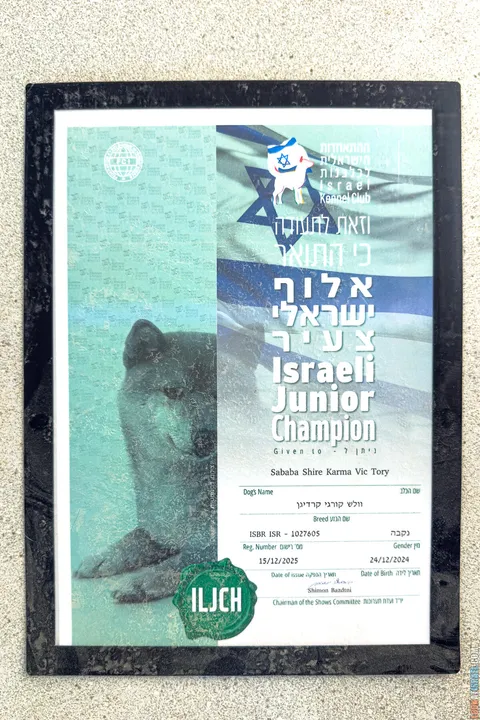
To obtain the title, a dog must:
- receive 2 JCACs;
- the certificates must be awarded by two different judges at club or international shows.
JCAC is awarded in the Junior class. It is not given automatically for winning the class: the judge must consider the dog worthy of the certificate. This means that a dog can place first in its class without being awarded a JCAC.
Israel Champion
Israel Champion (IL.CH)

The standard route is:
- receive 3 CACs;
- from at least two different judges;
- at least one CAC must be obtained at an international show.
There is also an alternative route:
- receive 3 CACs at club shows;
- additionally receive a Reserve CAC at an international show.
CACs may be awarded to adult dogs entered in the relevant classes. Junior JCACs do not replace adult CACs and do not count towards the Israel Champion title.
Israeli Grand Champion
Israeli Grand Champion (IL.GCH)
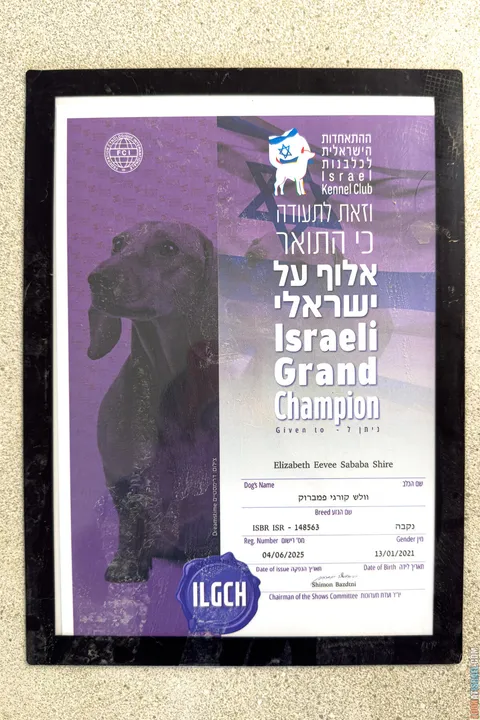
This title is intended for dogs that have already become Israel Champions and continue their show careers in the Champion class.
To obtain the title, a dog must:
- receive 3 GCACs;
- from at least two different judges;
- at least one GCAC must be obtained at an international show.
The Grand Champion title is therefore the next step after the adult Champion title.
Israeli Veteran Champion
Israeli Veteran Champion (IL.VCH)
To obtain the title, a dog must:
- receive 2 VCACs;
- from two different judges.
VCAC is awarded to dogs competing in the Veteran class. In Israel, the minimum age for this class may depend on the type of show: from seven years of age at club shows and from eight years at international shows.
A Championship Certificate and a Champion Title Are Not the Same Thing
This distinction is important: JCAC, CAC, GCAC, and VCAC are not championship titles themselves — they are certificates toward those titles.
Even after a dog has collected the required number of certificates, the title must first be officially confirmed by the Israel Kennel Club (ההתאחדות הישראלית לכלבנות). Only after confirmation does it become part of the dog’s official title record.
So saying that “the dog received a CAC” does not mean that it became an Israel Champion that day. It may simply have taken its first step towards the title.
International Titles
At international shows, dogs may receive additional certificates:
- CACIB-J — certificate toward the International Junior Beauty Champion title;
- CACIB — certificate toward an International Beauty Champion title;
- CACIB-V — certificate toward the International Veteran Beauty Champion title;
- Reserve CACIB — reserve certificate.
International titles are awarded according to FCI rules and may require several certificates obtained in different countries, under different judges, and within specified time intervals.
What Does a Champion Title Actually Mean?
A championship title confirms that a dog has repeatedly received high evaluations from different judges and has been recognised as a worthy representative of its breed.
This is an important achievement, particularly for a breeder, but a title does not mean that the dog is perfect.
Every dog has strengths and weaknesses. A champion may have faults that need to be considered when selecting a mate, while a dog without impressive titles is not necessarily a poor representative of its breed.
A dog show primarily evaluates conformation, movement, temperament in the ring, and overall conformity to the breed standard on that particular day.
It does not provide complete information about the dog’s health, genetics, ability to pass particular qualities to its offspring, or behaviour in everyday life.
Is a Champion Title Enough for Breeding Eligibility?
No.
In Israel, a dog’s eligibility for breeding is regulated by the Breeding Regulations (נוהל גידול) of the Israel Kennel Club (ההתאחדות הישראלית לכלבנות).
Show titles are only one part of evaluating a potential breeding dog.
Depending on the breed, breeding eligibility may also require:
- a specified minimum show grade;
- compliance with age requirements;
- results of mandatory breed-specific health examinations;
- fulfilment of additional requirements established by the breed’s breeding regulations.
Some breeds also have restrictions on the number of matings, the age of breeding dogs, and other specific rules.
Responsible breeders therefore evaluate breeding dogs as a whole. A show career can help confirm conformity to the breed standard, but it does not replace health testing, pedigree analysis, or careful mate selection.
Even when all formal requirements have been met, the final decision to breed a dog always remains with the breeder. The goal is not simply to produce puppies with impressive titles in their pedigrees, but to preserve the health, breed type, and sound temperament of future generations.
A breeder’s job is not to simply put two champions together. The goal is to select dogs that complement one another and offer the best chance of producing healthy, breed-typical, mentally sound offspring.
Two titled parents do not guarantee perfect puppies. Genetics is far more complicated than that, and impressive titles never eliminate the need for thoughtful mate selection.
What If the Dog Did Not Win?
One unsuccessful show proves nothing.
The result can depend on many factors:
- the strength of the competition;
- the dog’s age and current condition;
- the quality of its preparation;
- its behaviour in the ring;
- coat condition;
- the preferences of the particular judge.
A dog may lose today and win under another judge a month later.
Sometimes a dog is simply going through an awkward stage: it has not yet fully matured, looks temporarily unbalanced, or has lost much of its coat. At other times, it simply meets a stronger competitor in the ring.
This is why a dog should never be judged on the basis of a single show. It is far more useful to look at several critiques from different judges and see which strengths and weaknesses are repeatedly mentioned.
A Dog Show Is Not a Test of Love
Your dog does not become any less wonderful because it failed to win a title. A dog does not need to be a champion to remain a wonderful companion, a member of the family, and a beloved pet.
A show result tells you something about conformity to the breed standard. It does not measure affection, intelligence, sense of humour, loyalty, or the place the dog holds in the lives of its people.
Showing should remain an enjoyable activity that you share with your dog, not a source of constant pressure.
The Most Important Thing Is How the Dog Feels About Shows
Not every dog enjoys the show ring.
Some dogs happily interact with people, remain relaxed in noisy surroundings, and seem to genuinely enjoy the attention. Others become anxious, tense, and uncomfortable even with good preparation.
In that situation, the owner should honestly ask themselves: does the dog really need a show career, or is it something only the person wants?
No title is worth constant stress. Dog shows should be a safe and positive experience. Dogs should be prepared gradually, rewarded, and never punished for making a mistake in the ring.
So Why Go to Dog Shows at All?
Because with the right attitude, a dog show is much more than a competition for a rosette.
It is an opportunity to:
- receive an independent evaluation of your dog;
- see other representatives of the breed;
- compare different bloodlines and types;
- meet and talk with breeders and owners;
- gain experience working together with your dog;
- see the progress made by both dog and handler;
- spend a day among people who share an interest in dogs and breeding.
For breeders, dog shows remain an important tool in breeding programmes.
For other owners, they can become an enjoyable hobby and a way to understand their dog better.
Titles, trophies, and rosettes are a lovely bonus, but they are not the only reason to enter the ring.
There is another reason that is rarely mentioned.
Dog shows are not only about the ring, grades, and titles. They are also about bringing together people who share a love for the same breed.
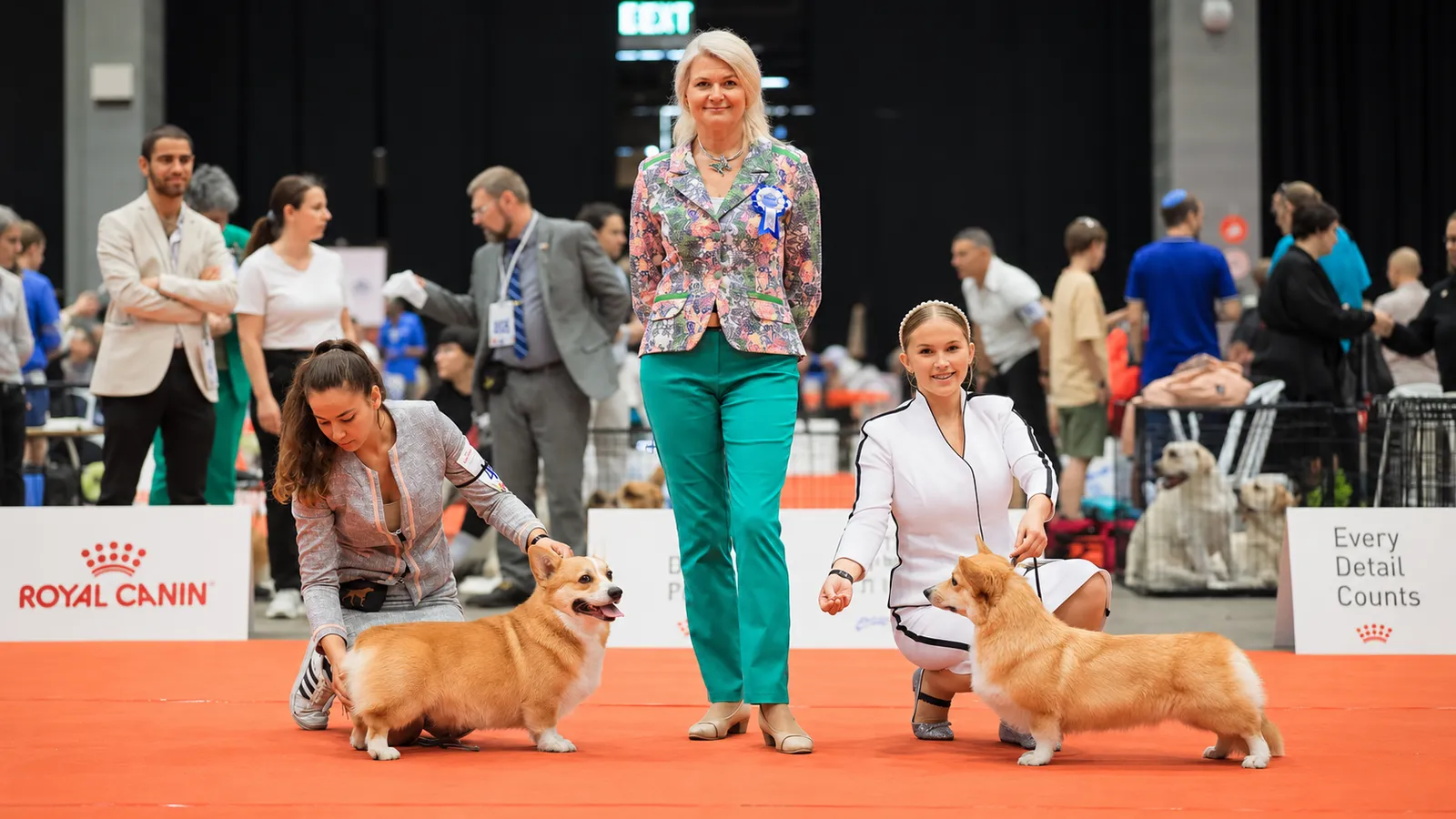
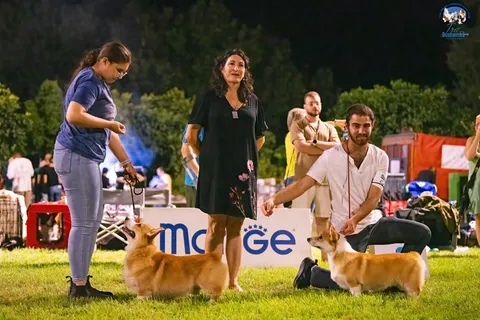
Our Sheepdog Breeds Club has a wonderful tradition: every summer, an evening show is held that feels more like a celebration among friends and like-minded people.
Alongside the show itself, the organisers hold a picnic, while dog owners, breeders, handlers, and judges talk, congratulate the winners, and simply enjoy a warm summer evening together.
It is a chance to meet breeders, talk to owners of dogs from different kennels, exchange experience, ask questions, or simply spend a few pleasant hours surrounded by beautiful dogs and people who share the same passion.
Events like these remind us that dog shows are not only about competition. They are also about a community of people united by a genuine love for their dogs and their breed.
This is what it looks like:
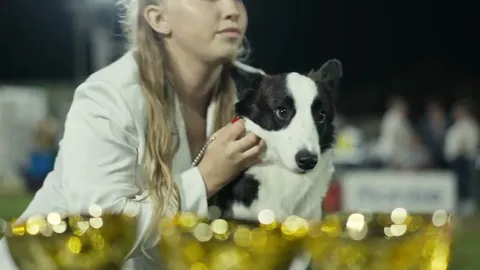
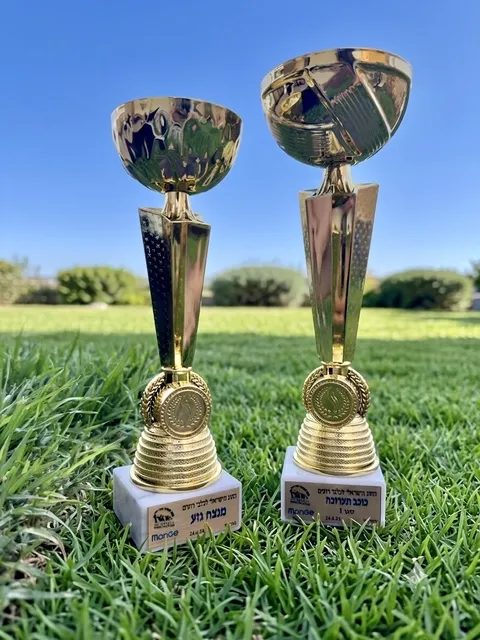
Perhaps that is why so many people continue coming to dog shows long after their dogs have already become champions. Trophies eventually gather dust, but friendships, conversations, and good memories can last for many years.
In Conclusion
A dog show is not a race, an obedience competition, or an ordinary beauty contest. It is an evaluation based on the breed standard, the judge’s expertise, and comparison between dogs.
It helps preserve breed type, provides breeders with valuable information, and allows owners to see their dog through the eyes of an independent professional.
But every show result should be viewed calmly and in perspective. Winning does not make a dog perfect, and losing does not make it a bad dog.
The most valuable things you can take home from a dog show are experience, new knowledge, and the pleasure of spending time together with your dog.