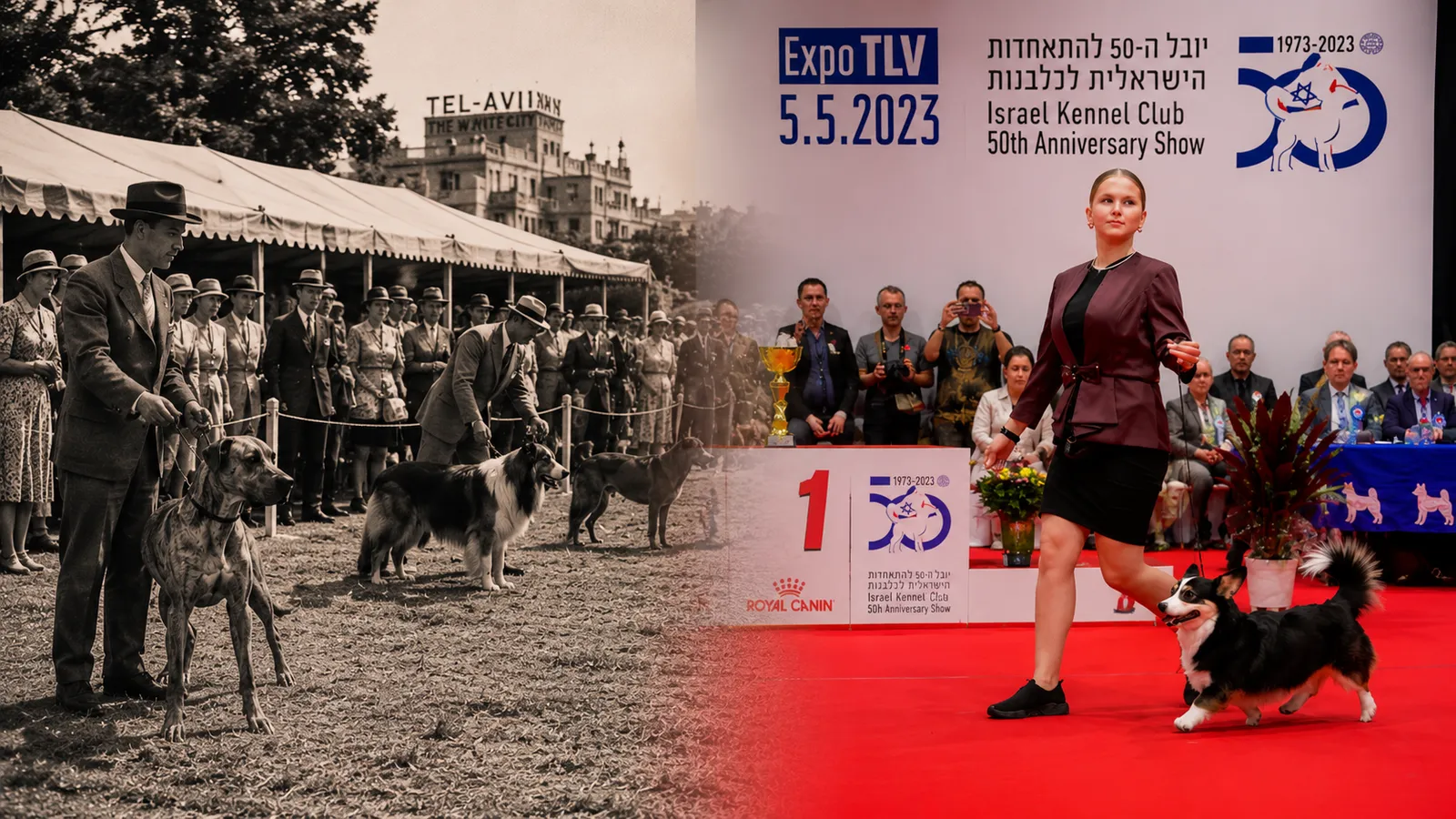
By the late 1960s, the owner of a pedigree dog in Israel could find themselves facing a rather unexpected choice: the country had two canine organizations. Both dealt with pedigree dogs, both brought breeders together, both held dog shows and, most importantly, each maintained its own stud book.
One dog could be registered in one system, while another was registered in the other.
For a small country, the situation was, to put it mildly, inconvenient. And when Israeli cynologists sought full integration into the international FCI system, another problem became apparent: the international federation required Israel to be represented by a single national canine organization.
The two sides had to find a way to agree.
But to understand how Israeli cynology managed to split into two systems in the first place, we need to go back a little further.
Cynology Before the State of Israel
Organized cynology began to develop in Mandatory Palestine long before the establishment of the State of Israel.
The British presence played a role in this process. British servicemen and members of the administration brought dogs of European breeds with them, and the Palestine Kennel Club, which had ties to the British Kennel Club, began operating in Palestine.
Attitudes toward dogs themselves were also changing. During the 1920s, increasing numbers of Jewish immigrants arrived in Palestine from Europe, many of them members of the urban middle class. Keeping a dog at home was nothing unusual to them. As the new Jewish Yishuv grew, dogs increasingly became not only guards or working animals, but also household pets and companions.
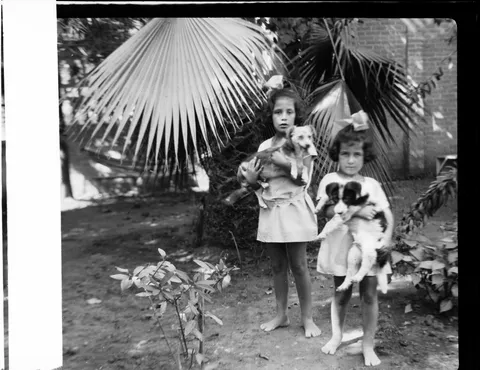
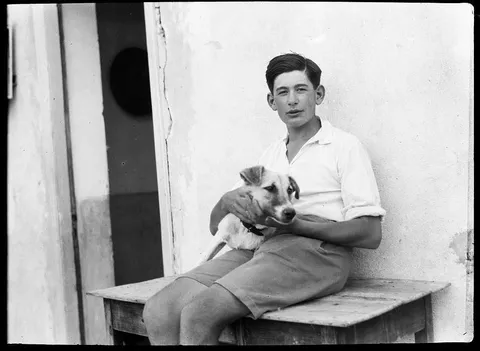
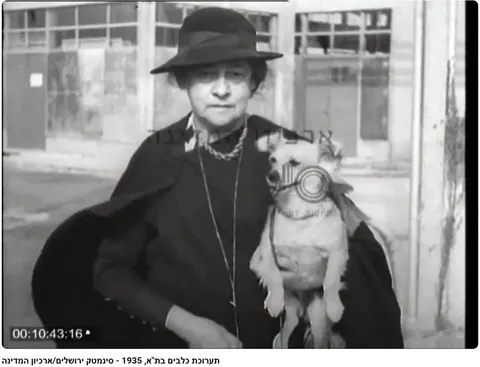
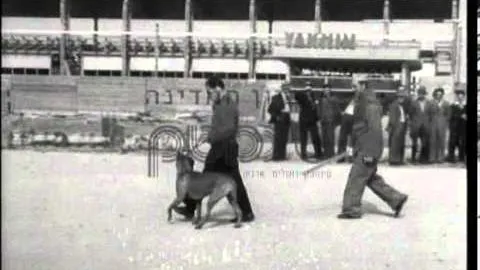
Local canine organizations gradually began to appear as well. The first club in Tel Aviv was founded in 1933, and in 1935 one of the first organized dog shows was held — and even captured on film. Footage of the Tel Aviv dog show has survived: the ring, spectators, owners with their dogs — a small but vivid fragment of everyday life from that period.
Thus, when Rudolphina and Rudolf Menzel moved to Palestine in 1938, a canine community already existed there. Their role was not to create it from scratch, but to help transform separate clubs, dog shows and breeding activities into a professionally organized system.
We have told the story of their work — service dogs, the first Hebrew cynological terminology, the institute in Kiryat Motzkin, the stud book and the development of the Canaan Dog — in detail in a separate article.
What was needed were breeding regulations, pedigree registration, dog shows, judges, clubs, professional education and a body of canine literature.
In 1939, the first Palestinian stud book — פנקס היוחסין הארץ־ישראלי — was established. It grew out of Rudolphina Menzel's breeding records, the famous “black book” in which she collected information about registered dogs and their pedigrees.
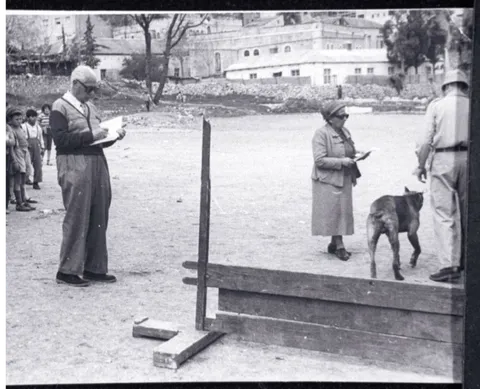
In 1950, Rudolphina and Rudolf Menzel conducted Israel's first course for dog-show judges.
Meanwhile, the young state was growing — and so was the number of people involved with pedigree dogs.
One Country, Different Clubs
After the establishment of Israel, new local canine organizations emerged.
One of the main organizations was התאחדות הכלבנים בישראל — the Israel Kennel Club, which succeeded the former Palestine Kennel Club. Its structure was largely territorial, with branches and clubs operating in different cities around the country, including Jerusalem, Haifa, Rishon LeZion and Nahariya.
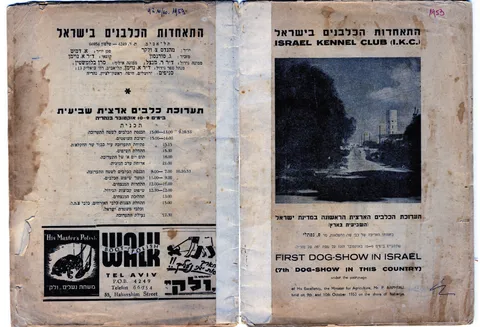
Such a model was perfectly natural for a young canine community: people organized primarily according to where they lived, and owners of different breeds met through local clubs, organized shows and other events, and registered their dogs.
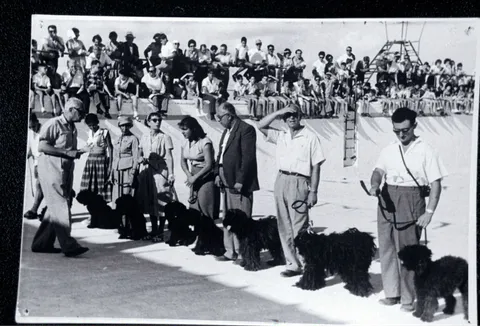
Gradually, however, new breeders and owners arrived in Israel who were familiar with the European system, in which breed clubs, rather than territorial organizations, played a major role.
In the 1960s, another organization appeared — איגוד מטפחי הכלב הגזעי בישראל, bringing people together around individual breeds. Among the first such organizations were clubs for Schnauzers, German Shepherd Dogs and sighthounds. The history of the Israeli German Shepherd Dog club, for example, dates its establishment to 1967.
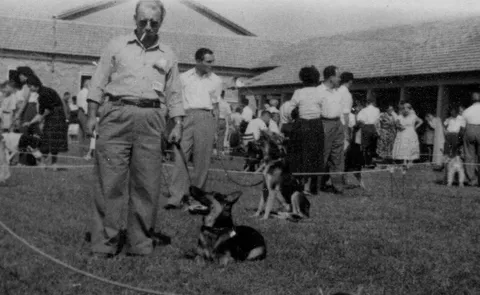
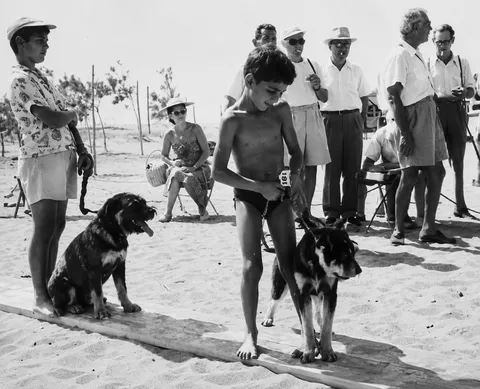
Israel therefore developed two different models: in one system, a person belonged to a local canine club; in the other, primarily to a community devoted to their breed.
That in itself might not necessarily have become a problem. The problem was that both systems wanted to represent Israeli cynology as a whole.
Two Organizations. Two Stud Books
By the end of the 1960s, the rivalry had become quite serious.
Both organizations had their own clubs, shows and regulations — and, most inconveniently from the standpoint of a unified breeding system, two separate stud books.
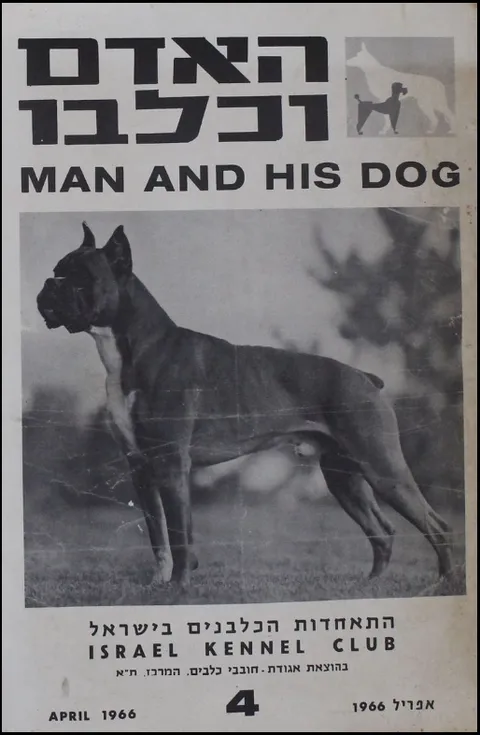
Traces of this period have survived even in the National Library of Israel. Its collections include old canine publications associated with the rival organizations: for example, the magazine האדם וכלבו was connected with התאחדות הכלבנים בישראל, while הכלב was published by the competing איגוד מטפחי הכלב הגזעי בישראל.
Soon, however, this internal Israeli dispute collided with an international reality.
Israeli cynologists sought full integration into the FCI — Fédération Cynologique Internationale, the world's largest international canine federation, and the FCI had no intention of choosing between two competing claimants.
Its principle was simple: a country should be represented by one national organization. One might have expected the FCI simply to select one of the two existing bodies, but the international federation took a more cautious approach. It declined to choose a winner in Israel's canine war and instead told the two camps to reach an agreement themselves.
Negotiations began...
How Do You “Marry” Two Canine Organizations?
The disagreements soon went well beyond purely organizational matters. In the histories of Israeli breed clubs, the rivalry between the two organizations is described with little diplomatic restraint as “a real war.”
And there was plenty to fight over. At stake were not only the structure of club life, dog-registration rules and two parallel stud books. Both organizations wanted the right to represent Israeli cynology internationally.
The negotiations lasted for about two years.
The task proved considerably more complicated than simply sitting representatives of both sides around the same table. Each organization already had its own clubs, breeders, shows, registered dogs and stud book. Behind the conflict were also two fundamentally different ideas about how organized cynology should work.
The older התאחדות הכלבנים בישראל had largely grown out of territorial organizations: owners of different breeds gathered in local canine clubs.
The איגוד מטפחי הכלב הגזעי בישראל, which emerged in the 1960s, followed a different model, organizing people primarily around individual breeds. Veterinarians Rita and Ze'ev Trainin, who had returned after studying in Switzerland, played an important role in developing this system.
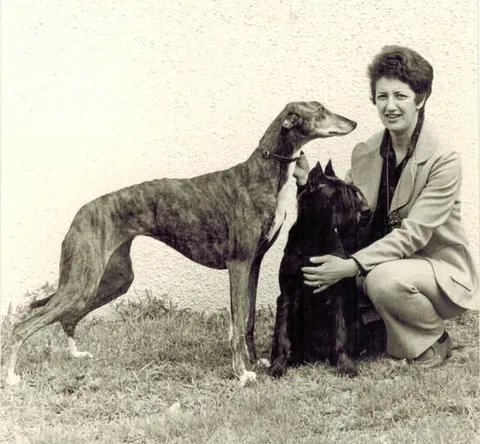
Clubs for Schnauzers, German Shepherd Dogs, sighthounds and other breeds formed around the new organization. Merging the two organizations therefore meant much more than choosing a new name — it meant combining two systems that were already fully operational.
By the end of 1972, a compromise was finally reached, and in 1973 the unified ההתאחדות הישראלית לכלבנות — Israel Kennel Club (IKC) began operating.
Documentary evidence of the unified organization’s activities has also survived in its own publication. In September 1973, «HaKelev» (הכלב) was published as the “official organ of the Israel Kennel Club” — ההתאחדות הישראלית לכלבנות.
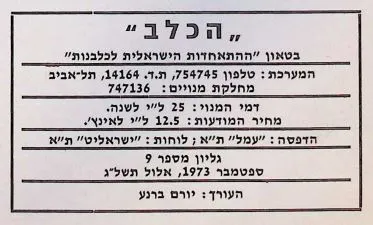
The chairmanship of the new organization had to be shared. The first chairman of the new federation was Shlomo Lieber, representing one side. Under the agreement, two years later he was to be succeeded by a representative of the other camp, Dr Yehezkel Gotschal.

Long before the word “rotation” became a familiar feature of Israeli political life, the country's dog people had already mastered the technique.
But signing a merger agreement was much easier than deciding what to do with all the clubs. In some cases, the merger left two parallel organizations performing essentially the same function: one inherited from the first federation and the other from the second.
Simply declaring one of them the “correct” organization was difficult, so an almost sporting solution was found.
During the transition period, each organization's actual activity was assessed: its number of members, registered puppies, dog shows and other events. The more active organization remained, while its parallel counterpart was expected to merge into it.
As a result, the modern federation inherited elements of both older systems.
Even more than half a century later, traces of that division can still be found in the names of Israeli canine organizations. Some are called חוג — “hug”, while others use מועדון — “mo'adon.” The two terms came from the once-competing organizations: חוג from the system of איגוד מטפחי הכלב הגזעי and מועדון from the older התאחדות לכלבנים בישראל.
It is a curious historical relic: the organizations merged long ago, yet their old terminology survived. Formally, the canine war ended. Linguistically, not quite.
There was still one problem, however, that could not be solved simply by changing the sign on the door: the two stud books had to be merged.
Dogs, their parents, litters and pedigrees now had to be brought together within a single registration system.
At the same time, the rules governing the registration of dogs of unknown origin were tightened. The stud book was closed to such registrations for almost all breeds.
Two special exceptions remained: the Canaan Dog and the Saluki. For these ancient local populations, it was still possible to incorporate suitable dogs of indigenous origin into breeding. In the case of the Canaan Dog, this was consistent with Rudolphina Menzel's own approach: she believed that bringing suitable local dogs into the breed remained important in order to preserve its genetic diversity.
The administrative merger was gradually becoming a genuinely unified canine system.
The End of an Era
For the history of Israeli cynology, 1973 marked a symbolic boundary for another reason as well.
On 7 May that year, Rudolphina Menzel died. For almost forty years, she had participated in building the canine system that had now finally been brought together within a single national federation.
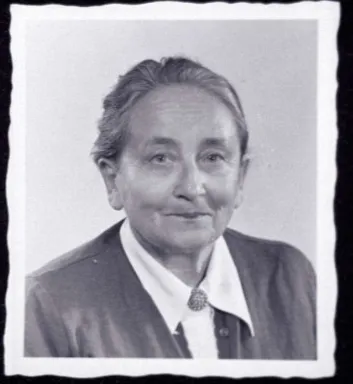
She had witnessed the first clubs and shows of Mandatory Palestine, helped establish pedigree registration and judge education, and worked to advance pedigree breeding and the international connections of Israeli cynology.
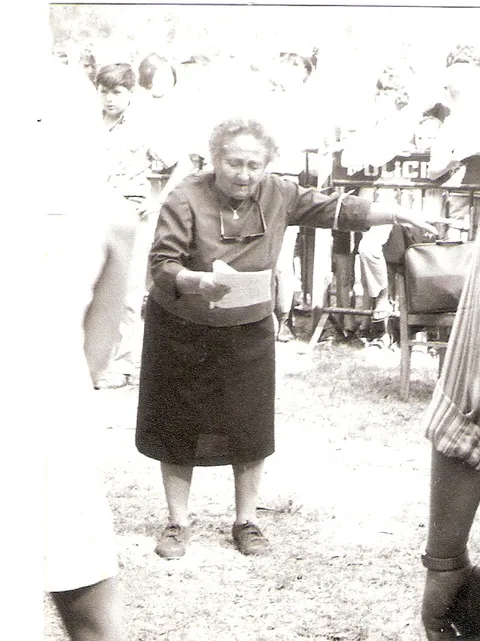
After her death, the magazine הכלב — by then a publication of the newly unified Israel Kennel Club — devoted its entire September 1973 issue to Rudolphina Menzel. It contained reminiscences and articles by her friends and colleagues in Israel and abroad — a kind of international farewell to one of the people who had helped lay the foundations of Israeli cynology.
This issue is not freely available online, but we were able to obtain a copy from the National Library of Israel.
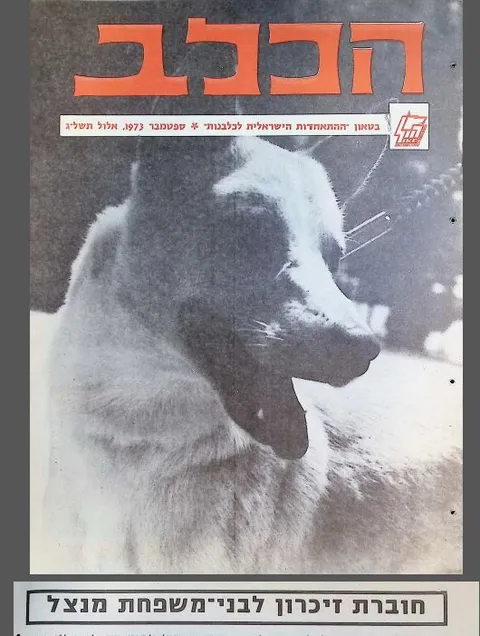
The timing was almost symbolic: in the same year that the life of one of the pioneers of organized cynology in the country came to an end, the system itself entered a new stage in its history.
Israel Enters the International Ring
As early as 1974, the new federation held its first official international dog show, with more than 600 dogs participating according to the IKC.
New breed clubs appeared, judge education developed, and educational programs and working-dog clubs were established.
Beginning in 1973, the federation published the magazine עולם הכלב — “The World of the Dog,” which continued until the late 1990s, when printed publications gradually began giving way to digital sources of information.
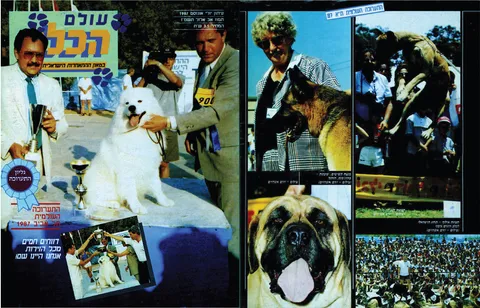
Perhaps the clearest sign of just how far Israeli cynology had come from the small clubs of the 1930s arrived in 1987.
Israel hosted the World Dog Show.
Photographs, a catalogue and other materials from the 1987 World Dog Show have survived, and Israel's postal service even issued a special set of three stamps for the event featuring dogs of local origin.
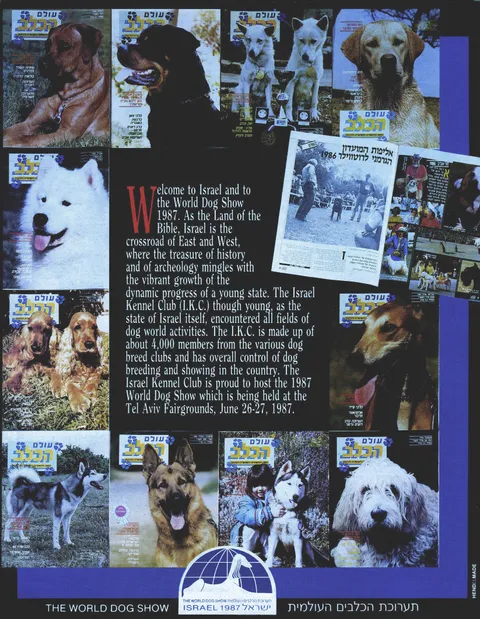
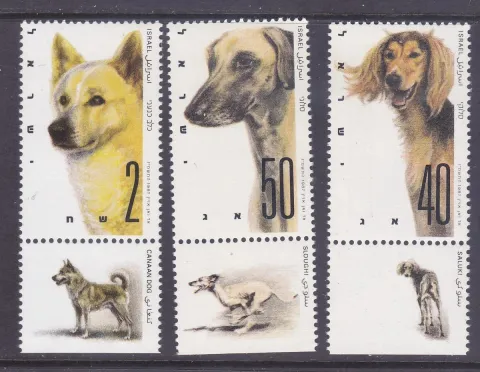
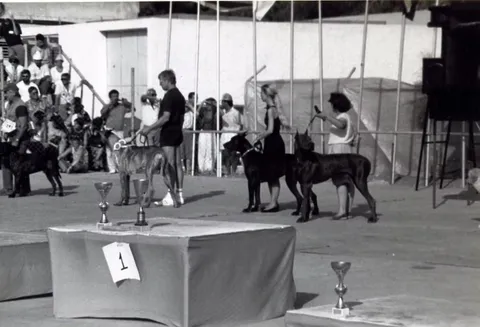
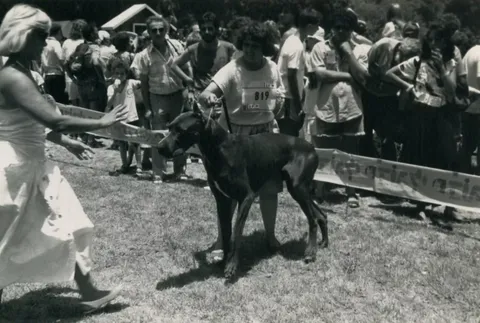
A country that only half a century earlier had been taking its first steps toward establishing a stud book and developing canine terminology in Hebrew was now hosting one of the major events of international cynology.
And in 2001, Israel hosted the European Dog Show in Tel Aviv, with sources for the event listing approximately 1,200 entries.


What Is the IKC Today?
Over the decades, the structure has become considerably more complex. The modern התאחדות הישראלית לכלבנות is not a club that every pedigree-dog owner joins directly, but rather a federation of organizations.
Today, the IKC comprises 30 clubs and associations, including breed and canine-sport organizations. Through them, owners and breeders participate in organized canine activities in Israel, including breeding, dog shows, working disciplines and other fields.
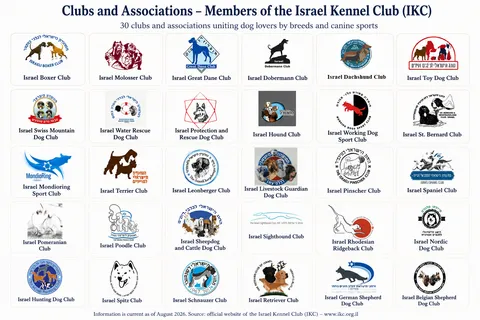
Here, the legacy of events half a century ago is particularly visible. Today, each breed can be represented within the IKC by only one breed club. The clubs themselves are independent nonprofit organizations and together form the General Assembly, the federation's highest governing body.
Within the IKC there are breeding and show committees, an educational structure, committees for working dogs, agility and Mondioring, a judges' college, an audit committee and its own court for resolving internal canine disputes.
Much of this system, however, depends on volunteer work. The leadership, committees and most other office-holders serve on a voluntary basis, while the permanent paid office staff is very small.
And the stud book that began in 1939 with Rudolphina Menzel's records has now become a computerized database.
The IKC remains the only Israeli national canine organization recognized by the FCI, and Israel is listed by the FCI as a full member through the IKC.
One might think that this would be the end of the story of two competing systems...
But this is Israel, after all.
History Repeats Itself
In May 2021, a new nonprofit organization was registered: המרכז לפעילות כלבנית בישראל — the Center for Canine Activity in Israel. According to its registration documents, its stated purposes include the breeding and registration of pedigree dogs according to the standards of another international system, IKU — International Kennel Union.
It is neither a branch of the IKC nor a second Israeli FCI organization. It is a parallel canine system.
In 2024, the Center's representative, Yaniv Bashari, speaking at a Knesset committee meeting, explicitly stated that the organization represents the IKU in Israel and maintains its own stud book in parallel with the IKC. He also described its own rules for breeding and litter registration, health and DNA requirements, and litter inspections.
The existence of the two systems has proved to be more than a theoretical issue. Relations between them have become the subject of internal proceedings within the IKC: published decisions of its court refer to the establishment of the new Center and its affiliation with the international IKU system, which is separate from the international system to which the IKC belongs.
At the same time, both organizations legally exist in Israel as registered associations, and representatives of both the IKC and the Center for Canine Activity are invited to Knesset discussions concerning the regulation of dog breeding.
As a result, today the phrase “a dog with a pedigree” does not by itself tell you who issued that pedigree.
Within the international FCI system, the IKC is Israel's national canine organization. Documents issued under the alternative system belong to the IKU system and are not FCI pedigrees.
And there is a remarkable historical echo in all of this...
Fifty years ago, Israeli cynology already lived with two organizations, two registration systems and two stud books. In 1973, they were merged because further development and international recognition required a single national structure.
Half a century later, Israel once again has two parallel systems for registering pedigree dogs.
History, of course, never repeats itself exactly, but some traditions of Israeli cynology have proved remarkably persistent.
==============================================================================
Sources: