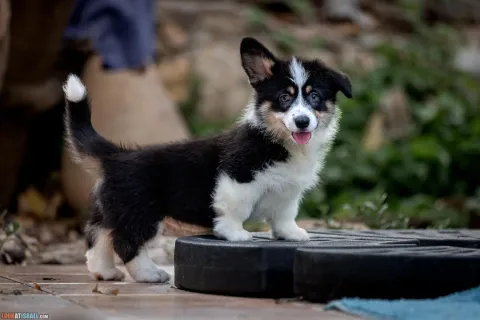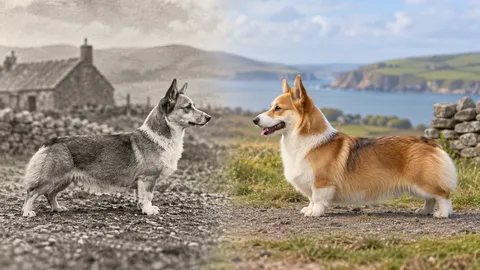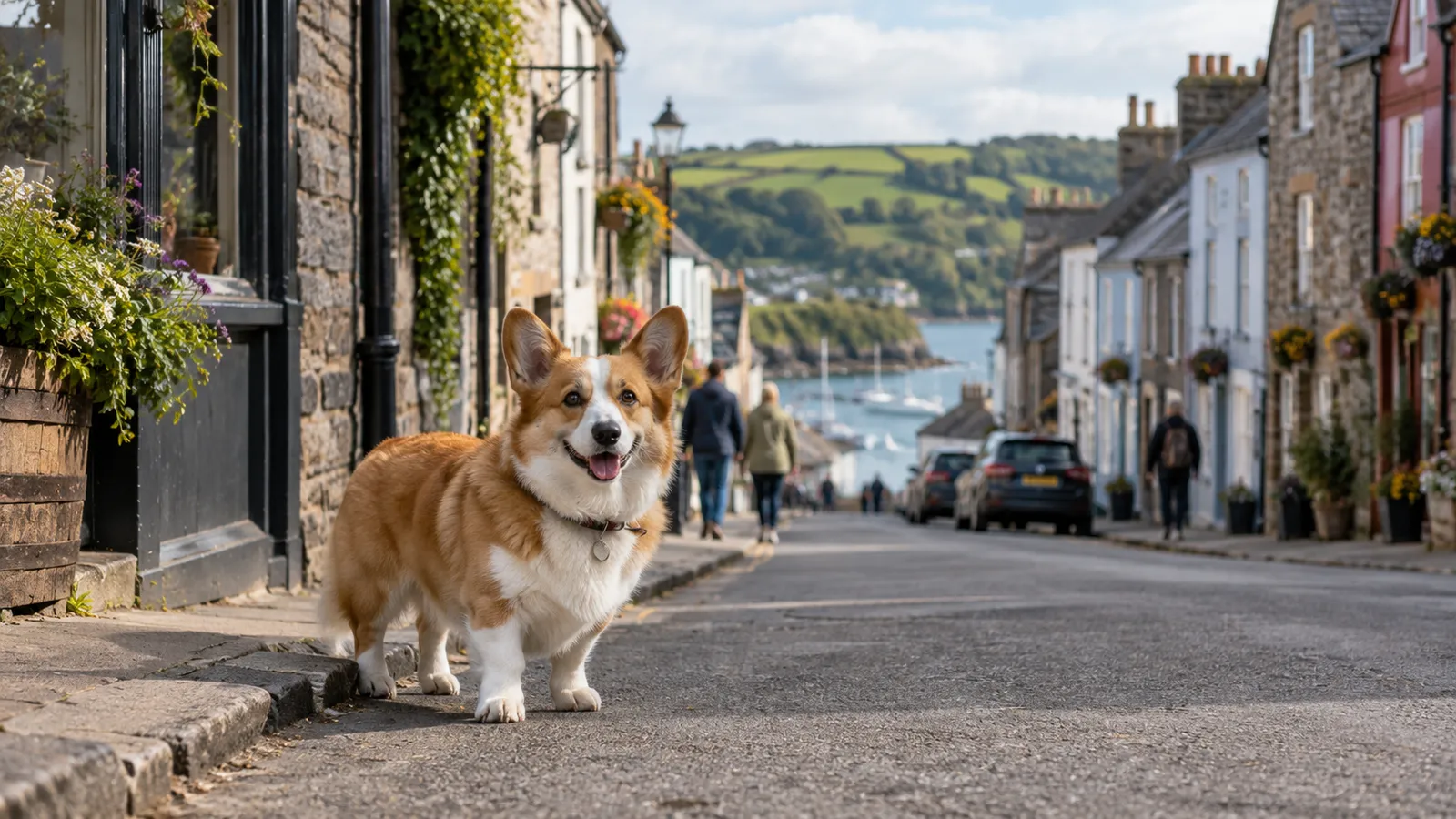
There are breeds so closely associated with a particular place that it seems you only have to go there and they will be everywhere. Saint Bernards in the Swiss Alps, Akitas in Japan — and, of course, corgis in Wales.
That is why a story told to me by an acquaintance sounded almost like the beginning of a little canine mystery. A few years ago, she was travelling around Britain and made a special trip to Pembrokeshire — the birthplace of the Pembroke Welsh Corgi, and home territory of the breed she herself owns. Where else would you go looking for corgis if not here?
And yet there were hardly any corgis to be seen in Wales. As she remembers it, they encountered perhaps one during the entire trip — and even that dog may have been a tourist too. They asked local people where all the famous Welsh dogs had gone, but no one seemed to have a clear answer.
Perhaps the story would have remained nothing more than an amusing travel memory. But the statistics of the British Kennel Club suggest that the absence of Welsh dogs from Wales was not so surprising after all.
In 1960, almost 9,000 Pembroke Welsh Corgi puppies were registered in Britain.
In 2014, there were just 274.
Behind those two numbers lies a story spanning more than half a century: the Royal Family, changing fashions, the disappearance of large kennels, arguments over tails, a reputation as “an older person’s dog” — and finally a television series that unexpectedly introduced a new generation of Britons to the young Elizabeth II and her corgis.
So where did Britain’s corgis go?
The dog made famous by the Royal Family
The Pembroke’s association with the British Royal Family began long before Elizabeth II came to the throne. In my previous articles about the breed’s history, I have mentioned more than once how, in 1933, breeder Thelma Gray of the Rozavel kennel brought three puppies to the family of the Duke of York so that the young Princesses Elizabeth and Margaret could choose one. Their choice was Rozavel Golden Eagle, known at home as Dookie.
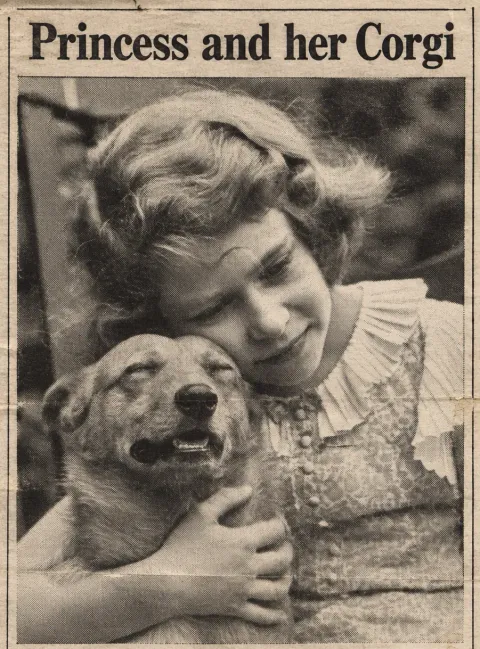
Corgis were already known in the dog world, but the arrival of one in the Royal Family gave the breed an entirely different kind of fame. In its history of the breed, the Welsh Corgi League notes that as early as the beginning of the 1930s, Thelma Gray and Barbara Douglas-Redding noticed how rapidly public interest in the breed began to grow after the princesses got their corgi.
For her eighteenth birthday in 1944, Elizabeth received a bitch of her own — Susan. Many generations of the Queen’s corgis would later descend from her; the last of this line, Willow, represented the fourteenth generation and brought to a close a breeding history spanning 74 years.
And this is where the statistics become particularly interesting. According to the Kennel Club, the breed’s popularity rose by 56 percent in 1944. Registrations continued to increase, reaching almost 9,000 puppies in 1960.
The Kennel Club points to another factor that coincided with this rise: this was the era in which television was developing rapidly and the Royal Family was becoming much more familiar to ordinary Britons. Millions watched Elizabeth II’s coronation on television in 1953, and in 1957 she delivered her first televised Christmas broadcast. Along with the young Queen, viewers repeatedly saw her dogs.
The corgi was transformed from a small Welsh herding breed into one of the most recognisable dogs in the country.
When you could buy a corgi at a farm gate
The Welsh Corgi League describes the 1960s and 1970s as the Pembroke’s heyday. Today, its recollection of just how commonplace the breed had become makes particularly striking reading:
“Families returning from a trip to Wales often came home with a Corgi bought for a few pounds at the farm gate.”
It is difficult to imagine a sharper contrast with the story that opened this article. In the 1960s and 1970s, corgis were such a familiar part of Welsh life that a puppy could almost become an impulse purchase during a holiday. Just half a century later, travellers can make a special trip to Pembrokeshire hoping to see the famous local breed — and encounter only one corgi during the entire journey.
But the Pembroke’s extraordinary popularity had a less attractive side. The Welsh Corgi League recalls that growing demand quickly attracted people for whom breeding was primarily a way to make money. Indiscriminate breeding became so widespread that, according to the club, its consequences were even reflected in the temperament of the breed.
It seemed that the corgi had secured its place among Britain’s favourite dogs. Yet behind the record figures of the 1960s, a very different story was already beginning: over the following decades, the number of registered Pembrokes would fall dramatically.
Nine thousand become two
The decline was rapid. While registrations approached 9,000 in 1960, by 1980 the Kennel Club registered only 1,806 Pembrokes — a fall of roughly 80 percent in just two decades.
This chronology matters when we try to understand what happened next. Much later, one explanation for the breed’s lack of appeal among younger Britons would be its decades-long association with Elizabeth II. In 2018, the Kennel Club’s David Robson put it very plainly:
“...they could be seen by young people as an older person’s dog.”
But the Pembroke’s decline had begun much earlier. Elizabeth II was only 34 in 1960, and by the time she was 54, registrations had already fallen roughly fivefold. That later reputation may therefore have made an existing problem worse, but it cannot explain how the long decline began.
To understand where thousands of corgis went, we need to look not only at the people who stopped buying them, but also at those who stopped breeding them.
It wasn’t only the puppies disappearing — the kennels were disappearing too
One important fact is easy to miss in registration statistics: the number of registered puppies is not the same as the number of people who wanted to buy one.
The Welsh Corgi League describes a major change in the structure of breeding itself:
“We no longer have the big kennels of the past.”
The large kennels of earlier decades were gradually replaced by breeders who kept only a few dogs, bred as a hobby and planned litters only occasionally.
Then comes a particularly important sentence:
“Demand for puppies exceeds supply.”
The figure of 274 registrations therefore tells us something important: it shows how few Pembroke puppies were being born and registered in Britain by that point, but it tells us nothing about how many people wanted one.
And supply had indeed become a serious problem. Large kennels were gradually disappearing, there were fewer breeders, and those who remained in the breed tended to keep only a handful of dogs and plan litters infrequently. It was not only the number of registered puppies that was shrinking — the breeding base capable of producing those puppies was shrinking as well.
In 2019, the Welsh Corgi League summed up the situation in one short phrase:
“...if only there were more responsible breeders to fulfil the demand.”
In other words, even after decades of falling registrations, the people who wanted a Pembroke had not disappeared. One reason so few puppies were available was simply that there were not enough responsible breeders willing to breed them.
When tail docking was banned
Another important turning point in the history of the British Pembroke was the ban on tail docking.
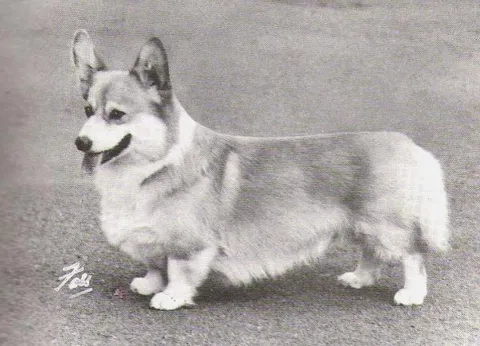
For most of the twentieth century, the familiar British Pembroke was virtually tailless. Some dogs were born with naturally short tails, but most puppies had their tails docked.
The practice had been debated for many years. The Council of Docked Breeds was formed in 1991 to campaign for the continued right to dock tails. From 1 July 1993, the procedure in Britain could be performed only by qualified veterinary surgeons, and in 2007 cosmetic tail docking was banned.
For the breed, this meant more than a change in veterinary practice: it also changed the familiar appearance of the dog. For some breeders, this was a far more significant change than it may seem today. The short tail had been regarded as one of the Pembroke’s characteristic features for decades, and not everyone was prepared to accept the breed’s new appearance. Diana King, who headed the Welsh Corgi League for many years, linked the docking ban with the departure of some of the older breeders:
“We have lost a lot of our big kennels, a lot have just given up.”
The Welsh Corgi League itself later described the situation somewhat more cautiously. According to its account, the introduction of the ban coincided with the retirement of several leading breeders and may, in some cases, have accelerated their decision to stop breeding. Registrations, show entries and breed-club membership continued to decline.
The docking ban can hardly be regarded as the main cause of the Pembroke’s long decline — registrations had already been falling for several decades by 2007. Rather, it became an additional challenge for a breed that was already experiencing a prolonged downturn and gradually losing an older generation of breeders.
Nevertheless, the new rules added fuel to the fire. The story of Allan Taylor of the famous Belroyd kennel shows just how seriously some members of that generation regarded the ban.
Taylor had been involved with Pembrokes since 1963 and, ten years later, became a partner of Idris Jones at Belroyd — a kennel that left an enormous mark on the history of the breed. Their Ch Belroyd Nut Cracker won the group at Crufts in 1991 and became such an influential sire that the Welsh Corgi League calls him “the leading stud dog in the breed’s history”.
In 2007, shortly after the docking ban was introduced, Taylor attended Corgisiada in Poland. During an interview, he was asked directly what he intended to do now that tails could no longer be docked in Britain.
His answer was brief:
“I’m not breeding any more Pembrokes.”
When asked, “Really?”, Taylor was equally succinct:
“Nope.”

For someone who had devoted more than forty years to the breed, the tail was not a minor detail that could simply be accepted along with a change in the law. In the same conversation, Taylor explained that, in his view, a long tail altered the familiar balance and outline of the Pembroke. At the same time, he was perfectly capable of appreciating the qualities of an individual tailed dog: he praised one puppy he saw at the show so highly that he admitted its quality had made him forget about the tail for a while.
The story of Belroyd does not mean that every British breeder reacted to the ban in the same way. But it does show why a change in the rules could affect the breed’s numbers much more profoundly than it might appear from the outside. The issue was not simply whether future generations of Pembrokes would grow up with long tails. Along with the breed’s old appearance, some of the people who had shaped it for decades were leaving — and some openly said that they did not want to continue breeding under the new conditions.
When fashions in dogs change
But the shrinking number of breeders was far from the whole explanation. While Pembroke registrations were falling year after year, other breeds in Britain were experiencing spectacular growth. Perhaps the clearest example is the French Bulldog. In 2004, the Kennel Club registered around 350 of them. Just ten years later, the figure was already around 9,000.
The number is almost symbolic: roughly as many Pembrokes had been registered in Britain at the height of their own popularity in 1960. Britons had not lost their interest in dogs — but their idea of which dog they wanted beside them had changed.
This is where the influence of celebrities becomes particularly interesting. During the French Bulldog’s meteoric rise, the breed could be seen with David and Victoria Beckham, Lady Gaga, Leonardo DiCaprio, Reese Witherspoon, Hugh Jackman and other celebrities. The Kennel Club itself mentioned famous owners when discussing the breed’s phenomenal rise in popularity.
There is a certain irony here. The Pembroke had once received extraordinary publicity thanks to a famous owner too — except that its principal “celebrity” was the Queen. In the middle of the twentieth century, the young Elizabeth II helped make the corgi one of Britain’s most recognisable dogs. Half a century later, a new generation was watching different celebrities — and noticing different dogs.
In 2015, Caroline Kisko, Secretary of the British Kennel Club, commented on the situation for ABC News. She cited changing breed fashions and celebrity influence among the factors involved, and was fairly blunt about the trend:
“People are daft, because celebrity isn’t a good reason to buy a dog.”
At the same time, she pointed out that the Pembroke itself had hardly become a breed suitable only for a narrow group of owners:
“Corgis are for everyone. They are fun, intelligent and active.”
Later, Kisko put the problem even more simply:
“Sadly dog breeds go in and out of fashion...”
The story of the French Bulldog shows just how quickly such fashions can transform the canine landscape. In the space of a single decade, one breed went from a few hundred registrations to several thousand, while another was moving in almost the opposite direction.
But fashion cannot provide a single explanation for the disappearance of Pembrokes either. Kennel Club representatives spoke about changing consumer preferences; the breed club pointed to the shrinking number of breeders and the consequences of the docking ban. Most likely, these processes were happening simultaneously and reinforcing one another.
By the 2010s, the corgi had acquired another problem — one far less tangible than the number of kennels or changes in legislation. A breed that had been inseparably associated with one particular person for decades seemed gradually to be ageing in the public imagination along with her.
When the corgi became “an older person’s dog”
The Pembroke’s long association with the British Royal Family eventually acquired an unexpected side. At first, photographs of the young Princess Elizabeth with her corgis helped make the breed enormously popular. But the decades passed, the Queen grew older — and somehow the image of the dogs that constantly accompanied her seemed to change with her.
By the mid-2010s, people within the breed were speaking about it openly. In 2015, British breeder Debbie Richardson put the problem very simply in an interview with The Guardian:
“The problem we have is that they are seen as an old person’s dog.”
It is a remarkable fate for a breed that had once been so commonplace that a puppy could be brought home from a trip to Wales almost like a souvenir. The corgi had never disappeared from popular culture — quite the opposite, almost everyone still recognised it. But recognition and wanting to own one turned out not to be the same thing.
A few years later, David Robson of the Kennel Club expressed much the same idea. Discussing the changing perception of the breed in 2018, he recalled its previous image:
“People used to have the impression that while corgis were in the spotlight, because of the Queen, they could be seen by young people as an older person’s dog.”
Of course, this reputation cannot explain the whole of the breed’s long decline. As we have already seen, Pembroke registrations had fallen sharply long before the image of an elderly Queen could have become part of the problem. But over time, another factor may have been added to the shrinking number of breeders, changes in breeding rules and the fashion for other breeds: the corgi remained famous, but to part of the younger audience it looked like a dog belonging to an earlier generation.
And here the story almost comes full circle. In 2016, millions of viewers once again saw Elizabeth with corgis.
Only this time, Elizabeth was young again.
The young Queen returns
By the beginning of the 2010s, the Pembroke had reached a position that would have been difficult to imagine during its post-war heyday. In 2009, the Kennel Club placed the breed in its At Watch category, which covered British breeds registering between 300 and 450 puppies a year. In 2014 came a new low: only 274 registered puppies. The Pembroke fell below the 300-registration threshold and entered the Vulnerable Native Breeds list.
Then something happened that had nothing to do with breeding, dog shows or canine policy.
In November 2016, the first season of The Crown was released. Millions of viewers watched the story of the young Elizabeth — and once again, there were corgis beside her.
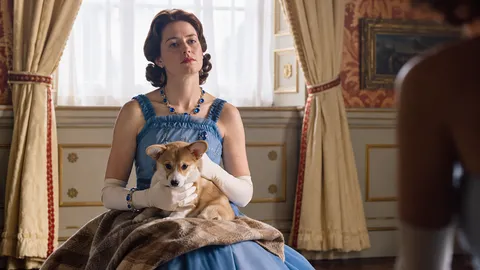
Soon, the numbers began to change. In 2017, the number of registered Pembrokes rose by 16 percent, and growth continued in 2018. The Kennel Club linked the renewed interest in the breed partly to the success of the series, while Caroline Kisko noted:
“...undoubtedly the breed’s profile started to rise.”
And this is where it is worth returning to David Robson’s words. When he said that younger people could see corgis as “an older person’s dog”, he immediately explained why that perception had begun to change:
“Now that’s changed, partly because we are seeing the character of the younger Queen surrounded by them.”
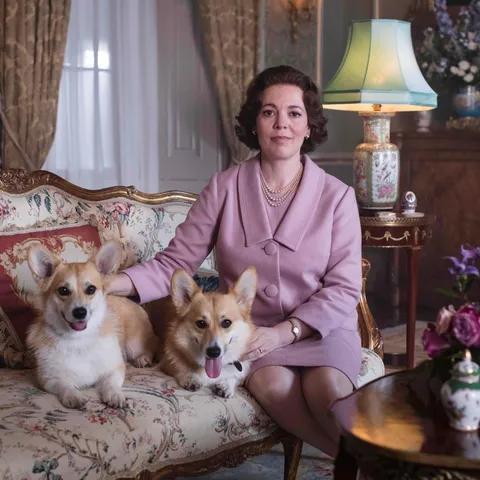
It was a remarkable story spanning almost seven decades. First a young princess, and later a young Queen, helped turn the Pembroke into one of Britain’s most recognisable dogs. Over time, that same inseparable association with Elizabeth II may have begun to work differently: the corgi remained famous, but to part of a new generation it became increasingly associated with an elderly owner and a previous era. Then television seemed to rewind time, presenting a young audience with the young Elizabeth once again — with corgis running beside her.
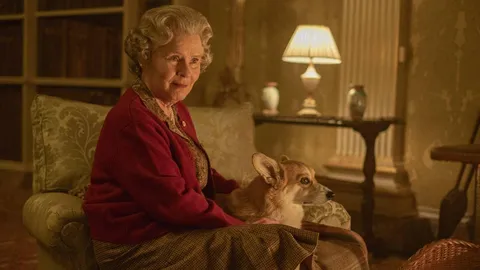
Of course, it would be far too simple to attribute the breed’s subsequent rise in popularity to a single television series. Registration numbers depended on the number of breeders and litters, interest in breeds changed under the influence of many different factors, and a few years later the general surge in demand for dogs during the COVID-19 pandemic played its part as well. But in the case of The Crown, there is more than a coincidence of dates: the Kennel Club itself noted the series’ influence, and after the second season, searches for Pembroke puppies on its website rose by 22 percent.
The corgi was no longer simply the Queen’s dog.
It was once again the young Queen’s dog.
A comeback — but not to the old numbers
The Pembroke’s revival did not end with the first seasons of The Crown. In 2021, the Kennel Club registered 1,223 Pembrokes — the highest figure in almost thirty years, and 38 percent more than the year before.
Bill Lambert of the Kennel Club, commenting on the breed’s comeback, again pointed to the television series:
“The breed has certainly seen a boost in recent years, largely down it would seem to their starring roles in The Crown...”
But the 2021 record had another important context. The pandemic had triggered an extraordinary increase in demand for dogs in general: that year, the Kennel Club registered 349,013 puppies of all breeds. Pembroke registrations were rising at the same time as the broader surge in demand for dogs across Britain, making it much harder to separate the effect of The Crown from the pandemic boom.
Even the word “comeback” requires some caution. 1,223 registrations look impressive beside the 274 recorded in 2014. But set against almost 9,000 in 1960, they show just how far the modern Pembroke remains from its former position in Britain.
After the pandemic peak, the figures fell again: 899 registrations in 2022, 940 in 2023 and 760 in 2024. The breed had moved away from the critical point it had reached a decade earlier, but there was no return to the mass popularity of the mid-twentieth century.
Half a century of change
The story of the British Pembroke turned out to be more complicated than any single explanation offered for its disappearance.
The docking ban could not have started a decline that had begun decades earlier. The reputation of being “an older person’s dog” cannot explain falling registrations at a time when Elizabeth II herself was still young. Fashion for other breeds tells us something about changing buyer preferences, but nothing about the gradual disappearance of large kennels. And the shrinking number of breeders, in turn, does not explain why the Pembroke ceased to be a dog that people seemed to want everywhere.
Most likely, all these processes overlapped. The breed’s extraordinary post-war boom came to an end. Large kennels that had bred Pembrokes for decades disappeared. Dog breeding itself was changing, new rules were introduced, and with them part of the older generation of breeders left the breed. New fashionable dogs replaced yesterday’s favourites. Even the decades-long association with the Queen came to be perceived differently: what had once made the corgi seem modern and prestigious could, decades later, give it a somewhat old-fashioned image.
Then the story turned once more. The Crown brought the young Elizabeth back to the screen, a new generation of viewers saw corgis beside her, interest in the breed began to grow — and a dog that had recently found itself among Britain’s vulnerable native breeds became visible again.
Perhaps the scale of what happened is best captured not by registration figures at all.
The Welsh Corgi League recalls how, in the 1960s and 1970s, families returned from trips to Wales with a corgi bought for a few pounds at a farm gate. There were so many of these dogs that nobody needed to go looking for them.
Half a century later, you can travel to Pembrokeshire, the birthplace of the breed, deliberately look for corgis in the streets — and see only one during the entire trip.
Today, the Pembroke is no longer in the position it found itself in back in 2014. But its British history shows how dramatically the fortunes of even a world-famous breed can change in the space of a few decades. People do not necessarily have to stop loving it altogether. There may simply be fewer breeders and fewer puppies; fashions and owners’ lifestyles may change; and an image familiar for decades may quietly shift from contemporary to old-fashioned.
And sometimes history turns once again — and a dog that a new generation had begun to regard as part of the past reappears beside a young Queen...