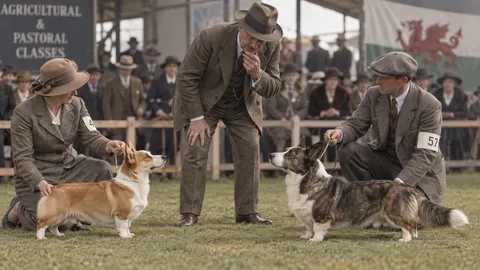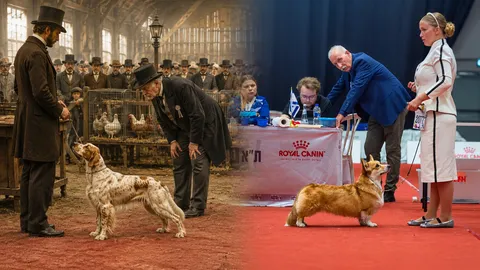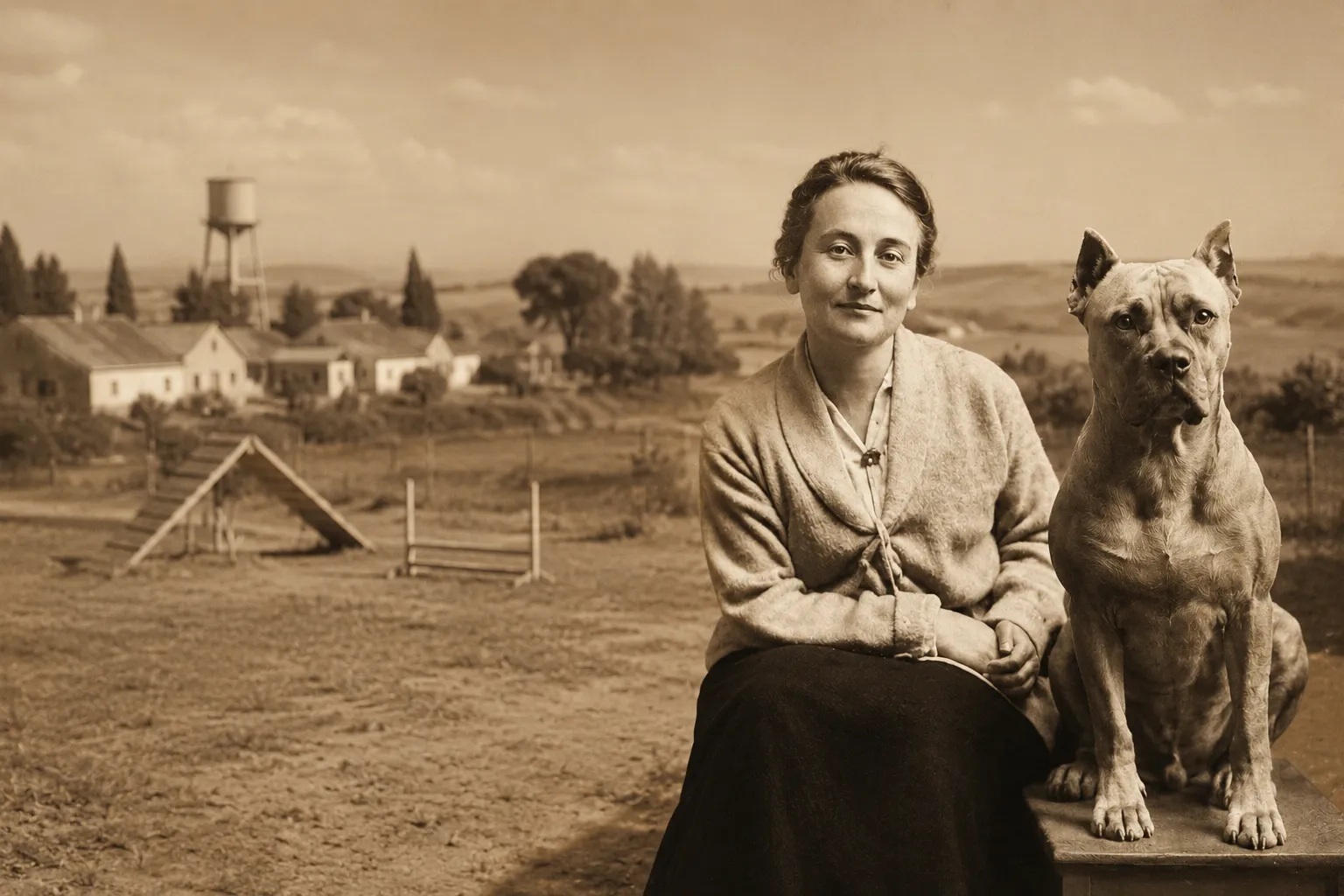
Linz, Austria, early 1920s.
A petite young woman stands in front of a Boxer and gives a command in a language rarely heard on the streets of Linz:
שב — “Sit.”
Then another command. And another.
The dog obeys.
Within a few years, dozens of dogs will surround the home of Rudolphina and Rudolf Menzel. Some will become dog show winners. Others will be purchased by the Austrian police. Military specialists will take an interest in the Menzels’ training methods. Cynologists, scientists, police officers — and young Zionists preparing to leave for distant Palestine — will come to their home.
One rule will always remain unchanged: the Menzels’ dogs are trained in Hebrew, even if they are destined to serve in Austria or Germany.
It is difficult to imagine a more symbolic beginning to the story of a woman who, years later, would play an enormous role in the development of cynology in the future State of Israel.
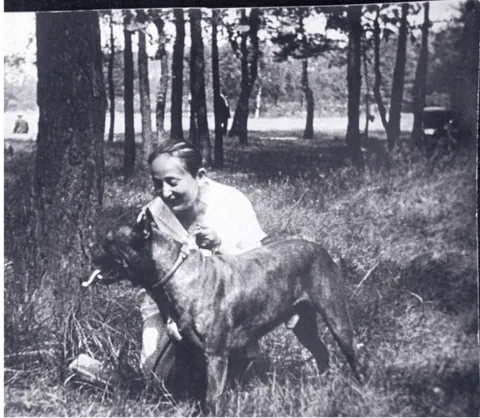
The Young Woman Who Had Never Planned to Work with Dogs
Rudolphina Waltuch was born in Vienna in 1891. For a long time, there was little in her biography to suggest that she would one day become one of Europe’s best-known specialists in canine behaviour and training.
She was interested in the natural sciences, studied at the University of Vienna and earned a doctorate. Her dissertation was in chemistry — more specifically, on sugar compounds in urine.
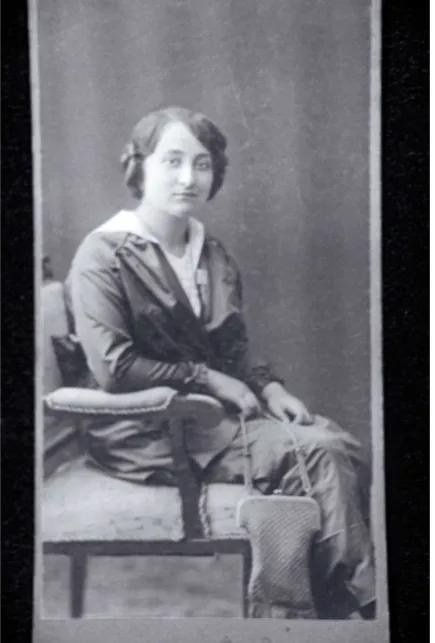
At the same time, Rudolphina became deeply involved in Zionism. As a young woman she participated in the Zionist movement, and at university she fought for the right to join a student Zionist society named after Theodor Herzl — despite resistance from men who were not particularly eager to admit a woman into their circle.
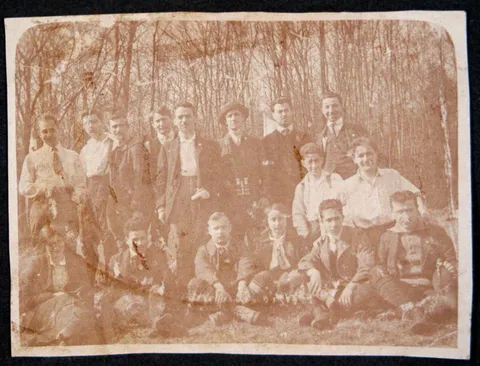
It was there that she met medical student Rudolf Menzel.
They married during the First World War and afterwards settled in Linz, where Rudolf worked as a physician. Rudolphina, meanwhile, had to find a new occupation.
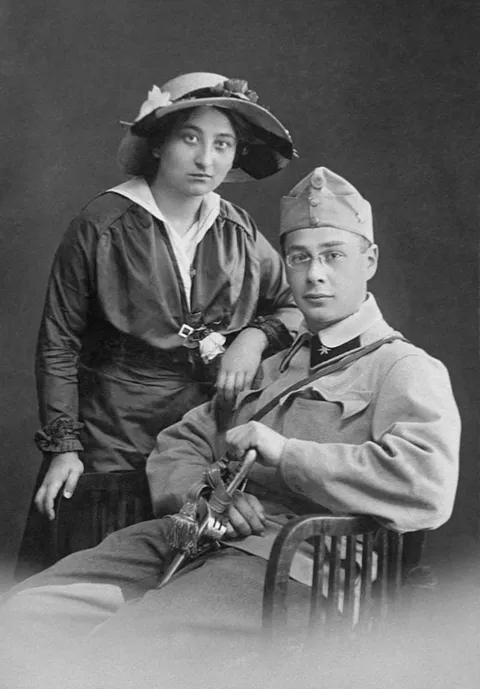
She found it quite unexpectedly.
It All Began with Mowgli
Rudolphina’s first dog was a Dobermann. The puppy lived for only a few days before dying of canine distemper.
Then came a Boxer named Mowgli.
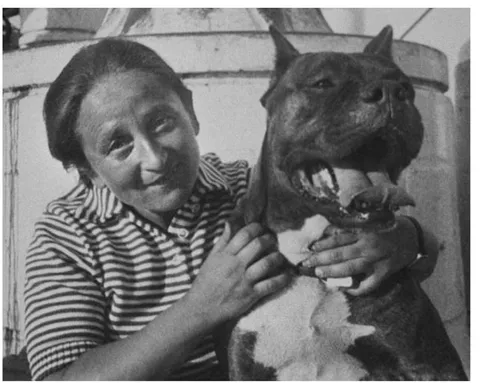
Rudolphina knew almost nothing about dog training, so she approached the problem in the way that, judging by the rest of her life, she would approach almost every unfamiliar challenge: she began to study it systematically.
She read everything she could find about canine behaviour and training, observed, experimented and worked with Mowgli.
In 1921, she entered him in a dog show in Munich. Mowgli placed sixth — hardly a historic achievement in itself — but something else attracted attention: the Boxer instantly obeyed commands spoken in a language unfamiliar to almost everyone present.
Hebrew.
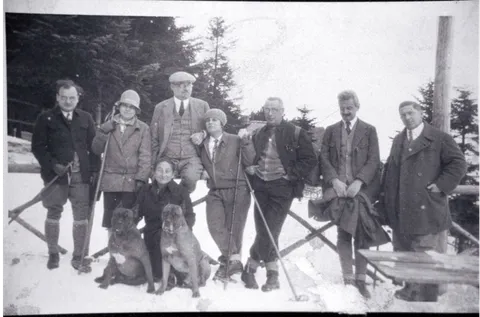
An interest that began with a single dog quickly became a life’s work — and before long, it was no longer Rudolphina’s project alone. Rudolf, a physician by profession, joined his wife in the work. Dogs gradually became a shared project for the couple: they bred and trained them, observed their behaviour and tried to approach those observations as researchers.
In 1922, the Menzels moved to a house near Linz. Kennels and training grounds appeared around it, eventually accommodating dozens of dogs at a time.
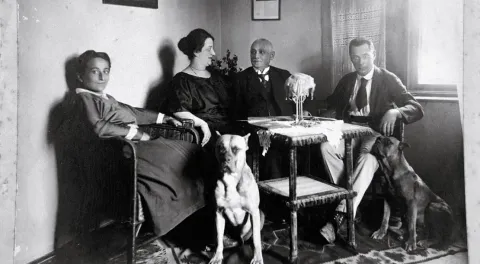
And so a kennel with a rather unforgettable name was born:
Bnei Satan — בני שטן — “Sons of Satan.”
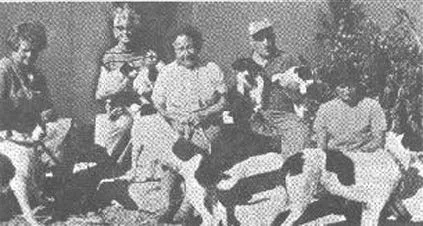
Boxers became the Menzels’ principal breed, and these were far more than household pets. Surviving photographs from the kennel show breed winners from 1927, 1928 and 1929. Another “Son of Satan” won in 1932.
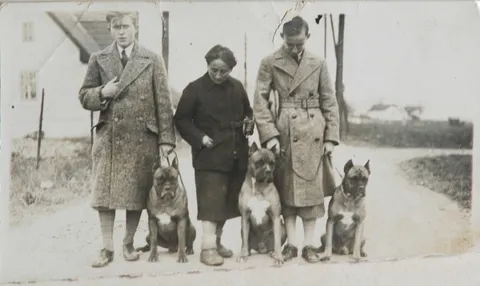
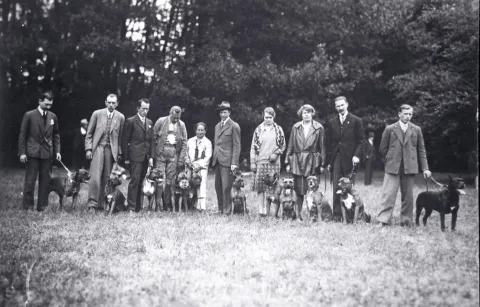
But the Menzels were becoming increasingly interested not simply in winning dog shows, but in how a dog works.
The House That Became a Laboratory
The Menzels studied learning, temperament, scenting ability, tracking and behavioural development. They bred dogs, experimented with different training methods and gradually developed their own system for training working dogs.
The dogs learned to guard, protect people, follow tracks and perform tasks required by the police and military.
For Rudolf, this work went far beyond simply helping his wife with the kennel. His medical background complemented Rudolphina’s research-oriented approach, and together they studied canine behaviour and sensory abilities. A number of later works on canine psychology and behaviour would be published under both their names.
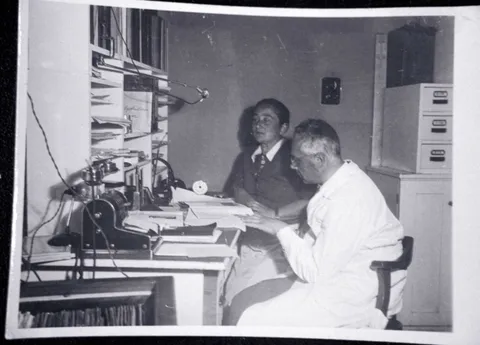
Their reputation grew. Austrian police and military organisations began turning to them. Rudolphina advised specialists and became known far beyond Austria. During the 1920s and early 1930s, she also collaborated with the German military dog training centre at Kummersdorf.
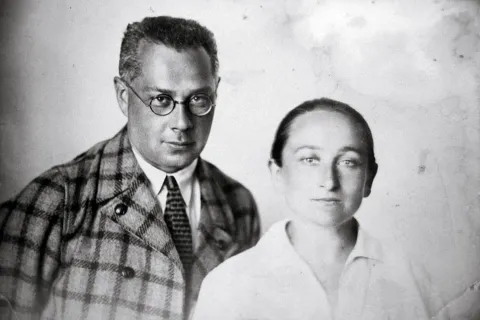
And throughout all these years, German and Austrian specialists encountered one small peculiarity of dogs from the Menzel kennel: to handle them, they had to learn Hebrew.
The Menzels concealed neither their Jewish identity nor their Zionist convictions; even the name of their kennel was Hebrew. And dogs sent to serve European institutions continued to obey commands in Hebrew.
At the time, this may simply have seemed like an eccentric habit of a gifted dog trainer. But within a few years, the detail would acquire a bitter irony: a Jewish woman and committed Zionist was training dogs for European services in Hebrew — and soon she herself would have to flee the regime that came to power in Germany and then in her native Austria.
The Dogs Reach Palestine Before Their Owners
The use of working dogs in the Jewish Yishuv began even before the Menzels became involved. According to historical materials from the Israel Kennel Club and the Beit HaShomer Museum, as early as 1913 Arthur Ruppin, head of the Palestine Office of the Zionist Organization, supported one of the first attempts to use specially trained dogs to protect Jewish settlements. Aharon Zvi Gostinsky, a member of the HaShomer organization, was sent to Germany to study dog training, and Dobermanns were acquired for the project. The Jewish National Fund allocated 2,500 marks — a considerable sum at the time. The initiative, however, could not be developed further: the First World War soon began.
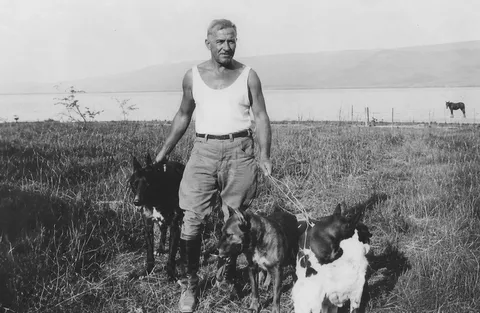
The idea resurfaced in the 1920s. By then, Rudolphina and Rudolf Menzel were developing their kennel and training school in Austria, while their ties with Palestine were growing steadily stronger. For the Menzels, Zionism was not an abstract political idea: both had long envisioned their future in Eretz Israel.
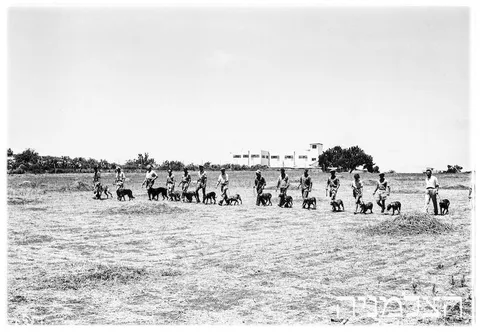
Young Zionists preparing to immigrate came to the kennel; some received training there and took trained dogs with them. Rudolphina tried to persuade the leadership of the Jewish Yishuv that a dog could be more than a household companion — it could also play an important role in protecting settlements.
At first, the idea met with little enthusiasm. But in the late 1920s, two settlers eventually came to the Menzels for training and returned to Palestine with two Boxers. In this way, the Menzels’ dogs reached the country before their owners did.
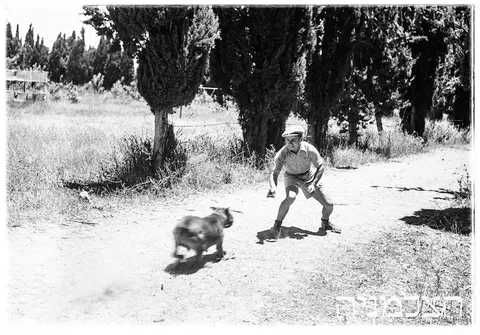
In 1933, the question of working dogs acquired new urgency. Following the assassination of the Zionist leader Haim Arlosoroff, the British authorities established a new unit that primarily used Dobermanns. At the same time, the Va'ad Leumi — the National Council of the Jewish Yishuv — began searching for Jewish specialists in dog breeding and training who could help establish a local canine system.
There was no shortage of volunteers: by December 1933, the Va'ad Leumi concluded that enough specialists had responded and that there was no need to seek additional candidates. Particularly important, however, was the contact already established with Rudolphina and Rudolf Menzel. By then, the couple were well known in Europe for their research into canine behavior, breeding, and the training of working dogs.
Soon afterward, Yitzhak Ben-Zvi, one of the leaders of the Yishuv and the future second President of Israel, invited Rudolphina to visit Palestine.
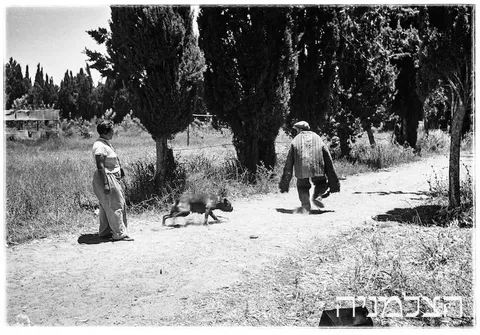
In 1934, she finally traveled to Palestine and saw for herself the country she had spoken about for so long — and for which she had already been training dogs.
Menzel judged the dogs she encountered in Palestine just as critically as she did those in Europe. After seeing dogs brought to the country by members of the new wave of immigration, she wrote:
“It is regrettable that the dogs brought into the country belong to owners who care more about the dogs’ outward beauty than about their inner qualities. These dogs are too small and too weak.”
For Menzel, this was a matter of principle. A dog could be beautiful, pedigreed, and successful in the show ring, but that was not enough: what mattered to her above all were health, temperament, working ability, and the capacity to perform a specific task.
During the visit, the internationally renowned canine expert encountered another unexpected problem: professional cynology in Hebrew had yet to acquire a language of its own.
How Do You Talk About Dogs in Hebrew?
Rudolphina wanted to do more than conduct a few training sessions — she intended to prepare a dog-training manual in Hebrew.
But how could such a manual be written when many familiar cynological concepts still had no established Hebrew terminology?
Soon after her arrival, Menzel therefore met the distinguished philologist Naftali Herz Tur-Sinai on Mount Scopus. Together they faced an unusual task: finding and creating the Hebrew words needed to discuss dog training and working dogs.
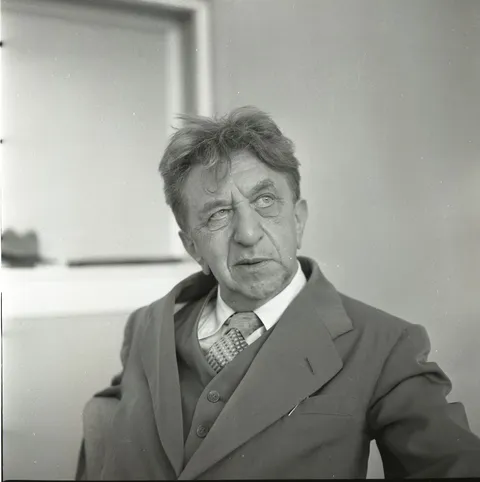
It is rather amusing to imagine the scene today...
A hot day in Jerusalem. The young Hebrew University. A philologist and a specialist in canine behaviour sit together at a table, trying to decide what modern cynology should sound like in Hebrew.
The work continued in the years that followed.
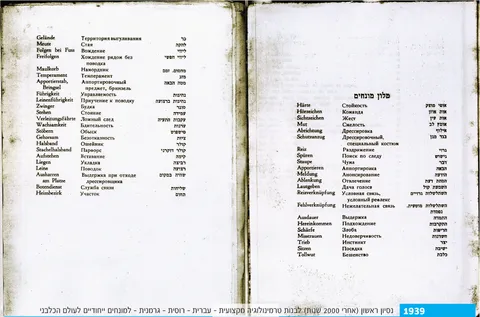
Among materials dating from 1939 survives a small monument to that period: a multilingual glossary of cynological terminology, with Hebrew, German and Russian words printed side by side.
But Rudolphina had not come to Palestine to compile a dictionary. She travelled between settlements, lectured and conducted courses for people who would be working with guard dogs. In 1937, the Menzels returned to Palestine: the programme became more intensive, with courses for handlers and trainers as well as lectures on animal psychology.
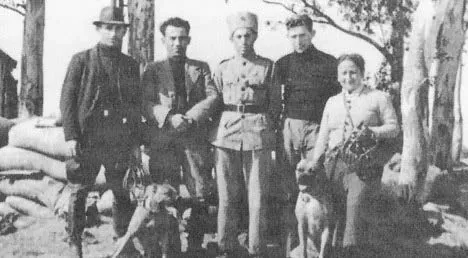
Gradually, an idea that only a few years earlier had seemed strange to many people was becoming a practical necessity. Palestine was becoming increasingly dangerous, and a guard dog really could save a human life.
1938
Meanwhile, Europe itself was becoming dangerous for the Menzels.
In March 1938 came the Anschluss of Austria — the country was annexed by Nazi Germany. For Austrian Jews, this meant the extension of Nazi persecution and antisemitic legislation to their own country.
The Menzels’ passports were confiscated. Rudolf was briefly arrested. Their home was searched. Their property was marked as a Jewish business. The slaughterhouse was forbidden to sell them meat for their dogs.
Then came the order to close the kennel. The dogs had to be sold or given away. Fortunately, some books, documents and belongings had already been sent to Palestine.
An almost unbelievable story associated with this period appears in several later sources.
According to these accounts, the Menzels were offered a very different way out: move to Germany and continue their work with military dogs. One version even claims that a car was sent to collect them, but that the Menzels refused. An acquaintance who held a senior position in the SS reportedly helped them escape. They were able to leave Austria with only a few dogs and arrived in Mandatory Palestine in 1938.
The details of this story should be treated with caution, as later accounts differ from one another.
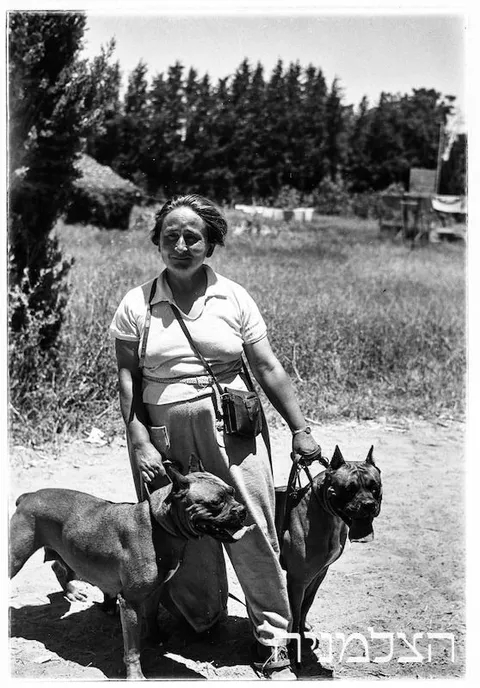
What is certain is the outcome: in 1938 Rudolf and Rudolphina Menzel left Austria — the country where they had spent almost their entire adult life together and where, over two decades, they had created a kennel, a training school and a research centre. They were able to take only a few dogs with them.
In the autumn, shortly before Rosh Hashanah, they arrived in Palestine.
Starting Again
Behind them were their home, their kennel, dozens of dogs and nearly two decades of work.
In Palestine, the Menzels first settled in Ramat Yohanan and later established themselves in Kiryat Motzkin near Haifa. There they founded the Palestine Research Institute for Canine Psychology and Training.
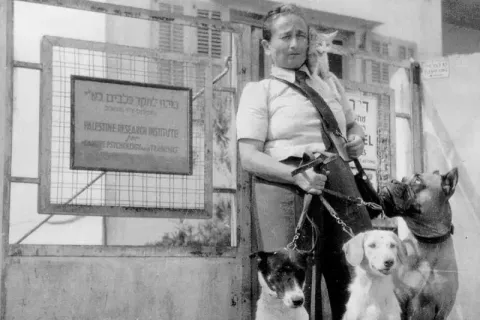
The name sounded impressive. The actual conditions were considerably more modest.
But the Menzels had no intention of merely rebuilding the kennel they had lost.
They wanted to bring something much larger with them: the systematic approach to breeding, training and the study of canine behaviour that had developed in Europe over the preceding decades. Rudolphina became the driving force behind this work. Her goal was to build modern cynology virtually from the ground up, not simply to train a few dozen dogs to guard settlements.
They needed trained handlers. Breeding regulations. A stud book. Pedigrees. Clubs. Dog shows. Judges. Professional literature. A system for registering dogs. In other words, all the structures that by then already existed within European cynology.
And Menzel set about building that system with her characteristic meticulousness.
A Dog Without a Past
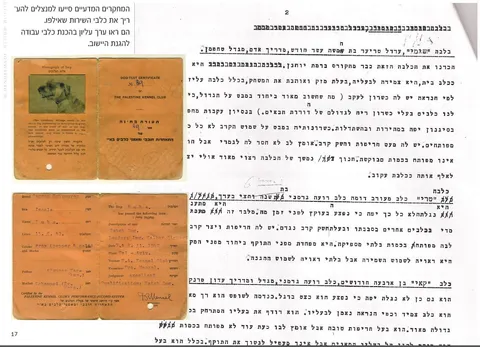
One of the first tasks was to establish a stud book. The ancestry of every pedigree dog had to be verified and entered into the register. Pedigree certificates in Hebrew and English gradually appeared; one surviving example dates from 1946.
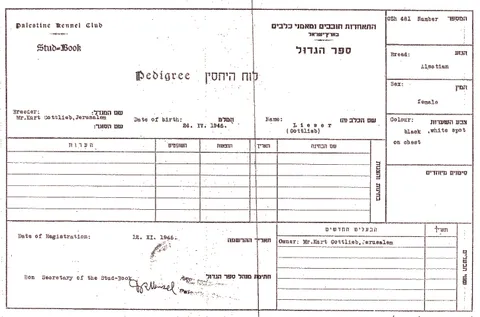
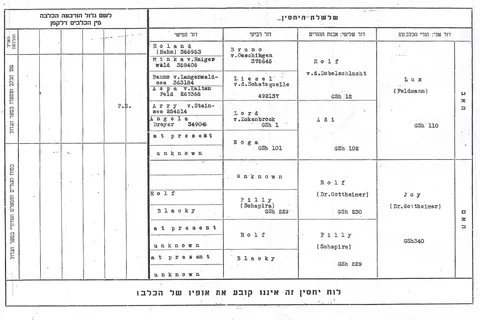
The figures illustrate just how quickly the system grew:
In 1939, the stud book contained 591 dogs.
By 1943, the number had risen to 2,140.
By 1946 — 3,300.
Numbers, however, tell us little about the personality of the person doing the work. One story does.
In the early 1940s, Rudolphina was notified of a litter of Scottish Terriers that needed to be registered. A routine procedure.
Except that when she checked the dogs’ ancestry, she noticed something strange: the pedigree presented for the puppies’ dam belonged to a different dog.
Menzel began to investigate. She discovered that the current owner had received the pedigree from a Mrs Müller of Tel Aviv. The document did indeed belong to another dog — a Scottish Terrier named Gaza, who had belonged to Mrs Müller’s daughter, who had died in a car accident.
After her daughter’s death, Mrs Müller had given the pedigree to another woman. In correspondence with Menzel, Mrs Müller maintained that she had not known that the document would later be used as the pedigree of a different dog.
Rudolphina decided that the story should not be made public: she believed that a public scandal could damage the country’s young organised canine community. Within the canine organisation, of course, the matter could not simply be ignored — the litter’s ancestry required an official decision. But Menzel was adamantly opposed to allowing the story to spread beyond those involved in investigating the case and become a public scandal.
In a letter dated 13 November 1942, discussing the case with colleagues, she asked that the story not be circulated. In her view, publicity could unfairly damage Mrs Müller’s reputation while also harming the young organised dog-breeding community in the country: “I consider it wrong to make a great issue of this case and thereby damage Mrs Müller’s reputation. In any event, I would ask you to let me know your opinion. I would be strongly opposed to spreading this story in any way, since it would cause serious harm to the young dog-breeding community in the country.”
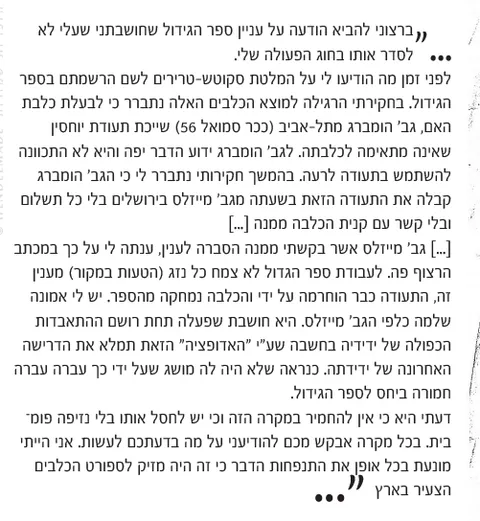
But when it came to pedigree registration, Rudolphina allowed no compromise: the false pedigree was confiscated and the dog was removed from the stud book.
Dogs from the Rubbish Dump
There was another problem: there simply were not enough dogs, while the European breeds the Menzels were accustomed to working with — Boxers, German Shepherds and Dobermanns — often struggled with the heat, local parasites and disease.
Rudolphina remembered the dogs she had seen during her earlier visits to Palestine. Local pariah dogs lived around human settlements; others stayed near Bedouin camps and herds, while some maintained an almost entirely free-ranging existence in desert regions. No one protected them from the climate of Palestine — and they did not need protection. Generations of natural selection had already done that work.
Obtaining such dogs for study was not easy. Some had to be literally lured with food; Menzel travelled into the Negev, collected puppies from discovered litters and attempted to tame adult dogs.
Sources even preserve the story of the first adult feral dog she managed to capture after several months of attempts. He was named Dugma — דוגמה, meaning “example.” Initially extremely wary of humans, within a few weeks he had become sufficiently accustomed to Menzel to accompany her into town and even ride on a bus.
Some of the dogs studied were found much closer to the cities — including dogs lured with food near a rubbish dump on the outskirts of Tel Aviv.
Menzel did not regard them as random “strays,” but as representatives of a local indigenous dog population that had existed in the region for generations. Rudolphina tested their temperaments and trainability. By the end of 1939, she had conducted 235 such tests.
Not every dog proved suitable for service work, and the original idea of replacing European working breeds with local dogs did not ultimately prove entirely successful: pedigree dogs born in Palestine were found to adapt considerably better than dogs imported directly from Europe.
But Menzel’s interest in the local population did not disappear. It was from this population — free-ranging dogs and dogs living around Bedouin settlements and herds — that Menzel would later select animals that formed the foundation of the emerging Canaan Dog breed.
When War Came
The Second World War was raging in Europe, and armies once again needed dogs. This time, the British needed them.
Dogs capable of detecting mines were particularly valuable.
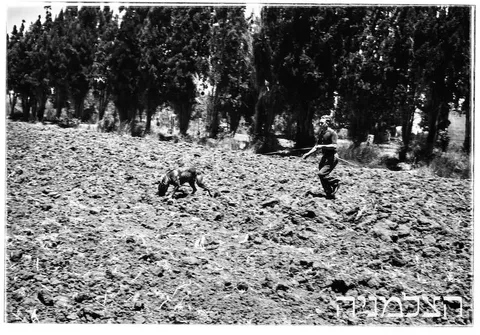
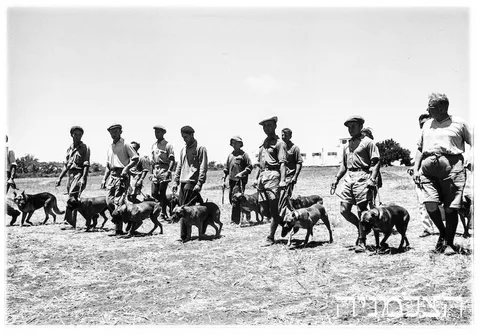
The Menzels became involved in preparing dogs for British forces in the Middle East.
For Rudolphina, the decision was not an easy one. She already knew that methods she had once taught to European specialists were now being used by Nazi institutions. She would later speak of how painful it was to know that knowledge she had passed on to others was now being turned against her own people.
When the British authorities asked Rudolphina to prepare hundreds of dogs for the army, she did not want to make the decision alone. Menzel feared that dogs she trained might later be used by the British authorities against the Jewish population of Palestine. Before agreeing to cooperate, she therefore consulted Moshe Sharett, head of the Political Department of the Jewish Agency, and discussed the conditions of her involvement with him.
Rudolphina agreed to train dogs for the British Army only on the condition that they would not be used against Jews in Palestine. The British authorities gave that assurance.
And the dogs went to war.
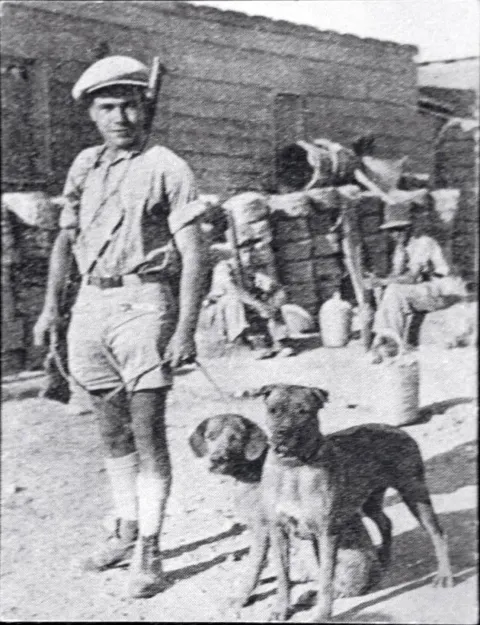
And on Weekends — the Dog Show
Here the story takes a remarkable turn: while organised canine activities in Europe had largely come to a halt because of the war, in Palestine they continued to develop.
Dog shows were held, clubs were established and catalogues were printed.
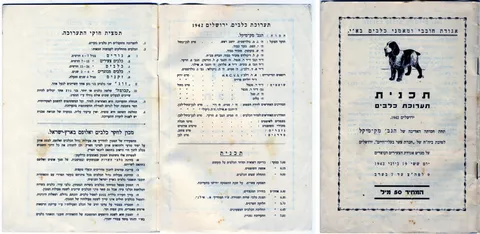
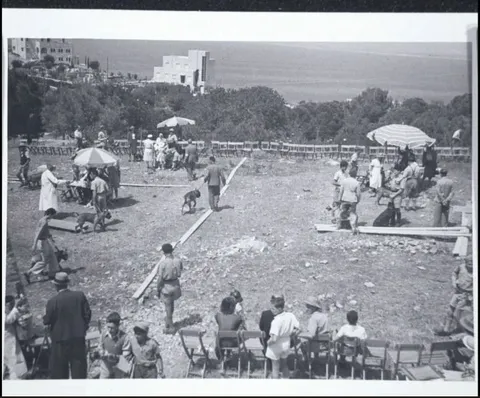
In 1943, the fifth dog show was held on Mount Carmel in Haifa. Its old, battered catalogue has survived to this day.
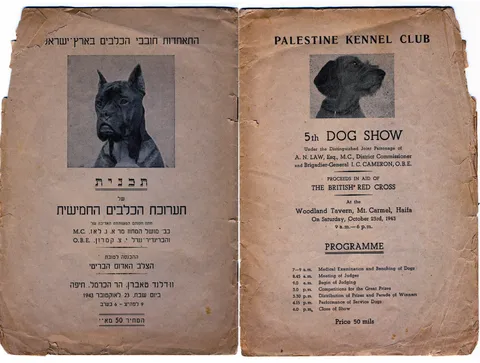
Open it, and history suddenly stops looking like a black-and-white photograph. The catalogue lists breeds and exhibitors: 35 Boxers, Airedale Terriers, German Shepherds, Borzois, Dachshunds, Dobermanns, Pointers, Poodles, Salukis and Scottish Terriers.
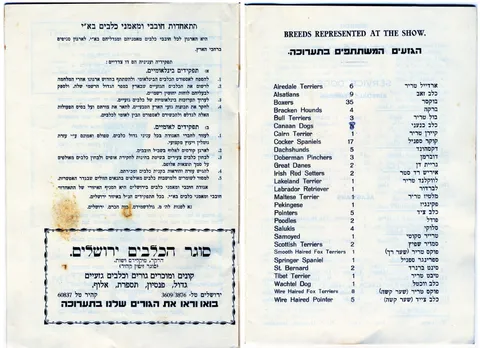
There are kennel advertisements. Product advertisements. And an appeal: THE ARMY NEEDS YOUR DOG!
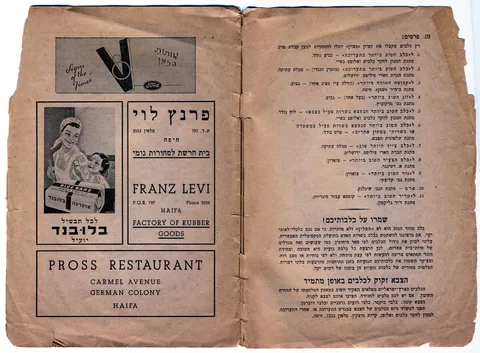
Two realities coexist within one small booklet: on the one hand, people discuss breeding, take dogs into the ring and compare them with the breed type; on the other, the army needs dogs.
It is 1943...
By then the pedigree system had become so well established that, of the 169 dogs entered at the Haifa show, 153 were registered in the stud book. Only sixteen were not. For Rudolphina, this was evidence of enormous progress compared with the earliest shows.
The Cynologists Start Arguing
In 1944, a journal appeared: הכלבן — Ha-Kalban. One might think this was simply another sign that organised cynology had firmly taken root.
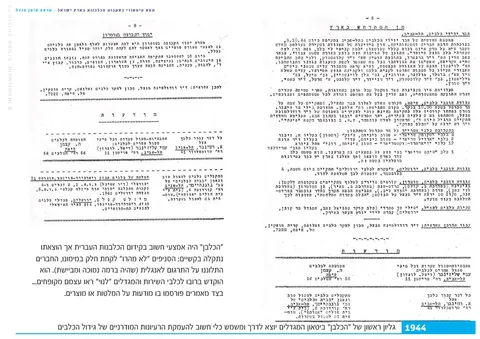
But the journal brought something even more convincing as evidence of a mature canine community:
the cynologists started arguing.
Regional branches were slow to pay for the publication, readers complained about the quality of the English translation, and people involved in show breeding protested that too much space was devoted to working dogs and too little to them.
In short, more than eighty years have passed, and some aspects of kennel-club life have changed remarkably little.
Dogs of a Young Nation
During the final years of the British Mandate, trained dogs were increasingly used by Jewish self-defence forces for guarding, detecting explosives and other tasks.
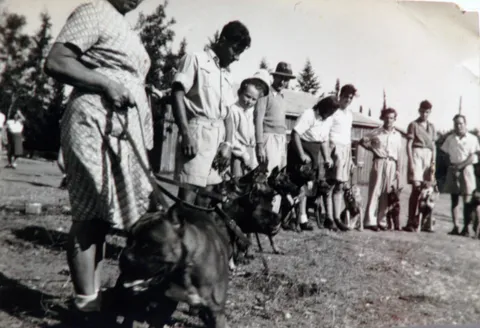
Photographs from the mid-1940s show Haganah handler courses in Kiryat Motzkin. Many of the dogs are Boxers, descendants of the very bloodlines the Menzels had once sent or brought from Europe.
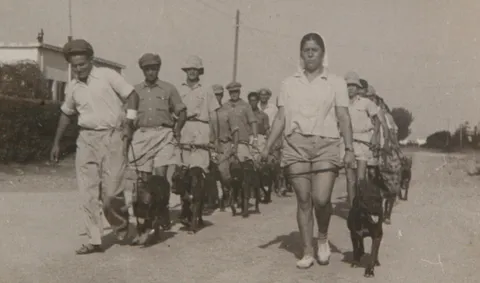
In 1948, the War of Independence began.
The canine unit went to the front.
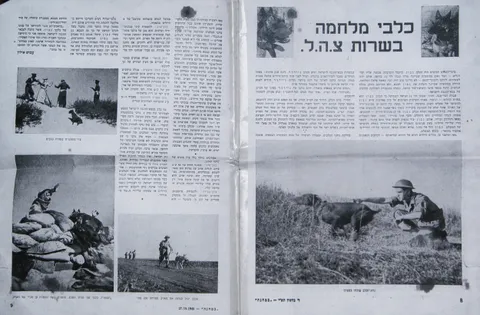
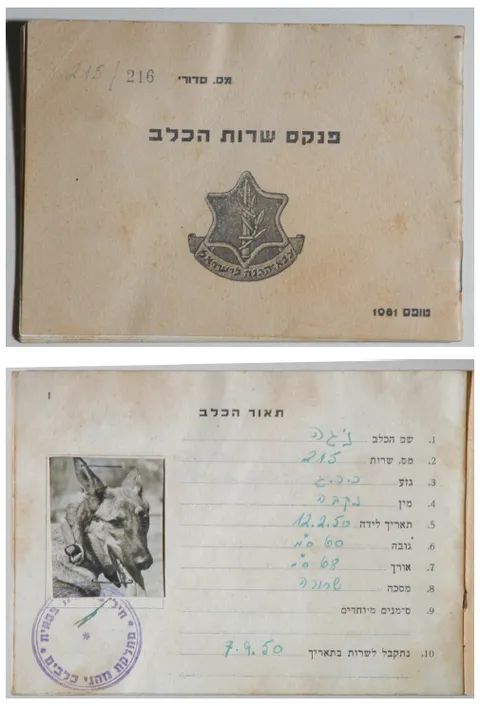
The dogs tracked, guarded, searched and carried supplies. Photographs of handlers survive, as do documents belonging to individual dogs — including actual service record books.
And in 1949, at a parade in Tel Aviv marking the end of the war, dog handlers marched through the streets with their dogs.
An old photograph shows a column of people, dogs walking beside them.
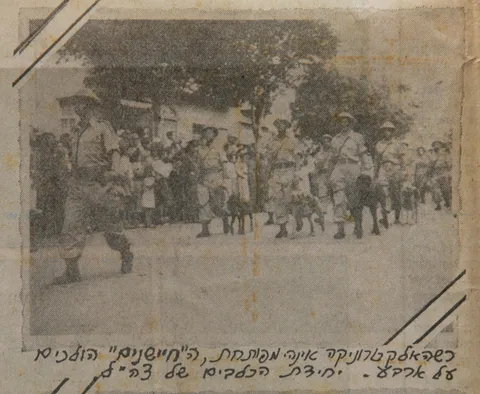
By then, little more than ten years had passed since Rudolf and Rudolphina Menzel had arrived in Palestine with almost nothing.
It should also be noted that the War of Independence was a severe test for the young canine system. Many working dogs were killed, food was in short supply, and rabies caused further losses among the dog population. The Menzels donated a substantial number of their own dogs to the canine units then being established within the army.
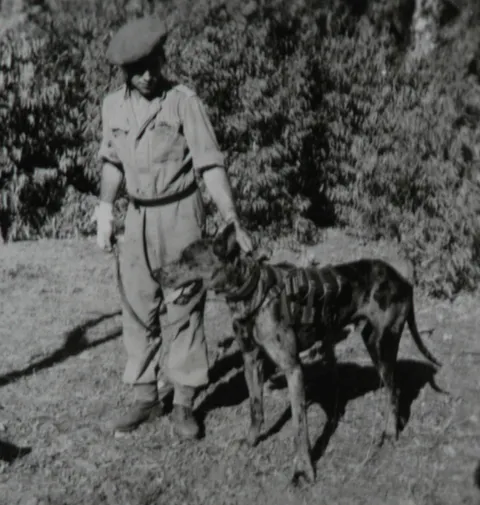
After the war, Rudolphina Menzel appealed to the state authorities and obtained special permission and funding to import dogs from Europe in order to rebuild the severely depleted breeding population.
At the same time, she continued to advocate for official recognition of practical cynology. Menzel contributed to the development of canine units in the army and police, promoted the use of herding dogs, and worked on the training of guide dogs.
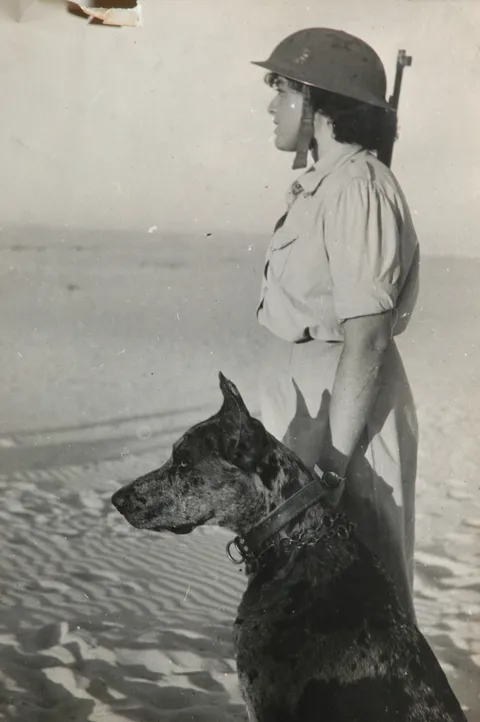
Her expertise was also put to use in settlements along the country’s borders. Menzel served as a consultant, teaching residents how to work with service dogs for security purposes. Later, a special “Committee for Improving Security Through the Use of Trained Dogs” was established with the participation of the Ministries of Defense, Interior, and Agriculture.
Thus, the work that the Menzels had begun before the war as a scientific and canine initiative gradually became part of the state system.
After the War
The establishment of the State of Israel was not the final chapter in Rudolphina Menzel’s life. She was fifty-seven years old — an age at which she could easily have looked back at everything she had already accomplished and stopped. Behind her were a European career, emigration, the creation of a canine system in Palestine, work with the Haganah and the British Army, and war.
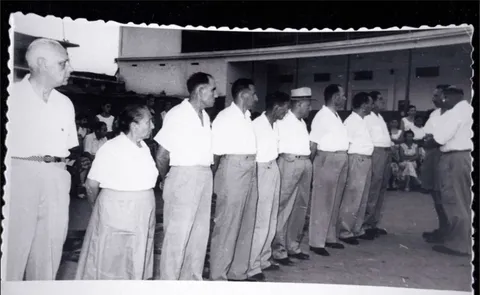
But the new state was also transforming the system the Menzels had helped to create. After the establishment of Israel, practical service-dog work gradually shifted from the Menzels’ private system to the army, police, and government agencies. Rudolphina’s role changed: increasingly, she worked as an expert, consultant, and educator. The Israeli police had to build their own service-dog unit virtually from scratch, and Menzel was brought in as one of the leading experts in the field. She helped select suitable dogs, train handlers, and organize the work of the new unit.
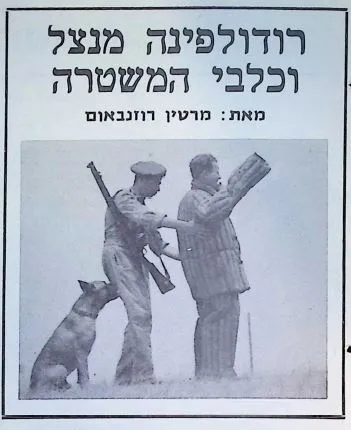
Direct cooperation with the police continued until 1950, after which Menzel shifted her main focus to other projects.
In 1949, Rudolphina founded an institute in Kiryat Haim for training guide dogs for blind people. It was not only the dogs that were trained there: future owners learned how to navigate and travel with their dogs, care for them and function together as a complete working team. The institute operated for about two decades.
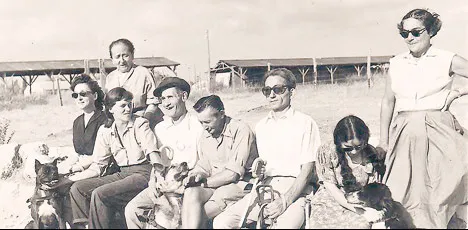
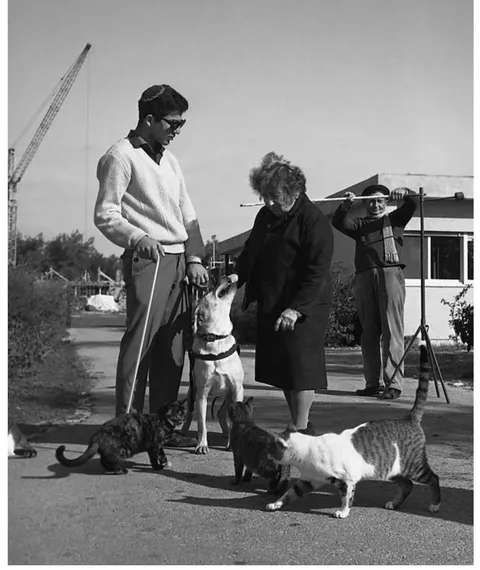
In 1952, the centre was visited by Helen Keller — the famous American author and activist who had lost both her sight and hearing in early childhood. By then, she had become an internationally renowned advocate for people with disabilities, making her visit to the young Israeli guide-dog centre far from an ordinary event.
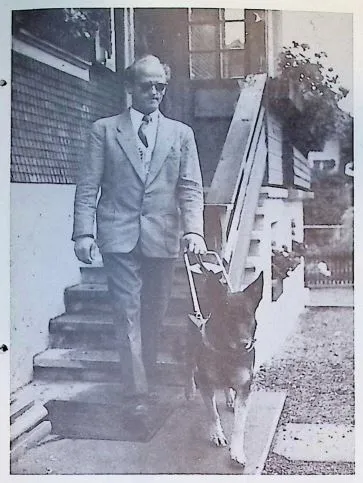
It is worth noting that working with guide dogs was not a new interest that Rudolphina developed in the post-war years: the Menzels had already been studying their selection and training in Europe in the 1930s.
At the same time, Rudolphina never abandoned either science or cynology. She continued to write, study canine behaviour and work with the local dog population from which the Canaan Dog was emerging. In 1962, she began teaching animal psychology at Tel Aviv University and became the first woman to receive a professorial appointment there.
At Tel Aviv University, Menzel taught much as she worked with dogs: through observation. Professor Hans Kreitler recalled that she taught students not to be satisfied with ready-made explanations of animal behavior, but to watch closely, compare, and seek their own answers.
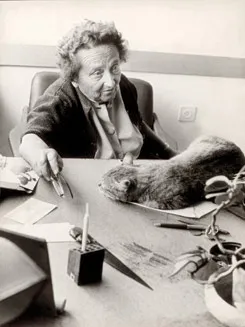
Rudolf remained beside her for most of this journey.
In our story, he has inevitably remained somewhat in his wife’s shadow: Rudolphina led many of their projects, spoke publicly and became the figure most closely associated today with the beginnings of Israeli cynology. But their work with dogs began as a shared project between husband and wife.
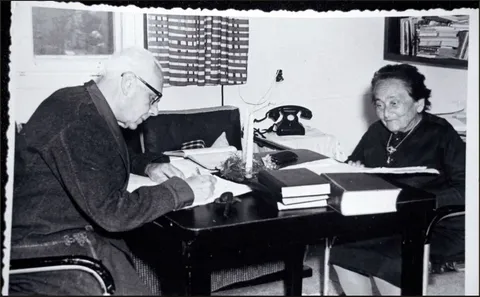
A physician by profession, Rudolf participated in research into canine behaviour and olfaction, as well as breeding and training, and the couple published many scientific and popular works together. After moving to Mandatory Palestine, he continued practising medicine while remaining Rudolphina’s partner in their cynological work.
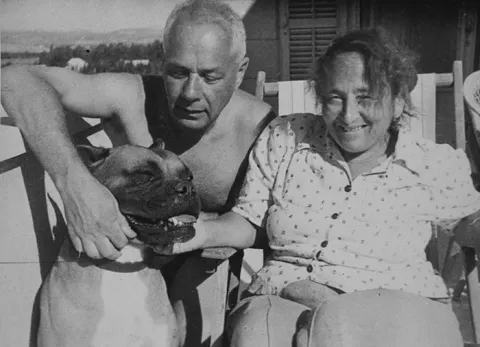
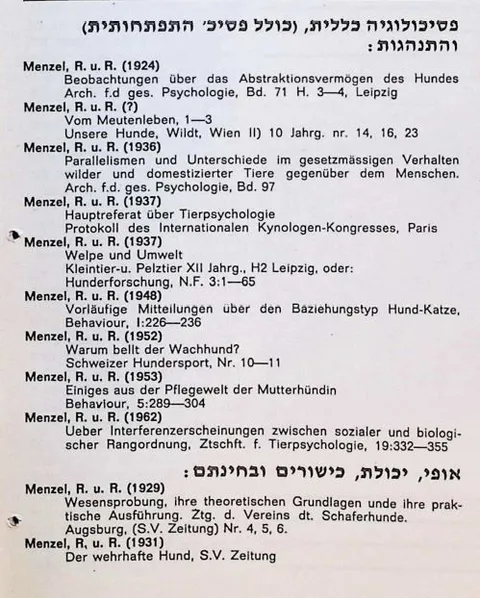
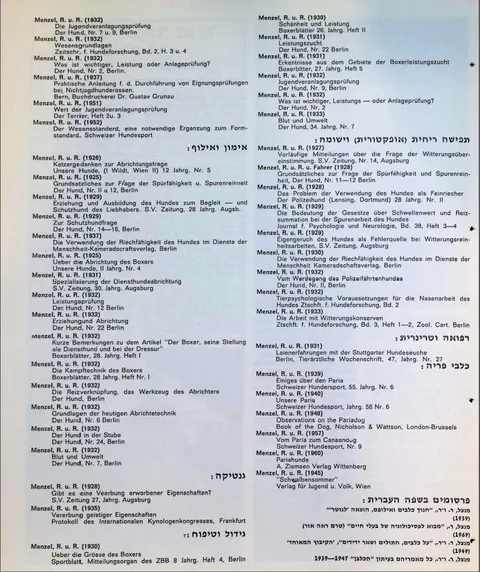
Although Rudolphina was the public face of this work, the scientific history of the Menzels was a shared one. Many of their studies were published under both names — Rudolf und Rudolphina Menzel. In the September 1973 memorial issue of HaKelev (הכלב), their contemporaries even noted that it was sometimes difficult to separate the scientific work of one spouse from that of the other. Rudolf was far less involved in day-to-day dog training and organizational work, but remained his wife’s constant scientific partner and co-author.
The Making of a “National Breed”
Guide-dog work was only one of the areas that occupied Rudolphina in the post-war years. She continued her research into canine behaviour and never forgot the local dogs that had fascinated her during her early years in Palestine.
Those same pariah dogs once sought out near settlements and Bedouin encampments — and even lured with food from a rubbish dump on the outskirts of Tel Aviv — gradually became the foundation of another major Menzel project. She studied them, selected animals for breeding and described the desired breed type. From this local population, the Canaan Dog gradually emerged as a recognised breed.
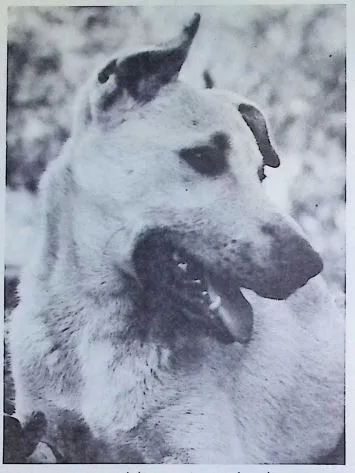
Menzel was interested in the local dogs not because they looked exotic, but because they were already adapted to the country’s climate and conditions. She regarded them primarily as a functional population whose qualities could be studied, selected, and put to practical use.
In 1966, something happened that would have been difficult to imagine only a few decades earlier: the Canaan Dog breed standard was recognised by the FCI.
Rudolphina was already seventy-five.
A local dog shaped by life in the Middle East, which had long existed almost entirely outside the European pedigree system, had itself become an officially recognised breed within that system.
There is something almost symbolic in the way this completes one strand of Rudolphina Menzel’s life. She had once come from Europe to Palestine bringing with her ideas about standards, pedigrees and organised breeding. Decades later, a dog of this land entered international cynology in its own right.
The Final Years
By the end of the 1960s, the Menzels had almost half a century of shared work with dogs behind them.
Beginning with Boxers in Austria, they had lived through European dog shows and working-dog training, emigration, the creation of an organised canine system in Palestine, war and the birth of a new state.
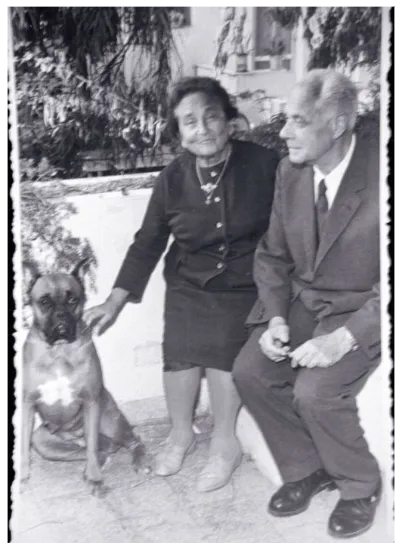
Rudolf died in 1970.
For Rudolphina, this meant losing not only the husband with whom she had shared more than half a century, but also the man who had been beside her when this entire story consisted of little more than one Boxer, a few books on dog training and a house near Linz.
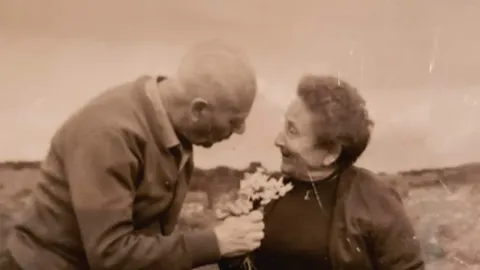
She survived Rudolf by almost three years.
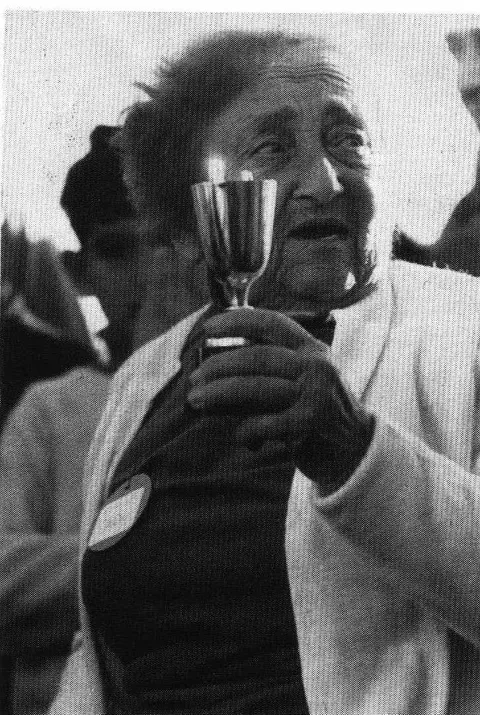
Rudolphina Menzel died on 7 May 1973, at the age of 82.
The Menzels’ Legacy
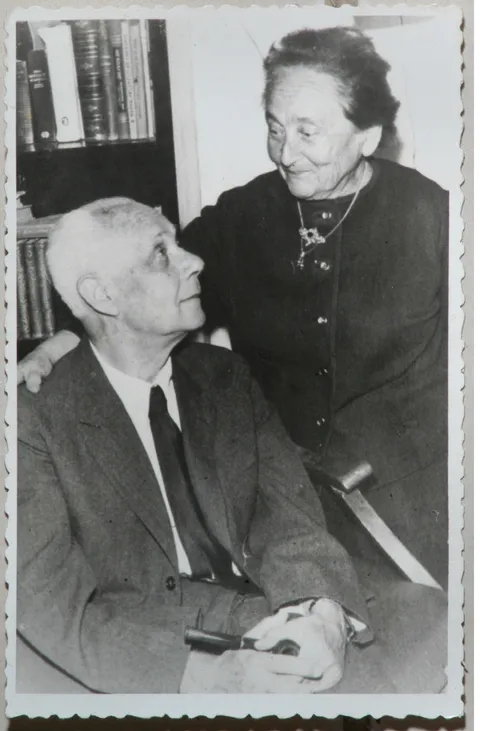
In the recollections of her students, Menzel hardly comes across as a gentle, good-natured “grandmother of the dog world.” She was demanding, sometimes sharp, and had little patience for superficiality. Yet those same people also remembered her remarkable willingness to share her knowledge. Rather than simply providing ready-made answers, she encouraged people to observe, test, and think for themselves.
Perhaps the easiest way to describe Rudolphina and Rudolf Menzel would be to say that they “stood at the origins of Israeli cynology.”
And that would be true.
But such a phrase hides almost everything.
It does not show us little Mowgli obeying Hebrew commands in the middle of Austria.
It does not show us the dozens of Boxers surrounding the house in Linz.
It does not show us the young people setting out for Palestine with trained dogs.
It does not show us Rudolphina sitting with a philologist in Jerusalem, creating the vocabulary of cynology in a language in which those words did not yet exist.
It does not show us the dogs being lured with food from a rubbish dump near Tel Aviv.
It does not show us the old stud book, into which the first hundreds — and later thousands — of dogs were entered one by one.
It does not show us the battered 1943 dog-show catalogue in which breeders’ advertisements sit alongside an appeal to give dogs to the army.
And it does not show us the column of handlers and dogs marching in the parade of a state that had now come into existence.
When the Menzels arrived in Palestine in 1938, there were already dogs, breeders and owners here, as well as the first canine clubs and dog shows. It would therefore be wrong to say that cynology did not exist before them.
But they brought something else with them — a system.
A scientific approach to canine behaviour and training. Organised breeding. Verifiable ancestry. Stud books. Professional training for handlers. Cynological literature. Terminology. An understanding of the dog simultaneously as a working partner, a subject of scientific study and the product of responsible breeding.
A significant part of organised cynology in Israel grew from that legacy.
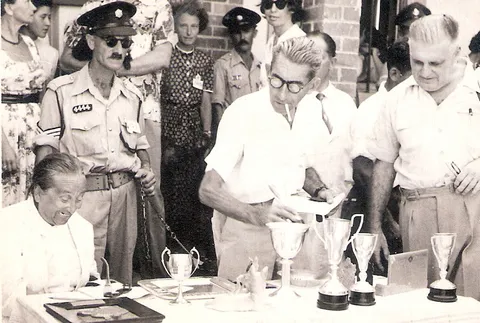
But there was still a long road ahead before the modern Israel Kennel Club — ההתאחדות הישראלית לכלבנות would emerge.
After the Menzels came new clubs and associations. Older organisations argued, split and merged again, and from the rather complicated world of Israeli dog breeding gradually emerged the national canine organisation we know today.
But that is another story.
=============================================================
Photos are taken from open archives:
Rudolf and Rudolphina Menzel Collection — Leo Baeck Institute / Center for Jewish History
The document images were photographed by Yigal Pardo and were authorised for use by Eitan Hendel — a dog show judge and my instructor on the course “Introduction to Cynology.”