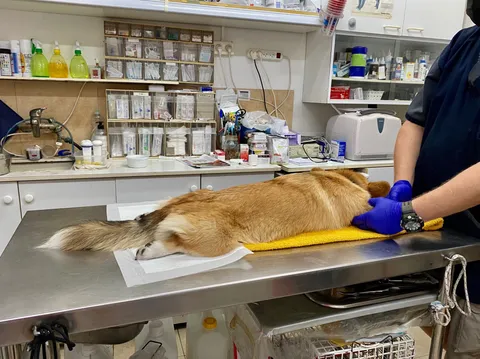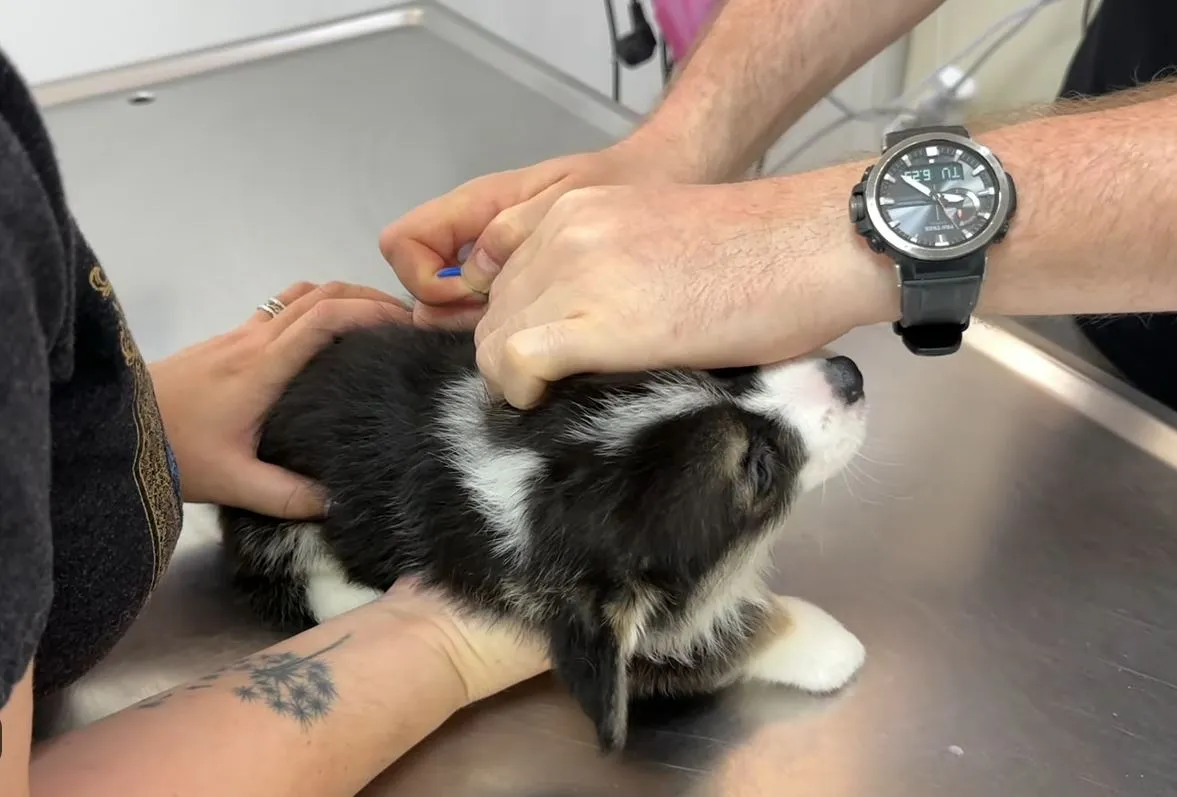
Vaccination is one of the most effective ways to protect dogs from serious infectious diseases. Thanks to widespread vaccination, many illnesses are now seen far less often, but this does not mean they have disappeared. When vaccination rates decline, dangerous infections can quickly return.
This article explains what is included in a canine core or combination vaccine, which diseases it helps prevent, why some puppies receive an additional DP or DP+ vaccine, why puppy vaccinations are given as a series, and how long immunity may last after vaccination.
What Is a Combination Vaccine?
A canine combination vaccine is often referred to as a core vaccine, a multivalent vaccine, or by abbreviations such as DHPPi or DAPP, depending on the manufacturer and the components included.
One injection can protect a dog against several common and potentially life-threatening infectious diseases.
Most combination vaccines provide protection against:
- canine parvovirus;
- canine distemper;
- infectious canine hepatitis caused by canine adenovirus type 1;
- respiratory infection associated with canine adenovirus type 2;
- canine parainfluenza;
- leptospirosis.
It is important to understand that vaccine formulations may differ between manufacturers.
Some products include protection against two leptospiral serovars, while others include four. Certain vaccines combine all components in one injection, whereas others separate the viral and leptospirosis components.
The main purpose remains the same: to protect the dog against infections that can cause severe illness, long-term complications, or death.
What Is the DP or DP+ Vaccine?
Some puppies receive an additional DP or DP+ vaccine before beginning the standard puppy vaccination series.
This vaccine protects against two diseases:
- canine distemper;
- canine parvovirus.
These are among the most dangerous viral infections affecting young puppies.
Why Is the DP Vaccine Used?
Puppies are born with maternal antibodies, which they receive mainly through colostrum during the first hours of life.
While these antibodies remain at a high enough level, they help protect the puppy against infection.
However, maternal antibodies can also interfere with vaccination by neutralizing the vaccine before the puppy’s own immune system has had time to respond.
The difficulty is that it is impossible to predict exactly when maternal antibody levels will fall in an individual puppy.
In some puppies, this happens earlier; in others, later.
This creates a period known as the window of susceptibility. During this time, maternal antibodies may no longer provide reliable protection, but they may still be strong enough to reduce the effectiveness of vaccination.
The DP vaccine may help shorten this vulnerable period.
It is often considered at around 6 weeks of age when the risk of infection is increased.
For example:
- when the puppy lives in a kennel or shelter;
- when parvovirus has recently occurred in the home or facility;
- when many dogs are kept in the same environment;
- when the veterinarian considers the risk of exposure to be high.
It is important to understand that DP does not replace the standard puppy vaccination series.
After receiving DP, the puppy still needs the usual age-appropriate combination vaccinations.
Why Do Puppies Need Several Vaccinations?
This is one of the most common questions asked by new dog owners.
At first, it may seem logical that one vaccination should be enough to produce immunity.
However, a young puppy’s immune system does not work in the same way as that of an adult dog.
After birth, puppies carry protective maternal antibodies.
These antibodies gradually decline during the first months of life.
While they remain high, they help protect the puppy.
At the same time, they can prevent a vaccine from producing a full immune response.
Because the veterinarian cannot know which vaccination will be the first one to work effectively, puppy vaccines are given several times at intervals of a few weeks.
This greatly increases the likelihood that at least one vaccination will be administered after maternal antibodies have fallen low enough for the puppy’s immune system to respond properly.
For this reason, it is important not to skip one of the scheduled vaccinations, even if the previous one caused no problems.
Canine Parvovirus
Canine parvovirus is one of the most serious infectious diseases of dogs and remains one of the leading causes of death in unvaccinated puppies worldwide.
Despite major advances in veterinary medicine, parvovirus continues to be a disease that veterinarians take very seriously.
The virus is extremely resistant in the environment.
It can survive in soil, grass, kennels, on shoes, clothing, and many other surfaces for several months.
As a result, a puppy does not have to come into direct contact with a sick dog to become infected. Simply visiting an area where an infected dog was present weeks or even months earlier may be enough.
Even after recovery, infected dogs continue shedding the virus in their feces for at least three weeks, posing a risk to other dogs.
The incubation period is usually 3–7 days.
Once clinical signs appear, a puppy's condition can deteriorate very rapidly.
The most common symptoms include:
- severe vomiting;
- bloody diarrhea;
- complete loss of appetite;
- profound lethargy;
- rapid dehydration.
The disease is dangerous not only because of the virus itself.
As the intestinal lining becomes severely damaged, bacteria can enter the bloodstream, leading to sepsis, while severe dehydration further worsens the puppy's condition.
Treatment usually requires intensive hospitalization with intravenous fluids, anti-nausea medications, pain management, antibiotics to control secondary bacterial infections, nutritional support, and continuous monitoring.
Even with prompt and aggressive treatment, the prognosis remains guarded, and hospitalization can be very expensive.
Fortunately, parvovirus is also one of the diseases that can be prevented most effectively through proper vaccination.
Why Shouldn't an Unvaccinated Puppy Walk Outdoors?
This is probably the question veterinarians hear most often.
Early socialization is extremely important for healthy behavioral development.
However, exposing an incompletely vaccinated puppy to areas where infected dogs may have been is simply not worth the risk.
Protective immunity does not develop immediately after the first or second vaccination.
A puppy is generally considered fully protected only about one week after completing the initial vaccination series.
Until then, infection remains possible.
This does not mean the puppy should stay isolated indoors.
On the contrary, exposure to different people, sounds, traffic, and everyday environments is essential during this critical developmental period.
A practical compromise is to take the puppy outside while carrying it, using a carrier or puppy stroller, without allowing contact with the ground, unfamiliar dogs, or dog feces.
This approach allows proper socialization while greatly reducing the risk of infection.
Canine Distemper
Canine distemper is another potentially fatal viral disease that has become much less common thanks to widespread vaccination.
Unlike parvovirus, the distemper virus does not survive well outside the host.
Sunlight, drying, and ordinary detergents destroy it relatively quickly.
Infection usually occurs through direct contact with infected dogs or their respiratory and other bodily secretions.
One particularly important feature of this virus is that infected dogs may begin shedding the virus before showing any visible signs of illness.
As a result, apparently healthy dogs can still spread the infection.
Distemper affects multiple organ systems.
The disease often progresses in stages.
Early signs typically include conjunctivitis and eye discharge.
As the infection progresses, respiratory signs such as coughing and nasal discharge develop.
Gastrointestinal symptoms, including vomiting and diarrhea, often follow.
In advanced stages, the virus reaches the brain and nervous system, causing neurological disease.
Possible clinical signs include:
- discharge from the eyes and nose;
- coughing;
- fever;
- loss of appetite;
- vomiting and diarrhea;
- muscle twitching or seizures;
- incoordination and balance problems.
One classic finding is hardening and thickening of the nose and footpads, often referred to as "hard pad disease."
Even dogs that survive distemper may suffer lifelong consequences.
Some develop myoclonus—persistent rhythmic muscle contractions that can affect a single limb, the face, or even the entire body.
If the disease occurs while permanent teeth are developing, defects in tooth enamel may remain for life.
This is another reason why prevention through vaccination is far safer than treating the disease itself.
Infectious Tracheobronchitis ("Kennel Cough")
Despite its name, kennel cough is not a single disease but a complex of highly contagious respiratory infections affecting dogs.
Several different pathogens may be involved, the most common being:
- canine parainfluenza virus;
- canine adenovirus type 2 (CAV-2);
- *Bordetella bronchiseptica*.
Canine parainfluenza virus and CAV-2 are included in standard combination vaccines.
Kennel cough spreads very easily wherever large numbers of dogs gather, including:
- boarding kennels;
- dog daycares;
- shelters;
- dog shows;
- training classes;
- dog parks.
The hallmark sign is a dry, persistent cough.
Many owners describe it in exactly the same way:
> "It sounds like my dog has something stuck in its throat."
This description is so common that it has almost become the classic presentation of kennel cough.
In most healthy adult dogs, the disease resolves on its own within 1–2 weeks.
However, young puppies, elderly dogs, and animals with weakened immune systems are at greater risk of developing secondary pneumonia.
Is There a Vaccine Against Bordetella?
Yes.
A separate vaccine is available against "Bordetella bronchiseptica".
It is not considered a core vaccine and is recommended only for dogs with an increased risk of exposure.
Your veterinarian may recommend it before:
- boarding your dog;
- attending dog shows;
- entering training classes;
- staying in shelters;
- frequent contact with large groups of dogs.
Ideally, vaccination should be given about two weeks before the expected exposure.
It is important to remember that kennel cough can be caused by several different organisms.
Therefore, vaccination cannot prevent every case.
However, vaccinated dogs usually develop a much milder illness and are less likely to experience serious complications.
Infectious Canine Hepatitis
Infectious canine hepatitis is caused by canine adenovirus type 1 (CAV-1).
It is a serious viral disease that primarily affects the liver but may also damage the kidneys, blood vessels, and eyes.
Clinical signs may include:
- high fever;
- severe lethargy;
- loss of appetite;
- vomiting;
- diarrhea;
- jaundice;
- abdominal pain.
Some dogs that recover develop a characteristic cloudy blue appearance of the cornea known as "Blue Eye."
Fortunately, infectious canine hepatitis has become extremely rare in countries where vaccination is widely practiced.
Interestingly, modern vaccines usually contain canine adenovirus type 2 (CAV-2) rather than CAV-1 itself.
Although CAV-2 primarily causes respiratory disease, it provides excellent cross-protection against CAV-1 while producing fewer vaccine-associated side effects than the older CAV-1 vaccines.
Leptospirosis
Leptospirosis is the only bacterial disease routinely included in most canine combination vaccination protocols.
It is also an important zoonotic disease, meaning it can be transmitted from animals to humans.
The disease is caused by bacteria of the genus Leptospira.
Many different serovars exist.
Modern vaccines protect against the serovars most commonly associated with disease in dogs.
Some vaccines protect against two serovars, while newer formulations provide protection against four, offering broader coverage.
How Is Leptospirosis Transmitted?
Dogs usually become infected through contact with urine from an infected animal or with contaminated water or soil.
The bacteria survive particularly well in warm, moist environments.
Once inside the body, leptospires spread through the bloodstream and primarily affect:
- the kidneys;
- the liver.
As a result, infected dogs may develop:
- fever;
- loss of appetite;
- vomiting;
- dehydration;
- jaundice;
- acute kidney injury.
If diagnosed early, leptospirosis generally responds well to appropriate antibiotic therapy.
However, once severe kidney or liver failure develops, treatment becomes much more challenging and the prognosis worsens considerably.
Why Is Leptospirosis Vaccinated Against More Frequently?
Many owners are surprised to learn that different vaccine components provide protection for different lengths of time.
Immunity against the viral diseases included in the combination vaccine is generally long-lasting.
After the puppy vaccination series and the one-year booster, protection against these viral infections is considered sufficient for at least three years in most healthy adult dogs.
Protection against leptospirosis, however, declines much sooner.
For this reason, annual revaccination against leptospirosis is still recommended in many countries, particularly in regions where exposure to wildlife or standing water is common.
Some veterinarians now recommend administering the viral core vaccine every three years, while giving the leptospirosis vaccine annually.
This approach maintains strong protection against all major infectious diseases while avoiding unnecessary revaccination against viruses that already induce long-lasting immunity.
Which Vaccinations Does a Dog Need in Israel?
Modern veterinary medicine has gradually moved away from the traditional approach of giving every vaccine every year.
Today, vaccination schedules are based on scientific evidence regarding how long immunity lasts against different diseases.
After a puppy has completed its primary vaccination series and received the one-year booster, immunity against most viral diseases lasts considerably longer than one year.
For this reason, the World Small Animal Veterinary Association (WSAVA) recommends revaccinating healthy adult dogs against the core viral diseases every three years, while leptospirosis vaccination is generally recommended annually because immunity declines more quickly.
The ideal vaccination schedule should always be determined by your veterinarian based on your dog's age, lifestyle, health status, and the local risk of infectious diseases.
Example Vaccination Schedule
Puppies
- 6 weeks — DP vaccine (when indicated).
- 8–9 weeks — first combination vaccine.
- 10–12 weeks — second combination vaccine.
- 12–16 weeks — third combination vaccine.
- From 3 months of age — rabies vaccination, according to Israeli law.
Young Dogs
- 1 year of age — booster combination vaccine.
Adult Dogs
- Core combination vaccine — every 3 years.
- Leptospirosis vaccine — annually.
- Rabies vaccination — according to current Israeli regulations.
- Bordetella vaccination — when indicated, ideally about two weeks before anticipated exposure to large groups of dogs.
Keep in mind that vaccination schedules may vary depending on the vaccine manufacturer, your dog's health, and your veterinarian's recommendations.
Recommended Preventive Care Program
Vaccination is only one part of keeping a dog healthy.
A comprehensive preventive care program should also include protection against parasites and other common diseases.
For dogs living in Israel, the following schedule can serve as a general guideline.
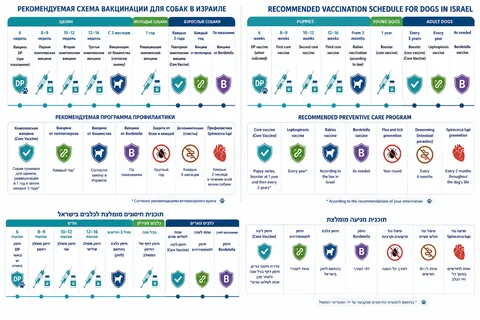
Always follow the vaccination schedule recommended by your veterinarian.
Key Takeaways
Today, many dog owners have never seen a case of parvovirus, canine distemper, or infectious canine hepatitis.
That is one of the greatest achievements of modern veterinary medicine.
Because these diseases have become uncommon, it is easy to assume they no longer exist.
Unfortunately, that is not the case.
They have become rare because vaccination works.
Whenever vaccination rates decline, these diseases quickly reappear.
Routine vaccination remains one of the safest, simplest, and most effective ways to protect dogs from serious infectious diseases.
Remember: vaccination is more than a routine veterinary procedure. It is an investment in your dog's health and a way to prevent diseases that are often far more difficult, more expensive, and sometimes impossible to treat.