What Are Endoparasites?
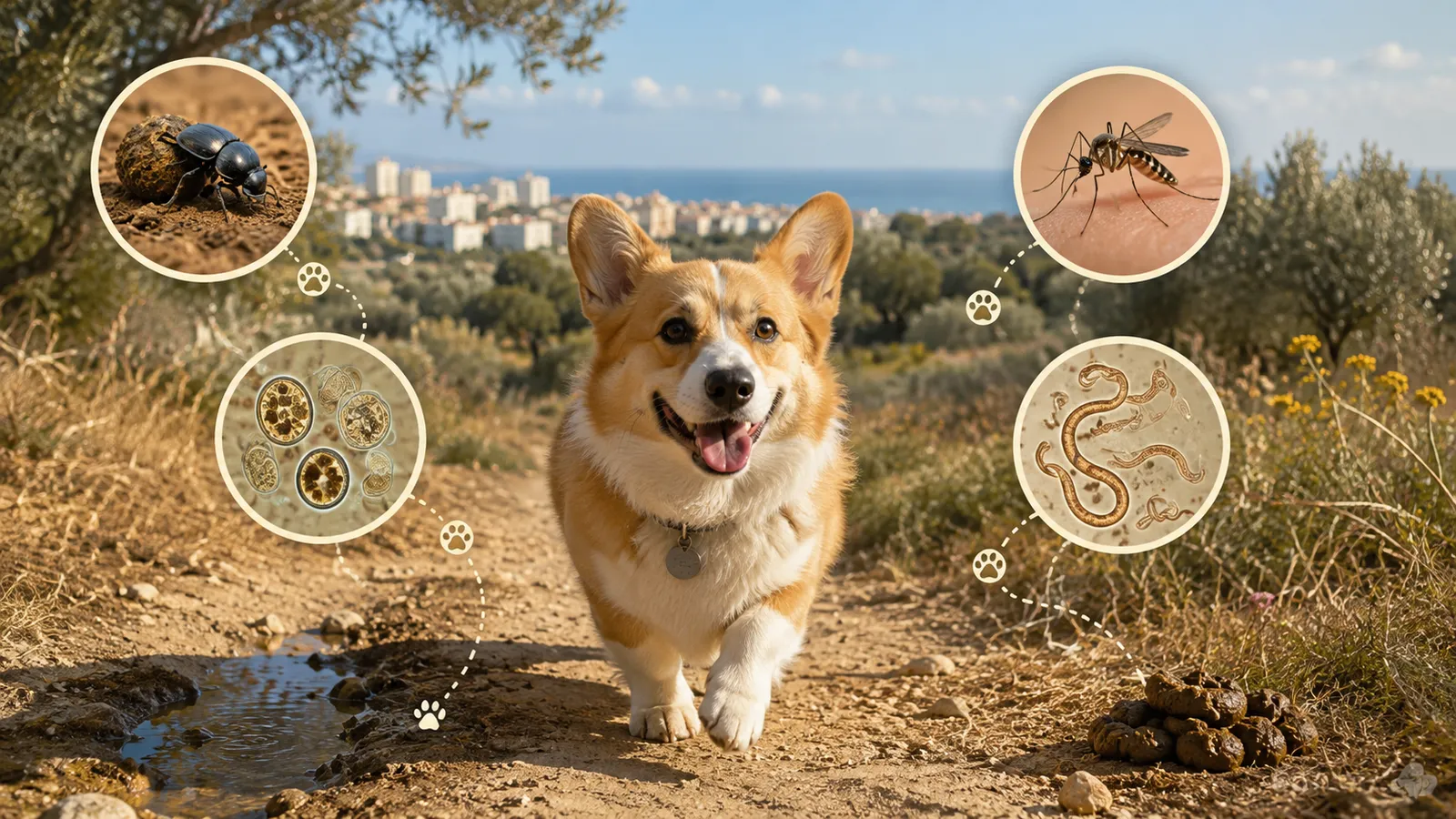
Endoparasites are organisms that live inside a host’s body and feed at its expense.
They include:
- roundworms and tapeworms;
- protozoa (Giardia, coccidia);
- some other microorganisms.
Some parasites live in the intestines, others affect the esophagus, heart, or blood vessels.
Many infected dogs look completely healthy, yet keep shedding parasite eggs and contaminating the environment.
The good news is that most of these parasites can be successfully prevented with regular prophylaxis.
The Most Dangerous Parasite in Israel – The Park Worm (Spirocercosis, Spirocerca lupi)
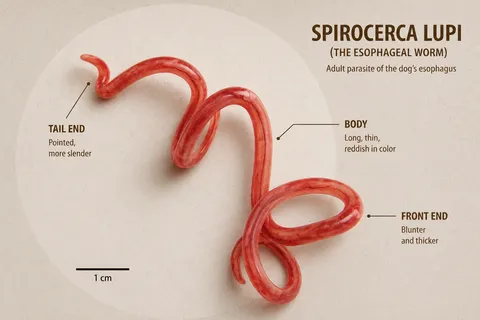
This is probably the most dangerous parasite of dogs in Israel.
Its life cycle is unusual: for infection to occur, the dog must swallow a dung beetle that previously fed on the feces of an infected dog.
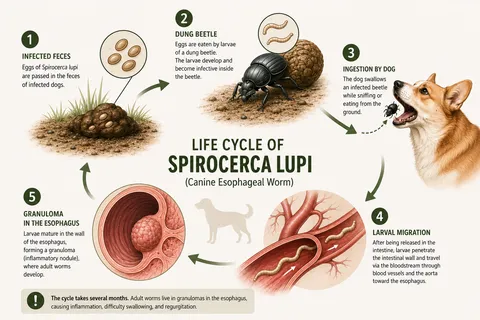
After ingestion, the larva develops for 3–6 months, but before it reaches the esophagus, it follows a dangerous path through the body.
Instead of moving directly, the larva migrates along the wall of the aorta — the largest blood vessel in the body. During this migration it damages the vessel and weakens its wall. In rare cases, the aorta can rupture, causing massive internal bleeding. Unfortunately, in such situations it is extremely difficult to save the dog.
Later, adult parasites settle in the wall of the esophagus, where they form a dense inflammatory nodule — a granuloma.
Because of this, food has trouble passing through, and the most characteristic symptom becomes regurgitation (bringing up undigested food).
Without treatment, the granuloma can eventually turn into a malignant esophageal tumor.
Prevention
Fortunately, this disease is well preventable.
In Israel, veterinarians recommend preventive injections against Spirocerca lupi approximately once every two months.
Even though the parasite takes several months to develop, this schedule allows the larvae to be killed before they can cause serious damage to the body.
The Most Common Intestinal Parasites
Roundworms (Toxocara)
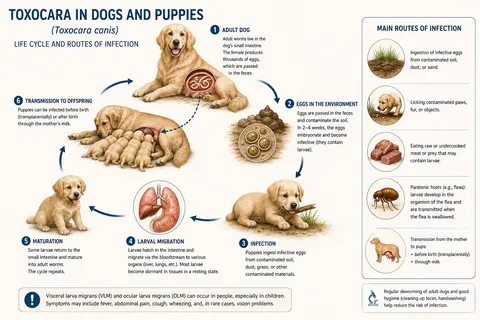
This is the most common intestinal parasite in dogs and is especially frequent in puppies.
Infection occurs when microscopic eggs from the environment are swallowed.
In pregnant females, larvae can cross the placenta, so most puppies are born already infected or become infected in the first weeks of life.
In adult dogs, infection often runs without symptoms — the larvae can remain in the tissues in a “dormant” state for years and become active during pregnancy or when immunity drops.
Puppies may develop:
- diarrhea;
- vomiting;
- a swollen belly;
- poor weight gain;
- dull coat.
This parasite can also infect humans, so it is always recommended to wash hands after contact with a dog, especially before eating.
Hookworms (Ancylostoma)
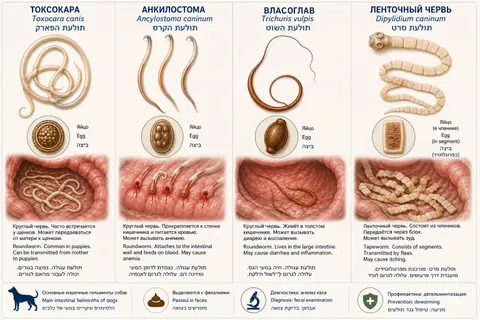
These small worms attach to the intestinal wall and feed on blood.
They are especially dangerous for puppies, in whom they can cause severe anemia.
Symptoms include:
- weakness;
- pale mucous membranes;
- bloody diarrhea;
- weight loss.
Larvae can enter not only through the mouth but also through the skin, and can be passed to puppies in the mother’s milk.
Some hookworm species can also affect humans.
Whipworms (Trichuris vulpis)
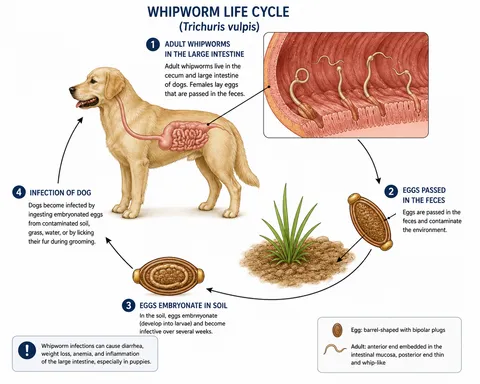
Whipworms live in the large intestine. Their eggs are highly resistant and can remain viable in the soil for several years.
With heavy infection, dogs may develop:
- chronic diarrhea;
- mucus or blood in the stool;
- weight loss;
- general weakness.
A particular feature of this parasite is that eggs are not shed constantly, so a routine fecal test may fail to detect the disease.
Tapeworms
Tapeworms most often appear after a dog swallows an infected flea, so flea control is at the same time prevention for some types of worms.
The most noticeable sign is small white segments, resembling rice grains, around the anus or in the stool.
The disease usually does not pose a serious threat, but it does cause itching, discomfort, and worsens the absorption of nutrients.
When tapeworms are found, or after a heavy flea infestation, it is common to carry out two treatments about 10 days apart.
Protozoan Parasites
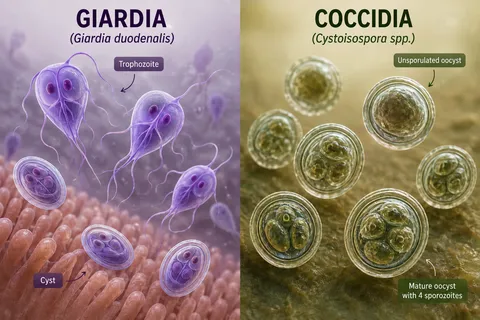
Not all internal parasites are worms — some diseases are caused by protozoan microorganisms.
Giardia
Giardia is one of the most common causes of chronic diarrhea in puppies and young dogs.
Infection occurs through contaminated water, food, or soil.
Main symptoms:
- intermittent diarrhea;
- mucus in the stool;
- unpleasant odor;
- weight loss.
Many adult dogs can be asymptomatic carriers.
Coccidia
Coccidia most often affect puppies. In adult dogs, the disease often goes unnoticed, but in youngsters it can cause severe diarrhea, dehydration, and stunted growth.
Coccidiosis spreads especially quickly in places where dogs are kept in groups.
Dirofilaria (Heartworm)
Heartworm disease (dirofilariasis) is transmitted through mosquito bites.
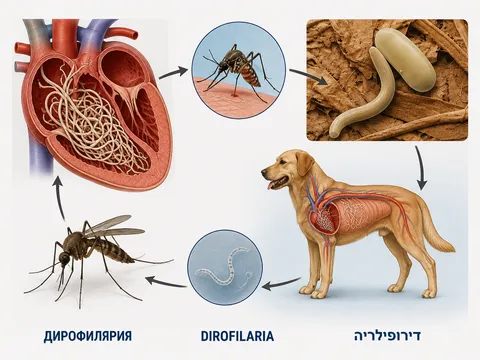
Adult parasites settle in the heart and the major vessels of the lungs, gradually disrupting the cardiovascular system.
Fortunately, in Israel the disease is much less common than in many other warm‑climate countries, but the risk cannot be completely ruled out. Prevention is much easier and safer than treating an already established disease.
Why Do Many Dogs Look Completely Healthy?
Most adult dogs tolerate a small parasite burden with almost no symptoms.
This does not mean that treatment is unnecessary, because parasites continue to reproduce, contaminate the environment with their eggs, and can be transmitted to other animals and even humans.
Do You Need to Deworm Regularly?
Yes.
Even a fully indoor dog can become infected with parasites through the owner’s shoes, raw meat, water, fleas, mosquitoes, or during walks.
Regular deworming protects not only the dog itself, but also other animals and people.
For most adult dogs, preventive treatment is recommended every six months.
Puppies require a completely different deworming schedule, which we described in the article Puppy Deworming: When, How, and Why to Treat for Worms.
Should You Do a Fecal Test?
A fecal test is a useful diagnostic tool, but it does not always rule out infection. Many parasites do not shed eggs continuously, so a negative result does not guarantee their absence.
For this reason, veterinarians often recommend regular preventive treatment even when no symptoms are present.
The Essentials
Most internal parasites can be successfully prevented with timely prophylaxis.
Regular deworming, protection against fleas and mosquitoes, good hygiene, and annual preventive check‑ups significantly reduce the risk of infection.
Remember: it is much easier to prevent a parasitic disease than to treat its consequences.