“I think my corgi is bored on their own…”
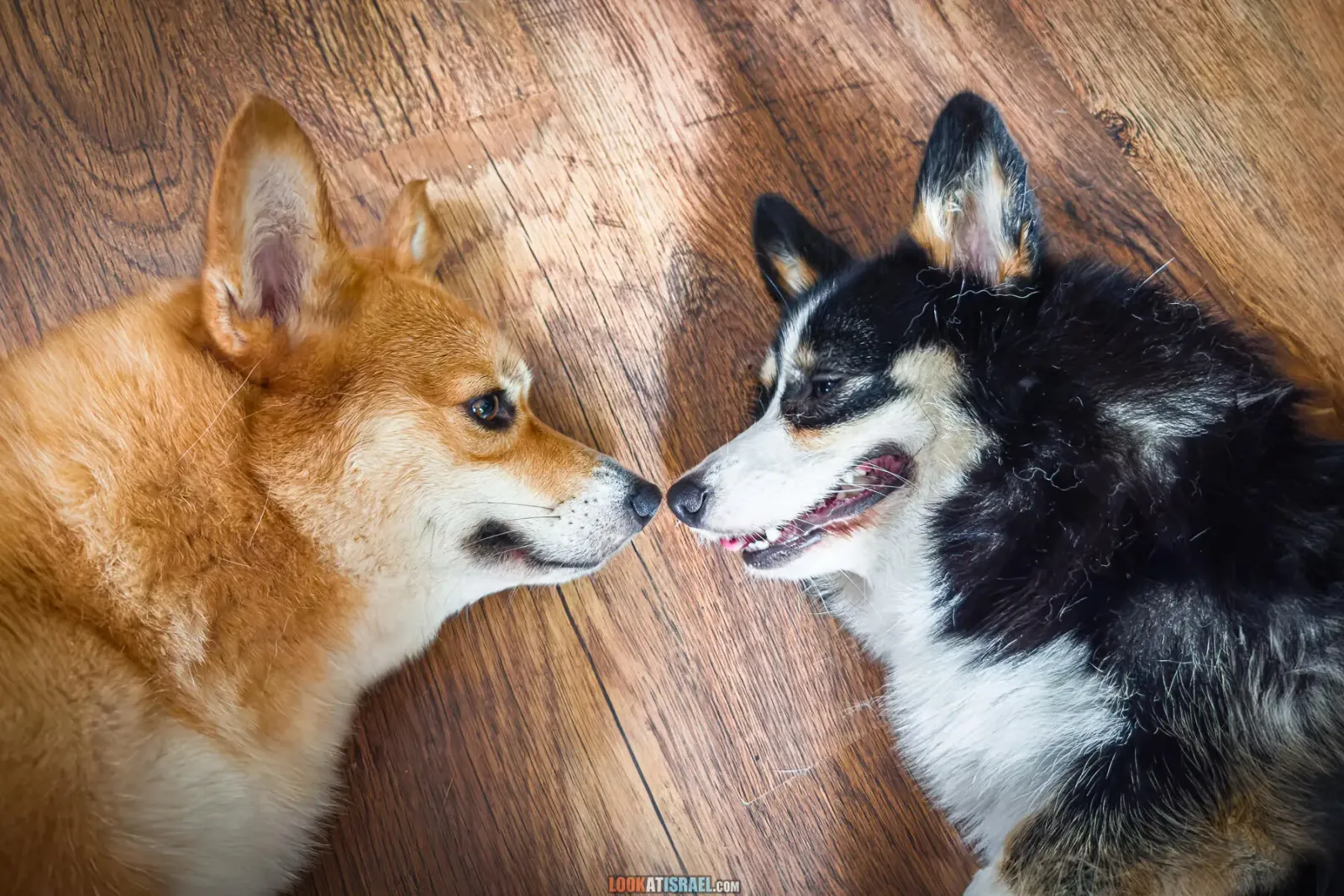
This is probably the most common reason a second dog appears in the family.
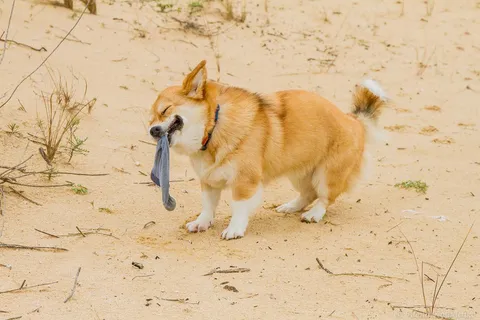
The owner goes to work, and a sad corgi stays at home, sleeping, waiting, or entertaining themselves by looking for trouble.
And one day the owner thinks: “I need to get them a friend.”
But there’s one important thing to understand – you are getting a second dog first and foremost for yourself, not for the first dog.
If the first dog has issues with being left alone, anxiety, or destructive behavior, getting a puppy rarely solves them.
When it really makes sense to get a second corgi
There are a few situations when it can genuinely be a good idea.
✔ You’ve been dreaming of another dog for a long time.
✔ The first dog is well trained.
✔ They are relaxed around other dogs.
✔ You have enough time and energy to work with both dogs separately.
✔ You are financially ready for double the expenses.
What changes after the second dog arrives?
Some things get better, and some become noticeably more complicated.
The dogs have more fun
Corgis love company. They play together, run, communicate in their own language, and often sleep side by side.
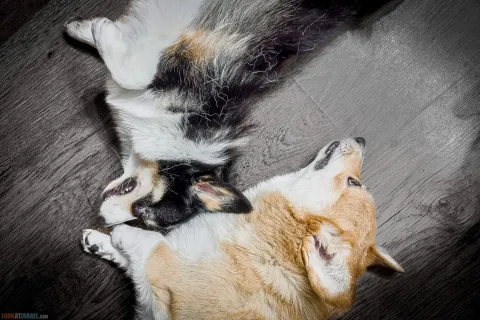
It’s especially great if the dogs have a similar temperament.
They learn from each other
A puppy understands the house rules much faster.
They copy the adult dog:
- where the toilet area is;
- how to walk on leash;
- how to behave at home;
- how to play.

This really makes adaptation easier.
But bad habits are copied too
If the older dog:
- barks at passersby;
- picks up food from the ground;
- pulls on the leash;
- begs at the table,
there is a very high chance the younger one will quickly master the same skills.
Dogs are excellent at picking up not only the good things.
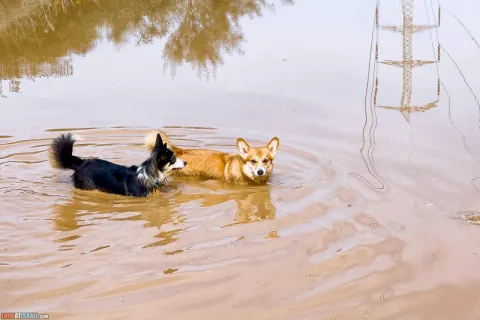
Two dogs is not half the work, it’s almost double
This is one of the most common surprises.
You’ll need to:
- feed two dogs;
- trim two sets of nails;
- buy more food;
- give more vaccinations;
- pay for two insurance policies;
- go to the vet with two patients instead of one.
During shedding season it can feel like the fur is trying to evict you from your own home.
Don’t forget about individual attention
A very common mistake is when the dogs start living only as a pair: on walks they play only with each other, and at home they are always together. The owner turns into something like a service staff member.
That’s why it’s important to regularly spend time with each dog separately.
For example:
- individual walks;
- separate training sessions;
- scent work;
- one-on-one trips.
This strengthens the bond with the human.
Does jealousy exist?
Yes, though it’s more accurate to call it competition for resources.
For dogs, resources are:
- the owner’s attention;
- toys;
- treats;
- a spot on the couch;
- a favorite bed.
Most conflicts arise exactly because of this, so it’s better to establish clear rules from the start.
Should you let the dogs “work it out” between themselves?
No! This is one of the most dangerous ideas.
Even if a conflict ends quickly, each following fight is more emotional than the previous one, so it’s better to prevent situations that lead to competition in advance.

Who should be older?
In many cases, life is simplest when you have a calm adult dog and a puppy in the house.
An adult corgi usually becomes a sort of “teacher”, while two adolescents of about the same age sometimes stage a real world championship in mischief.
What if both dogs are the same sex?
It’s possible. Many families have two bitches or two males living together very well.
However, the likelihood of competition is usually higher in same-sex pairs, especially if both dogs tend to claim a leading position in the group.
This doesn’t mean such combinations are bad, but you should choose the second dog especially carefully, taking the personality of the first one into account.
Whom to choose – a puppy or an adult dog?
Each option has its advantages.
Puppy
- adapts more easily;
- is easier to shape “for yourself” from the start;
- is more likely to be accepted calmly by the adult dog.
Adult dog
- their temperament is already clear;
- there is no puppy destruction phase;
- you can choose a temperament that will be the best match for your first dog.
When it’s better to wait a bit
It’s better not to get a second dog yet if:
- the first one is not trained;
- they have pronounced aggression toward other dogs;
- they have serious separation anxiety;
- you are still struggling to cope even with one dog.
It’s almost always easier to solve existing issues first than to try to deal with them once you already have two dogs.
How to introduce two corgis so they become friends
Even if your adult corgi adores other dogs on walks, it does not mean they will be equally enthusiastic about a new roommate in their own home.
For a dog, home is their territory, their usual routine, and their favorite resources. The arrival of a puppy inevitably disrupts this order.
The good news is that most introductions go smoothly if you don’t rush things.
Don’t arrange the first meeting at home
If possible, introduce the dogs on neutral ground.
For example:
- on a quiet street;
- in a park;
- near the house, but not at the front door.
Let them walk together a bit, sniff each other, and get used to one another, and after that you can calmly go home.
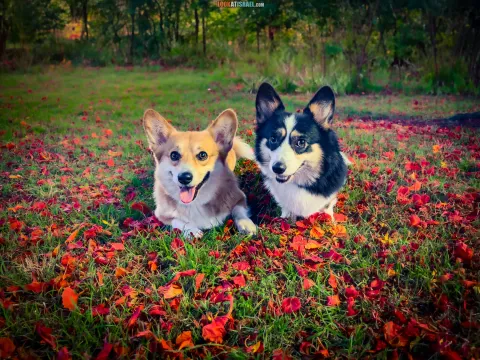
(As a side note, we introduced our first two dogs – Eevee and Kaya – at home, and that meeting went wonderfully.)

Don’t force the dogs to be friends
You really want to sit them next to each other, take photos, and watch them start playing right away, but not all dogs are ready for that.

If the adult corgi steps aside, watches from a distance, or doesn’t want to interact – that’s fine; give them the chance to decide for themselves when to approach the puppy.
The first days – more control, less freedom
You shouldn’t immediately give the puppy the run of the entire house.
It’s better to use:
- a playpen;
- baby gates;
- a leash indoors (if needed);
- a separate resting place.
This way it will be easier for the adult dog to get used to the new neighbor, and the puppy won’t be able to pester them endlessly.
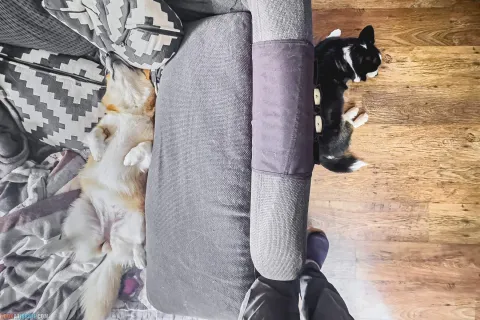
Each dog should have their own place
Even if later they end up sleeping in one bed, at first it’s better to have:
- two beds;
- two bowls;
- separate toys;
- their own safe places where nobody will bother them.
This reduces the likelihood of competition.
It’s better to feed them separately
Even the friendliest dogs can start guarding their bowls during meals.
So at first it’s advisable to:
- feed them in different places;
- put bowls away after they’ve finished eating;
- not leave long-lasting chews unsupervised.
This is especially true for bones, dried chews, and food-dispensing toys.
Don’t punish the adult dog for showing displeasure
A puppy can be very intrusive.
If the adult dog:
- turns away;
- walks off;
- growls quietly;
- shows their teeth without trying to bite,
this is often a normal way of saying: “I don’t feel like playing right now.”
You shouldn’t scold the adult dog just for these signals.
On the contrary, these are exactly the signals that help the puppy learn dog language and understand boundaries.
You should step in when the puppy ignores the warnings or when the situation starts to escalate into a real conflict.
Don’t forget about the older dog
After the puppy arrives, many owners start giving almost all their attention to the baby, which can be a real shock for the adult dog.
Try to keep their usual routine:
- favorite walks;
- playtime together;
- training sessions;
- one-on-one time with the owner.
The older corgi shouldn’t feel like their place in the family has become less important.
Play is great, but watch for fatigue
Puppies don’t know how to stop on time; they’re ready to play for hours.
An adult dog might tolerate this for too long and then suddenly snap, so sometimes the owner should be the one to end the game and give both dogs a chance to rest calmly.
When can you leave the dogs alone together?
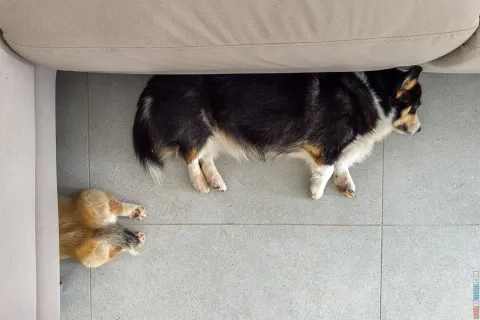
Don’t do this on the first day. For the first few days, you should watch their interactions.
When you see that the dogs calmly:
- rest next to each other;
- don’t fight over toys;
- don’t show excessive arousal,
then you can gradually increase the time they spend together without constant supervision.
If tense situations arise between them, it’s better to separate the dogs into different rooms or use a gate when you’re away.
Don’t expect love at first sight
Sometimes friendship starts within a few hours, sometimes it takes weeks.
And sometimes dogs never become best friends – but they live together perfectly well, respect each other’s personal space, and feel comfortable.
And that is also an excellent result.
The main rule:
Don’t try to speed up the relationship between the dogs.
Real attachment doesn’t appear because they were forced to be together, but because they feel calm, safe, and predictable around each other.
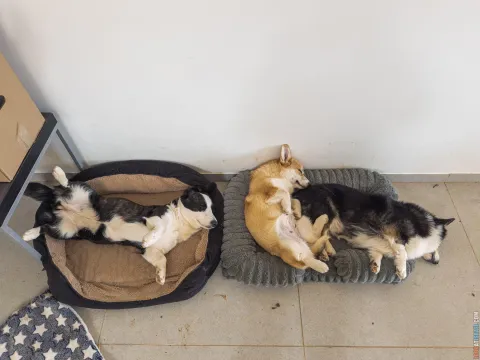
That kind of start most often leads to the very picture owners dream of: two corgis peacefully sleeping side by side after another day of shared adventures.
And then something strange happens…
You start thinking: “Well, two dogs are almost like having just one…”
After a while a third one appears.
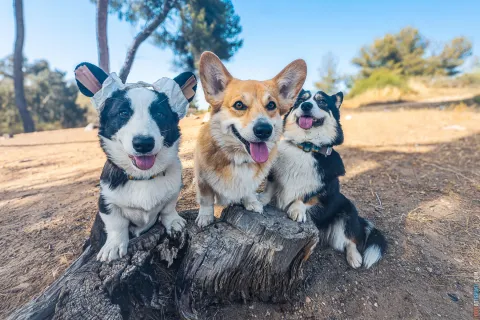
Then a fourth.

And after that people around you stop asking “why?” and become interested in only one thing: “So how many are there now?” 😄
Conclusion
A second corgi rarely makes life easier. But it very often makes it more interesting, more fun, and much richer in emotions.
The main thing is to understand that a new puppy doesn’t solve the first dog’s problems and doesn’t replace interaction with the owner. They become a new member of the family who will also need time, attention, training, and love.
If you are ready for that, one day you may catch yourself thinking the same thing many corgi owners do:
“How did we ever live with just one dog?”