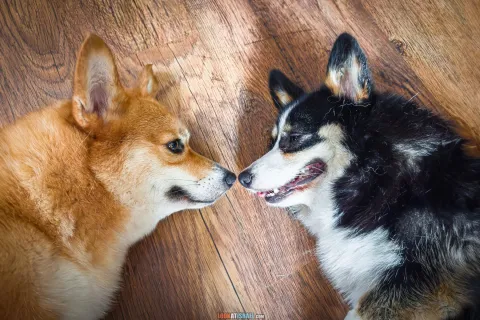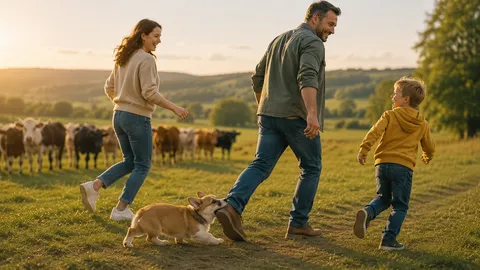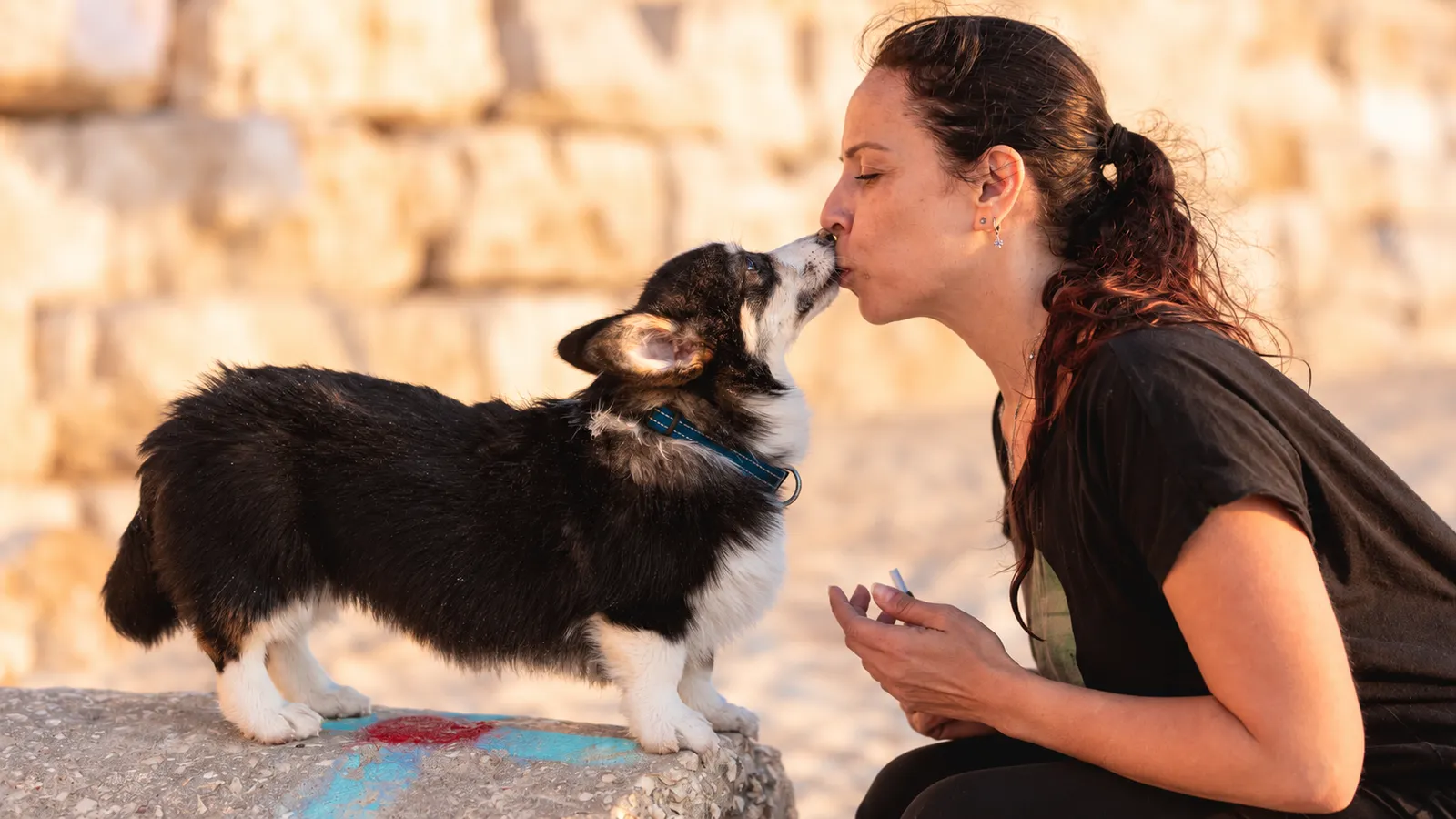
A dog greets us at the door as if we had been gone not for twenty minutes, but for several years. It follows us from room to room, settles down beside us, rests its head on our knees. When it is frightened, it seeks us out, and when we return, it is so delighted to see us that there seems to be little room for doubt about its feelings.
We call it love.
But love is a human word. We cannot ask a dog what it feels and receive an answer. So science frames the question a little differently: what actually connects a dog to a human, and how similar is this bond to the relationships we call attachment?
Over the past several decades, scientists have devised many ways to investigate this. They have observed dogs during separation from their owners, studied how their behavior changes in the presence of familiar and unfamiliar people, measured hormones and stress levels, examined gaze, and even compared the personalities of dogs and their owners.
And it turns out that behind the familiar phrase “my dog loves me” lies a much more interesting story.
Dogs did not simply learn to live alongside humans. Over thousands of years of shared history, two different biological species developed a relationship involving mechanisms remarkably similar to those that support social bonds within our own species.
It All Began Long Before Sofas and Leashes
Scientists are still debating exactly when dog domestication began and what the earliest relationships between humans and the ancestors of dogs looked like. But one thing is clear: dogs diverged from the wolf lineage long before the emergence of modern breeds and have travelled an extraordinary evolutionary path alongside humans.
And the process that brought the ancestors of dogs closer to humans may not have begun with people deciding to tame wolves.
According to one hypothesis, wolves that were more tolerant of humans began spending time near human camps, where they could find food scraps. Animals that were less fearful of people and less likely to respond aggressively gained access to this new source of food and may have had an advantage over more cautious individuals. Humans, in turn, may have been more tolerant of animals that were easier to coexist with.
Gradually, one of the most important qualities of the future dog became the ability to live alongside humans and interact with them.
Modern dogs differ from wolves in much more than appearance. Their development and reproduction, behavior and — particularly important to our story — their relationship with humans have changed as well. Even wolves raised by humans and intensively socialized do not interact with us in quite the same way dogs do.
A particularly interesting comparison comes from puppies and wolf pups raised in close contact with humans from a very early age. If dogs’ special relationship with humans were primarily the result of socialization, we might expect human-raised wolves to develop a similar bond.
Yet by around four months of age, an important difference was already apparent. Puppies distinguished their caregiver from other people. After a separation, they sought contact specifically with that person and responded differently when the caregiver returned than they did to an unfamiliar person. In other words, their behavior depended not simply on the presence of a human, but on which particular human was there.
Human-raised wolf pups did not show the same degree of selectivity. They could be well socialized, interact calmly with people and seek human contact, but they did not show the same special preference for their caregiver over a stranger. Close interaction with humans alone did not produce the same pattern of attachment observed in dogs.
This suggested that intensive contact with humans by itself is not enough to create the selective bond characteristic of dogs. It became one of the arguments that dogs’ special relationship with humans cannot be explained by upbringing and familiarity alone. The ability to form selective attachments to humans is probably also connected with changes that occurred during domestication.
The Experiment That Changed the Way We Think About Domestication
In 1959, Soviet geneticist Dmitry Belyaev began the famous experiment with silver foxes, which was later continued for many years by Lyudmila Trut.
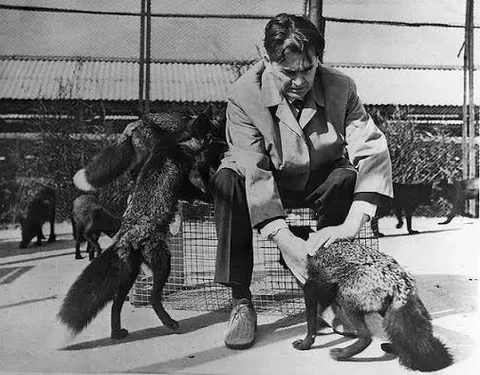
The principle of selection was strikingly simple: the animals chosen for breeding were those that showed less fear of humans and less aggression toward them.
Over the generations, the foxes’ behavior did indeed change: they became much more willing to seek contact with people. In addition, traits commonly seen in many domestic animals began to appear more frequently among them, including floppy ears, curled tails, patches of coat color, and shorter, more delicate muzzles and jaws. Their physiology changed as well, including aspects of development and reproductive function.
The experiment became one of the best-known arguments for the idea of a so-called domestication syndrome: the hypothesis that selection for calmer, friendlier behavior can also bring about a whole range of other changes.
However, later research prompted scientists to reconsider some of the conclusions drawn from the famous experiment.
Research into the history of the experimental population showed that Belyaev’s foxes descended from animals that had already been bred on fur farms for several decades, and that some of the traits later associated with experimental selection had already occurred in farmed foxes. Scientists therefore continue to debate whether all of these changes can be considered a direct consequence of selection for friendliness toward humans.
But regardless of the debate surrounding individual findings, the experiment clearly demonstrated that deliberate selection for behavior can profoundly change animals’ attitudes toward humans within a relatively small number of generations. Dogs, meanwhile, had not dozens of experimental generations but thousands of years of life alongside us.
Perhaps We Helped Dogs Become So Cute, Too
Adult dogs retain a number of traits that resemble those of young wolves. The retention of juvenile characteristics into adulthood is known as paedomorphism. It can appear in physical features — for example, a shorter muzzle, relatively large eyes, a rounder head, smaller teeth and, in some dogs, floppy ears. But it is not limited to appearance. Paedomorphic characteristics can also include the persistence into adulthood of certain behaviors more typical of young animals, such as playfulness, strong social orientation, and a readiness to seek contact and support.
This raises an intriguing question: could human preferences have influenced which dogs people were more likely to choose and keep close to them?
In 2013, Bridget Waller and her colleagues observed dogs in shelters and analyzed their facial expressions. They found that dogs that more frequently raised the inner part of their eyebrows — a movement that makes the eyes appear larger and gives the face a more “puppy-like” expression — found new homes more quickly.
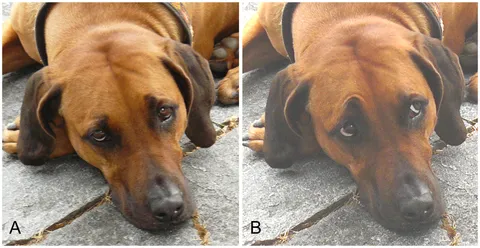
Of course, a modern animal shelter is not a model of wolf domestication thousands of years ago. But the experiment clearly demonstrates a mechanism that could have operated again and again: human preferences can influence the fate of dogs.
We chose dogs, and our preferences gradually changed dogs themselves.
But Is It Attachment?
The most interesting part begins when we stop looking at dogs as a species and instead look at the relationship between one particular dog and one particular person.
In human psychology, there is a theory of attachment, whose foundations were laid by British psychiatrist and psychoanalyst John Bowlby. He proposed that a young child’s drive to remain close to a caregiving adult is not simply the result of upbringing or habit, but an innate behavioral system shaped by evolution. For a helpless young child, staying close to the person who feeds, protects and cares for them quite literally increases the chances of survival.
Psychologist Mary Ainsworth later developed a way to study attachment experimentally. She observed how young children behaved in an unfamiliar environment, what happened when their mother briefly left, how the child responded to an unfamiliar person, and how they greeted their mother when she returned.
These studies revealed two particularly important functions of the person to whom an attachment has formed. When a child is frightened or distressed, they seek protection and comfort from that person — the attachment figure acts as a “safe haven.” In a calm situation, the person’s presence gives the child confidence to explore the world around them — in this role, the adult becomes a “secure base.”
At some point, researchers asked an unexpected question: could a human serve the same functions for a dog?
To find out, researchers adapted Ainsworth’s test for dogs. A dog and its owner entered an unfamiliar room. An unfamiliar person then came in, the owner left for a while, the dog remained without them, and eventually the owner returned. The researchers did not focus on a single behavior, but observed the dog as a whole: how readily it explored the new environment, whether it sought proximity to its owner, how it reacted when the owner left, and what it did when they returned.
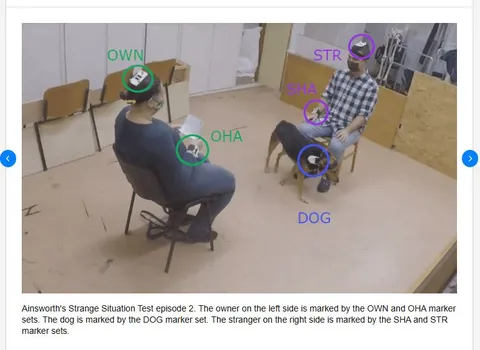
The results showed that, to a dog, its owner is far more than simply one familiar person among many. In their owner’s presence, dogs appeared more confident and explored the unfamiliar room more actively. When the owner left, their behavior changed, and when the owner returned, they sought to re-establish contact. An unfamiliar person could not fully replace the owner.
This pattern strongly resembled what Ainsworth had observed in young children. A person to whom a dog was attached could perform the same two familiar functions: someone whose proximity the dog sought in a distressing situation, and someone whose presence made it easier to feel confident in unfamiliar surroundings.
Nor is this ability limited to bonds formed during puppyhood. Studies of adult shelter dogs revealed something particularly interesting: dogs can form a new attachment to a human even as adults. After only a few brief encounters with the same person, they began to distinguish that individual from others and to show behavior toward them characteristic of a developing attachment.
In other words, a person can become special to a dog even if they did not raise that dog from its earliest weeks — the ability to form new social bonds with us remains later in life.
A very recent study showed just how unusual this canine ability may be. In 2024, scientists used the same test not only with pet dogs, but also with miniature pigs that likewise lived in family homes, were kept as companion animals, and had extensive contact with humans from an early age.
The pigs readily interacted with people, but their owners did not occupy the same special position that was evident in dogs. Dogs were more likely to follow their departing owner toward the door, wait for their return, and greet them differently from a stranger. The miniature pigs did not show the same consistent distinction between their owner and an unfamiliar person.
So simply growing up around humans is not enough to produce the kind of bond seen in dogs. The authors suggest that dogs’ ability to form attachments to humans may be the result of their unique evolutionary history and selection for close interaction with us.
But an especially vivid demonstration came later.
Sometimes It Is Enough for Your Person Simply to Be There
In 2013, researchers Lisa Horn, Ludwig Huber and Friederike Range set out to test whether the presence of an owner really does make a dog feel more confident when faced with a new task.
The dog was brought into an unfamiliar room and presented with a fairly simple puzzle: it had to learn to manipulate a special device with its paw or muzzle in order to obtain a treat hidden inside.
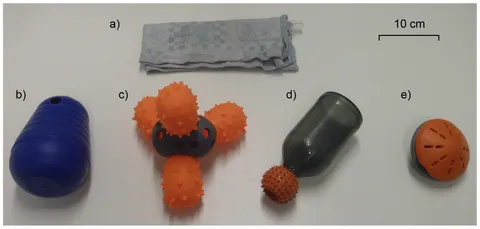
The researchers wanted to know whether the dog’s behavior would change depending on whether its owner was nearby and on how the owner behaved.
In one condition, the owner actively supported the dog by talking to and encouraging it. In another, the owner remained in the room but sat quietly and offered no help. In the third, the owner was not present at all.
If assistance and encouragement were what mattered, we might expect dogs to do best when their owners actively supported them. Instead, the owner’s mere presence turned out to matter much more. Dogs were more willing to keep working on the unfamiliar task when their owner was in the room, and there was little difference between active encouragement and the owner simply sitting there quietly.
To make sure that the effect was not caused merely by having any person present, the researchers repeated the experiment with a stranger. The stranger’s presence did not affect the dogs’ persistence in the same way as the owner’s presence did.
The owner did not need to say anything, demonstrate anything or offer assistance. Simply having a familiar and significant person nearby made the dogs more persistent when faced with a new task.
This provided further evidence of the “secure base” effect: when a dog is near a person to whom it is attached, exploring the unfamiliar and trying something new becomes easier.
What Happens When a Dog Looks Into Our Eyes?
There is another feature of dog–human relationships that is difficult for any owner to miss: dogs look at us.
They do not simply watch where we are going. They seek our gaze, use it in social interaction, and are capable of maintaining eye contact with us.
When a dog looks at its owner, this is not merely a form of communication. Such contact can be accompanied by changes in both the dog’s and the human’s bodies. One substance that has attracted particular attention from researchers is the hormone oxytocin.
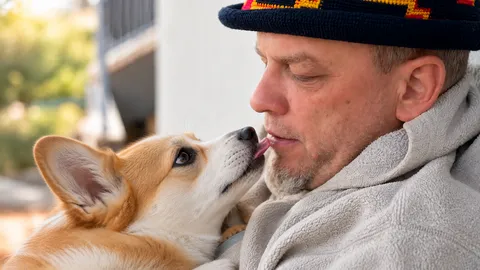
Oxytocin is often called the “love hormone,” although that appealing label creates an overly simple picture. Oxytocin is part of a complex system involved in regulating social behavior and the formation of social bonds in humans. It plays an important role, for example, in the relationship between mother and child, contributes to bonding between partners, and influences how we process social signals.
Oxytocin does not, however, create love by itself. Its effects depend on the situation, the relationship between the individuals involved, and many other factors. It is therefore more accurate to think of it not as the “love hormone,” but as one of the biological mechanisms involved in social bonding.
And it turns out that this mechanism may operate not only in relationships between humans.
In 2015, a group of Japanese researchers led by Miho Nagasawa published a study that became famous. The scientists observed dogs interacting with their owners and measured urinary oxytocin levels in both before and after the interaction. They found that owners whose dogs gazed at them for longer showed a greater increase in oxytocin levels after the interaction.
In another part of the experiment, oxytocin was administered intranasally to the dogs. Afterwards, female dogs gazed at their owners for longer, and their owners showed increased oxytocin levels following the interaction. The researchers did not, however, observe the same effect in male dogs.
The researchers proposed that a kind of oxytocin-mediated positive feedback loop may exist between dogs and humans: a dog’s gaze triggers a physiological response in the human, the human responds with more interaction, and this in turn affects the dog’s physiological state.
In simplified form, the idea looks almost like a dialogue: the dog seeks the human’s gaze → the human body responds → the human interacts more with the dog → the dog’s body responds as well.
Interestingly, the researchers did not find the same association between gaze and owner oxytocin in the comparison group of wolves. The authors proposed that, during domestication, dogs may have become integrated into a social-interaction mechanism that in humans primarily evolved to support relationships with other humans.
The hypothesis attracted enormous attention, but subsequent research has shown that oxytocin’s role in dog–human relationships is more complicated.
The “Love Hormone” Does Not Explain Love
Nagasawa’s study attracted enormous attention, and the idea of an oxytocin feedback loop quickly became a popular explanation for the special bond between humans and dogs. Further research, however, has shown that this relationship cannot be reduced to a simple chain of “gaze — oxytocin — attachment.”
Oxytocin does influence dogs’ social behavior, but its effects appear to be highly context-dependent. Different experiments have produced different results depending on the dog’s sex, individual characteristics, relationship with a particular person, and even the conditions under which the study was conducted. Some studies have found increased social behavior after oxytocin administration, while others have found much weaker effects or none at all.
Measurements of naturally occurring oxytocin during dog–human interactions have also produced mixed results. Researchers use different methods, and oxytocin itself is difficult to measure and interpret: an increase in its concentration does not automatically mean an increase in attachment.
So the familiar claim that mutual gaze causes both dog and human to “release the love hormone” is far too simplistic. Oxytocin does appear to participate in social interactions between dogs and humans, but it is only one of many mechanisms that support this relationship.
And this fits much better with everything else we know about canine attachment. A dog’s relationship with its owner is not expressed in a single hormonal measurement: the dog seeks that person in distressing situations, feels more confident in their presence, distinguishes them from strangers, and changes its behavior during separation and reunion.
What we call attachment is not a single chemical reaction, but a complex relationship between two living beings.
Can Dogs Feel Our Stress?
Many owners are convinced that their dogs know perfectly well when they are upset or tense. But an owner’s subjective impression is not yet scientific evidence.
In 2019, a group of researchers from Linköping University in Sweden set out to investigate whether a person’s emotional state might be associated with their dog’s state not just for minutes or hours, but over a period of months.
The study included 58 dog–owner pairs: 33 Shetland Sheepdogs and 25 Border Collies. All of the owners were women. Some of the dogs were ordinary family pets, while others trained regularly and competed in agility or obedience. This allowed the researchers to investigate whether any association they found could simply be explained by differences in lifestyle or physical workload.
To assess longer-term stress, hair samples were collected from both people and dogs on two occasions — in the summer of 2017 and the winter of 2018. The researchers measured the concentration of cortisol, a hormone whose levels change in response to stress and exertion. Unlike blood or saliva samples, which are more likely to reflect the state of the body at a particular moment, hair grows gradually and incorporates cortisol over time. It can therefore provide an approximate picture of cortisol levels over the preceding weeks and months.
But the researchers wanted to rule out a simpler explanation. Perhaps humans and dogs had similar cortisol levels simply because they exercised together?
For one week, the dogs therefore wore special activity monitors. Owners also reported how much they trained with their dogs, whether they competed, and what their everyday routines were like. In addition, personality questionnaires were completed for both dogs and humans.
When the researchers compared the results, an intriguing pattern emerged: the higher the cortisol concentration in an owner’s hair, the higher it tended to be in their dog’s hair as well. The association appeared in both sampling periods — summer and winter.
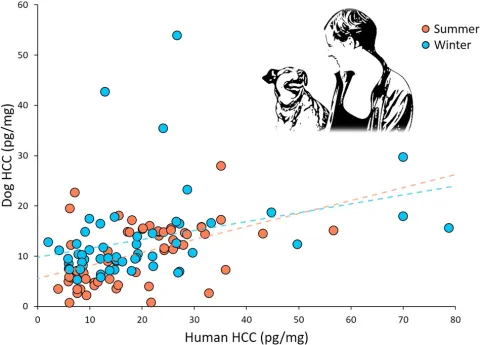
The pattern did not appear to be explained simply by shared physical activity. Neither the dogs’ overall activity levels nor the amount of weekly training accounted for the association. It was present both in family pets and in dogs that trained and competed regularly. The association was stronger in female dogs than in males, and stronger among competing dogs than among ordinary pets.
The personality analysis produced another interesting result. The dog’s own personality explained relatively little of its hair cortisol level. By contrast, several personality traits of the owner — including neuroticism, openness to experience and conscientiousness — were associated with the dog’s cortisol levels.
The authors therefore suggested that, within these pairs, dogs may be more likely to mirror their owners’ long-term stress than owners are to mirror their dogs’ stress. They described the phenomenon as long-term interspecies synchronization of stress levels. This does not mean that a dog literally “reads” its owner’s cortisol. More likely, throughout daily life the dog is continually exposed to the person’s behavior, mood, reactions and lifestyle, all of which may influence the dog’s own physiological state.
The findings should not automatically be generalized to all dogs: the study included only two herding breeds and only female owners. Still, the possibility that the states of humans and dogs may be connected not only during a single stressful moment but over periods of months is remarkable.
We live together so closely that our relationship may be reflected not only in behavior, but in physiology as well.
Do Dogs Really Resemble Their Owners?
We often notice similarities between dogs and their owners — sometimes in appearance, sometimes in habits or temperament. But could such similarities exist outside our imagination?
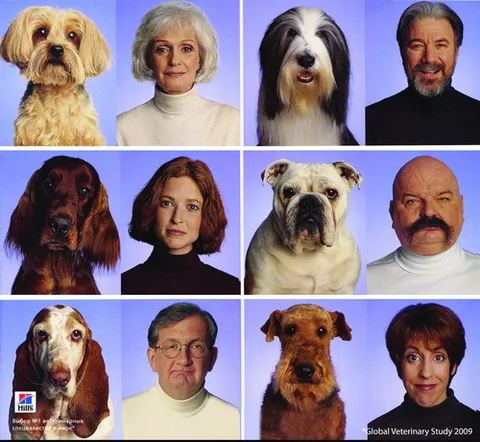
In 2012, Borbála Turcsán and her colleagues set out to compare personality traits in dogs and their owners. The study involved several hundred pairs from Austria and Hungary.
Human personality was assessed using the Big Five model. It describes five broad traits: extraversion, agreeableness, conscientiousness, openness to experience and neuroticism (a tendency to experience anxiety, tension and negative emotions more strongly). For the dogs, researchers used an adapted assessment system designed to describe comparable stable behavioral characteristics.
When the owners’ and dogs’ results were compared, an intriguing similarity emerged: the more strongly a particular trait was expressed in the human, the more likely a corresponding characteristic was to be expressed in the dog. Associations were found for all five traits.
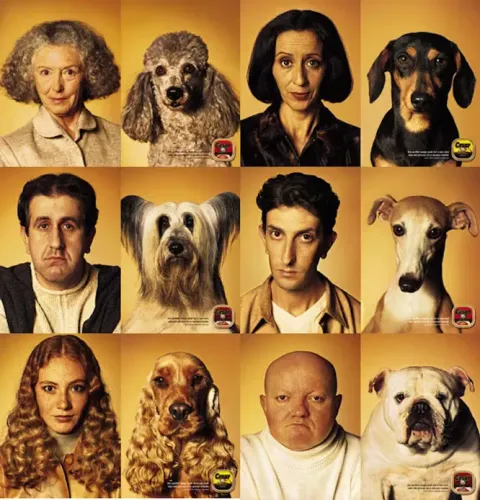
There was, however, an obvious problem: the owners themselves had rated their dogs, which meant they might — even unconsciously — see their own characteristics in them. The researchers therefore asked other people who knew the dogs well to complete questionnaires too. Based on those assessments, the similarity remained for four of the five traits. In other words, the result could not be explained solely by the owners projecting their own personalities onto their dogs.
The next question was: where does this similarity come from?
The simplest explanation seems obvious: humans and dogs live together for a long time, influence one another, and gradually become more alike. But if that were the main mechanism, we would expect pairs that had lived together for many years to resemble one another more closely than pairs that had only recently begun living together.
The study found no such relationship. The length of time a person and dog had lived together was not associated with greater personality similarity.
This suggests another possibility: perhaps some of the similarity is already present when the dog is chosen. A person may feel more comfortable with an animal whose temperament corresponds in some way to their own — an active person with an active dog, for example, or a calmer person with a less excitable one. Shared living conditions, activities and everyday routines may also play a role.
The study cannot tell us exactly which of these mechanisms matters most. But it does show something intriguing: similarities between the personalities of people and their dogs can indeed be detected, and they cannot be explained simply by saying, “they became alike because they have lived together for a long time.”
We Changed Dogs — and They Changed Us
The domestication of dogs is sometimes portrayed as a process entirely controlled by humans: our ancestors tamed a wild animal and then, generation after generation, selected the qualities they wanted. In reality, the relationship between the two species probably developed in a much more complex way.
In the early stages, animals that were less afraid of people and more tolerant of their presence may have gained an advantage around human settlements. Later, once dogs had become part of human life, people began deliberately selecting them for their ability to perform particular tasks, for behavioral characteristics and, eventually, for appearance. Thousands of years of such selection made dogs extraordinarily attentive to humans — to our gestures, voices, gaze and emotional states.
But dogs were not the only ones adapting. Humans also learned to notice and understand their signals. We respond when a dog seeks our gaze or approaches us for reassurance, recognize its mood from posture and facial expression, and change our own behavior in response to its reactions. Even aspects of canine appearance and facial expression that readily make humans pay attention or feel an urge to care for the animal may have gained an advantage through selection.
The relationship between humans and dogs is difficult to describe simply as the story of one species taming another. Over thousands of years of living together, two species have become so adept at interacting with one another that this bond has become part of the behavior of both dogs and humans.
So, Do Dogs Love Us?
Science cannot give this question the same simple “yes” that most dog owners would offer without hesitation. We do not know whether a dog experiences a subjective feeling fully equivalent to human love. Then again, human love itself cannot be reduced to a single hormone, a particular behavior, or the activity of one region of the brain.
What we can study is what can be observed and measured. And here the picture is quite compelling: dogs form selective relationships with particular people. They seek their proximity when distressed, feel more confident in their presence, and use the person as a “secure base” while exploring an unfamiliar world. They are extraordinarily attentive to our social signals, and interactions between dogs and humans are accompanied by changes not only in behavior but also in physiological systems.
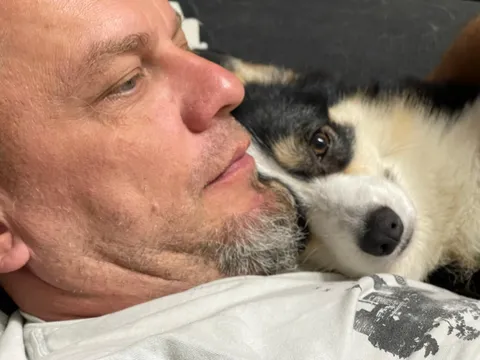
Nor does such an attachment necessarily take years to develop. Studies of shelter dogs have shown that an adult dog can begin forming a selective bond with a new person after only a few brief encounters. The ability to form new relationships with us persists well beyond puppyhood.
Perhaps this is one of the most remarkable characteristics of dogs as a species: over thousands of years alongside humans, they acquired not only the ability to live among us, understand our signals and cooperate with us, but also the ability to single out one person among many and form a special relationship with them.
A researcher is therefore unlikely to write in a scientific paper, “we have proved that your dog loves you.” Scientific language demands a more cautious formulation: a dog is capable of forming a stable, individual social attachment to a particular person, in which that person’s presence, proximity and interaction acquire special significance for the dog.
Dog owners, however, can allow themselves to translate that from scientific language into ordinary language.
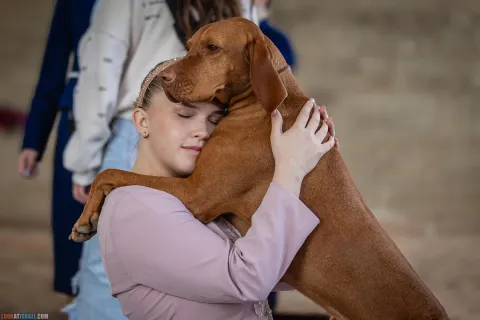
Yes. It seems they really do love us.
================================
Sources:
- Gácsi, M., Topál, J., Miklósi, Á., Dóka, A., & Csányi, V. (2001), "Attachment behavior of adult dogs (Canis familiaris) living at rescue centers: forming new bonds"
- József Topál, Márta Gácsi, Ádám Miklósi, Zsófia Virányi, Enikő Kubinyi, Vilmos Csányi (2005), "Attachment to humans: a comparative study on hand-reared wolves and differently socialized dog puppies"
- Borbála Turcsán, Friederike Range, Zsófia Virányi, Ádám Miklósi, Enikő Kubinyi (2012), "Birds of a feather flock together? Perceived personality matching in owner–dog dyads"
- Bridget M. Waller, Kate Peirce,Cátia C. Caeiro, Linda Scheider, Anne M. Burrows, Sandra McCune, Juliane Kaminski (2013), "Paedomorphic Facial Expressions Give Dogs a Selective Advantage"
- Lisa Horn ,Ludwig Huber, Friederike Range (2013), "The Importance of the Secure Base Effect for Domestic Dogs – Evidence from a Manipulative Problem-Solving Task"
- Miho Nagasawa et al (2015), "Oxytocin-gaze positive loop and the coevolution of human-dog bonds"
- Sundman, AS., Van Poucke, E., Svensson Holm, AC. et al. (2019) "Long-term stress levels are synchronized in dogs and their owners"
- Kathryn A. Lord, Greger Larson, Raymond P. Coppinger, Elinor K. Karlsson (2020), "The History of Farm Foxes Undermines the Animal Domestication Syndrome"