A Beautiful Corgi Is a Healthy Corgi
Grooming your dog is not about making it look “fancy.”
Regular grooming and basic hygiene give you an opportunity to notice problems that may not be obvious at first glance:
- allergies;
- ear inflammation;
- dental tartar;
- cracked paw pads;
- lumps and growths;
- ticks;
- minor injuries and cuts.
Experienced breeders examine their dogs regularly. Just a few minutes of routine care can help you notice changes long before they develop into a serious problem.
Nails: Not Just About Appearance, but Health
A dog’s nails grow throughout its life. Even if a Corgi walks on pavement every day, the nails do not always wear down sufficiently on their own. This is especially true of dewclaws, if present — their nails receive little or no natural wear.
Overgrown nails alter the position of the paw. The toes begin to sit at an incorrect angle, increasing strain on the joints and ligaments and making movement less comfortable for the dog.
Over time, this can affect not only the dog’s gait but also its overall musculoskeletal health.
This is particularly important for Corgis: because of their long bodies and relatively short limbs, correct paw placement plays an important role in distributing physical load.
Short nails are also not merely a matter of health — they are a requirement of the breed standard.
The FCI standards for both the Pembroke Welsh Corgi and the Cardigan Welsh Corgi specifically state that the nails should be short, which is why breeders always check nail length before shows.
It is better to shorten the nails a little at a time and regularly than to wait until they become excessively long.
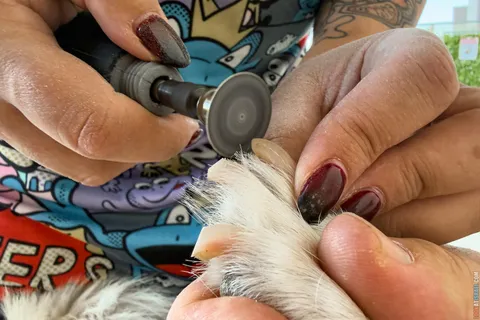
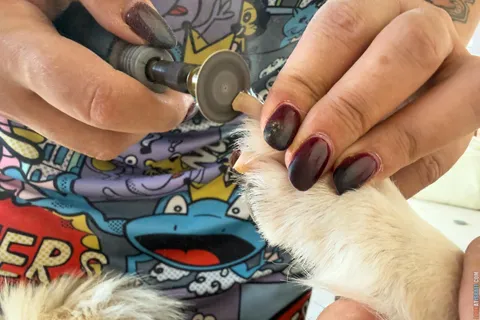
With our own dogs, we prefer to grind their nails rather than clip them. This makes it easier to avoid accidentally cutting into the blood vessels inside the nail. Even so, our dogs absolutely hate the procedure. They have even learned the word “nails,” and if we accidentally say it within earshot, we then have to search every hiding place in the house to find them. 😀
Coat: Why You Should Never Shave a Corgi
Corgis have a double coat consisting of two layers:
- a dense, soft undercoat;
- longer guard hairs.
These two layers work together: in winter they help retain warmth, while in summer they protect the skin from overheating and direct sunlight.
This is why the common advice to “shave your Corgi to keep it cool” is misguided and can even be harmful!
After clipping or shaving a Corgi:
- the coat’s natural thermoregulatory function may be disrupted;
- the skin becomes more exposed to the sun;
- the risk of sunburn increases;
- the coat may grow back unevenly or in patches;
- in some cases, the guard hairs may never fully return to their previous condition.
Remember: a healthy Corgi should not be clipped or shaved.
And if you are planning to show your dog, giving your Corgi a fashionable haircut or trimming its rear into a cute “heart shape” is definitely not a good idea. A Corgi is not a Poodle, and a show judge is unlikely to appreciate this kind of “styling.”
At most, the hair between the paw pads can be neatly trimmed, along with an occasional stray hair, to maintain a tidy appearance.
Shedding: You Cannot Eliminate It
If you dream of a Corgi that never sheds, we are afraid we have some disappointing news. Corgis shed. And they can shed quite a lot.
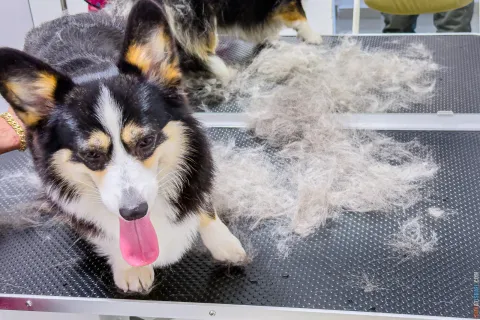
Seasonal shedding is particularly noticeable in spring and autumn, when the dog loses a large proportion of its undercoat.
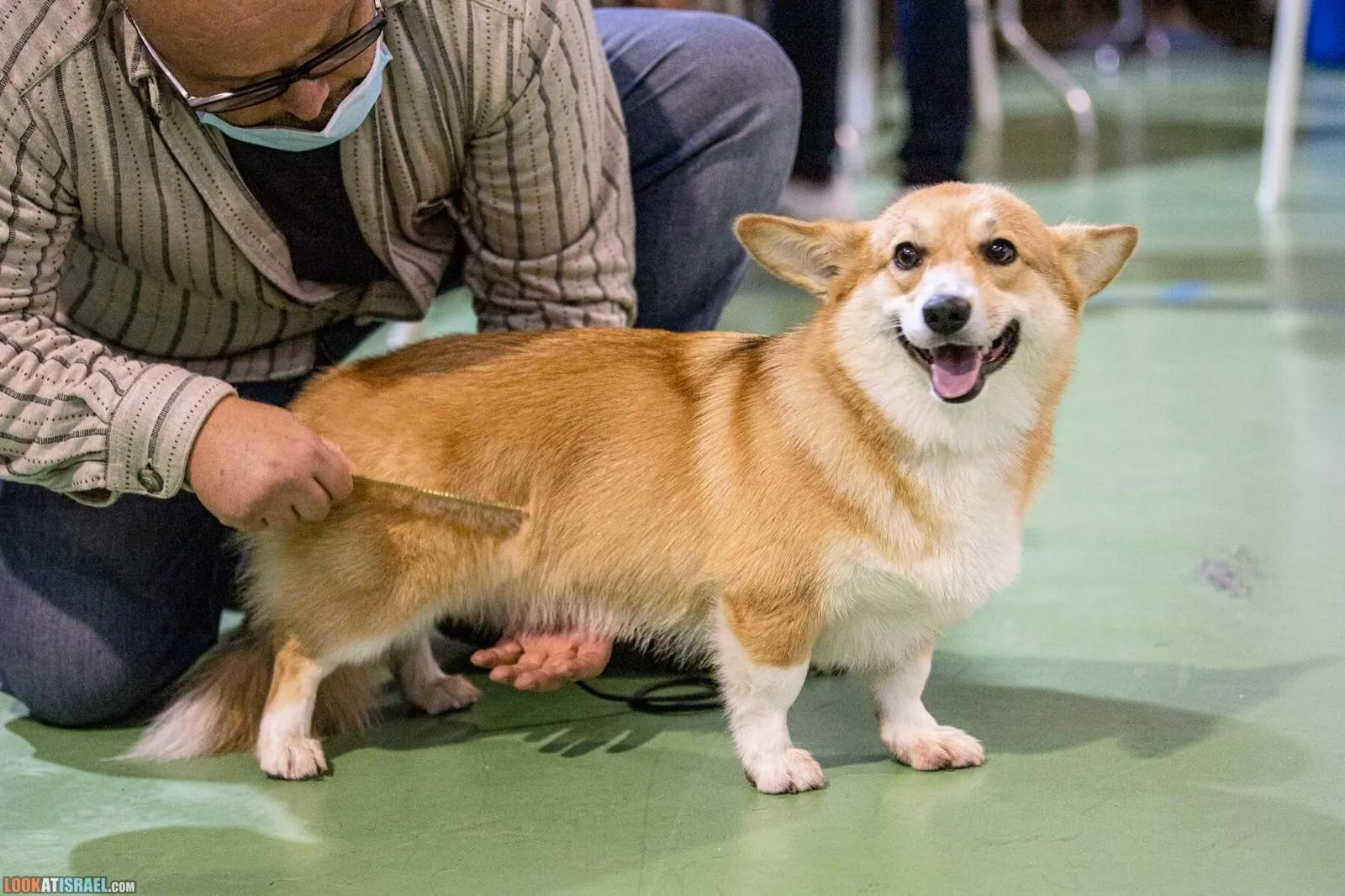
It is impossible to eliminate loose hair from the house completely, but regular brushing can significantly reduce the amount.
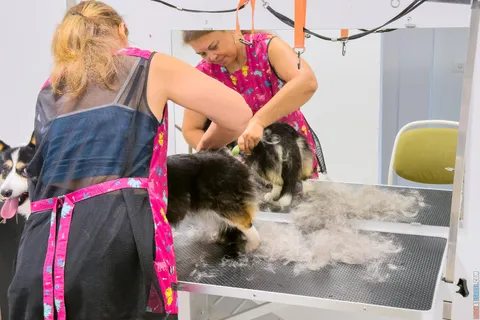
If you do not have the time, energy, or desire to deal with all that hair at home, professional grooming salons can help with a thorough deshedding treatment.
What Is a Deshedding Treatment?
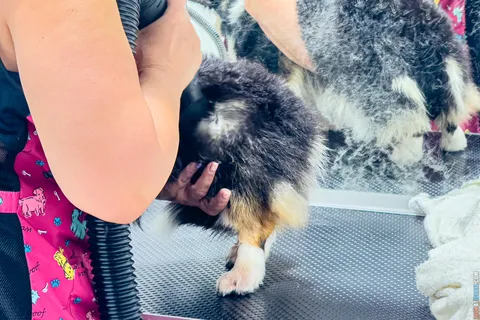
A professional deshedding treatment is not a magical procedure that “stops” shedding. It is a combination of grooming techniques designed to help the dog get rid of dead undercoat more quickly.
It usually includes:
- bathing with professional grooming products;
- applying conditioner or a special coat mask;
- thorough drying with a high-velocity dryer;
- extensive brushing to remove dead undercoat.
After such a treatment, there really can be noticeably less loose hair around the house.
However, it is important to understand that deshedding does not stop the coat’s natural shedding cycle and does not affect how quickly new hair grows. It simply helps remove undercoat that is already ready to come out.
This type of grooming is particularly useful during seasonal shedding and before dog shows.
How to Brush a Corgi Properly
For regular coat care, you will usually need:
- a slicker brush;
- a metal comb;
- an undercoat rake, if necessary;
- a high-velocity dryer after bathing.
The popular Furminator, however, should be used with caution. If used too frequently, it can damage the guard hairs, so routine use without a specific need is not recommended.
It is better to spend a few minutes brushing your dog several times a week than to try to remove the entire undercoat in one session.
Bathing: Is Less Always Better?
Some owners are afraid to bathe their dogs too often because they worry about damaging the skin’s natural protective lipid barrier. Others, on the contrary, believe that a Corgi should be bathed every week.
Neither approach is quite right.
Owners who worry about frequent bathing may be reassured to know that modern high-quality dog shampoos allow dogs to be bathed as needed.
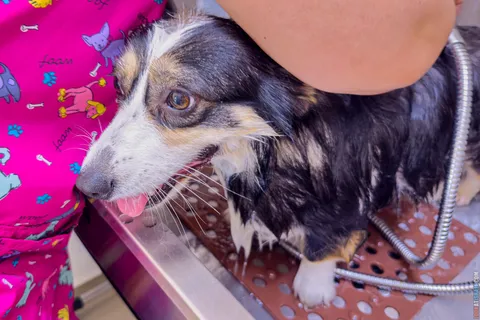
At the same time, there is usually no reason to bathe a Corgi according to a rigid weekly schedule. A bath is generally useful:
- when the dog gets dirty;
- during seasonal shedding;
- before a dog show;
- before a photo shoot;
- when the coat begins to look dirty.
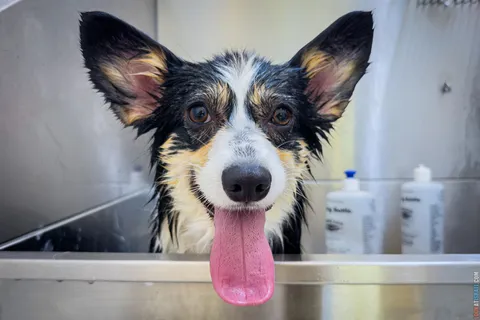
After bathing, it is extremely important to rinse the shampoo out thoroughly and dry the undercoat completely.
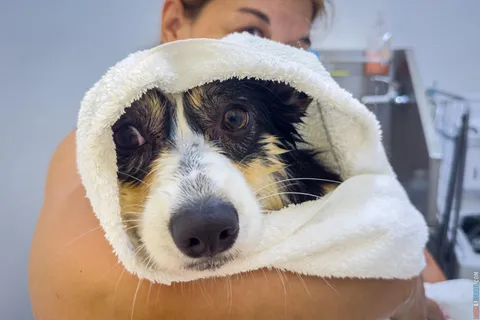
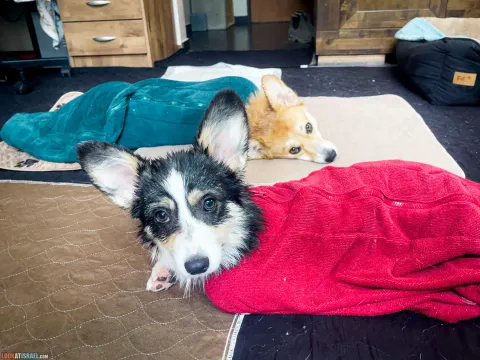
A dense, damp undercoat can retain moisture for a long time even when the outer coat already feels dry. This warm, moist environment provides ideal conditions for bacterial growth and can contribute to acute skin inflammation known as a hot spot, or acute moist dermatitis.
A hot spot usually appears suddenly: a painful, red, inflamed area develops on the skin and may rapidly increase in size. It can become moist and intensely itchy, causing significant discomfort to the dog. Treatment often requires clipping the hair around the affected area and treating the skin, and in some cases antibiotics or anti-inflammatory medication may be necessary.
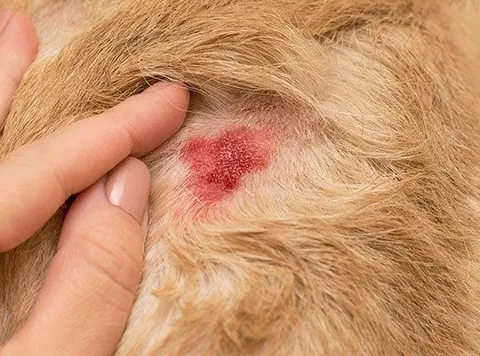
This is why, after bathing, it is important to dry not only the outer coat but the undercoat all the way down to the skin, particularly around the neck, behind the ears, in the armpits, and around the hindquarters or “pants.” If your dog has a very dense coat, it is best to use a hair dryer or high-velocity dryer with warm — but never hot — air.
Do Corgi Ears Need Cleaning?
In a healthy Corgi, the inside of the ear is usually pale, clean, and has little to no noticeable odour.
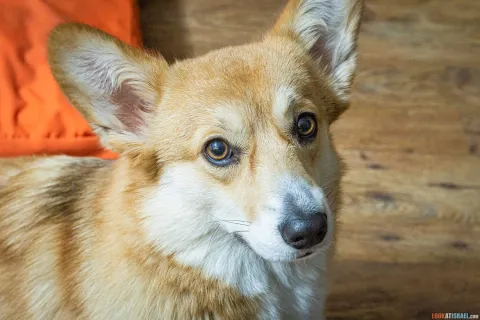
A small amount of earwax is completely normal. There is no need to try to keep the ears perfectly sterile or clean them every week “just in case.”
If some dirt or wax does accumulate, it can be gently softened with a few drops of baby oil. Lightly massage the base of the ear, then carefully wipe away the softened wax with a cotton pad or soft cotton round. Do not use cotton swabs or attempt to reach deep into the ear canal, as this may push debris further inside or injure the delicate skin.
If you notice an unpleasant smell, redness, dark discharge, severe itching, or frequent head shaking, the dog should be examined by a veterinarian.
Teeth
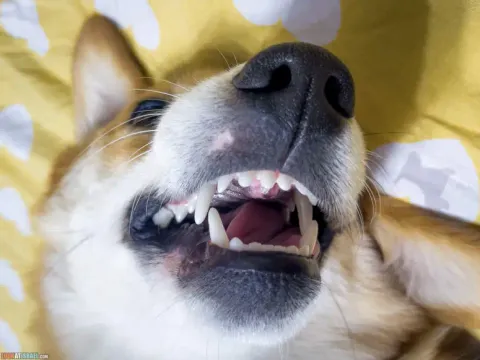
One of the most common mistakes is assuming that dental chews or dry food can completely replace tooth brushing.
Unfortunately, they cannot. Regular brushing with a toothbrush and veterinary toothpaste remains the best way to help prevent plaque accumulation. Ideally, a puppy should be introduced to tooth brushing from an early age.
Once plaque has hardened into tartar, it cannot be properly removed at home — professional dental cleaning by a veterinarian will be required.
Paws After a Walk
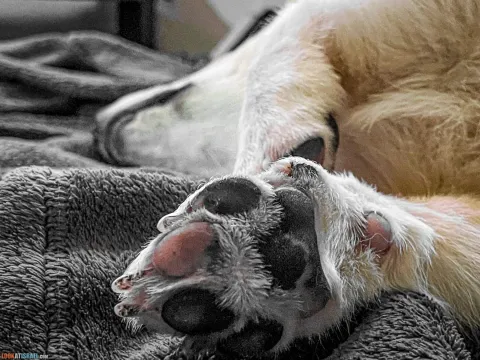
It is a good habit to give your dog’s paws a quick check after every walk.
Pay attention to:
- the paw pads;
- the nails;
- the spaces between the toes;
- any cuts or cracks.
For dog owners in Israel, it is particularly important to remember the danger posed by dry grass awns and foxtails. You can read more about them in our article “Plants in Israel That Are Dangerous to Dogs”.
Grass awns can work their way between the toes, under the skin, into the ears, and even into the nose, causing painful inflammation and abscesses.
During the summer, always check your dog’s paws after walking through tall, dry grass and remove any trapped awns immediately, before they have a chance to penetrate deeper.
Eyes
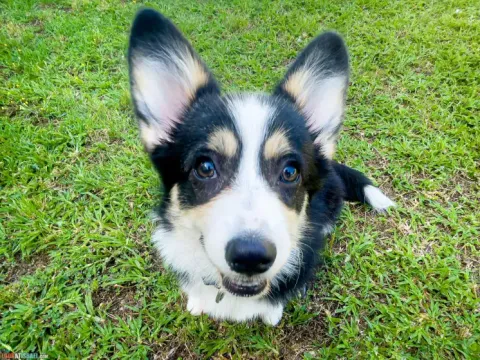
A small amount of clear discharge after sleep is considered normal. However, persistent tearing, thick yellow or green discharge, redness, or frequent squinting should be examined by a veterinarian.
Do not use eye drops on your own without first establishing the cause of the problem.
Does a Corgi Need a Professional Groomer?
Yes — but it is important to understand that a good groomer will not give a Corgi a haircut. The main goal of professional grooming is to preserve the coat’s natural structure.
During a grooming session, the groomer will usually:
- bathe the dog;
- dry the coat thoroughly;
- remove dead undercoat;
- trim the nails;
- tidy the paws.
This type of care helps keep the coat healthy and looking its best.
Our Advice
Caring for your dog is not a separate chore — it is part of your relationship with them.
While you brush the coat, shorten the nails, or clean the teeth, your dog learns to trust you and calmly accept handling and veterinary procedures. At the same time, you learn to notice even the smallest changes in your dog’s condition.
That is why a few minutes of regular care often do far more good than occasional, lengthy “deep-cleaning” sessions.
A healthy Corgi is not one that looks perfect only before a dog show. It is a dog that receives a little care every single day.